


- You are here:
-
Sights by Regions

-
Lviv region
- Lviv
Lviv
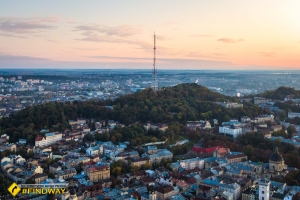
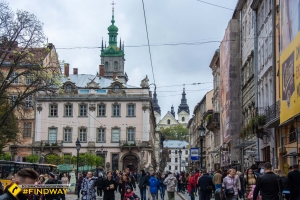

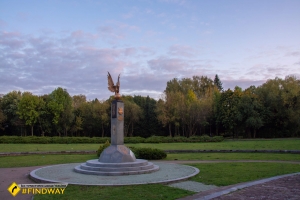
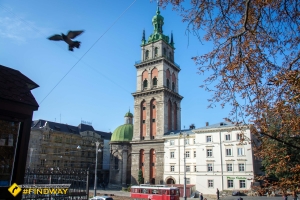
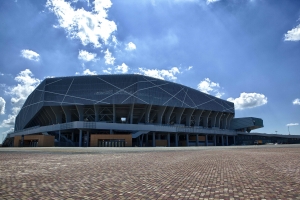
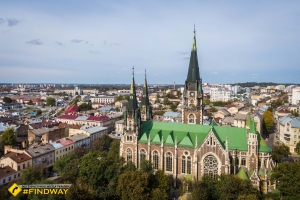




Lviv is a city where time runs on two clocks at once. One is on the town hall: precise, European, gilded. The other is in the coffee house: running about forty minutes slow, with a pause for «one more cup.» While the city lives by the first, its residents go by the second.
Gothic, Baroque, Renaissance, Secession, Constructivism and a kiosk selling mulled wine all appear on the same kilometre. People come here when they want to feel Europe without leaving Ukraine — and discover that Europe here is entirely its own, with the orange scent of old coffee houses and lazy jazz drifting from an open window.
City at a glance
| Founded | 1256 (first written record); founded by Danylo Halytsky and named after his son Lev |
| Administrative status | Regional centre of Lviv Oblast; historical capital of Galicia |
| Historical land | Galicia (centre of the Ruthenian Voivodeship, then the Kingdom of Galicia and Lodomeria) |
| Population | ~720 000 (noticeably more with IDPs since 2022) |
| Area | 182 km2 |
| Elevation | ~296 m (built on 7 hills, the highest being High Castle) |
| Main river | Poltva (hidden in a culvert beneath the city centre — yes, you’ve been walking over a river without knowing it) |
| Nicknames | The Lion City, the Ukrainian Athens, Little Paris, the coffee capital |
| Best time to visit | Year-round. Summer for coffee-house terraces, autumn for parks, December for the Christmas market, spring for jazz and festivals |
In this article
- What kind of city is this, and why visit?
- Location and character
- History in brief
- Legends and mysteries
- Top sights of Lviv
- City itineraries
- Must-do in Lviv
- FAQ
What kind of city is this, and why visit?
Lviv is Ukraine’s most «European» city — not because its roads are the best (they aren’t), but because Lviv has spent over 600 years in the same rhythm as Krakow, Vienna and Prague. Its streets still bear traces of five cultures that lived here simultaneously — Ukrainian, Polish, Jewish, Armenian and German — each with its own cathedral, its own cemetery, its own coffee house.
People come here for an unplanned urban weekend: no itinerary needed, just follow the cobblestones, step into a courtyard with wrought-iron doors, order coffee «on the terrace» and stay two hours. Lviv is one of those rare Ukrainian cities where getting lost is a full tourist experience, not a mistake.
It also has the highest concentration of architectural monuments per square kilometre in Ukraine. The historic centre of Lviv has been on the UNESCO World Heritage List since 1998.
Location and character
The city stands on seven hills — an old legend enjoys the comparison with Rome. The highest is Castle Hill with the ruins of High Castle (413 m), from which the entire Old Town and its terracotta rooftops spread out below. The lowest is the Poltva valley: the river, buried in an underground culvert, flows beneath the very centre, under the feet of tourists drinking coffee on Rynok Square who have no idea.
The centre of Lviv is compact: everything essential fits within a 1.5 km radius. From Rynok Square to St George’s Cathedral is a 15-minute walk. To Lychakiv Cemetery is 25 minutes or one tram stop. This means a car in Lviv is unnecessary — in fact, it gets in the way.
When to visit. Lviv is alive year-round: spring for April festivals and rainy jazz on cobbled streets; summer for coffee-house terraces and evenings in Stryiskyi Park; autumn for Lychakiv walks and exhibitions; winter for Christmas nativity scenes, mulled wine and the scent of cinnamon. The worst month is November — fog and rain — but even then it’s romantic.
History in brief
Danylo Halytsky founded the city in the mid-13th century, naming it after his son Lev. Within a century Lviv became the main trading hub of the region, where routes to Krakow, Kyiv, Istanbul and Venice crossed. In the 14th century Lviv received Magdeburg rights — among the first in Ukraine — and thrived as a free trading city with its own courts, craft guilds and self-governance.
For over 400 years the region belonged to Poland and the Polish-Lithuanian Commonwealth, then to the Austrian Empire (from 1772). The Austrian period made Lviv what visitors recognise today: the opera house, cobblestones, coffee houses, university traditions, Historicist facades. Ivan Franko, Mykhailo Hrushevsky, Metropolitan Andrei Sheptytsky and Sholem Aleichem all lived here — each a whole culture in themselves.
The 20th century was brutal. Two world wars, interwar Poland, two Soviet occupations, the Nazi destruction of Jewish Lviv, Operation Vistula, anti-Soviet underground resistance. And yet — it was here, in the late 1980s, that the movement for independence emerged and began shaking the USSR from within. A Lviv rally in 1989 supporting the UGCC drew more than 250,000 people.
Lviv is one of the few European cities the Allies did not bomb in World War II. That is why the medieval centre reached us virtually intact. Dresden, Warsaw and Cologne were not so fortunate.
Legends and mysteries
Lviv is perhaps the most legend-dense city in Ukraine. Here are three that locals and taxi drivers love equally.
1. The lion buried beneath the city
An old Lviv legend says a stone lion still lives in the underground tunnels beneath the Old Town — the very one after whom Danylo named Lviv. While the lion sleeps, the city stands. If it wakes, it will release all the buried ages at once. Finding it is supposedly impossible because the passages are constantly rebuilt. Lvivians have grown used to this and simply spill coffee on the cobblestones — for luck.
2. The Black Mansion and its curse
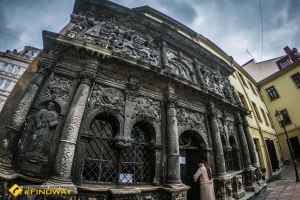
On Rynok Square stands the Black Mansion — a sandstone building that really is black (centuries of soot from coal fires never washed away). Legend says an Italian apothecary who lived here in the 17th century sold his soul to the devil in exchange for an immortality elixir. The devil, as usual, cheated. The apothecary died, and the house turned black. Neighbouring townhouses reported strange wall-cracking noises right into Soviet times.
3. Underground Lviv — the city beneath the city
Beneath old Lviv lie hundreds of metres of underground corridors, cellars, wine vaults and medieval sewers. One of the most accessible sections — the medieval cellars of the Museum of the History of Religion — can be explored with a guide. It is said that around 70% of the city’s subterranean cavities remain undescribed. Lvivians joke that half the centre could collapse at any moment — and indeed, from time to time, it does.
Top sights of Lviv
Rynok Square
The heart of Lviv and one of the most beautiful squares in Central Europe. Forty-four townhouses, each with its own history — Italian, Armenian, Polish, Jewish merchants built their homes here over centuries. In the centre stands the Town Hall, which you can climb for the best panorama of the city. See Rynok Square.
High Castle
The highest point in Lviv (413 m) and the best viewpoint in the city. The castle itself is long gone — only a fragment of a 14th-century wall remains. What does remain is a park, benches, and a panorama that turns anyone into a tourist. Climbing up at sunset is non-negotiable. See High Castle.
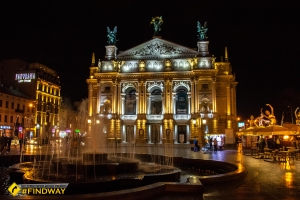
Lviv National Opera
One of the most beautiful opera houses in Europe, built in 1900 in Viennese Neo-Baroque style — with gilding, bronze and frescoes. The cheapest gallery ticket costs less than an espresso. See the Lviv Opera.
Pharmacy Museum «Under the Black Eagle»
The oldest operating pharmacy in Europe, founded in 1735. Inside: 18th-century prescriptions, scales, alembics, dried herbs and portraits of apothecaries. A unique place where you can buy «iron wine» made to a 200-year-old recipe. See the Pharmacy Museum.
Chapel of Boim
A small gem of a chapel beside the Latin Cathedral, entirely covered in white stone carvings inside and out. Every centimetre is Biblical scenes, symbols and portraits of patrons. Art historians call the Chapel of Boim one of the finest examples of Mannerism in Europe. See the Chapel of Boim.
Lychakiv Cemetery
Not a cemetery but an open-air museum. Here lie Ivan Franko, Markiian Shashkevych, Ivan Krypyakevych, Solomiya Krushelnytska, Yaroslav Stetsko and thousands of other distinguished Ukrainians, Poles and Austrians. Sculptures, crypts, family mausoleums — the 19th century in concentrated form. Best visited in autumn, with leaves underfoot and complete silence. See Lychakiv Cemetery.
Shevchenkivsky Grove
An open-air museum on the outskirts of Lviv: real wooden churches, cottages, smithies and mills brought from across Galicia, Boyko country and Lemko land. You can spend an entire day wandering, peering through windows, touching oak beams and listening to century-old timber creak. Ideal with children. See Shevchenkivsky Grove.
House of Organ and Chamber Music
A former Church of Mary Magdalene that Soviet authorities converted into a concert hall in the 1960s — they only spared it because an organ was installed. Today Bach, Handel and Lviv Baroque music fill the space on weekday evenings, while light from stained-glass windows falls on the cobblestones outside. House of Organ and Chamber Music — not yet described on the site as a separate page.
St George’s Cathedral
The main temple of the Ukrainian Greek Catholic Church, an 18th-century Baroque gem on its own hill. This is where the metropolitan conducted services for centuries, and where in 1989 the restoration of the legal Greek Catholic church was proclaimed. Architect: Bernard Meretyn, who also built the town hall in Buchach. St George’s Cathedral — not yet described on the site as a separate page.
Stryiskyi Park
Lviv’s largest and most beautiful park, with a fountain, ponds and century-old trees. In 1894 the Galician Regional Exhibition was held here — a local «Expo» that launched Lviv as a European tourist brand. Perfect for an afternoon stroll. See Stryiskyi Park.
Pinzel Sculpture Museum
Johann Pinzel — the Lviv Michelangelo of the 18th century, a sculptor-enigma whose date of birth and origin remain unknown. His works are expressionism in wood that leaves visitors speechless. The museum in the former Church of the Clarisses is one of the most powerful art venues in the city. Pinzel Sculpture Museum — not yet described on the site as a separate page.
Dominican Cathedral
One of the largest churches in Lviv, with an imposing Baroque interior. See the Dominican Cathedral.
Coffee Mine
The most theatrical coffee experience in Lviv: descend to a «mine» on Rynok Square, order your coffee in character, and surface back into the 21st century ten minutes later. See Coffee Mine.
City itineraries
Itinerary 1. Lviv in one day (essential highlights)
Start at Rynok Square with a morning coffee and a climb up the Town Hall. Then: Pharmacy Museum, a walk to Chapel of Boim and Dominican Cathedral. Lunch near Coffee Mine. Afternoon: climb to High Castle for sunset, then an evening at the Opera.
Itinerary 2. Lviv in two days (full programme)
Day 1 as in Itinerary 1: Rynok Square, Pharmacy Museum, Chapel of Boim, High Castle, Opera in the evening. Day 2: morning at St George’s Cathedral for a service, then the Pinzel Sculpture Museum, evening at the House of Organ Music. In between: Lychakiv Cemetery and a stroll through Stryiskyi Park.
Itinerary 3. Sacred Lviv
For those who love churches and fine acoustics: St George’s Cathedral → Bernardine Monastery → Dominican Cathedral → Ruins of the Golden Rose Synagogue → Jesuit Church. Five faiths in one walking day.
Itinerary 4. Coffee-house Bohemian Lviv
Start at Coffee Mine on Rynok Square with the «descent into the mine» ritual. Then the Beer History Museum (since 1715), Kryivka with the password on entry, and an evening in one of the Jesuit courtyards. Not a route for those in a hurry.
Itinerary 5. Lviv with kids
Shevchenkivsky Grove for a full morning → lunch → the Children’s Railway or Zoo → evening in Stryiskyi Park with ducks and ice cream. No museums, no queues, with room to run.
Must-do in Lviv
- Drink coffee on Rynok Square at seven in the morning, before the city wakes up. It is a completely different city, honestly.
- Try Lviv cottage-cheese pancakes with raisins and Galician potato pancakes — not in a tourist chain, but in a coffee house near Lychakiv.
- Buy a hand-painted chocolate bar at «Lviv Handmade Chocolate.» The unofficial souvenir number one.
- Hear the organ at the House of Organ Music. Bach in a former church — a completely different sound.
- Climb High Castle at sunset — the best angle on the Old Town.
- Order a bottle of «Lvivske» craft beer at the Beer History Museum — the oldest working brewery in Galicia, since 1715.
- See a performance at the Opera from the gallery. The cheapest ticket in the country for the most beautiful stage.
- Step into one of the Lviv courtyards on Virmenska or Staroievreiska streets — a separate world of hanging laundry and cats on balustrades.
- Light a candle in St George’s Cathedral — even if you are not religious. This is a place of memory for the entire Greek Catholic Ukraine.
- Buy coffee from «Svit Kavy» or «Kofeyin» — beans from a Lviv roastery. The best edible souvenir.
- Walk Lychakiv in autumn — leaves underfoot and silence deep enough to hear your own thoughts.
- Touch the wall of the Black Mansion for luck — every Lvivian does it, even those who don’t believe.
Lviv officially has more than 1,500 architectural monuments. At one per day, a complete tour would take over four years. The «see everything» strategy simply does not work — choose what you love.
Frequently asked questions
What to see in Lviv in one day?
The essential circuit: Rynok Square → Chapel of Boim → Pharmacy Museum → lunch → High Castle → evening at the Opera.
What to see in Lviv in two days?
Day 1: historic centre (Rynok Square, Opera, High Castle, Pharmacy Museum). Day 2: St George’s Cathedral, Lychakiv Cemetery, Shevchenkivsky Grove, and in the evening the organ in the Church of Mary Magdalene.
Where to go in the evening in Lviv?
To the Opera or an organ concert. For atmosphere: Kryivka on Rynok Square (password on entry) or one of the coffee houses around the Town Hall. In summer: jazz on a terrace.
Where to go with kids in Lviv?
Shevchenkivsky Grove, Stryiskyi Park, the Children’s Railway, the Zoo, the Circus.
Is it safe to visit Lviv now?
Lviv is Ukraine’s westernmost regional city, far from the front line. Missile strikes have targeted infrastructure (energy, warehouses); tourist sites have not been affected. Before travelling, monitor air-raid warnings via the official «Povitriana Tryvoga» app.
What is the best season to visit Lviv?
Late April to October for walks, festivals and coffee-house terraces. December to early January for the Christmas market and mulled wine. Worst: November — fog, rain and mud underfoot.
What are the most famous dishes of Lviv?
Lviv cottage-cheese pancakes, Galician potato pancakes, Galician-style ham, borscht with ear-shaped dumplings, «Lviv sandwiches,» potato pancakes with sour cream. For dessert: handmade chocolate, honey cake. With everything: coffee.
What to bring home from Lviv?
Chocolate from «Lviv Handmade Chocolate,» coffee from «Svit Kavy» or «Kofeyin,» ceramics, a bell from the Town Hall workshop, a book by Yuri Andrukhovych or Lyubko Deresh. The best souvenir is one that smells of something.
Lviv is a city you have to return to. Not merely because one visit can never be enough (that is an axiom), but because Lviv is a different city each time. The same courtyard in autumn and in summer is two different courtyards. The same coffee house at seven in the morning and at seven in the evening is two different worlds.
If you haven’t decided where to start — start with a coffee house. In Lviv that isn’t a break in the itinerary; it is the main item on it.
JoomShopping Download & Support