


- You are here:
-
Sights by Regions

- Kyiv region
Kyiv region


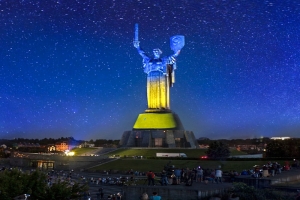

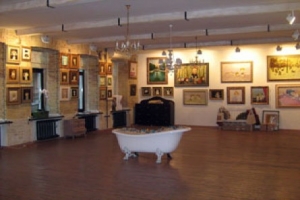

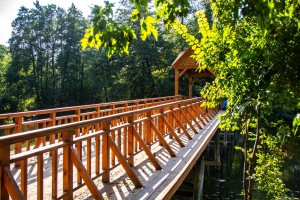

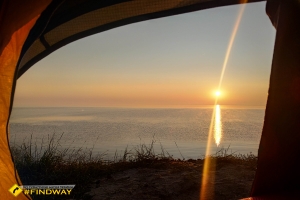

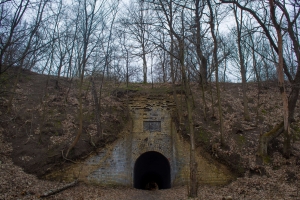

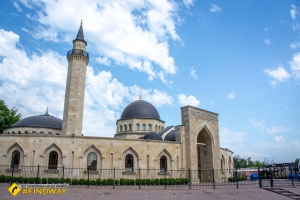
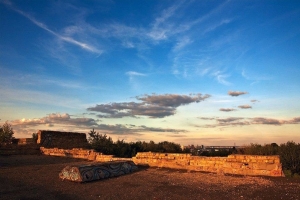



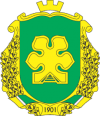
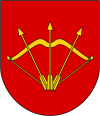



Kyiv Oblast is a region that lives in two rhythms at once. One is metropolitan: morning metro, coffee on the way to work, evening traffic on the Zhytomyr highway. The other is deeply Ukrainian and millennia-old: the Polissia wetland forests, the Porossia lands with their Haidamak songs, the Middle Dnipro with its hetman capitals. And the distance between the two is no more than an hour's drive.
Around Kyiv, as if in orbit, you find Bila Tserkva with one of the most beautiful parks in Europe, Pereiaslav with thatched hetman homesteads, Bohuslav with the granite canyon of the Ros River, and the Kyiv Sea with fishermen and gulls. And then there are the towns whose names the whole world learned by heart after 2022: Bucha, Irpin, Hostomel, Borodianka. Kyivshchyna carries all its pages simultaneously.
Region card
| Administrative centre | Kyiv (administrative centre of the oblast, capital of the state) |
| Area | 28,131 km2 |
| Population | ~1.8 million (excluding Kyiv); the greater metro area with Kyiv is ~5 million |
| Historical lands | Polissia (north), Porossia (centre-south), Middle Dnipro; the core of Kyivan Rus |
| Main rivers | Dnipro, Desna, Prypiat, Ros, Teteriv, Irpin |
| When to visit | April–October for nature and parks; December–January for Christmas markets in Bila Tserkva and Pereiaslav |
In this article
- What kind of place this is and why people travel here
- Geography, landscapes, climate
- History in brief
- Legends and folklore of the region
- Places of remembrance from 2022
- Top sights of the oblast
- Day trips and weekend routes
- Things you must do
- FAQ
What kind of place this is and why people travel here
Kyivshchyna is Ukraine's most historically dense region by sheer geography. This is where Prince Kyi founded Kyiv, where Volodymyr the Great baptised Rus, where Hetman Bohdan Khmelnytskyi sealed his controversial agreement with the Muscovite tsar at Pereiaslav, where Shevchenko wrote "Kobzar," where the Cossack Sich camps once stood, and where the Ukrainian People's Republic both began and ended. Every defining moment in Ukrainian history happened somewhere on this land.
People come here for three reasons. First: a weekend escape from Kyiv — when the city starts to feel heavy and you don't want to go far, the Alexandria arboretum in Bila Tserkva comes to the rescue. Second: Ukrainian identity — Pereiaslav, Bohuslav, Kaniv are places where Ukrainian culture is literally written into the landscape. Third, the new one: remembrance of 2022 — Bucha, Hostomel, Borodianka, Irpin have become places of pilgrimage not for tourists but for witnesses and participants.
Geography, landscapes, climate
Kyivshchyna straddles two landscape worlds. In the north is Polissia: pine forests, peat bogs, marshes, slow rivers, and wooden churches. Here the oblast borders the Chornobyl Exclusion Zone and Belarus. In the south is the forest-steppe of Porossia: open fields, black soil, the winding banks of the Ros and Tiasmyn rivers, orchards, and old Cossack settlements.
A particular geographical gem is the Ros River Canyon near Bohuslav — one of the few places in flat Ukraine where a river has cut a granite gorge, its walls 70–100 metres apart. In the north of the oblast lies the Kyiv Sea (Kyiv Reservoir), created in 1965. Its 922 square kilometres of water are prime catfish and pike-perch territory, and the natural boundary where Kyiv's suburbs end.
When to visit. The Alexandria arboretum and Sofiivka (which is technically in Cherkasy Oblast but nearby) are at their best from April through October — from spring bloom to golden autumn. Bohuslav and the Ros Canyon are finest in late May and September. The museums of Pereiaslav and Bila Tserkva are open year-round. Winter Kyivshchyna has its own appeal: Christmas markets, and the deep silence of Polissia villages under snow.
History in brief
Kyivshchyna was the nucleus of Kyivan Rus from the late 9th century. From here, princes Oleh, Volodymyr the Great, and Yaroslav the Wise built the first great state of the eastern Slavs. After the Mongol devastation of 1240 the region declined, but a century later it recovered under the Grand Duchy of Lithuania, and later under the Polish-Lithuanian Commonwealth.
In the 17th century the land became a theatre of Cossack wars. Pereiaslav, 1654 — the city where Hetman Khmelnytskyi signed an agreement with the Muscovite tsar that remains one of the most contested pages in Ukrainian history. Bila Tserkva, 1651 — another significant hetman treaty. Bohuslav and Korsun — centres of the 18th-century Haidamak movement, the Koliyivshchyna uprising led by Zalizniak and Honta.
In the 19th century the region belonged to the Russian Empire, but it was here that a new Ukrainian culture took root: Pereiaslav was Shevchenko's town, Bila Tserkva the ancestral seat of the Branitska family, and Kyiv the home of the Cyrillo-Methodian Brotherhood. The 20th century brought the Ukrainian People's Republic, Soviet terror (Bykivnia), the Holodomor, the Second World War, Chornobyl (the northern part of the oblast), and independence.
2022 wrote its own chapter in the region's story: from 24 February until the end of March, Russian forces occupied a large part of northern Kyivshchyna in an attempt to take Kyiv. Their withdrawal in late March and early April revealed Bucha, Irpin, Hostomel, and Borodianka to the world. The Battle of Kyiv became one of the defining victories of the war's first year.
In any global ranking of "most historically dense regions," Kyivshchyna sits in the top ten alongside Tuscany, Campania, the Loire Valley, and central Hesse. Just dig into any hillock — you'll find a layer.
Legends and folklore of the region
Kyivshchyna has accumulated legends from three eras — the princely age, the Cossack age, and the present. Here are three of them.
1. Countess Oleksandra Branitska and "her" avenue
The Alexandria arboretum in Bila Tserkva is named for Countess Oleksandra Branitska, wife of a Polish magnate, who laid out the park in 1793. Legend has it that every morning in the mist, Oleksandra in a white dress walks one of the park's avenues — checking that all the trees are still in place. Old park guides claim to have seen her most often. The park itself invites the legend: 200 years old, 297 hectares, a labyrinth of paths — paradise for any ghost who knows the layout.
2. Haidamaky in the Ros Canyon
The Bohuslav district was the heart of the Haidamak movement in the 18th century. In the narrow, rocky Ros Canyon, the Haidamaky (Ukrainian Cossack rebels) hid from Polish troops and slipped out at night on their missions. Locals say that on certain nights you can still hear the dry clatter of horses' hooves and Cossack songs echoing below the cliff edge — but no one is ever visible, because the sounds come from within the rocks, not from behind them.
3. Shevchenko who survived the bombardment
The region's newest legend. In March 2022 Russian shells nearly levelled the centre of Borodianka — including the statue of Taras Shevchenko that stood on the main square. The bronze poet's head remained on its pedestal with a bullet hole in the temple. That image — a monument that survived air strikes only to be shot by an occupier's bullet — became one of the defining visual symbols of the war. The pedestal has since been restored; the bullet hole is left unrepaired. The local folk name: "The Taras Who Would Not Bend."
Places of remembrance from 2022
Kyivshchyna is the first region in Europe to have systematically understood itself as a memorial region of a 21st-century war. These are not tourist attractions in the conventional sense — they are places people come to understand, not to be entertained.
Bucha. The town whose name became a synonym for war crimes. A memorial on the Avenue of Heroes of Ukraine, the local church with the mass burial site, and a rebuilt town centre. Bucha is represented on the website as a category, with several locations.
Irpin. A Kyiv suburb through which the defensive line on the Kyiv axis ran. The destroyed Palace of Culture, the bridges over the Irpin River, and the "road from Romanivka" that became a symbol of civilian evacuation under fire.
Hostomel. The Hostomel aerodrome was the first target attacked by Russian paratroopers on 24 February 2022. The AN-225 "Mriia" — the world's largest cargo aircraft and a symbol of Ukrainian aviation engineering — burned here. "Mriia" means "Dream" in Ukrainian. The aircraft's wreckage is preserved in a special hangar, awaiting the reconstruction of a second AN-225 that has been under construction since the 1980s. Hostomel does not yet have a dedicated page on this website.
Borodianka. The town whose central residential blocks were destroyed by Russian air strikes in the first days of the war. The surviving Shevchenko monument with a bullet in its temple, Banksy murals (several of them) painted on the walls of ruined buildings, and restored apartment blocks with white memorial plaques where people died. Borodianka does not yet have a dedicated page on this website.
Bykivnia. In a separate category stands the memorial to the victims of Stalinist terror at Bykivnia (on the northern edge of Kyiv, formally in Kyiv Oblast). Around 100,000 people shot in 1937–1941 are buried here. Bykivnia does not yet have a dedicated page on this website.
Top sights of the oblast
Alexandria arboretum in Bila Tserkva
The region's top travel highlight. The Alexandria arboretum is one of the most beautiful landscape parks in Europe, founded in 1793 by Countess Branitska. 297 hectares, 2,000 species of plants, artificial lakes, bridges, rotundas, and Romantic-era artificial stone ruins. The showpiece is the "Luna" colonnade, which echoes your voice back to you seven times. The site does not yet have a dedicated page on this website, but it is Kyivshchyna's undisputed must-see number one.
Bila Tserkva — the historic Branitska town
Bila Tserkva has more to offer than its park: the 19th-century Transfiguration Cathedral, the unique St John the Baptist Roman Catholic Church with its organ hall, and the historic BRUM Trading Arcades. The town is compact — perfect for a half-day walk after the arboretum.
Pereiaslav-Khmelnytskyi — the hetman capital
Pereiaslav-Khmelnytskyi is one of the oldest towns in Kyivshchyna (first mentioned in 907) and a pivotal site in 17th-century Ukrainian history. The centrepiece is the Museum of Folk Architecture and Life of the Middle Dnipro — a vast open-air skansen of thatched cottages, churches, windmills, and Cossack homesteads.
Bohuslav and the Ros Canyon
Bohuslav is a small town in the south of the oblast with the region's most unusual natural attraction: the Ros Canyon, a granite gorge with 20-metre cliff walls, rapids, whirlpools, and Haidamak legends. It is one of the few spots in flat Ukraine where you can kayak through properly fast water. The site does not yet have a dedicated page on this website, but it is one of Kyivshchyna's most original routes.
The Kyiv Sea near Liutezh
The Kyiv Sea is the most accessible large body of water for Kyivites. Beaches, fishermen, and a sea horizon just 30 minutes from the Maidan. On the right bank is the Liutezh Bridgehead memorial — the crossing from which the liberation of Kyiv began in 1943.
The unusual village of Kovalivka
Kovalivka is a living ethno-village museum recreated as an ideal Ukrainian village of the 19th to early 20th century: thatched cottages, a working smithy, potters, windmills, and a Cossack camp. Nearby is the Saint Anastasiia Convent. A great option for families with children.
The village "Hollywood" at Nizhylovychi
Nizhylovychi is a village built as an outdoor film set for Ukrainian productions: a Western main street, a Cossack fortress, and an English-style market town. A great location for photoshoots and family fun.
The Antonov aerodrome and the memory of Mriia
Hostomel was home to the legendary AN-225 "Mriia" ("Dream") — the largest cargo aircraft ever built. On the first day of the full-scale invasion, Russian strikes destroyed its hangar. The aircraft's wreckage is kept in a dedicated hangar, awaiting the completion of the second AN-225, which has been under construction since the 1980s. There is no dedicated page on this website yet, but "Mriia" is one of the most emotionally resonant symbols of contemporary Kyivshchyna.
Day trips and weekend routes
Route 1. Bila Tserkva — one full day
The classic Kyiv day trip south (~80 km). Start with Alexandria arboretum for 3–4 hours, walking every avenue. Lunch in town. Afternoon: the historic centre of Bila Tserkva — the Transfiguration Cathedral, the Trading Arcades, an organ concert at St John the Baptist Church. Back in Kyiv by evening.
Route 2. Pereiaslav — one full day
East from Kyiv (~95 km). A full day in Pereiaslav-Khmelnytskyi, with the Museum of Folk Architecture (allow at least 3–4 hours). Lunch at a local cafe with a view over the Dnipro. If time allows on the way back, stop in at Kovalivka.
Route 3. The Remembrance Route
Not a sightseeing tour but a conscious journey of reflection. Bucha with its memorial and rebuilt streets → Irpin with the bridge and the Palace of Culture → Hostomel with the wreckage of Mriia → Borodianka with the Shevchenko statue and Banksy murals. One day for grasping the scale of what happened here.
Route 4. Bohuslav and the Ros Canyon (weekend trip)
Deeper south — Bohuslav for a day and a half. Day 1: the Ros Canyon, the town market, relaxing on the riverbank. Day 2: on the way back, stop at the Saint Anastasiia Convent in Kovalivka. Best for those who want an active trip near the water.
Route 5. The Kyiv Sea and Polissia Kyivshchyna
The northern direction: the Kyiv Sea at Liutezh, then Polissia villages, the Nativity of the Theotokos Church in Hoholiv, and the village "Hollywood" at Nizhylovychi. A day in nature and among photogenic film-set scenery.
Things you must do in Kyivshchyna
- Walk the avenues of Alexandria arboretum in Bila Tserkva — a rite of passage for any Kyivite and a must-see for every visitor.
- Shout into the "Luna" colonnade in Alexandria and count the echoes. Seven is normal.
- Eat a genuine banosh in Pereiaslav — not the version served in Kyiv restaurants, but the village original: corn porridge with sheep's bryndza cheese.
- Step inside a cottage-museum in the Pereiaslav skansen and see what ordinary Ukrainian life looked like in the 18th century.
- Hear the organ in Bila Tserkva's Roman Catholic church — one of the finest organ halls outside Kyiv.
- Stand beside Mriia's remains at Hostomel — even the charred wreckage. It is the moment you fully understand what the words "the price of freedom" mean.
- Walk the Avenue of Heroes of Ukraine in Bucha in silence. No words are needed here.
- Buy Bila Tserkva bread at the local market — the town's bakeries are widely considered the best in the region.
- Paddle or walk the Ros Canyon at Bohuslav — by kayak or simply along the bank.
- Buy a fridge magnet of "The Taras Who Would Not Bend" — sold in Borodianka, it is a more powerful memorial than any official postcard.
Growing in the Alexandria arboretum is an oak said to be over 400 years old. It was here before the Branitska family, before the park, before Bila Tserkva in its present form. In fact, it was here when this territory was still called Poland.
Frequently asked questions
What to see in Kyivshchyna on a day trip from Kyiv?
The most popular choice is Bila Tserkva with the Alexandria arboretum. Another excellent option is Pereiaslav-Khmelnytskyi with its open-air folk architecture museum. Both are 80–100 km from the capital and work comfortably as a single day.
What is the Alexandria arboretum?
One of the most beautiful landscape parks in Europe, founded in 1793 by Countess Oleksandra Branitska in Bila Tserkva. 297 hectares, over 2,000 plant species, artificial lakes, rotundas, Romantic-era stone ruins, and the "Luna" colonnade with its sevenfold echo. Open year-round; most beautiful in May and October.
Is it safe to travel to Kyivshchyna right now?
Kyivshchyna is far from the front line; the main tourist sites are safe and open. Occasional missile strikes on infrastructure (energy facilities, depots) do occur. Before you go, monitor air raid alerts via the official "Air Alarm" (Povitriana Tryvoha) app.
Where to go with children in Kyivshchyna?
Kovalivka with its ethno-village and Cossack camp, the village "Hollywood" with its film sets, the Alexandria arboretum (a full-day visit easily), and the Pereiaslav skansen. The city park in Bucha has been fully restored and functions as a normal public park.
What war memorials are there in Kyivshchyna?
The Avenue of Heroes of Ukraine in Bucha and the local church with the mass burial; the memorial by the destroyed bridge in Irpin; the hangar with the wreckage of AN-225 Mriia in Hostomel; the Shevchenko statue with a bullet in its temple and the Banksy murals in Borodianka; the memorial to Holodomor victims at Bykivnia.
What do Bucha, Irpin, and Borodianka look like today?
Most of the housing stock in Bucha and Irpin has been rebuilt. A few sites are deliberately preserved as "ruin memorials" — including part of the Palace of Culture in Irpin. Borodianka is partially rebuilt — the central apartment blocks are still in progress; the Banksy murals have become a tourist attraction in their own right.
What are the most famous dishes of Kyivshchyna?
Chicken Kyiv (a butter-filled breaded chicken fillet, invented in a Kyiv restaurant around the turn of the 20th century), "Kyiv cake" (a layered hazelnut meringue and cream cake), charlotte cake Kyiv-style, and Pereiaslav varenyky (dumplings) with sour cherries. In the south of the oblast — traditional Polissia and Podillia dishes: halushky (dumplings in broth), pampushky (garlic bread rolls), and borscht.
Kyivshchyna is a region that refuses to settle on one mood. You can come on a Sunday for the arboretum and a romantic stroll, then return the next day for Bucha and a quiet hour at the memorial. That tension is what makes it alive: it will not be reduced to a single dimension.
If you live in Kyiv — come to Kyivshchyna every month. If you are visiting — give it at least two days after the capital. Most of what Ukraine has become began right here.
JoomShopping Download & Support