


- You are here:
-
Sights by Regions

- Zakarpattia region
Zakarpattia region

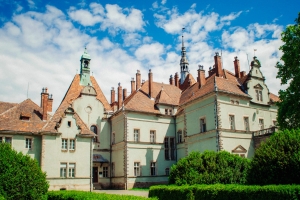


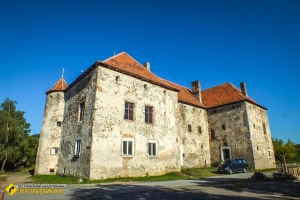






Imagine Japan, Hungary and the Carpathians agreeing to create one shared region. A strange idea — yet that is exactly what Zakarpattia looks like: in spring, sakura blossoms here (real ones, 300 trees lining the Uzhhorod embankment), cafes serve bograch with paprika, and an hour's drive from the city you can stand on a ridge with four countries visible at once.
This is the westernmost and least "typically Ukrainian" region of Ukraine. For a thousand years it was a Hungarian province, then part of Austria-Hungary, then Czechoslovakia, then the USSR. Each left something behind: castles, wines, thermal pools and an accent unlike anything else.
Region at a glance
| Administrative centre | Uzhhorod |
| Area | 12 800 km2 |
| Population | ~1.25 million |
| Historical land | Zakarpattia (Subcarpathian Ruthenia) |
| Main rivers | Tysa, Latorytsia, Uzh, Borzhava |
| Best time to visit | April — sakura and narcissi; May—June — mountains; October — grapes and autumn foliage; winter — skiing and thermal springs |
In this article
- What kind of region is this
- Geography and climate
- History
- Legends
- Top sights
- Itineraries
- Must-do
- FAQ
What kind of region is this and why people come here
Zakarpattia is the only region of Ukraine where you can simultaneously hear Ukrainian, Hungarian, Romanian and Romani at the market. Here 80.5% are Ukrainian, but nearly 12% are Hungarian (the largest Hungarian diaspora outside Hungary), 2.6% are Romanian, and a dozen smaller communities besides. This is not a "problem" or mere "local colour" — it is simply a region that was never monoethnic.
People come here for different reasons. Some come for the castles: there are over twenty, and many stand right along the roads between towns, requiring no effort to find. Others come for the thermal springs — more than a dozen in Zakarpattia, none of which freeze even in February. Still others come for the mountains, mushrooms, wine from the Berehove area, or simply for the feeling of having stepped briefly outside the familiar.
Zakarpattia is the only region of Ukraine where sakura grows. Three hundred Japanese cherry trees along the Uzh River turn Uzhhorod into something between Kyoto and Zakarpattia. If you have not seen April here — you have not seen April at all.
Geography, landscape, climate
The region divides cleanly into two halves by terrain: the north is the Carpathian Mountains (the Svydovets, Chornohora and Polonyna Rivna ridges), the south is the Zakarpattia lowland. The elevation difference ranges from 100 metres above sea level to over 2,000. The climate is therefore milder than anywhere else in Ukraine: winters without Siberian cold, an early spring, and an autumn that stretches through November.
The region's main river is the Tysa, which rises in the Ukrainian Carpathians and carries its waters through Hungary to the Danube. Its tributaries the Latorytsia, Uzh and Borzhava lend their names to valleys and routes. The road from Mukachevo into the mountains follows the Latorytsia valley — from the bus window you can see vine-covered hills and, right on the slopes, the ruins of medieval castles.
Best seasons: April — sakura and the start of the narcissus bloom; May — narcissi at their peak; June–September — mountain hiking; October — grape harvest and Berehove wine; December–March — thermal baths and skiing.
History in brief
A thousand years not its own
From the late 9th to the early 20th century, Zakarpattia was part of the Kingdom of Hungary — first as a frontier fortress belt, then as an ordinary province. No special rights, no autonomy. The locals were called "Rusyns" and "Greek Catholics" — these were the main identifiers that set them apart from Hungarians and Poles alike.
After the collapse of Austria-Hungary in 1918, Zakarpattia briefly became Subcarpathian Ruthenia — an autonomous part of Czechoslovakia. These were arguably the most liberal years in its history: its own constitution, schools in the native language, an open border with Prague. It lasted twenty years — until 1939, when Hungary annexed the region with Hitler's tacit approval.
The Soviet chapter and independence
In 1944, Soviet forces occupied Zakarpattia. A local "people's council" proclaimed reunification with Soviet Ukraine, and from 1945 it became the Zakarpattia Oblast of the Ukrainian SSR. Borders were redrawn, names renamed, some Hungarian and Czech heritage erased. But the castles remained. The wines too. And the character of a land in which so much had blended together went nowhere.
Today Zakarpattia is one of Ukraine's safest regions for tourism: far from the front line, well connected to the rest of the country by rail and road.
Legends and mysteries of the region
1. The Pohana Diva and the walls of Nevytske Castle
They say that the walls of Nevytske Castle were mixed not with lime but with human blood — only that would make them stand forever. The castle's builder, known as the Pohana Diva (the Wicked Maiden), obtained this recipe from a witch and duly carried it out. The name "Nevytske," according to another legend, comes from the word for "bride": when the Tatars attacked, girls were hidden here. The castle does indeed stand on a cliff above the Uzh in an elliptical shape — resembling Irish stone fortresses more than any Ukrainian fortification.
2. Synevyr: the lake born of tears
A count had a daughter named Hana; Hana fell in love with a shepherd named Vyr. The count found out — and ordered the shepherd killed. They say Hana wept so long and so abundantly that a lake formed in the mountains. "Hana's blue eyes" plus "Vyr" — that is where "Synevyr" comes from. The small island in the middle of the lake is still called "Lovers' Island" by locals. The legend is touching and tragic — and has never once stopped hundreds of tourists from photographing themselves here every single day.
3. Molfars: the living shamans of the Carpathians
Unlike most regions where witches are folklore, in the Carpathians molfars are a living phenomenon. A molfar is a person who can speak to nature: stop storms, heal illness, cast or lift a spell. The best-known of the modern molfars was Mykhailo Nechai from the Verkhovyna area, documented by filmmakers from around the world. You cannot go looking for a molfar in the mountains — but they say that if one notices you, he will give a sign.
Top sights of Zakarpattia Region
Palanok Castle, Mukachevo
The best-preserved castle in Ukraine. It stands on a volcanic hill 68 m high — a natural platform no architect could have invented. 130 rooms, three tiers of fortifications, a well 85 m deep that took 70 years to dig. It served as a prison from the 17th through the 20th century — among those imprisoned here was Ferenc II Rakoczi, who later had a monument erected beside the very same walls. Palanok Castle is the first reason to visit Mukachevo.
Uzhhorod Castle
Uzhhorod Castle is the oldest structure in the city; the first fortifications on this site appeared as early as the 9th century. Today it houses the Zakarpattia Regional Museum of Local History, with collections of folk costumes, icons and Hungarian artefacts. But even if museums are not your thing — climbing the walls for the view over the city is worth it regardless.
Nevytske Castle
15 km from Uzhhorod along the Uzh River — and suddenly on a cliff above the water the silhouette of a medieval castle ruin appears. Nevytske Castle was built in the 14th century and destroyed in the 17th by order of the Austrian emperor — so it would not fall into the hands of insurgents. An unusual elliptical wall plan, no restorers, nothing artificial. Pure romanticism and a hint of eeriness from the legend of the Pohana Diva.
Lake Synevyr
Ukraine's most famous mountain lake, situated at 989 m in the National Nature Park. The water is blue-green, icy even in summer, and the small island in the middle genuinely looks like something from a fairy tale. Around it stretch spruce forests and trails you could walk for hours. Synevyr is included in the "7 Natural Wonders of Ukraine" tourist route — and this is one of those cases where the title is deserved.
Valley of Narcissi, Khust
Near Khust, in the floodplain of the Khustets River, millions of wild narcissi bloom every May — the largest natural population in Central Europe. The Valley of Narcissi is a UNESCO biosphere reserve. It blooms for two to three weeks, and thousands of people make the trip during that time. Coming and missing the bloom is genuinely disappointing. Watch the flowering forecasts: local tourism groups publish weekly updates.
The Valley of Narcissi near Khust is the only natural population of this scale in Central Europe. During the bloom, several hectares of floodplain become a solid white carpet. It looks incredible. It smells even better.
Khust Castle. On the way to the narcissi you cannot miss the hill above Khust with the ruins of a 14th-century castle. Lightning struck the powder cellar in 1748 — since then the castle was gradually dismantled for building material. Walls and towers remain, but the view from them over the confluence of the Tysa and Rika rivers is one of the finest in the region.
Thermal springs. The Berehove, Kosyno and Velatyn thermal complexes are perhaps Zakarpattia's most "Hungarian" legacy. Water temperatures range from 36 to 42 degrees, with a different mineral composition at each spring. In winter, guests lie in a warm pool beneath falling snow — an entirely shameless pleasure.
Day trips and weekend itineraries
One day in Uzhhorod
Morning — the Uzh embankment and the sakura avenue (April). Then — Uzhhorod Castle and the regional history museum inside. On the way back — a 15-minute drive to Nevytske Castle above the Uzh. In the evening — Korzo Street and bograch at any restaurant in the centre.
Weekend: castles and mountains
Saturday: Uzhhorod → Mukachevo (Palanok Castle — at least 2 hours) → lunch in town → Berehove thermal springs or Kosyno. Sunday: early start for Lake Synevyr — stop in Mizhhiria on the way, then return via Khust with a detour to Khust Castle. A packed itinerary, but realistic in two days.
Nature itinerary (May)
Perfect for May: Valley of Narcissi near Khust (morning, before the crowds) → Khust Castle (climb for the view) → lunch in Khust → Velatyn thermal springs or Kosyno to finish the day. If time and energy allow — return via Vynohradiv with a stop at Kankiv Castle.
Must-do in Zakarpattia
- See the sakura in Uzhhorod. April, two weeks, the Uzh embankment. If you catch the peak bloom — you will understand why people come from across the country for it.
- Climb Palanok Castle in Mukachevo. 130 rooms, a 68-metre hill, views over the city and the Carpathians — all of it more than justifies the trip to Mukachevo.
- Get into a thermal pool. Berehove, Kosyno, Velatyn — take your pick. Under snowfall in winter — especially.
- Try bograch. Hungarian goulash cooked over an open fire with pork, beef, paprika and homemade pasta. Served in a small cauldron. Best eaten in Mukachevo or Berehove — the recipe is closest to the original there.
- Make it to Lake Synevyr. Even if you do not love mountain hiking — there is a road for cars almost to the water's edge. No excuses.
- Catch the Valley of Narcissi in May. Track the bloom forecast, arrive in the morning, bring a thermos. It looks like a picture you would not want to edit.
- Drink Zakarpattia wine. The Berehove or Mukachevo wine-growing region is the southernmost winemaking zone in Ukraine. Varieties include Troyanda Zakarpattia, Rkatsiteli and Leanka. Palinka (plum brandy) is also worth trying.
- Buy a Hutsul souvenir. Wood-carved items, lizhnyky blankets, ceramic pitchers — at any market in Uzhhorod or Kosiv.
Frequently asked questions
What can I see in Zakarpattia in one day?
For a single day — Uzhhorod plus Mukachevo. Morning in the city: the embankment, the sakura avenue (April), Uzhhorod Castle. Then 45 minutes to Mukachevo and a few hours at Palanok Castle. On the way back, stop at Nevytske Castle — it is right on the road and takes about an hour.
When is the best season to visit Zakarpattia?
It depends on what you are looking for. April — sakura and narcissi (book ahead, it gets very busy). May–June — green mountains, fresh scenery, fewer crowds. October — grapes, warm weather, golden leaves in the mountains. December–February — thermal springs and small ski slopes.
Is it safe to travel to Zakarpattia right now?
Zakarpattia is one of Ukraine's calmest regions, far from the front line. Tourist infrastructure is operating, hotels and restaurants are open. Follow official SESU channels and check the status before your trip — but the region is generally considered safe for domestic tourism.
Where to go with children in Zakarpattia?
Palanok Castle in Mukachevo — a real castle with towers and dungeons, children love it. The thermal complexes (especially Kosyno and Velatyn) have children's areas. Lake Synevyr is accessible even with small children — a paved path leads right to the water's edge.
What are the most famous dishes of Zakarpattia?
Bograch — Hungarian goulash on an open fire, a must. Banosh — cornmeal porridge with bryndza cheese and crackling (a Hutsul dish). Cabbage rolls in sour cabbage leaves. Homemade "dyoryoke" sausage and noodle soup. Palinka (plum or pear brandy) — the traditional digestif.
What souvenirs to bring from Zakarpattia?
Zakarpattia wine or palinka — the best souvenir, one that takes up no room in your heart but plenty in your luggage. Wood-carved tableware and figurines. Lizhnyky (thick woven blankets) from Hutsul villages in the Rakhiv area. Ceramic pitchers and bowls from Kosiv.
How much time do I need for Zakarpattia?
A minimum of three days to cover Uzhhorod, Mukachevo and some nature. A week — if you want to see both the castles and the mountains, the thermal springs and the Valley of Narcissi. Zakarpattia is one of those regions people return to: every season shows it differently.
Zakarpattia is unlike any other region in the country — and that is not a metaphor. The architecture genuinely is different, the food is different, the rhythm of speech is different, and the mountains are different. A thousand years of history separate from the rest of Ukraine produced something that does not even try to look like Kyiv or Lviv.
Come in April, when the Uzh embankment turns pink. Or in May, when the valley below Khust smells of narcissi. Or in winter, when Palanok Castle stands in the mist and you are lying in a thermal spring looking out at the Carpathians. There are enough options here — choosing the wrong one is almost impossible.
JoomShopping Download & Support