


- You are here:
-
Sights by Regions

- Kharkiv region
Kharkiv region


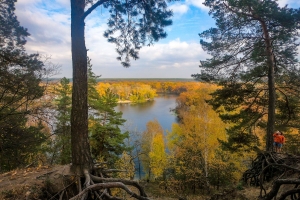





Kharkivshchyna is Slobozhanshchyna — steppe wind, forest-steppe giving way to open grassland, chalk cliffs above the Siversky Donets, Cossack earthworks instead of medieval castles, and two centuries of sloboda (free-settlement) Cossack self-governance instead of Polish magnates. Everything here is different from western Ukraine — not worse, not better, just different.
Since 24 February 2022, Kharkiv region has been living two parallel lives: one for travellers (the palaces of Sharivka and Staryi Merchyk, Chuhuiv with its Repin connection, the Zmiiv Cliffs) and one on the front line (Kupyansk, Vovchansk, Balakliia, Izyum). Some locations are reachable; others are not. This guide draws an honest line between the two.
Safety note. The north-eastern part of the region (Kupyansk, Vovchansk, and parts of Chuhuiv districts) is a front-line zone with shelling risk and movement restrictions. Western and southern Kharkivshchyna (Sharivka, Krasnokutsk, Zmiiv, Parkhomivka) is relatively safer, but still subject to periodic missile strikes. Before any visit, check the current situation through official channels and the air-alert app «Povitriana tryvoha» (Air Alert Ukraine).
Region at a Glance
| Administrative centre | Kharkiv |
| Area | 31 415 km2 (one of Ukraine’s largest regions) |
| Population | ~2.4 million (pre-2022); significantly lower now due to evacuation of front-line communities |
| Historical territory | Slobozhanshchyna (entirely); the heartland of Sloboda Ukraine in the 17th–18th centuries |
| Major rivers | Siversky Donets, Udy, Lopan, Kharkiv, Oskil |
| Current status | Front-line region. The north-east is partly on the contact line; the centre and south are under periodic missile threat |
| Best time to visit | May–October for palaces and nature; winter for art museums (Parkhomivka, Chuhuiv) |
In This Guide
- What this region is and why people come
- Geography, landscapes, climate
- History in brief
- Legends and mysteries
- Places of memory: 2022
- Top sights of the region
- Day trips and weekend routes
- Must-do experiences
- FAQ
What This Region Is and Why People Come
Kharkivshchyna is the Ukraine where you can hear the steppe wind. There are no Carpathian peaks here, no castles of the Golden Horseshoe route, no coastline. What there is — found nowhere else — is a ring of 17th-century sloboda colonies that Ivan Sulima, Ivan Vyhovskyi, and other Cossack leaders planted on the “Wild Field” between the spheres of influence of Muscovy and the Crimean Khanate. A sloboda was a free settlement that received tax privileges from the government — and the word gave an entire historical region its name.
Travellers come for four reasons. First: palace Slobozhanshchyna — the half-timbered fairy-tale palace at Sharivka and the Shidlovskyi manor at Staryi Merchyk. Second: art — Chuhuiv as the birthplace of Illia Repin, and the Parkhomivka museum with its collection spanning from Shevchenko to Picasso. Third: nature — the Zmiiv Cliffs above the Siversky Donets, the Homilsha Forests, the chalk hills of the Dvorichna district. Fourth, new since 2022: memory — Izyum, Balakliia, Kupyansk, and Skovorodnivka with its missile-struck museum.
Geography, Landscapes, Climate
Kharkiv region sits at the boundary of two natural zones: forest-steppe (centre and north) and steppe (south and east). Cutting through the region is the Siversky Donets — one of Ukraine’s longest rivers, flanked by chalk escarpments rising up to 60 metres. The most spectacular stretches are the Zmiiv and Homilsha cliffs.
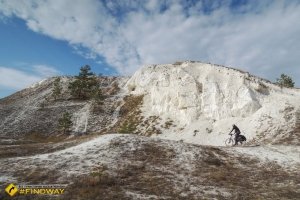
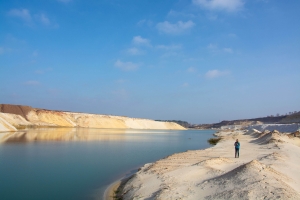
The region’s most surprising geological feature is the chalk outcrops of the Dvorichna district: white hills rising from the steppe like a southern-Ukrainian Dover. The chalk hills of Dvorichanskyi district are a geological rarity where Cretaceous-period strata reach the surface. Note: the Dvorichna district is currently a front-line area; access is restricted.
When to visit. The palaces and parks of Slobozhanshchyna are at their best from April through October. Peak months are May (rhododendrons in bloom at Krasnokutsk Arboretum) and September (golden steppe, cliffs above the Donets at their most dramatic). Winter Kharkivshchyna is quieter — the art museums, which need no sunshine, are open and worth the trip.
History in Brief
Sloboda Ukraine began to take shape in the mid-17th century, when Ukrainian Cossacks and peasants fled Polish rule and colonised the empty steppe borderlands. Kharkiv was founded in 1654 on the site of a Cossack fortification. A century later, the region had become one of five sloboda regiments — self-governing Cossack units with their own elected leaders.
In the 18th and 19th centuries, Slobozhanshchyna was a centre of literature and painting: the philosopher Hryhorii Skovoroda (1722–1794) lived and died here at Skovorodnivka, the painter Illia Repin was born at Chuhuiv in 1844, and the Kharkiv Literary School flourished with figures like Hulak-Artemovskyi and Kvitka-Osnovianenko. In 1805, Kharkiv University opened — the third in the Russian Empire after Moscow and Tartu.
1919–1934: Kharkiv served as capital of the Ukrainian Soviet Socialist Republic. It was here, in the 1920s, that the cultural renaissance known as the Executed Renaissance (Rozstriliane Vidrodzhennia) flourished — writers Mykola Khvyliovyi, Mykola Kulish, poet Maik Iohansen, theatre director Les Kurbas. It ended in the Holodomor famine of 1932–33 (Slobozhanshchyna was among the worst-affected areas) and the mass repression of 1937–38. During World War II, Kharkiv was occupied twice and liberated twice. In 1956, construction of the Kharkiv Nuclear Power Plant began at the village of Birky, but was halted after Chornobyl — public opinion shifted.
2022. On 24 February, Russian forces crossed the border from the Belhorod direction. Kharkiv held, but the northern and eastern districts (Izyum, Kupyansk, Balakliia) fell under occupation. The Kharkiv counteroffensive of September 2022 was one of the fastest operations of the war: roughly 8,000 square kilometres were liberated in a week. The Kupyansk and Vovchansk areas remain front-line zones.
In 1934, the Soviet authorities moved the capital of the Ukrainian SSR from Kharkiv to Kyiv. The official reason: “closer to the geographic centre of the republic.” The real one: to break up the Kharkiv intellectual elite, which had grown too independent. Within two years, most of that elite had been shot.
Legends and Mysteries of the Region
1. Skovoroda and His Epitaph
Ukraine’s most celebrated philosopher, Hryhorii Skovoroda, was buried in 1794 in the village then called Pan-Ivanivka, today Skovorodnivka. On the gravestone, per his own instruction, was carved: “The world tried to catch me, but it did not.” In 2022, a Russian missile struck his memorial museum — destroying the building in which Skovoroda had died. The cottage where the philosopher spent his final days survived. The world still hasn’t caught him — not even after the strike. The memorial is being restored.
2. The Tsar Who Survived at Spasiv Skyt
On 17 October 1888, near the village of Birky outside Kharkiv, an imperial train derailed: the express carrying Tsar Alexander III and his family went off the rails. Twenty-one people died, but the imperial family survived — legend has it the tsar held up the roof of the dining car with his bare shoulders while his family crawled to safety. A vast Spasiv Skyt monastery complex was built on the crash site. The Soviets partially demolished it in the 1940s, but the ruins still command the landscape with their sheer scale.
3. The “Russian Woodpecker” Near Kharkiv
A few kilometres from Zmiiv stands the Ionospheric Research Station — one of three Soviet sites in the Duga over-the-horizon radar system (the same system that gave the world the eerie “Russian Woodpecker” signal during the Cold War). Smaller than the famous Chornobyl-2 radar but still colossal. Soviet drivers entering the facility were told to say it was a “weather station”; on local maps the site was labelled a “children’s camp.” Long inactive now, the structure is largely intact.
Places of Memory: 2022
Kharkiv region was among the hardest-hit in Ukraine. Some sites are accessible and functioning as memorials; others are still too dangerous to reach.
Izyum. Izyum — a city in the south of the region — was under occupation from April to September 2022. After liberation, investigators found mass graves on the outskirts: more than 440 burials in a forest. Kremenets Hill — the highest point on the left bank of Ukraine — saw prolonged fighting. The city is now recovering and open to visitors.
Balakliia and Kupyansk. Balakliia was the first city liberated in the September 2022 counteroffensive. Kupyansk remains a front-line city with restricted access. Memorials are only beginning to take shape.
Skovorodnivka. A village 60 km south of Kharkiv, where Hryhorii Skovoroda died in 1794. On 6 May 2022, a Russian cruise missile pierced the roof of his memorial museum and destroyed most of the exhibition housed in the historic Kovalevsky palace. The original cottage where the philosopher died was undamaged. The memorial is under restoration and open to visitors. Skovorodnivka does not yet have its own page on the site.
Vovchansk. A city right on the Russian border, back on the front line since spring 2024. Vovchansk is listed on the site as a category, with an entry on the abandoned airfield. Access is currently dangerous.
Top Sights of the Region
Sharivka Palace and Park Complex
Sharivka is the region’s defining landmark. A half-timbered palace with towers, Gothic windows, marble staircases, and a 40-hectare park — as though lifted straight from a Hoffmann fairy-tale and dropped in the middle of the sloboda steppe. It belonged to the Koenig family, 19th-century sugar magnates. Most beautiful in May (rhododendrons in bloom) and September (park in full autumn gold).
Shidlovskyi Manor at Staryi Merchyk
Staryi Merchyk — another palace, the ancestral seat of the Shidlovskyi family in 18th-century classical style. Alexander Pushkin once stayed here; today the palace is in a precarious state, but the park and facades still impress. The atmosphere is perfect for fans of melancholy abandoned estates.
Krasnokutsk Arboretum
Krasnokutsk Arboretum is one of the oldest landscape parks in Left-Bank Ukraine, established in 1809 by the Karazin family. It holds over 240 tree species, including rare ginkgo and swamp cypress. Nearby are the underground cells of a 17th-century Orthodox monastery.
Chuhuiv — Birthplace of Repin
Chuhuiv is a small town 40 km from Kharkiv where Illia Repin was born in 1844 — painter of the iconic “Reply of the Zaporozhian Cossacks” and “Barge Haulers on the Volga.” The town has a memorial museum dedicated to him and a historic area known as the Chuhuiv Fortress, featuring an art gallery in the half-abandoned headquarters of military settlements. Chuhuiv is periodically under shelling; check the security situation before visiting.
Parkhomivka Art Museum
Parkhomivka Historical and Art Museum named after O. Lunov is a village museum with a world-class collection. It was founded by a local schoolteacher, Afanasii Lunov, who spent decades acquiring paintings. Today the collection includes works by Shevchenko, Aivazovsky, Malevych, Picasso, and Gauguin. One of the most underrated museums in all of Ukraine.
Zmiiv Cliffs and Homilsha Forests
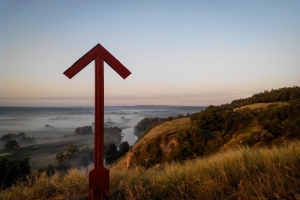
Zmiiv Cliffs are chalk escarpments above the Siversky Donets reaching 50 metres — one of Slobozhanshchyna’s most spectacular views, especially in autumn. Nearby lies Homilshanski Forests National Nature Park with Kozacha Hora and Korobovi Khutory. Arguably the best natural destination in the region for hiking and picnics.
Atomic Birky — The Unfinished Nuclear Plant
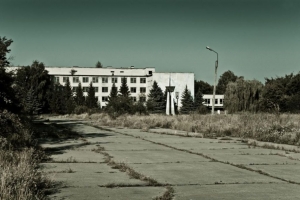
Atomic Birky is the unfinished Kharkiv Nuclear Power Plant at the village of Birky. Construction began in 1956 and was halted after Chornobyl, leaving behind the skeleton of the reactor building, a machine hall, and half-built nine-storey apartment blocks intended for plant workers. One of the most surreal urbex sites in Kharkivshchyna. Access is currently restricted due to proximity to the front line.
Spasiv Skyt — A Memorial Temple at a Disaster Site
Spasiv Skyt in the village of Spasove is a grand monastic complex built on the site of the 1888 imperial train disaster in which the family of Alexander III narrowly survived. The main cathedral was demolished by Soviet authorities in 1944, but the ruins impress by their sheer scale and atmosphere. One of the most overlooked heritage sites in Slobozhanshchyna.
Skovorodnivka
Skovorodnivka — a village 60 km from Kharkiv where Hryhorii Skovoroda died. Until May 2022, it housed a national memorial museum-estate with the philosopher’s original cottage and a manuscript collection. The Russian missile strike destroyed most of the palace building, but the cottage survived. The museum is being restored; Skovoroda’s grave — inscribed with “The world tried to catch me, but it did not” — remains undamaged. The site does not yet have its own page on the site.
Day Trips and Weekend Routes
Route 1. Palace Slobozhanshchyna — One Day
The classic western Kharkivshchyna loop. Morning: Sharivka Palace with its half-timbered towers and a stroll through the park. Lunch in Bohodukhiv. Afternoon: Shidlovskyi Manor at Staryi Merchyk. If time permits, add a stop at Krasnokutsk Arboretum.
Route 2. Art Route — Chuhuiv and Parkhomivka
For art lovers. Morning: Chuhuiv with the Repin museum and the art gallery in Chuhuiv Fortress. Afternoon: Parkhomivka Museum with its extraordinary collection. Check Chuhuiv security conditions before departing.
Route 3. Natural Slobozhanshchyna (Weekend)
A two-day route heading south. Day 1: Zmiiv Cliffs, Homilsha Forests with Kozacha Hora. Overnight in Zmiiv or a local eco-camp. Day 2: Ionospheric Research Station — the “little Duga.” Return.
Route 4. In the Footsteps of Skovoroda
A contemplative thematic route. Skovorodnivka with the recovering memorial museum and the philosopher’s grave → Spasiv Skyt monastery in the village of Spasove — an epic 19th-century ruin-memorial. This route is not sightseeing in the entertainment sense: it is a day for reflection.
Route 5. Urbex Slobozhanshchyna
For fans of abandoned places. Atomic Birky (if access permits), the abandoned S-200 anti-aircraft missile division at Eshar, the abandoned Utkivka factory in Merefa, and the abandoned pioneer camp. A full-day route — proceed with caution and awareness.
Must-Do Experiences in Kharkivshchyna
- Walk around all the towers of Sharivka Palace — each has a different style, from Gothic to Neo-Renaissance.
- Find the Picasso in Parkhomivka village museum. It’s the kind of experience that makes you stop mid-step and say it out loud.
- Stand on the Zmiiv Cliffs at sunset — the Siversky Donets far below and a steppe wind at your back. Slobozhanshchyna at full volume.
- Rest your hand on the oak logs of the old cottage at Skovorodnivka — the one that survived the missile strike. The most powerful memorial made by sheer endurance.
- Eat halushky (Ukrainian dumpling-like dough pieces) with fresh garlic at a local canteen in Krasnokutsk or Bohodukhiv.
- Walk through the skeleton of Atomic Birky (when access opens again): nine-storey apartment blocks swallowed by weeds and an unfinished reactor — a visual jolt unlike anything else.
- Buy a woven rushnyk (embroidered towel) in Krasnokutsk district — traditional sloboda weaving still survives in a few local workshops.
- Attend a morning service in one of the sloboda Cossack churches — at least in Dvorichna or Bohodukhiv. A different acoustic, a different feeling.
- Study the shape of a dormant Duga radar antenna at the Zmiiv Ionospheric Station. A smaller sibling of the Chornobyl “Russian Woodpecker.”
- Have borscht with pampushky (soft garlic buns) in Chuhuiv — at one of the restaurants that stay open despite the shelling.
In 1932, Kharkiv — then capital of the Ukrainian SSR — had more writers and artists per square kilometre than any other city in the Soviet Union except Moscow and Leningrad. Within four years, most of them had been shot or sent to the Gulag. That legacy is what Ukrainians today call the Executed Renaissance.
Frequently Asked Questions
Is it safe to travel to Kharkiv region right now?
It depends on which part. Relatively safe (with awareness of possible air alerts): Bohodukhiv, Krasnokutsk, Zmiiv district, Barvinkove district — the south and west of the region. Front-line zone: Kupyansk, Vovchansk, and parts of Chuhuiv district — do not travel there without official necessity. Kharkiv city itself is periodically targeted by missiles, but is functioning and open.
What to see in Kharkiv region in one day?
The most efficient option: Sharivka Palace plus Krasnokutsk Arboretum in the western part of the region. Or: Zmiiv Cliffs plus Homilsha Forests for a nature-focused day.
What is Slobozhanshchyna?
A historical territory that formed in the 17th and 18th centuries on the “Wild Field” — the steppe borderland between the Muscovite Tsardom and the Crimean Khanate. The name comes from “sloboda” — a free settlement that received tax exemptions from the government. It encompassed Kharkivshchyna and parts of Sumy, Luhansk, and Poltava regions. Today Slobozhanshchyna is a distinct cultural identity with its own dialect, cuisine, and traditions.
Where to go with children in Kharkiv region?
Krasnokutsk Arboretum with its walking trails, Homilsha Forests with eco-paths, Parkhomivka Museum for children with a taste for art. Sharivka park also goes down very well with kids.
What happened to the Skovoroda Museum?
On 6 May 2022, a Russian Kalibr cruise missile struck the Hryhorii Skovoroda Memorial Museum in Skovorodnivka village. It destroyed most of the building — the historic Kovalevskyi palace. The original cottage in which the philosopher died survived the strike. Most of the exhibits had been evacuated in advance. The memorial is in the process of restoration.
What are the signature dishes of Slobozhanshchyna?
Sloboda borscht with pampushky (soft garlic buns) and garlic, halushky (doughy dumplings) with fresh garlic, traditional sloboda varenyky (dumplings) filled with potato and cracklings, beetroot kvass, uzvar (a warm dried-fruit compote), and Kharkiv “kachky” — ring-shaped bread rolls. The south of the region carries the influence of Poltava cuisine; the east, closer to Luhansk, features steppe dishes with lamb.
What to bring back from Kharkiv region?
Souvenirs featuring Skovoroda’s likeness (especially the gravestone engraving “The world tried to catch me”), a woven sloboda rushnyk, ceramics from Krasnokutsk or Bohodukhiv, local honey, and uzvar from the Zmiiv forest district.
Kharkivshchyna is a region that holds its value quietly. It didn’t draw tourist crowds before 2022, and it draws fewer still today. What opens up to those who make the effort is Ukraine without ornamentation: Slobozhanshchyna in its pure form — steppe wind, chalk cliffs above the Donets, palaces in the middle of nowhere, village art museums with a Picasso on the wall.
And Skovoroda, still outsmarting the world — even after the missile.
JoomShopping Download & Support
Attention! Part of Ukraine was occupied during Russia's unfounded military aggression against us and other democratic countries!
russia is a terrorist country, russians are murderers, thieves and rapists.
Russia's unhuman aggression against Ukraine since 2014 has led to the loss of homes and lives not only of many Ukrainians, but also of citizens of other countries and nationalities.
We consider any military actions against any state in the 21st century unacceptable and stupid, but unfortunately the Russians do not think so, and therefore many democratic countries, including Moldova, Georgia and our homeland, suffer from barbaric aggression.
Therefore, until the occupied parts of Ukraine are demilitarized and returned to our state, we remind users about the real danger of visiting the territories occupied by russia.