


- You are here:
-
Sights by Regions

- Cherkasy region
Cherkasy region
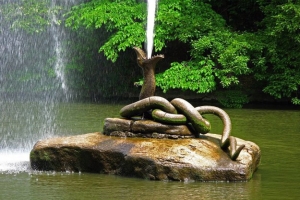


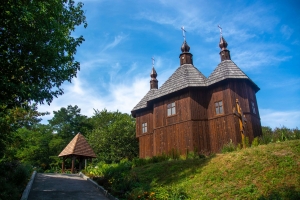


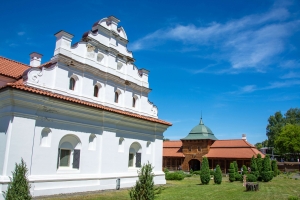
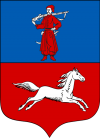


Cherkasy Oblast is the heartland of Ukrainian national identity. This is where Bohdan Khmelnytskyi had his hetman capital. This is where Taras Shevchenko — Ukraine’s national poet — asked to be buried, on a bluff above the Dnipro River. This is where the haidamaky (Ukrainian rebel fighters) gathered beneath a thousand-year-old oak in Kholodnyi Yar. And this is where a Polish nobleman built one of Europe’s most beautiful parks as a gift to the woman he loved. No other oblast in Ukraine packs so many national symbols into a single stretch of land.
People come here for six reasons. First — Shevchenko’s grave on Tarasova Hora in Kaniv. Second — Chyhyryn, the 17th-century Hetmanate capital. Third — Sofiivka Park in Uman, one of Europe’s finest landscape gardens. Fourth — Kholodnyi Yar, with its ancient forests, monasteries and the legendary oak. Fifth — Korsun-Shevchenkivskyi, site of a decisive 1944 battle. Sixth — Kamianka, with its museum dedicated to Pushkin and Tchaikovsky.
Region at a Glance
| Administrative centre | Cherkasy |
| Area | 20 900 km2 |
| Population | ~1.15 million |
| Historical lands | Middle Dnipro Region, Chyhyryn Land, Uman Region, Zvenyhorod Land |
| Main rivers | Dnipro, Tiasmyn, Ros, Hirskyi Tykych, Hnylyi Tykych |
| Best time to visit | May–October for parks and nature; Kaniv and Chyhyryn year-round; Sofiivka at its finest in May and October |
In This Article
- What this region is and why people come
- Geography, landscapes, climate
- History in brief
- Legends and local lore
- Top places to visit
- Day trips and weekend itineraries
- Must-do experiences
- FAQ
What This Region Is and Why People Come
Cherkasy Oblast is Ukraine’s most «Shevchenko» region. The poet was born here (in Moryntsi and Kyrylivka), he grew up here, and he asked to be buried here (Kaniv, Tarasova Hora). This is also the centre of the Hetmanate era: Khmelnytskyi’s Chyhyryn, Subotiv with the family estate, Korsun where the pivotal 1648 battle was fought. All of it sits in a single oblast, on the right bank of the Dnipro.
Visitors come primarily in search of national identity: to stand where Shevchenko rests, to walk where Kulish wrote, to see where Khmelnytskyi fought, to feel the ground where the haidamaky hid. This is not a «tourist» region in the conventional sense — there are no Michelin-starred restaurants, no ski slopes. What it offers instead is something rarer: a place where you can feel Ukrainian to the bone. And on top of all that — Sofiivka Park in Uman, one of the most beautiful landscape gardens in Europe, a fully-fledged attraction in its own right.
Geography, Landscapes, Climate
Cherkasy Oblast sits on the Dnipro Upland — a rolling forest-steppe of hills, ravines, woodlands and river valleys. The Dnipro cuts through the entire oblast from north to south, flanked by dramatic cliffs and bluffs. On the right bank rise the so-called «Kaniv Mountains»: 200-metre wooded hills crowned with churches. It’s the most scenic stretch of the Middle Dnipro Valley.
In the south lies Kholodnyi Yar (literally «Cold Ravine»), a dense forest massif covering around 250 square kilometres between Chyhyryn and Kamianka. One of the thickest, most impenetrable forests in right-bank Ukraine, it shelters millennium-old oaks, Tiasmyn floodplains and old Cossack farmsteads. In the 18th century it was the hideout of the haidamaky rebels; in 1918–1920 it harboured the fighters of the «Kholodnyi Yar Republic» resisting the Bolsheviks.
When to go. Late April through mid-October is the sweet spot. Sofiivka Park in Uman blooms spectacularly in May (tulips, lilac) and again in October (golden autumn). Tarasova Hora in Kaniv is worth visiting year-round — especially on 9 March (Shevchenko’s birthday) and 22 May (the anniversary of his reburial). Kholodnyi Yar is best in late May and September, when the insects thin out and the heat is bearable.
History in Brief
The lands of present-day Cherkasy Oblast formed the core of Kyivan Rus, with princely towns at Kaniv, Korsun and Zvenyhorod. By the 15th century they had become the cradle of Ukrainian Cossackdom: Zaporozhian Cossacks regularly moved north from the Dnipro rapids into this Middle Dnipro heartland.
In the 17th century, Chyhyryn became the capital of the Hetmanate — the Cossack state of Bohdan Khmelnytskyi (hetman, a Cossack military-political commander). The hetman’s military council met here; he received envoys from Moscow, Istanbul and Warsaw; from here he corresponded with the Polish king about the 1654 Pereiaslav Council. In 1648, at Korsun, Khmelnytskyi annihilated one of the largest Polish armies of the era — a defining victory of the Cossack-Polish War. In 1664 Chyhyryn fell; the Hetmanate capital moved to Baturyn in the Chernihiv region.
The 18th century brought the haidamaka uprising. Kholodnyi Yar and Zhabotyn became the bases for the rebel bands of Maksym Zalizniak and Ivan Honta, who launched the Koliivshchyna in 1768 — the largest anti-Polish rebellion in right-bank Ukraine. It was crushed with the help of the Russian army, which then betrayed the Cossacks who had fought alongside it.
In the 19th century the region became a cultural hub of Ukrainian literature. Taras Shevchenko was born here in 1814 (in Moryntsi); Mykhailo Maksymovych, Panteleimon Kulish and Mykhailo Hrushevsky’s uncle all lived and worked here. In 1861 Shevchenko’s remains were reinterred on Monastic Hill (Chernecha Hora) near Kaniv, which from that day became known as Tarasova Hora. The Kaniv Nature Reserve was founded around the poet’s grave in 1925.
1918–1922: the Kholodnyi Yar Republic — an anti-Bolshevik partisan movement in the forests of the Chyhyryn region. One of the last armed pockets of resistance to Soviet rule in Ukraine. The final fighters were killed by the Reds in 1922.
Since 2022. Cherkasy Oblast is a rear-area region with no ground combat. Infrastructure has been struck by missiles (Cherkasy city in particular), but tourist sites have not been directly targeted.
The transfer of Shevchenko’s remains from St Petersburg to Kaniv in 1861 was one of the largest popular pilgrimages of the 19th century. For more than two months the procession moved through Ukraine; thousands lined the roads to meet the coffin. It was the first time Ukrainians collectively asserted themselves as a nation — not «Little Russians,» but Ukrainians. The Russian Imperial gendarmerie opened a «Shevchenko file» that same day.
Legends and Local Lore
1. Sofiivka Park — a Landscape Born from Love
In 1796, the Polish magnate Stanislaw Szczęsny Potocki laid out a park in Uman as a gift to his wife, the Greek-born beauty Sofia Potocka. The leading Polish landscape architect Ludwik Metzel designed it. Serf labourers carved granite cliffs by hand, dug artificial lakes and waterfalls, and transplanted trees from across Europe. The result was one of the finest parks on the continent. Local legend holds that on certain evenings in May, Sofia’s spirit drifts among the fountains, gazing at the flowers she once planted with her own hands. Whether anyone has actually seen her remains a matter of cheerful debate.
2. Maksym Zalizniak’s Oak in Kholodnyi Yar
Deep in Kholodnyi Yar stands a thousand-year-old oak — one of the oldest living trees in Ukraine. Legend says it was under this very tree in 1768 that Maksym Zalizniak consecrated his haidamaky before the uprising. The oak measures more than 8 metres in circumference and stands about 22 metres tall. Local lore holds that anyone who touches its bark and thinks of Ukraine will sense the «body» of every generation that ever stood here — rebels, partisans of 1918, UPA fighters, today’s defenders. It is the most historically charged tree in Ukraine.
3. Shevchenko’s Testament and Chernecha Hora
In his poem «Testament» (1845), Taras Shevchenko asked to be buried «in beloved Ukraine, amid the wide-open steppe,» on a high hill «where the broad fields and the Dnipro and its cliffs could be seen.» In 1861, two months after his death in St Petersburg, his body was brought to Kaniv and interred on Chernecha Hora (Monastic Hill, named for an ancient monastery), which from that day became Tarasova Hora. From the summit you can see the Dnipro, the cliffs, the fields — exactly as the poet had imagined. No other leader of a Slavic nation has left such a precise symbolic match between a final wish and a real grave. Shevchenko got it exactly right.
Top Places to Visit
Kaniv and Tarasova Hora
Kaniv is a small city on the right bank of the Dnipro, and it carries more national significance per square metre than almost anywhere in Ukraine: Tarasova Hora with Shevchenko’s grave, the Shevchenko National Reserve, the Kobzar Museum, and a panoramic viewpoint over the Dnipro. Kaniv also holds the 1147 burial site of Prince Yurii Dolgorukyi in its monastery. This is the essential stop for any Ukrainian — and for any foreigner who wants to understand what Ukraine is.
Chyhyryn — Capital of the Hetmanate
Chyhyryn is a small town with an outsized history. Castle Hill features a reconstructed residence of Bohdan Khmelnytskyi complete with bastions, a hetman’s throne and scriptorium. Bohdanova Hora bears a monument to the hetman. Nearby, the village of Subotiv holds the Khmelnytskyi family estate and the Illinska Church — the burial vault of Bohdan and his son Tymish (destroyed by the Poles, later restored). Together they form the National Historical and Cultural Reserve «Chyhyryn,» one of Ukraine’s most important national sites.
Sofiivka Park in Uman
Sofiivka Park in Uman is one of Europe’s finest landscape gardens and a national monument of garden art. Spread across 180 hectares, it weaves together artificial lakes, granite outcrops, waterfalls, grottos, rotundas and bridges. Polish magnate Stanislaw Potocki created it between 1796 and 1802 as a gift for his wife Sofia. The park’s glory season runs from late April through October. In 2009 it was voted one of the Seven Wonders of Ukraine.
Kholodnyi Yar
Kholodnyi Yar (Cold Ravine) is a forested massif in southern Cherkasy Oblast and Ukraine’s most storied site of armed resistance. It contains the thousand-year-old oak of Maksym Zalizniak, the Motronynsky Monastery (16th century, once a haidamaka base), and a Scythian hillfort site with memorials to the UPA (Ukrainian Insurgent Army) and the Kholodnyi Yar Republic. Low tourist traffic, high emotional impact — one of the region’s most powerful places.
Korsun-Shevchenkivskyi
Korsun-Shevchenkivskyi is a riverside town on the Ros with the Lopukhin Palace (19th century), a historical-cultural reserve, and a Museum of the 1944 Battle of the Korsun-Cherkasy Pocket — one of the decisive engagements of World War II on Ukrainian soil. Nearby lies the Shevchenko family’s ancestral village of Kyrylivka. The reserve is less famous than Kaniv or Chyhyryn, but feels atmospherically more intact.
Kamianka — Pushkin and Tchaikovsky
The Literary-Memorial Museum of Pushkin and Tchaikovsky in Kamianka is one of Cherkasy Oblast’s most underrated stops. In the 19th century this was the estate of the Davydov family — relatives of the Decembrists. Alexander Pushkin visited several times in the 1820s; Pyotr Tchaikovsky composed operas here. The museum collection ranks among the finest in Ukraine outside the capital.
Cherkasy — the Regional Capital
Cherkasy is a relatively young city by Ukrainian standards, perched on a high bank of the Dnipro. It has a pleasant riverfront promenade, the Valley of Roses Park, a Shevchenko monument and a cathedral. Not a classic tourist destination in itself, but an excellent base for day trips to Kaniv, Chyhyryn and Kholodnyi Yar.
Moryntsi and Kyrylivka
Moryntsi is the village where Taras Shevchenko was born on 9 March 1814. Kyrylivka (now called Shevchenkove) is the village where he spent his childhood. Both are in the Zvenyhorod district, complete with museums and memorials that form part of the Shevchenko National Reserve.
Day Trips and Weekend Itineraries
Route 1. Shevchenko’s Kaniv in a Day
Kaniv is roughly 140 km from Kyiv (or 70 km from Cherkasy). Start the morning at Kaniv with Tarasova Hora, Shevchenko’s grave, the Kobzar Museum and the river viewpoint. Lunch in town. Afternoon: stroll the Dnipro embankment or hike up Kniazha Hill in the Kaniv Nature Reserve. The quintessential Ukrainian national day out.
Route 2. The Hetman’s Chyhyryn in a Day
Head out from Cherkasy to Chyhyryn. Castle Hill with the reconstructed Khmelnytskyi residence, then Bohdanova Hora and the hetman’s monument. Lunch. Afternoon: drive to Subotiv for the Illinska Church (the hetman’s burial vault) and the family estate. One of the most historically significant days you can spend in Ukraine.
Route 3. Sofiivka and the Uman Region in a Day
From Kyiv, head roughly 210 km south to Uman. Allow the whole morning and most of the afternoon for Sofiivka Park — a thorough circuit takes 4–5 hours. Lunch in Uman. Late afternoon: explore the historic centre including the Jewish synagogue (Uman is a major pilgrimage site for Hasidic Jews visiting the tomb of Rabbi Nachman of Bratslav). Drive home in the evening.
Route 4. Rebel Cherkasy Oblast — a Weekend
A two-day itinerary for those who want to feel the Cossack-insurgent history deep in their bones. Day 1: Chyhyryn + Subotiv. Overnight. Day 2: Kholodnyi Yar — Zalizniak’s ancient oak, Motronynsky Monastery, memorials to the Kholodnyi Yar Republic. The most immersive itinerary in the region.
Route 5. Literary Cherkasy Oblast
A two-day route for lovers of literature and music. Moryntsi and Kyrylivka (Shevchenko’s birthplace) → Kaniv with Tarasova Hora → Kamianka with the Pushkin and Tchaikovsky Museum.
Must-Do Experiences in Cherkasy Oblast
- Stand at Shevchenko’s grave on Tarasova Hora — the defining pilgrimage of Ukrainian national consciousness. Non-negotiable.
- Step inside the reconstructed Khmelnytskyi residence in Chyhyryn — sit on the hetman’s throne, walk through the courtroom, browse the scriptorium.
- Walk every path in Sofiivka — from the Great Rock to the Grotto of Venus and the Lake of the Dead.
- Touch Zalizniak’s thousand-year-old oak in Kholodnyi Yar — the most historically charged tree in Ukraine.
- Enter the Illinska Church in Subotiv — the hetman’s burial vault.
- Take a boat along the Dnipro from Kaniv to Shelestove Island — a rarely beautiful river journey.
- Try Kaniv-style carp soup (karaseva yuska) — the signature dish of the Dnipro riverbank.
- Buy a willow-woven cradle — the traditional craft of the Chyhyryn region.
- Catch a concert in Sofiivka Park on the «Island of Anti-Circe» during the summer season — one of the most magical open-air venues in the country.
- Watch the sunset from the viewpoint above Kaniv — when the Dnipro turns to gold below you.
Sofiivka Park was named one of the Seven Wonders of Ukraine in 2009, alongside Kyiv’s St Sophia Cathedral, Khortytsia island, Kamianets-Podilskyi fortress, the Kyiv-Pechersk Lavra, Khotyn Fortress and Sviatohirsk Lavra. It was created in 1796–1802 — a full 30 years before the Versailles gardens took their current form.
Frequently Asked Questions
What can I see in Cherkasy Oblast in one day?
The classic option is Kaniv with Tarasova Hora (~140 km from Kyiv, ~70 km from Cherkasy). Alternatively: Chyhyryn with Subotiv. Or: Sofiivka Park in Uman (~210 km from Kyiv). All three could each fill a full and satisfying day.
What is Sofiivka Park?
The National Dendrological Park Sofiivka in Uman is one of Europe’s finest landscape gardens. Polish magnate Stanislaw Szczęsny Potocki created it in 1796 as a gift to his wife Sofia. Its 180 hectares contain artificial lakes, granite cliffs, waterfalls and grottos. Open year-round; most spectacular in May and October. One of the Seven Wonders of Ukraine.
Is it safe to travel to Cherkasy Oblast now?
Yes. Cherkasy Oblast is a rear-area region far from the front line. Missile strikes on infrastructure occur periodically (particularly targeting Cherkasy and Uman), but tourist sites have not been directly hit. Before travelling, check official Ukrainian government channels and the «Air Alert» app.
Where should I take children in Cherkasy Oblast?
Sofiivka Park in Uman — a full day of space to run, labyrinths, bridges and fountains. Kaniv with Tarasova Hora is wonderful for older children who have already encountered Shevchenko’s poetry. The Cherkasy Dnipro embankment is perfect for a relaxed walk with cafes along the way.
What is Kholodnyi Yar?
A dense forest massif in southern Cherkasy Oblast covering around 250 square kilometres between Chyhyryn and Kamianka. Ukraine’s most significant site of armed popular resistance: in the 18th century it sheltered the haidamaky rebels of Zalizniak and Honta; in 1918–1922 it was the stronghold of the Kholodnyi Yar Republic against the Bolsheviks. The forest contains Maksym Zalizniak’s thousand-year-old oak and the Motronynsky Monastery.
Why do tens of thousands of Hasidic Jews come to Uman every year?
Uman is the burial place of Rabbi Nachman of Bratslav (1772–1810), the founder of Bratslav Hasidism — a major branch of ultra-Orthodox Judaism. Before his death he promised his followers that those who came to his grave for Rosh Hashanah (the Jewish New Year) would have their sins forgiven. Since the 1990s, between 30,000 and 50,000 Hasidic pilgrims from around the world arrive in Uman each September. It is the largest Jewish pilgrimage outside Israel.
What are the most distinctive local dishes?
Cherkasy-style borscht with pampushky (garlic bread rolls), Kaniv carp soup, Chyhyryn dumplings (halushky) with young garlic, Korsun cherry varenyky (filled dumplings), Uman baked apples with honey. In the south (Uman and Zvenyhorod districts) you’ll find the influence of Podilian and Uman Jewish cuisine: gefilte fish, tsimmes. In the north — classic Middle Dnipro cooking.
What should I bring home from Cherkasy Oblast?
A Shevchenko reproduction print from Kaniv, a miniature of the Khmelnytskyi monument from Chyhyryn, a postcard from Sofiivka Park, a hand-woven willow basket from the Chyhyryn region, honey from the apiaries of southern Cherkasy Oblast, or sweet cherry jam from the Kaniv orchards.
Cherkasy Oblast is the place where Ukraine finds itself. Not in grand architecture or famous monuments or polished museums — but in the very earth where hetmans and poets stood, where rebels hid and artists created, where tzaddikim are buried and Cossacks rode. This is not a region you visit for entertainment. You come here to remember who you are.
And alongside all of that — there is Sofiivka, reminding you that beauty, too, is part of a nation’s soul.
JoomShopping Download & Support