


- You are here:
-
Sights by Regions

- Volyn region
Volyn region
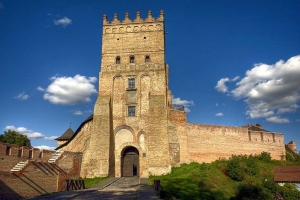


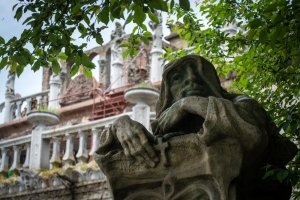
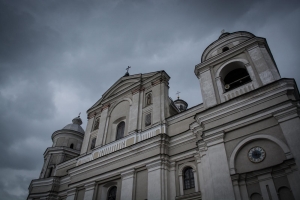
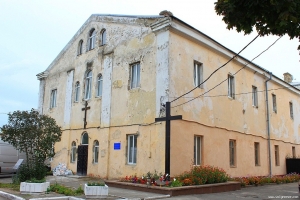





In 1429 Lutsk hosted the largest gathering of monarchs in medieval Europe: the King of Poland, the Grand Duke of Lithuania, the Holy Roman Emperor, the Khan of Crimea, the Grand Master of the Teutonic Order, and ambassadors from Denmark and Hungary — all together, in one city. Lubart's Castle bore their company without visible consequence. Most visitors today have never heard of that congress. That is how Volyn has always existed: with an enormous history that almost nobody notices.
And yet: here is the deepest lake in Ukraine, complete with a legend about a sunken castle; one of the best-preserved medieval fortresses in the country; an underground passage said to run for 40 kilometres beneath the Polesian bog; and 220 lakes scattered through pine forests. Volyn is underrated. Consistently and without justification.
Region at a glance
| Administrative centre | Lutsk |
| Area | 20 143 km2 |
| Population | ~1.03 million |
| Historical lands | Volhynia (north — Volhynian Polesia) |
| Main rivers | Prypiat, Styr, Turia, Stokhid, Western Buh |
| When to go | May–September for lakes and forests; castles open year-round |
In this article
- What makes this region tick
- Geography, landscapes, climate
- History in brief
- Legends and mystique
- Top sights of the region
- Day trips and weekend routes
- Must-do experiences
- FAQ
What makes this region tick
Volyn Region is two different worlds stitched together by the Styr river. In the north: Volhynian Polesia — endless pine forests, wetlands, lakes, and a silence so deep it stills even the wind. In the south: the rolling Volhynian Upland with ancient towns, castles, and fields where you keep stumbling across traces of events that earned a paragraph in the history books when they deserved whole chapters.
People come here for three things. First — Lubart's Castle in Lutsk, one of the best-preserved in the country. Second — the Shatsk Lakes: transparent water, pine trees to the horizon, and the feeling of being in Scandinavia without the hotel prices. Third — the quiet of Polesia, which you will not find anywhere else in quite this form.
Geography, landscapes, climate
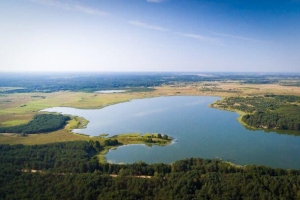
The region is flat but not monotonous. The north is true Polesia: bogs where tinder fungus glows, and pine forests that smell of resin so strongly in summer that you forget everything else. More than 220 lakes lie scattered here. Among them: the Shatsk group of 23 karst lakes and Lake Svitaz — the deepest lake in Ukraine (~58 metres). A modest figure on paper; striking when you stand on the bank and look into water the colour of minerals.
The rivers here move slowly and know where they are headed: Prypiat, Styr, Turia — broad, with forested banks and fishing spots every kilometre. The climate is moderately continental and wet: mild winters, warm and rainy summers. Forests cover 34% of the area — second highest in Ukraine after Zakarpattia. Best time to visit: June–September for lakes and nature; April–October for castles and towns.
History in brief
Lutsk is one of the oldest cities in Ukraine. First written record: 1085, though the city is considerably older. In the 12th–13th centuries it was the capital of the Volhynian Principality, then part of the Galicia-Volhynia state. Lubart's Castle was built in the 14th century under the Lithuanian prince Liubart Gediminovich, and over two centuries it withstood sieges by Poles, Tatars, and Teutonic Knights — without serious damage to its walls.
In 1429 Lutsk hosted that same royal congress — the “Congress of Lutsk” — little known today but regarded as one of the largest diplomatic gatherings in medieval Europe. In the 17th century Volyn became the arena of one of the era's greatest battles: the Battle of Berestechko, 1651, between Khmelnytsky's Cossacks and the Polish army of Jan II Casimir, brought several hundred thousand soldiers to the banks of the Styr. The battlefield survives to this day as a memorial reserve.
Lutsk Castle was never taken by storm throughout all of medieval history. It simply changed hands — through treaties, marriages, and the exhaustion of the besieged. This says more about medieval diplomacy than about the architectural skills of its builders.
Legends and mystique
1. Lake Svitaz and the sunken castle
Once, where the lake now lies, there stood a city with a castle. When enemies approached the walls, the prince's daughter, refusing to surrender, turned to heaven in prayer — and the castle and city sank into the earth. Water covered everything. The girls who lived in the city were transformed into aquatic plants — water-stars that still bloom on the surface of Svitaz to this day. Two lovers who could not be together became a sycamore maple and a linden tree on an island in the middle of the lake. The island is still called the Island of Lovers. The reality: the lake is 58 metres deep and so clear that the bottom is visible from the surface.
2. The underground passage from Olyka to Lutsk — 40 kilometres beneath Polesia
The Radziwiłł Castle in Olyka stands 40 km from Lutsk. According to legend, a passage wide enough for a carriage runs underground between the two fortresses. The Radziwiłłs, who once ruled Olyka Castle, were one of the most powerful noble families in the Polish-Lithuanian Commonwealth, with their own army and more wealth than some sovereign states. A 40-kilometre underground corridor would have struck them as modest. The passage has never been found. But no one has disproved it either.
3. Voices beneath Lesia Ukrainka Street in Lutsk
In Lutsk there is a street where inexplicable muffled sounds are heard from underground at night. The local explanation: the street once connected two monasteries by underground tunnel, and sinful monks buried in the tunnel have found no rest. The factual explanation: a branching network of 16th–17th-century underground passages genuinely exists beneath the city, and has been partly explored. Beneath the Church of Saints Peter and Paul, researchers found an underground chapel with frescoes and a mysterious tomb with no remains inside. Who lay there and where they went — unknown.
Top sights of the region
Lutsk Castle (Lubart's Castle) — living 14th century
Lubart's Castle is one of the best-preserved medieval castles in Ukraine. Three towers, defensive walls, an inner courtyard where medieval festivals are held regularly. Inside: the Museum of Books, the Museum of Bells, and an artillery collection. It looks as though the 14th century was lightly restored and left to live. Around it: the old town of Lutsk with the Cathedral of Saints Peter and Paul, the Great Synagogue of 1628, and the Bridgettine Monastery.
Shatsk Lakes — Scandinavia without the flight
Shatsk National Nature Park on the borders with Poland and Belarus holds 23 lakes among pine forests. The main lake — Svitaz, the deepest in Ukraine: crystal water, sandy beaches, no industrial waterfront. In summer half of Lutsk and a significant slice of Poland converge here — the border is just 18 km away. Arrive early on a weekday morning or in a cloudy September, and you have it all to yourself.
Radziwiłł Castle in Olyka
Olyka is a small town 30 km from Lutsk where the Radziwiłłs — one of the wealthiest families in the Polish-Lithuanian Commonwealth — built their residence. The castle is in a state of ruin, and it is impressive precisely because of that: towers, walls, the gateway, and the park are being swallowed by vegetation, creating something that resembles a film set for a medieval drama. Nearby stands the imposing Collegiate Church of the Holy Trinity, which the Radziwiłłs used as their mausoleum.
The Berestechko battlefield — 1651
The Battle of Berestechko in 1651 was one of the largest battles of 17th-century Europe: several hundred thousand soldiers on each side, three days of fighting, and Khmelnytsky's retreat following the betrayal of the Crimean Khan. The memorial reserve preserves the battlefield, the Cossack camp, and a church-museum containing the remains of those who fell. The place is quiet, open, and speaks without a guide.
Lutsk — a city outside the tourist queues
Beyond the castle, the city holds the House of a Thousand Faces by sculptor Holovan — a facade covered in hundreds of unique ceramic faces. The Museum of Technological Progress with vintage machinery in the open air. And the quiet fact that Lutsk stays off the main tourist circuit — you can sit down in a coffee shop and leave without queuing.
Volodymyr-Volynskyi — as old as Lutsk
Volodymyr-Volynskyi is one of the oldest cities in Volhynia and Ukraine: first recorded in 988. The Dormition Cathedral (12th century) in the city centre is a rare surviving example of Old Rus architecture, a contemporary of Kyiv's Golden Gate. A small, quiet city, but a mandatory stop for anyone interested in early medieval architecture.
Lake Luka — Polesia without tourists
Lake Luka near the village of Liutka is one of those Polesian lakes that mass tourism has not yet reached. Pine-fringed shores, silence, fish in the water, and a total absence of bustle. For those who want the Shatsk Lakes experience — but without the neighbours with the loudspeaker.
Day trips and weekend routes
Route 1. Lutsk in a packed day
Morning — Lubart's Castle (allow at least 2 hours). Then — the Great Synagogue and Cathedral of Saints Peter and Paul, followed by the House of a Thousand Faces. Lunch in the centre. Afternoon — Museum of Technology or a walk along the Styr embankment.
Route 2. Shatsk Lakes for a weekend
Friday evening — drive from Lutsk (~110 km to Shatsk). Saturday — Lake Svitaz: swim, walk the shore trail, evening at the jetty. Sunday — a less-visited neighbouring lake (Pulemetske or Luka), return via Kovel. A route for those who want a forest-and-lake break without complications.
Route 3. Volhynian castles and battlefields (1 day)
West from Lutsk: Olyka (Radziwiłł Castle, Collegiate Church) → Berestechko (battlefield memorial, 1651) → Volodymyr-Volynskyi (12th-century Dormition Cathedral). Three different eras, three different characters — all within 80 km of Lutsk.
Must-do experiences
- Enter Lutsk Castle and take your time. The 14th century is not re-enacted here — it simply stands before you. Towers, courtyard, Museum of Bells, and the view over the old town from above: worth a dedicated morning.
- Swim in Lake Svitaz. Ukraine's deepest lake, with karst water the colour of mother-of-pearl. The bottom is visible metres below the surface. Best of all early in the morning, before everyone else arrives.
- Stand on the Berestechko field. Silence, open sky, and grass over the place where in 1651 the fate of the Cossack state was decided. Come without rushing.
- Find the House of a Thousand Faces in Lutsk. Holovan's sculptural facade is local underground art that inexplicably fails to appear in most guidebooks. Once found, you will stand there for at least twenty minutes.
- Try Volhynian borscht and hrechaniky. The cuisine of Volyn is generous, rural, wheat-and-buckwheat, with beans and home-cured sausage. There are places in Lutsk where it is served exactly as it should be.
- Visit the abandoned Radziwiłł Castle in Olyka. Patina, vegetation, silence, and the feeling of being the first tourist this week. For lovers of romantic ruin — this is the ideal.
- Cycle or walk the Polesian forests. Shatsk Park and its surroundings are the best way to encounter Polesia as it truly is, without asphalt or explanation.
Lutsk is the only city in Ukraine that in 1429 received simultaneously a Holy Roman Emperor, a Crimean Khan, a Grand Master, and two kings. International recognition — six hundred years ago. Presumably, there were no queues at the castle then either.
Frequently asked questions
What to see in Lutsk in a single day?
Lubart's Castle — essential, and at least two hours. Then the Great Synagogue, Cathedral of Saints Peter and Paul, the House of a Thousand Faces. Evening — the Styr embankment.
Where to go for a weekend from Lutsk?
Shatsk Lakes — ~110 km, ideal for Saturday–Sunday. Olyka and Berestechko together make one day. Volodymyr-Volynskyi is a separate half-day trip. Lake Luka — if you want quiet without the Shatsk crowds.
When is the best time to visit the Shatsk Lakes?
June–August for swimming, but busy (especially on peak weekends). May and September are a good compromise: warm enough, fewer people, and the scenery is more beautiful. Shatsk Park is open year-round for walks and fishing.
Is it safe to travel to Volyn Region now?
Volyn Region is in western Ukraine and is one of the furthest oblasts from the front line. Missile strikes on the region are extremely rare. Before travelling, monitor the situation and air alerts via the Povitriana tryvoga app.
Where to go with children in Volyn Region?
Lutsk Castle — medieval atmosphere, towers, and a courtyard to run around in. The Shatsk Lakes — sandy beaches, shallow swimming areas, forest. The Museum of Technology in Lutsk — vintage cars, tractors, and trams under the open sky.
What are the signature dishes of Volyn Region?
Volhynian borscht with beans and beetroot, hrechaniky (buckwheat patties with meat), potato pancakes with soured cream, meat jelly, home-made sausage. Cabbage and mushroom pasties are a forest-country classic. Mushrooms are gathered here as casually as other people buy them at a supermarket.
What is Volhynian Polesia and why does it matter?
Polesia is the northern part of Volyn: unbroken pine forests, wetlands, 220+ lakes, and a sparse local population that lives by nature's rhythms more than by urban timetables. This is a place for those who need genuine distance from civilisation — not performed, but real.
Volyn is a region that is in no hurry and makes no great claims on your attention. It simply stands here with its 14th-century castle, Ukraine's deepest lake, and forests that remember more than any textbook. Come and work it out for yourself.
If you do not know where to start — start with the castle. Then stay one more day. That is how it always goes in Volyn.
JoomShopping Download & Support