


- You are here:
-
Sights by Regions

- Dnipropetrovsk region
Dnipropetrovsk region



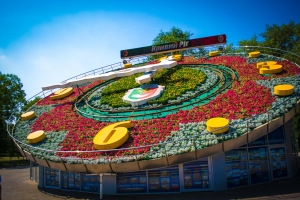

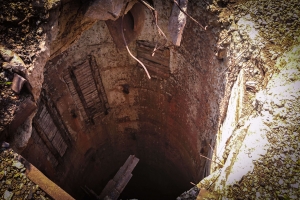






Dnipropetrovsk Oblast is the second heartland of the Cossacks — home to two legendary Sich fortresses (Nykytynska and Chortomlyts’ka), the grave of Ivan Sirko, Petrykivka folk art, the largest wooden cathedral in Ukraine, and some of the most dramatic granite quarries in Eastern Europe. Industrial epics of the 20th century and authentic Cossack heritage coexist here, sometimes within a 30-kilometre radius.
People come for Dnipro city (one of Ukraine’s most distinctive regional capitals, with Europe’s longest riverside promenade), for the urbex wonderland of Kryvyi Rih (massive quarries with viewing platforms and abandoned Soviet palaces of culture), for Samarsky Monastery in Novomoskovsk with its unique wooden cathedral, for Petrykivka with its UNESCO-listed folk painting, and for the Cossack heartland on the left bank of the Dnipro.
Region at a glance
| Administrative centre | Dnipro |
| Area | 31 974 km2 |
| Population | ~3.1 million (Ukraine’s third most populous oblast) |
| Historical lands | Zaporizhzhia (historic Sich fortresses), Kryvorizzia, the Southern Wild Field, Prydniprovya |
| Main rivers | Dnipro, Samara, Oril, Inhulets |
| Best time to visit | April–October for nature and quarries; year-round for Dnipro city and museums |
In this article
- What this region is and why people come
- Geography, landscapes, climate
- History in brief
- Legends and folklore
- Top sights of the oblast
- Day trips and weekend routes
- Must-do experiences
- FAQ
What this region is and why people come
Dnipropetrovsk Oblast is Ukraine’s most «industrial» region. Iron, steel, energy, the Dnipro river, steppe, and wide-open spaces define the landscape. Dnipro city is the industrial capital that simultaneously runs a nightlife scene rivalling Kyiv and Lviv combined, with top-tier restaurants, a 30-kilometre riverside promenade, and the Yuzhmashrocket and space plant just one kilometre from the city centre.
Visitors come for five reasons. First — Dnipro city itself: the endless promenade, Lazaria Hloby Park, European Square with the region’s tallest skyscraper, museums and restaurants. Second — Kryvyi Rih and its quarries that look like alien landscapes: the YUZHOK quarry viewing platform is one of the most extraordinary locations in Left-Bank Ukraine. Third — Cossack heritage: the Nykytynska and Chortomlyts’ka Sich sites, and the grave of Ivan Sirko in Kapulivka. Fourth — Samarsky Desert-Mykola Monastery in Novomoskovsk with its unique wooden cathedral. Fifth — Petrykivka with its decorative painting style listed as UNESCO Intangible Cultural Heritage.
Geography, landscapes, climate
The oblast stretches along the Dnipro river, which divides it into right-bank and left-bank halves. The right bank holds the Kryvyi Rih iron-ore basin with granite and iron-ore quarries, imposing industrial architecture, and steppe between towns. The left bank is broader, more flat, cut through by the Samara and Oril rivers, with Dnipro floodplains and Cossack villages.
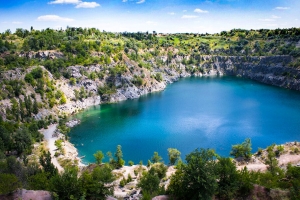
The region’s standout feature is the quarries of Kryvyi Rih. Dozens of active and abandoned pits dot the city and its surroundings, several filled with turquoise water. Pershotravnevyi Quarry with its red cliffs looks like Mars. Granite Quarry is a rock-climber’s paradise. Karachunivskoho Reservoir with its artificial waterfall is another surprise.
Best time to visit. Late April to early October is ideal for nature and quarry exploration, before the heat peaks and while the steppe is still green. Dnipro city works year-round, with May and September as sweet spots. Winter is quiet but museums and restaurants remain open. The western and southern parts of the oblast are significantly safer for travel than the eastern and south-eastern parts (near the frontline regions of Zaporizhzhia and Donetsk oblasts).
History in brief
The lands of modern Dnipropetrovsk Oblast were the territory of the second and third waves of the Zaporozhian Sich (the legendary Cossack republic-fortress). After the fall of the Khortytsia Sich, the Cossacks founded new ones — Nykytynska Sich (1639–1652) at what is now Pokrovske, then Chortomlyts’ka (1652–1709) near present-day Kapulivka. It was here that the legendary hetman Ivan Sirko ruled; his grave on a cliff above Kapulivka is one of the most sacred Cossack sites in the country.
In 1776, Empress Catherine II founded the provincial city of Katerynoslav on the site of the old settlement of Polovytsia. The city was designed as the «southern capital» of the empire, with an Empire-style centre and a university. In the 19th century the region became the centre of industrialisation of the Russian Empire: metallurgical plants sprang up, the Kryvyi Rih iron-ore basin was discovered (1881), and railways were laid across the steppe.
In 1926 the city was renamed Dnipropetrovsk in honour of Bolshevik Hryhorii Petrovsky. In 1934 construction began on the Yuzhne Machine-Building Plant (Yuzhmash) — which from the 1950s became the backbone of the Soviet space and missile programme. Dnipro was a «closed city» until 1987 — foreigners were banned due to the military enterprises.
In 2016, as part of decommunisation, the city reclaimed the name Dnipro. The 2022 war pushed the eastern and south-eastern parts of the oblast (Pokrovske, Synelnykove, Nikopol directions) to the front zone, and brought missile alerts to the regional capital and Kryvyi Rih. The cities themselves and most tourist sites continue to operate.
Dnipro’s riverside promenade stretches for 23 kilometres — making it the longest in Europe. It was designed in the 1960s under the motto «Dnipro must see the water» — before that, the port district blocked the city’s river views with an industrial zone.
Legends and folklore
1. Ivan Sirko and the hand that won battles
The most celebrated koshovy otaman (supreme commander) of the Chortomlyts’ka Sich, Ivan Sirko, died in 1680 and was buried in Kapulivka, 15 km from present-day Nikopol. According to legend, before his death Sirko ordered that after his passing the Zaporozhian Cossacks should cut off his right hand and carry it at the head of the army as a talisman. They say the hand secured three consecutive battlefield victories. Today Sirko’s grave on a cliff above Kapulivka is one of Ukraine’s most important Cossack sites, drawing thousands of pilgrims each year.
2. The Petrykivka folk art that started with burning homesteads
The village of Petrykivka in Dnipropetrovsk Oblast has decorated the walls of its homes with vivid floral patterns for centuries. In the 20th century, the style was embraced by professional artists and became internationally recognised. In 2013, Petrykivka decorative painting was inscribed on UNESCO’s Representative List of Intangible Cultural Heritage of Humanity — alongside French cuisine and Japanese gagaku. The village hosts a Centre of Petrykivka Painting where you can buy work directly from the master. Not yet covered as a separate page on the site.
3. A nine-log cathedral built without a single nail
In Novomoskovsk (formerly Samar) stands the Holy Trinity Cathedral — the largest wooden church in Ukraine, built between 1773 and 1779 by local craftsman Yakym Pohrebniak. Nine log-cabin structures topped with spires form a Baroque structure rising 65 metres. Legend holds that Pohrebniak used not a single nail — all joints are held by wooden pegs. The cathedral survived fires, Soviet rule, and Nazi occupation. Not yet featured as a separate page on the site, but it is one of the country’s most important architectural landmarks.
Top sights of the oblast
Dnipro — the regional capital
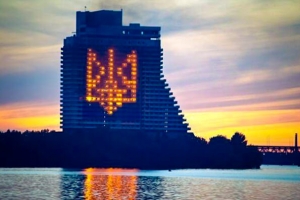
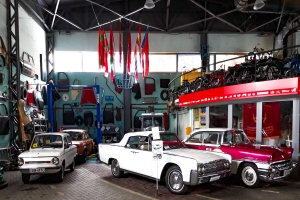
Dnipro is one of Ukraine’s most distinctive cities. Lazaria Hloby Park is the historic core of old Katerynoslav, complete with swans and century-old plane trees. Technical Museum «Machines of Time» holds Ukraine’s largest collection of vintage cars. For urbex fans — the abandoned Hotel Parus on the riverside. And separately — the rocket-and-space heritage of Yuzhmash and one of Ukraine’s best dining scenes.
Kryvyi Rih — the mining megalopolis
Kryvyi Rih is Europe’s longest city (~120 km north to south, following the iron-ore basin). It has no single centre but a string of districts, each with its own landmarks. The highlights include Spaso-Preobrazhensky Cathedral, St Volodymyr Cathedral, St George Bell Tower, Synagogue with the Mykhailo Marmer Museum, and the History and Local Lore Museum.
Quarries and urbex of Kryvyi Rih
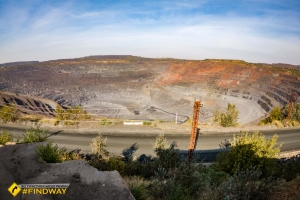
The most visually unexpected locations in the region. The YUZHOK quarry viewing platform reveals a wall at least 200 metres tall and wide, excavated over 60 years of mining. Pershotravnevyi Quarry — red cliffs, a lake in the middle. Granite Quarry — a rock-climber’s dream. Railway Bridge with panorama of the waterfall and Karachunivskoho Reservoir dam — a rarity for flat-land Ukraine. For urbex — the Red Abandoned Bridge and the Koksokhimik Palace of Culture.
Samarsky Desert-Mykola Monastery
Samarsky Desert-Mykola Monastery in Novomoskovsk is the oldest monastery in the Zaporizhzhia region, founded by Cossacks at the turn of the 16th–17th centuries. Four churches, including the unique underground church of Cyril and Iulita at a depth of 10 metres. Nearby (also in Novomoskovsk) — the Holy Trinity Cathedral, Ukraine’s largest wooden church.
Petrykivka — the folk art capital
Petrykivka is a village 80 km from Dnipro where a unique style of decorative painting emerged, inscribed on UNESCO’s heritage list in 2013. The village hosts a Centre of Petrykivka Painting, a craft school, and a museum. You can buy a painted board directly from the artist. This is one of the most «soulful» stops on the Ukrainian tourism circuit.
Kapulivka and the grave of Sirko
The village of Kapulivka in Nikopol district stands on the site of the former Chortomlyts’ka Sich. On a high cliff above the estuary sits the grave of Ivan Sirko, the legendary Cossack commander. The Sich site has a memorial complex with reconstructed Cossack barracks and an exhibition of artefacts. Not yet on the site as a standalone page, but an essential stop for anyone interested in Cossack history.
Nikopol and Cossack heritage
Nikopol History and Local Lore Museum is one of the best places to explore the history of all the Zaporozhian Sichies. It holds a unique collection of Cossack relics. Nearby — the atmospheric former restaurant Dnipro with its sobering-up station — a classic 1970s urbex find. Nikopol is currently on the regular shelling line due to its proximity to the Zaporizhzhia NPP, but continues to function.
Kamianske (former Dniprodzerzhynsk)
Kamianske is an industrial satellite of Dnipro with a powerful metallurgical plant. The main tourist draw is the History Museum with an exhibition on the region’s industrialisation and the city’s journey through Soviet renaming and back to its historical name. Small but atmospheric.
Day trips and weekend routes
Route 1. Dnipro in one day
A classic urban day out. Lazaria Hloby Park in the morning. Stroll along the riverside promenade. Lunch near the river station. Afternoon — Technical Museum «Machines of Time». Before sunset — abandoned Hotel Parus for atmospheric shots.
Route 2. Kryvyi Rih quarries in one day
Not for the faint-hearted. YUZHOK quarry viewing platform in the morning (best light). Pershotravnevyi Quarry at midday. Lunch in Kryvyi Rih. Afternoon — Karachunivskoho Reservoir with waterfall at sunset. Camera — mandatory.
Route 3. Cossack Dnipropetrovsk Oblast over a weekend
A two-day left-bank route. Day 1: Dnipro → Samarsky Monastery in Novomoskovsk → Holy Trinity wooden cathedral nearby. Overnight in Dnipro. Day 2: Petrykivka folk art centre → return.
Route 4. Sich trail — Sirko and Chortomlyts’ka
A specialist route for Cossack history enthusiasts. Dnipro → Nikopol History Museum with the Sich exhibition → Kapulivka with Sirko’s grave and the Chortomlyts’ka Sich reconstruction → return. Check safety first: Nikopol is currently under regular shelling due to its proximity to the Zaporizhzhia NPP.
Route 5. Urbex Dnipropetrovsk Oblast
For abandoned-place enthusiasts. Abandoned Hotel Parus in Dnipro → Red Abandoned Bridge in Kryvyi Rih → Koksokhimik Palace of Culture. If time allows — the former restaurant Dnipro with sobering-up station in Nikopol.
Must-do experiences in Dnipropetrovsk Oblast
- Stand at the YUZHOK quarry viewing platform — the scale will knock the breath out of you.
- Step inside the Holy Trinity wooden cathedral in Novomoskovsk and take in the 65-metre Baroque structure built without a single nail.
- Light a candle at Samarsky Monastery — one of the oldest Cossack monastic sites in Ukraine.
- Buy a Petrykivka painted plate directly from the artist in Petrykivka. The region’s best souvenir.
- Stand at Sirko’s grave in Kapulivka — a place of power visited for the feeling, not the photo.
- Walk the 23-kilometre Dnipro promenade in full, or at least its central stretch. Europe’s longest.
- Try Dnipro-style borscht with pampushky and garlic — the local borscht school holds its own against Poltava or Kyiv.
- Walk the Kryvyi Rih concrete bridges near Quarry No. 2 — a genre of architectural tourism all its own.
- Pick up a Petrykivka embroidered cloth with traditional patterns — an official UNESCO-recognised craft.
- Taste the «Dnipro Pie» at a local café — the city’s classic dessert.
Every year Kryvyi Rih extracts around 62 million tonnes of iron ore — a third of Ukraine’s total output. That means one of its quarries grows 50–100 metres deeper and wider each year. Kryvyi Rih’s landscape is one that is literally being remade annually.
Frequently asked questions
What can I see in Dnipropetrovsk Oblast in one day?
The quickest option is Dnipro city itself — the promenade, Lazaria Hloby Park and the Technical Museum. Another strong pick: the quarries of Kryvyi Rih with their alien landscapes. Or — Samarsky Monastery with the Holy Trinity Cathedral in Novomoskovsk.
What is Petrykivka folk art?
A decorative style of Ukrainian folk painting that originated in the village of Petrykivka, Dnipropetrovsk Oblast. It is characterised by vivid plant and bird motifs on white or plain-coloured backgrounds. In 2013, Petrykivka decorative painting was inscribed on UNESCO’s Representative List of the Intangible Cultural Heritage of Humanity. The village still hosts the Petrykivka Painting Centre and a craft school.
Is it safe to travel to Dnipropetrovsk Oblast right now?
Most of the oblast is behind the lines. Dnipro and Kryvyi Rih experience periodic missile and drone strikes on infrastructure but operate normally with air-raid alerts. Be cautious around Nikopol (close to the occupied Zaporizhzhia NPP, under regular shelling) and the Pokrovske direction in the east. Before travelling, check official channels and the «Air Alert» app.
Where to go with children in Dnipropetrovsk Oblast?
Lazaria Hloby Park, the Technical Museum «Machines of Time» with real vintage cars, and the Dnipro riverside promenade. In Kryvyi Rih — Yuvileinyi Park and Miners’ Park.
What was the Chortomlyts’ka Sich?
A Zaporozhian Sich (Cossack republic-fortress) that existed from 1652 to 1709 in the area of present-day Kapulivka, Nikopol district. Its most powerful era: here hetman Ivan Sirko ruled, envoys of the Moscow tsar and the Polish king met, and the famous letter to the Ottoman Sultan was written. Today the Sich site holds a memorial complex and Sirko’s grave on a high cliff above the Dnipro.
What are the most famous local foods of Dnipropetrovsk Oblast?
Dnipro-style borscht with pampushky and garlic, Cossack kulish (millet porridge with pork), steppe pancakes with sour cream, the «Dnipro Pie» dessert, and cherry varenyky (dumplings). In the south (Kryvorizzia) — the mining-kitchen tradition: buckwheat with crackling, salted pork fat, sauerkraut.
What souvenirs to bring from Dnipropetrovsk Oblast?
Petrykivka-painted woodenware (plate, cutting board, chest), a Cossack magnet featuring Sirko, handmade ceramics from Kryvyi Rih, rocket-and-space memorabilia from Dnipro (Yuzhmash miniatures), a bottle of wormwood tincture from the local steppe.
Dnipropetrovsk Oblast doesn’t try to charm you. It’s workhorse Ukraine — powerful, quietly confident, and deeply layered. Dnipro with its rocket-and-space legacy, Kryvyi Rih with its «Nibiru»-grade quarries, Cossack Kapulivka with Sirko’s grave, Samarsky Monastery with its underground church, Petrykivka with its UNESCO folk art — all of this fits into one oblast.
If you haven’t been yet, take at least two days. Dnipro + Samarsky Monastery + Petrykivka — that route alone will give you a reason to come back.
JoomShopping Download & Support