


- You are here:
-
Sights by Regions

-
Odesa region
- Odesa
Odesa






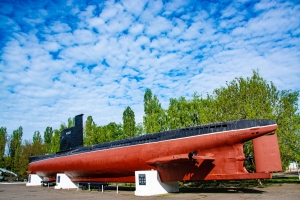


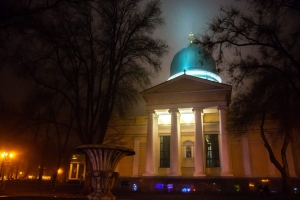


Imagine a city invented from scratch — on a bare coastline, beside a Turkish fortress, by imperial decree. And within half a century it had become the third-largest city in the empire, with its own language, its own humour and its own character unlike anything else. This is Odesa. Here even the cobblestones know they’re special.
You don’t «see the sights» in Odesa — you fall for it or you argue with it, but nobody leaves indifferent. The city smells of sea, acacia and fish frying at the Pryvoz market; it talks to you in lines you want to write down; and even under the strikes of 2022 it keeps making jokes — because it simply doesn’t know any other way. Here’s where to start.
Important. Odesa is a coastal city that periodically comes under missile and drone strikes, mainly targeting port infrastructure; some historic buildings in the centre have also been damaged. The beach season is restricted due to mine hazards — swimming is only permitted on officially open beaches. Before visiting, check the current situation via official channels and the «Air Alarm» app.
City at a glance
| Founded | 1794 (imperial decree to found the city on the site of the Khadjibey fortress); the name «Odesa» was formalised in 1795. Settlements on this spot existed much earlier |
| Admin status | Regional capital of Odesa Oblast; one of Ukraine’s largest cities |
| Historical land | Northern Black Sea coast; historically a free-trade port city |
| Population | ~1 million |
| Area | ~162 km2 |
| Sea | Black Sea; nearby — the Khadjibey and Kuyalnyk estuaries with therapeutic mud |
| Nicknames | Pearl by the Sea, Southern Palmyra, Capital of Humour, Odesa-Mama |
| Best time to visit | Year-round, subject to the security situation. May and September are most comfortable; summer is the sea season (with restrictions) |
In this article
- What kind of city this is and why people come
- Location and character
- History in brief
- Legends and mystique
- Top attractions in Odesa
- City itineraries
- Things you must do in Odesa
- FAQ
What kind of city this is and why people come
Odesa is a city with a personality. Younger than most Ukrainian regional capitals, it has packed more identity into its short life than cities twice its age. Odesa means a port, the multiculturalism that shaped it, and the humour that holds it together.
People come for the architecture of the «Southern Palmyra». The historic centre is an unbroken ensemble of 19th-century classicism, baroque, Art Nouveau, lacy balconies and courtyard labyrinths. In 2023 it was inscribed on the UNESCO World Heritage List — immediately as a site in danger.
And people come for the feeling of Odesa itself. For the sea glimpsed at the end of every street. For Pryvoz market, where haggling is an art form. For the catacombs, the longest underground network of any city in the world. And for that special atmosphere in which even war couldn’t erase the irony. Odesa is a city to be felt, not just ticked off a list.
Location and character
Odesa sits on the gently sloping shore of the Black Sea, in its north-western corner — a historic crossroads between Europe and the Near East. The sea and the port made the city what it is: commercial, open, loud. Nearby lie the saline Khadjibey and Kuyalnyk estuaries, famous for their therapeutic mud.
The historic centre is compact and walkable: Prymorsky Boulevard, Derybasivska Street, Cathedral Square, Hretska Street — all within an hour’s stroll. The city is laid out in a neat grid, almost impossible to get lost in — every street eventually leads to the sea. A special Odesan pleasure: the courtyards, a whole parallel world of galleries, cats and washing lines.
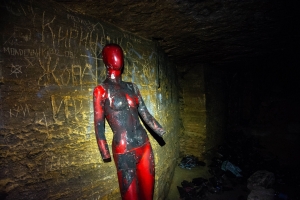
Beneath the centre lies another Odesa: the catacombs, a labyrinth of former limestone quarries stretching thousands of kilometres. The city was literally built from its own underground: the houses were laid in the same shell limestone cut from below.
When to go. The most comfortable months are May and September: warm without July’s heat and crowds. Summer is beach season, but with the current security situation and beach restrictions. Autumn and winter are quieter, yet the city never fully closes: theatres, museums and cafés all operate. Any visit should be planned around up-to-date safety advice.
History in brief
From Khadjibey to the free-trade port
The site of Odesa was settled for centuries — the last incarnation was the Turkish fortress of Khadjibey. In 1794 an imperial order founded a new port city here, and the following year it was named Odesa. Construction was overseen by José de Ribas (after whom Derybasivska Street is named) and the first city governor, Duc de Richelieu. The real leap came with free-port status: duty-free trade turned Odesa into one of the wealthiest cities in the empire.
The golden century
The 19th century created the Odesa we know. The city ranked third in the empire, with an opera house, boulevards, a stock exchange and a university. Greeks, Italians, Jews, Bulgarians and Armenians all settled here — and from this mix the Odesan dialect and Odesan humour were born. Pushkin served his exile here; later, writers Babel, Ilf and Petrov and Kataev all worked here, forming the celebrated «Odesa literary school.»
20th–21st centuries
The 20th century hit Odesa hard: revolutions, Romanian occupation and the Holocaust during World War II, the heroic defence of 1941, Soviet decades. In independent Ukraine, Odesa remained the country’s main seaport. 2022 brought missile strikes on the port and mines in the Black Sea; that same year Ukrainian forces sank the cruiser Moskva and gradually pushed the enemy fleet back. In 2023, Odesa’s historic centre was listed by UNESCO — as a site in danger.
Odesa’s catacombs are the longest artificial underground network in the world: estimated at over 2,500 kilometres. For comparison: that’s more than the straight-line distance from Odesa to Berlin.
Legends and mystique
Odesa is a city that mythologises itself. A legend can be born over lunch and by evening become an established «historical fact.» Here are four without which Odesa is not Odesa.
1. How the city got its name
The most popular legend says the name «Odesa» was chosen in honour of the ancient Greek colony Odessus, supposedly located somewhere nearby (in fact it stood far away, near modern Varna). Another version — quintessentially Odesan — holds that when the name was proposed to the empress, she ordered it feminised, because «there should be more water here» — and Odessus became Odesa. No documentary evidence exists, but Odessans have chosen this version. Because it’s funnier.
2. The Duke you must view from a manhole
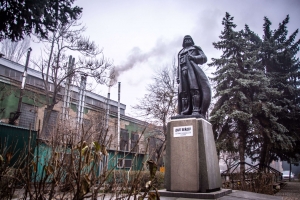
The statue of Duc de Richelieu above the Potemkin Stairs is the city’s main symbol. But in Odesa there is a ritual: you must walk to a specific drain cover in front of the monument, crouch down and look up at the Duke from there. From that angle, the statue’s outstretched arm takes on a decidedly rude gesture. «Viewing the Duke from the manhole» is a compulsory item on any programme for someone who wants to understand Odesan humour.
3. Underground Odesa
The catacombs are not just «caves» — they are a parallel city. Former quarries where the limestone was cut for the houses above became a labyrinth sheltering smugglers, criminals and, in World War II, partisans. Part of the network, they say, still hasn’t been mapped, and new branches turn up from time to time. Go only with a guide: the legends about people who went in alone and never came out are not entirely legendary.
4. Odesan humour as a survival strategy
The greatest «legend» of Odesa is the Odesan sense of humour itself. It was born in a multilingual port where you had to negotiate fast without permanently offending anyone. Over time it evolved into a distinct art: the Odesan phrase is always a little crooked, a little bold and always on target. The city believes in this so completely that it even has its own humour festival. And even now, under bombardment, Odesa keeps joking — because that’s how it refuses to break.
Top attractions in Odesa
Potemkin Stairs and Prymorsky Boulevard
The city’s main stage. The Potemkin Stairs — 192 steps descending from the Duke’s statue to the port, with a famous optical illusion: from below you see only the treads, from above only the landings. Eisenstein’s film made them world-famous. At the top, Prymorsky Boulevard offers a sweeping sea view and the best starting point for a first walk. Potemkin Stairs and Prymorsky Boulevard (page coming soon).
Odesa National Opera and Ballet Theatre
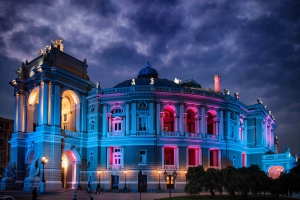
One of the most beautiful opera houses in Europe — a Viennese neo-baroque building with marble staircases and a ceiling painted with scenes from Shakespeare. Built in the late 19th century, it remains the city’s calling card. A ticket to a performance here is one of the best evening investments in Odesa. Odesa National Opera and Ballet Theatre (page coming soon).
Derybasivska Street
Odesa’s main pedestrian street, named after the city’s founder José de Ribas. Cafés, street musicians, the adjacent City Garden, historic facades — this is where the city’s pulse is felt. Even in wartime, Derybasivska remains the heart of Odesa and the place everyone eventually returns to. Derybasivska Street (page coming soon).
Odesa Catacombs
Underground Odesa — the longest man-made tunnel system in the world. Former quarries that became a haven for smugglers and partisans; today part of the network is open for organised tours. Descending is a separate, slightly eerie, but unforgettable experience. Going alone is strictly inadvisable. Odesa Catacombs (page coming soon).
Vorontsov Palace and Colonnade. The palace of the first regional governor on the edge of Prymorsky Boulevard, with a semicircular colonnade offering one of the best views of the port and sea. Page coming soon.
Spaso-Preobrazhensky Cathedral. The city’s main church on Cathedral Square — a vast cathedral demolished in Soviet times and rebuilt in independent Ukraine. A dominant landmark of the historic centre. Page coming soon.
Passage. A lavish late-19th-century shopping arcade with a glass roof and sculpture-encrusted facades. Even if you buy nothing, it’s worth stepping inside just for the architecture. Page coming soon.
Pryvoz Market. Odesa’s legendary market — not just a place to shop but an attraction in its own right. Here they haggle with intonation, sell things «just for you» and teach you Odesan faster than any textbook. Page coming soon.
Sea Port and Maritime Terminal. Where it all began. Even now, with the sea mined, the port remains the city’s symbol and the promenade by the terminal an atmospheric place to walk. Odesa Sea Port (page coming soon).
Trinity Greek Church. A reminder of the Greek community that for centuries was one of the city’s pillars. One of the oldest churches in Odesa. Trinity Greek Church (page coming soon).
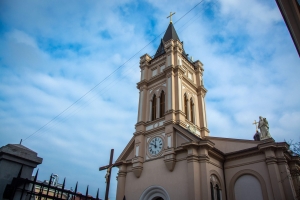
Church of the Assumption of the Blessed Virgin Mary (Roman Catholic). A Latin-rite church — the legacy of Odesa’s Polish and Italian communities, its slender Gothic lines standing out amid the southern classicism. Church of the Assumption (page coming soon).
Vasyl Pinchuk Museum of Sound. A very Odesan spot: a collection of antique music boxes, gramophones and barrel organs that don’t just stand there — they play. A small museum with a big soul. Vasyl Pinchuk Museum of Sound (page coming soon).
Battery 411 — Memorial to the Heroic Defence of Odesa. An open-air museum on the site of a coastal battery: real military hardware, guns and aircraft. A place about a different war, but one that resonates afresh today. Battery 411 (page coming soon).
City itineraries
Itinerary 1. Odesa in one day (must-see highlights)
Start at Prymorsky Boulevard and the Potemkin Stairs with the obligatory «Duke from the manhole» ritual. Continue to the Vorontsov Colonnade, Spaso-Preobrazhensky Cathedral, Derybasivska Street and the City Garden. Lunch in the centre. Afternoon — Odesa Opera Theatre; evening — a performance or a stroll along the promenade.
Itinerary 2. Odesa in two days (full)
Day 1 — as in Itinerary 1: boulevard, stairs, Derybasivska, Opera. Day 2 — deeper Odesa: Pryvoz Market in the morning, Odesa Catacombs with a guide, Vasyl Pinchuk Museum of Sound, then the Maritime Terminal and promenade in the evening.
Itinerary 3. Multicultural Odesa
A route through the city’s melting-pot heritage: Trinity Greek Church → Church of the Assumption (Roman Catholic) → Church of St Nicholas → Arabic Cultural Centre and Mosque. Four communities that built one city.
Itinerary 4. Underground and heroic Odesa
For those who like history without gloss: Odesa Catacombs with a guide → Battery 411 → Krayan abandoned workshops (for urban explorers). A day not for entertainment but for understanding.
Itinerary 5. Odesa with kids
Vasyl Pinchuk Museum of Sound with real barrel organs → Battery 411 with real hardware → Shevchenko Park for a stroll → Arkadia entertainment centre. Plenty of space and zero museum boredom.
Things you must do in Odesa
- Walk down the Potemkin Stairs and back up again — feel that famous optical illusion with your own legs.
- View the Duke from the manhole — the classic Odesan ritual that unlocks the city’s sense of humour.
- Catch a show at the Opera Theatre — even if you’re not an opera fan, go for the building alone.
- Haggle at Pryvoz Market — not to save money, but for the conversation. It’s a free masterclass in Odesan.
- Descend into the catacombs with a guide — see the second, underground city with your own eyes.
- Try real Odesan forshmak and «synenki» (aubergines) — not in a tourist restaurant, but where the locals eat.
- Have coffee in a courtyard — an Odesan passageway with cats and galleries deserves its own place on the itinerary.
- Stroll Prymorsky Boulevard at sunset — when the sea turns pink and the Vorontsov Colonnade turns gold.
- Step inside the Passage and stand in the middle, looking up at the glass roof and sculpture.
- Listen to a street musician on Derybasivska — that is the sound of the city.
- Eat fresh Black Sea fish — gobies, mullet, sprats, fried simply and honestly.
- Buy something «with personality» — an Odesan souvenir without irony is, by definition, impossible.
There are now 192 Potemkin Stairs, though there were originally 200. Eight of the lowest steps disappeared when the port was extended. Odessans say the city simply «grew a little taller.»
Frequently asked questions
Is Odesa safe right now?
Odesa is a coastal city that periodically comes under missile and drone strikes, mainly targeting port infrastructure. At the same time the city is functioning: transport, museums, cafés and theatres are open. Any trip requires careful planning: monitor official recommendations, respond to air-raid alerts via the «Air Alarm» app and know your nearest shelter.
Can you swim in Odesa right now?
Some beaches are officially open, others are closed due to mine hazards. The Odesa city and regional authorities publish updated lists. Swim only on officially permitted beaches, do not go beyond the buoys and stay away from sections marked with mine-warning signs.
What to see in Odesa in one day?
The essential loop: Prymorsky Boulevard and the Potemkin Stairs → Vorontsov Colonnade → Derybasivska Street with the City Garden → Odesa Opera Theatre.
What to see in Odesa in two days?
Day 1 — the historic centre (boulevard, stairs, Derybasivska, Opera). Day 2 — deeper Odesa: Pryvoz Market, Odesa Catacombs, Vasyl Pinchuk Museum of Sound and the Maritime Terminal.
Where to go in the evening in Odesa?
To a show at the Opera Theatre, for a stroll along Derybasivska in the evening with street musicians, or to Prymorsky Boulevard for the port view — subject to the security situation and the curfew.
Where to take kids in Odesa?
Vasyl Pinchuk Museum of Sound with antique mechanisms, Battery 411 with real military equipment, Shevchenko Park for walks and Arkadia entertainment complex.
What are Odesa’s most famous dishes?
Odesan forshmak (chopped herring), «synenki» (aubergines) in every variation, brynza cheese, fried Black Sea fish — gobies, mullet and sprats — and fish soup. The city also has a strong café culture and its own confectionery traditions.
What to bring back from Odesa?
Souvenirs featuring the Duke and the Potemkin Stairs, postcards with Odesan phrases, brynza and aubergine caviar from local markets, local coffee, items from Odesan artisans. The best souvenir is, naturally, one with a sense of humour.
Odesa is a city that defies the guidebook. Too alive, too voluble and too distinctly itself to be a mere «destination.» You don’t memorise it — you catch it like a virus, and for a long time afterwards you notice Odesan intonations creeping into your own speech.
If you’re still wondering where to begin — begin at the sea at the end of the street. In Odesa, every street leads there eventually, and that, in essence, is the city’s main itinerary.
JoomShopping Download & Support