


- You are here:
-
Sights by Regions

- Ternopil region
Ternopil region

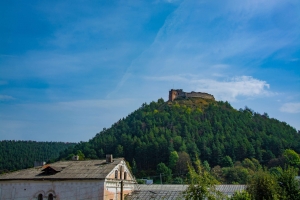
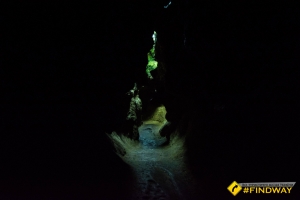
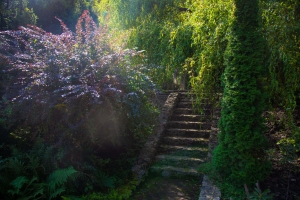

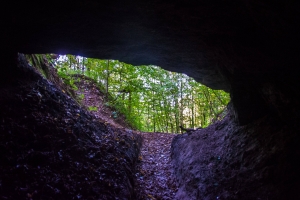
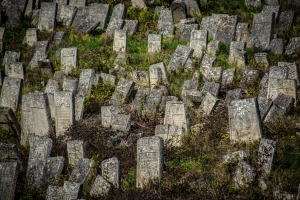
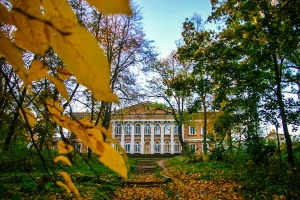

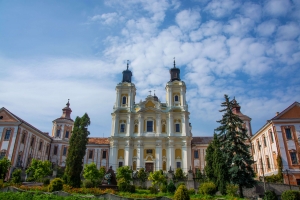


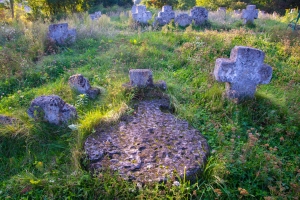
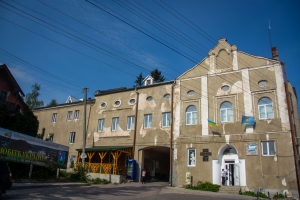




Ternopil Region is Western Podolia at maximum concentration: castles, castles, castles, monasteries, gypsum caves with the longest passages in Europe, the Dnister Canyon, Crimean Tatar traces, Jewish heritage, and the sculptures of Pinzel. No other region of Ukraine packs more castles into a single oblast — save perhaps neighbouring Khmelnytskyi. This is where Queen Bona Sforza held court in Kremenets, where Cossacks besieged the Zbarazh fortress (immortalised by Henryk Sienkiewicz in With Fire and Sword), and where the Galician Michelangelo, Johann Pinzel, carved sculptures that left European art historians speechless.
People come here for four reasons: castles (Kremenets, Zbarazh, Buchach, Chortkiv, Skalat, Mykulyntsi, Terebovlia, Sydoriv), caves (Crystal Cave in Kryvche, Optimistic Cave — the longest gypsum cave in Europe), the Dnister Canyon with its limestone cliffs and Zalishchyky, and sacred heritage (Pochaiv Lavra, Pidhoriansky Monastery, the Monastery of Saint Yosaphat in Buchach).
Region at a glance
| Administrative centre | Ternopil |
| Area | 13 824 km2 (one of the smallest oblasts) |
| Population | ~1.0 million |
| Historical lands | Western Podolia, Kremenetshchyna (north), Opillia (west), Pokuttia (south) |
| Main rivers | Dnister, Zbruch, Seret, Strypa, Ikva |
| When to go | May–October for castles, the canyon and the Kremenets Hills; caves open year-round |
In this article
- What makes this region tick
- Geography, landscapes, climate
- History in brief
- Legends and mystique
- Top sights of the region
- Day trips and weekend routes
- Must-do experiences
- FAQ
What makes this region tick
Ternopil Region is one of the most castle-rich corners of Ukraine. More than 30 castles, fortresses, and fortified monasteries from the 13th–17th centuries survive here, at least ten of them in a state worth visiting. This is Western Podolia — the borderland that for centuries was contested by Poland, Lithuania, the Crimean Khanate, Cossack Ukraine, and later the Austrian Empire and interwar Poland.
Beneath the rolling hills lies an extraordinary underground world: Ternopil Region is the gypsum cave capital of Europe. Sliced through the gypsum strata is the world's longest gypsum cave, Optimistic Cave (over 260 km of passages, discovered in 1966 and still not fully mapped). Crystal Cave in Kryvche is the most visitor-friendly option, while Mlynky, Atlantyda, and Uhryn offer wilder underground adventures.
Then there is the Dnister Canyon along the region's southern rim — the longest canyon in Ukraine (250 km between Zalishchyky and Khotyn), with limestone cliffs rising 100 metres above the river. One of the country's finest kayaking corridors and simply one of the most photogenic landscapes in western Ukraine.
Geography, landscapes, climate
Ternopil Region sits on the West Podolian plateau, part of the broader Podolian Upland. There are no high mountains (average elevation 300–400 m), but the relief is surprisingly varied, with the Podolian Tovtry — limestone ridges running through neighbouring Khmelnytskyi oblast and into southern Ternopilshchyna. In the north rise the Kremenets Hills: a forested elevated plateau with the region's highest point, Mount Bona (407 m), looming over the town of Kremenets.
The region's southern boundary is the Dnister, whose most dramatic loop forms the Dnister Canyon — limestone cliffs reaching 100 metres. Sydoriv Castle-Ship, perched on a rocky spur above the Zbruch river, is one of the canyon zone's most photogenic vantage points.
The underground world of Ternopilshchyna is a geological miracle. The gypsum strata conceal the world's longest gypsum caves: Optimistic Cave (260+ km of passages — longest gypsum cave in the world and second-longest cave overall, behind Mammoth Cave in Kentucky with 685 km), Ozerna Cave (135 km), Mlynky (45 km), Crystal Cave (22 km). Most are off-limits to casual visitors, but Crystal Cave is fully equipped for guided tours.
When to go. Castles and canyon are best from late April to mid-October. The Kremenets Hills are finest in late summer and early autumn. Caves are open year-round (underground temperature a constant 11–12°C). The 2022 war did not reach Ternopil Region directly: it is a rear-area oblast with only occasional missile strikes on infrastructure.
History in brief
The lands of modern Ternopil Region form the historic territory of Podolia, part of the Principality of Galicia-Volhynia from the 12th century. In the 1340s the region passed to Lithuania, and from the 1430s to Poland. Its exposed position on the Crimean Khanate's raiding frontier meant that Tatar attacks came almost annually — and that every large village needed a fortification. The result is the dense castle network still visible today.
In the 15th–17th centuries the region became one of Poland's wealthiest provinces. Kremenets was the personal domain of Queen Bona Sforza (1518–1556), who invested heavily in its fortress and town. Zbarazh belonged to the Vyshnevetsky family. Buchach was the ancestral seat of the Potocki magnates, who invited Johann Pinzel — the Galician Michelangelo — to decorate their churches and town hall with Baroque sculptures that still stop visitors in their tracks.
1648–1657. The Khmelnytsky Uprising. The Siege of Zbarazh in 1649 — when Yarema Vyshnevetsky held the castle against a combined Cossack-Tatar force for six weeks — became one of the war's defining episodes and the centrepiece of Henryk Sienkiewicz's novel With Fire and Sword (1884).
In 1772 Ternopilshchyna passed to the Austrian Empire after the First Partition of Poland. The Austrian period brought a flowering of Jewish communities (Ternopil, Buchach, and Zbarazh became important Hasidic centres) and the rise of Kremenets Lyceum, one of the finest schools in the empire. In 1918–1919 the region was briefly part of the West Ukrainian People's Republic. From 1921 to 1939 it was under Polish rule; in 1939 it was incorporated into Soviet Ukraine.
In the 1940s–50s Ternopilshchyna was a stronghold of the OUN-UPA resistance movement. Roman Shukhevych operated here; the last UPA fighters held out in these hills until the mid-1950s.
2022. Ternopil Region is a rear-area oblast, far from the front lines. Occasional missile strikes have hit infrastructure (mainly Ternopil and Chortkiv), but no tourist sites have been directly struck.
Optimistic Cave in the village of Korolivka is the world's longest gypsum cave (over 260 km of explored passages) and the second-longest cave on the planet — after Mammoth Cave in Kentucky (685 km). Discovered in 1966 by student cavers from Lviv University. Every year new expeditions add kilometres to the total length. Among extreme cavers, it is one of the cult destinations of Eastern Europe.
Legends and mystique
1. Bona Sforza and the curse of the castle
Bona Sforza — Italian princess, second wife of Polish king Sigismund I the Old, and one of the most formidable women of 16th-century Europe — arrived in Poland at the age of 24 in 1518 and became the de facto ruler while her husband aged. Kremenets Castle was her personal property from 1530 to 1556. Local legend says that Bona cursed the castle before her death (she was poisoned in Italy after returning home), declaring that no one outside her bloodline would ever hold it. A century after her death, Bohdan Khmelnytsky's Cossacks razed the castle (1648). It has never been rebuilt. Kremenets Castle still stands as a ruin on the hill locals call "Queen Bona's Castle Mountain."
2. Zbarazh and With Fire and Sword
In 1649, Yarema Vyshnevetsky held Zbarazh with a Polish garrison against the combined Cossack-Tatar army of Bohdan Khmelnytsky for six weeks. Seven thousand defenders against 150,000 attackers. The castle held thanks to its bastion fortifications and stockpiled supplies. Sienkiewicz made this siege the dramatic centrepiece of With Fire and Sword (1884), one of the most celebrated Polish novels about Ukraine. Local legend holds that at the most critical moment of the siege, the ghost of Saint Wojciech appeared and showed the defenders a secret underground passage for a sortie. The debate between historians and believers continues to this day.
3. Johann Pinzel — the Galician Michelangelo
In the 18th century, a sculptor named Johann Georg Pinzel worked in Buchach (present-day Ternopil Region) and became one of the most enigmatic figures in European art history. No one knows exactly where he was born, where he came from, what he looked like, or when he died. He left behind several dozen sculptures that leave German and French art historians reaching for superlatives. The Buchach town hall, the Church of the Dormition in Horodenka, the Monastery of Saint Yosaphat in Buchach — all his work. Local legend says Pinzel was a secret monk who had taken a vow of invisibility, carving behind locked doors and carrying his finished works out at night. If true, it is one of the highest degrees of artistic anonymity in history.
Top sights of the region
Kremenets and Kremenets Castle
Kremenets is one of the most beautiful small towns in Ternopil Region. Above it rises Mount Bona (407 m) with the ruins of Kremenets Castle, Queen Bona Sforza's personal stronghold. The climb is steep but the view from the summit — across the Kremenets Hills, the town's church spires, and the botanical garden below — is the finest in northern Ternopilshchyna. Down in town: Kremenets Lyceum (1805), once among the finest schools in the Russian Empire, the Kremenets Local History Museum with its Polish and Jewish heritage collections, the Epiphany Monastery, and the Kremenets Botanical Garden, one of the oldest in Ukraine.
Zbarazh — the castle of With Fire and Sword
Zbarazh is a small town with one of Ukraine's most famous castles. Zbarazh Castle (1626–1631), built by the Vyshnevetsky family, was the first true European-style bastion fortress on Ukrainian soil. In 1649 Yarema Vyshnevetsky held it against Khmelnytsky in the siege that Sienkiewicz immortalised. The castle has been restored and now houses a museum. Nearby: a 17th-century Bernardine Monastery.
Buchach — the Potockis and Pinzel
Buchach is one of the most beautiful towns in Podolia. The ancestral seat of the Potocki magnates since the 17th century. The Buchach Town Hall (1751) is a late Baroque masterpiece adorned with Johann Pinzel's sculptures. The Monastery of Saint Yosaphat with its Church of the Dormition — also Pinzel's work. Buchach Castle on the hill above town (now ruins) and the Buchach Synagogue speak to the town's once-powerful Jewish community. Not yet a standalone page on the site, but an unmissable stop in Ternopilshchyna.
Chortkiv — the Holski Castle and Carmelite Monastery
Chortkiv is a small but atmospheric town on the Seret river. The Holski Castle (17th century) sits on a hill above the town; the Carmelite Monastery with its Church of Saint Stanislaus and the historic merchant quarter complete the picture. The town was once home to a powerful Hasidic dynasty — the Chortkiv Rebbes. Currently listed as a city category on the site, with individual attraction pages still to come.
Mykulyntsi — castle and thermal springs
Mykulyntsi is a township 25 km from Ternopil. Mykulyntsi Castle (16th–17th century, built by the Seniavsky family) is one of the best-preserved defensive castles in Podolia. Nearby: the Church of the Holy Trinity (18th century) and the Mykulyntsi Thermal Springs with their mineral water — a sanatorium operates here year-round.
Ternopil and Ternopil Lake
Ternopil is the regional capital — relatively young by Ukrainian standards, founded in 1540. The main draw is the Old Castle (16th century) on the shore of an artificial lake. That lake, Ternopil Lake (300 hectares), is a rare phenomenon: a vast man-made reservoir right in the city centre, with a promenade, fountains, and summer concerts. Shevchenko Boulevard with its poet's monument is the city's social hub.
Sydoriv Castle-Ship
Sydoriv Castle in the village of Sydoriv is a unique 17th-century fortification shaped like a ship — the only one of its kind in Ukraine. Built by the Kalinowski family on a rocky spur above the Zbruch river, it is currently in a state of partial restoration, but its architecture and setting are remarkable. One of the most photogenic spots in Ternopil Region.
Pidhoriansky Monastery in Terebovlia
Pidhoriansky Monastery near Terebovlia is one of the oldest monasteries in Podolia, dating to the 14th century. It was carved into a chalk cliff: underground cells, chapels, and corridors that feel like something from the Italian Marche. The town of Terebovlia itself — once the seat of the medieval Terebovlia Principality — has its own strong historical identity, though it has no standalone page on the site yet.
Crystal Cave in Kryvche
Crystal Cave in the village of Kryvche is the region's most accessible gypsum cave. Total length: 22 km; approximately 2.5 km are lit and equipped with walkways and guides. Unique selenite gypsum crystals stud the walls; underground chambers harbour small lakes; temperature holds at 11–12°C throughout the year. One of the best family-friendly routes in the region.
Skalat Castle
Skalat Castle in the town of Skalat is a four-towered 17th-century fortress built by the Kalinowski family. All four corner towers survive — one of very few structures of this type remaining in Ukraine. Partly restored, with guided tours available. Not yet a standalone page on the site.
Zalishchyky and the Dnister Canyon
Zalishchyky is a town at the very south of Ternopilshchyna, cradled in a loop of the Dnister. The Dnister Canyon, with cliffs rising 100 metres above the river, is one of the most beautiful landscapes in western Ukraine. The classic kayaking route from Zalishchyky to Khotyn begins here. The town has a 19th-century historic centre, a riverfront promenade, and a park. Neither the town nor the canyon yet has a dedicated page on the site, but both will be added in time.
Day trips and weekend routes
Route 1. Castles of northern Ternopilshchyna in a day
About 140 km from Lviv. Start with Kremenets: climb to Queen Bona's Castle and stroll the historic centre. Lunch in town. Afternoon: Kremenets Local History Museum and the Kremenets Botanical Garden. Easily combined with a stop at Pochaiv Lavra.
Route 2. With Fire and Sword — Zbarazh and Ternopil in a day
From Lviv or Kyiv. Morning: Zbarazh with its Vyshnevetsky Castle and Bernardine Monastery. Lunch. Afternoon: Ternopil with the Old Castle and an evening walk along Ternopil Lake.
Route 3. Pinzel and southern Podolia — a weekend
Two-day route. Day 1: Buchach — the Baroque town hall with Pinzel's sculptures, the Monastery of Saint Yosaphat. Overnight. Day 2: Chortkiv with the Holski Castle and Carmelite Monastery, then on to Sydoriv Castle-Ship.
Route 4. Underground Ternopilshchyna — the caves
For spelunkers and adventure seekers. Crystal Cave in Kryvche for a classic lit-and-guided underground tour. Experienced cavers with an organised group can arrange an extreme excursion into Mlynky or Optimistic Cave. One of the most extraordinary underground adventures in Europe.
Route 5. The Dnister Canyon by kayak
The classic summer route. Paddle the Dnister from Zalishchyky (Ternopil Region) to Khotyn (Chernivtsi Region) over three to five days. Limestone cliffs, cave openings in the rock face, cliff-top monasteries. One of Ukraine's finest active-tourism itineraries.
Must-do experiences
- Climb Mount Bona in Kremenets — to the queen's ruined castle, with panoramic views over the Kremenets Hills.
- Stand in the hall of Zbarazh Castle — where Khmelnytsky's Cossacks besieged Yarema Vyshnevetsky for six weeks.
- See Pinzel's sculptures in Buchach — and understand why European art historians call him the Galician Michelangelo.
- Descend into Crystal Cave — walk 2.5 km of a gypsum labyrinth glittering with selenite crystals.
- Circumnavigate Sydoriv Castle-Ship — the only ship-shaped castle in Ukraine.
- Stroll Ternopil Lake at sunset — an outdoor urban lake 300 hectares wide, right in the city centre.
- Try Podolian dumplings with cherries and honey — the local dessert.
- View the Dnister Canyon from the lookout above Zalishchyky — the finest panorama in western Ukraine.
- Buy a book about Pinzel at the Buchach tourist centre — 18th-century Ukrainian art at its most intense.
- Soak in the thermal springs at Mykulyntsi — even in December, the water stays at 38°C.
Johann Georg Pinzel worked in Ukraine from the 1740s until 1761. He left behind several dozen sculptures in Lviv, Buchach, Horodenka, and Monastyryska. In 2012–2013 an exhibition of his works at the Louvre in Paris was hailed as the greatest rediscovery of 18th-century European art in decades. French critics called Pinzel "the unknown Bernini of Eastern Europe." Buchach is the epicentre of his legacy.
Frequently asked questions
What can I see in Ternopil Region in a single day?
The quickest option is Kremenets with a climb to Queen Bona's castle. Alternatively, Zbarazh with its With Fire and Sword castle. Or — for those drawn underground — Crystal Cave in Kryvche.
How does Ternopil Region differ from Khmelnytskyi Region?
Both regions form historic Podolia, divided administratively in 1937. Ternopilshchyna is Western Podolia — closer to Galician identity, with richer Polish and Jewish heritage (Buchach, Zbarazh, Kremenets). Khmelnytskyi Region is Central Podolia, defined by Kamianets-Podilskyi, Medzhybizh Fortress, and Bakota. Together they form the most castle-dense stretch of Ukraine.
What is Crystal Cave?
A gypsum cave in the village of Kryvche (Borshchiv district, Ternopil Region). Total length: 22 km. About 2.5 km are equipped with lighting and guided tours. Selenite gypsum crystals cover the walls; underground chambers hold small lakes; temperature is a constant 11–12°C year-round. One of the most accessible gypsum caves in Europe.
What is Optimistic Cave?
The world's longest gypsum cave — over 260 km of explored passages (and still being mapped). The second-longest cave on the planet, after Mammoth Cave in Kentucky. Discovered in 1966 by student cavers from Lviv University. Not accessible to ordinary tourists: entry is permitted only to organised caving groups with full equipment. Located in the village of Korolivka (Borshchiv district).
Is it safe to travel to Ternopil Region now?
Yes. Ternopil Region is a rear-area oblast, far from the front lines. Occasional missile strikes have hit infrastructure (mainly Ternopil and Chortkiv), but no tourist sites have been directly struck. Before travelling, check the official Ukrainian government channels and the air alert app Povitriana tryvoga.
Where to go with children in Ternopil Region?
Crystal Cave is one of the most child-friendly spots in the region (an underground adventure with glittering crystals). Ternopil Lake for promenades and boat rides. Zbarazh Castle for playing knights. The Mykulyntsi thermal springs for a swim.
What are the signature dishes of Ternopil Region?
Podolian borscht with pampushky rolls, Kremenets cottage-cheese pancakes, Buchach poppy-seed wafers, Podolian dumplings with cherries and honey, kyslyak (curd cheese), kyndyukh (stuffed stomach), kachanky (cherries in pastry). A distinct layer of Hasidic cuisine — tzimmes and kugel — traces the Jewish heritage of Kremenets and Chortkiv.
What to bring home from Ternopil Region?
A castle magnet (Kremenets, Zbarazh, or Sydoriv), a miniature Pinzel sculpture replica from Buchach, a selenite crystal from Crystal Cave, Kremenets herbal balsam, honey from the Kremenets Hills apiaries, a bottle of local wine.
Ternopil Region is a remarkably concentrated travel destination. Within an area smaller than Tuscany: more than 30 castles, the world's longest gypsum caves, the Dnister Canyon, Pinzel's Baroque sculptures, Jewish and Polish heritage, and thermal springs. Everything within 100 km of everything else.
Come here once you feel you have done Lviv Oblast and want something deeper. Ternopilshchyna is Podolia at its purest.
JoomShopping Download & Support