


- You are here:
-
Sights by Regions

- Donetsk region
Donetsk region
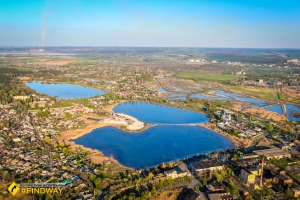


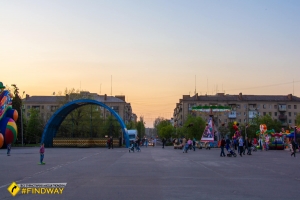
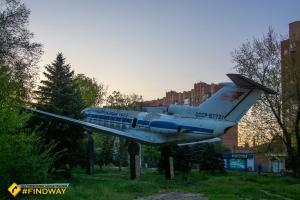


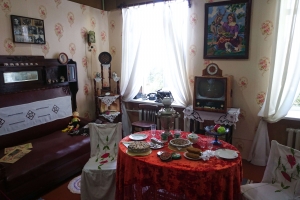







Donetsk region is the most complex region in modern Ukraine. Most of its territory has been under Russian occupation — since 2014 (Donetsk city, Horlivka, Makiivka) and since 2022 (Mariupol, Bakhmut, Avdiivka, Solodar, Vuhledar, Kurakhove). The part still under Ukrainian control covers the northern section, including the cities of Sloviansk, Kramatorsk, Lyman, Sviatohirsk, Kostiantynivka, and Druzhkivka — all in a frontline zone under regular shelling.
And yet Donetsk region is not only about war. It is home to Sviatohirska Lavra — one of Ukraine’s three great lavras and a national shrine. It has chalk mountains above the Siversky Donets river that look like the southern edge of the Alps. It has the salt mines of Solodar, which supplied Ukraine with salt for centuries and created breathtaking underground cathedrals with white walls. It has the Stone Sculpture Park in Druzhkivka, unique in the post-Soviet world. And it has Mariupol — a city that became a global symbol of resilience.
Important. Visiting Donetsk region is currently dangerous. Over 60% of the territory is under Russian Federation occupation (Donetsk city, Mariupol, Bakhmut, Avdiivka, Solodar, and others). Travel there is impossible without serious risk to life. The Ukrainian-controlled part (Sloviansk, Kramatorsk, Lyman, Sviatohirsk) is a frontline zone subject to regular missile, artillery, and drone strikes. Tourist travel is not recommended; this guide describes the region as national heritage worth knowing — not as an active travel destination.
Region at a Glance
| Administrative centre | Donetsk city (occupied since 2014); administrative functions relocated to Kramatorsk |
| Area | 26,517 km2 |
| Population | ~4 million before 2014; ~2.4 million before 2022; significantly fewer now in the controlled zone |
| Historical land | Southern Wild Field (Dyke Pole), Donbas (industrial region since the 19th century), Pryazovia |
| Main rivers and sea | Siversky Donets, Kalmius, Kalchyk; Sea of Azov (coastline occupied) |
| Current status | Over 60% occupied since 2014 and 2022; controlled area is a frontline zone |
| Best time to visit | Tourist access currently restricted across the entire region; when safe — late April to early October |
In This Article
- What is this region and why do people come here
- Geography, landscapes, climate
- Brief history
- Legends and mystique
- Temporarily occupied territories
- Top sights (Ukrainian-controlled area)
- Routes — for when it is safe again
- Must-do experiences
- FAQ
What Is This Region and Why Do People Come Here
Donetsk region is where three Ukrainian identities converge. The southern Wild Field — a steppe frontier of Cossack fortifications and Scythian burial mounds. The industrial Donbas, built on coal, metal, and salt in the second half of the 19th century. Pryazovia (the Azov coast), with fishing villages, Greek communities, and Crimean Tatar heritage. The war of 2014–2024 has added an extraordinarily heavy new layer to this polyphony.
Before 2014, visitors came to Donetsk region for three reasons. First — Sviatohirska Lavra, one of Ukraine’s three great lavras and a national shrine. Second — the Siversky Donets highlands, with chalk cliffs and salt lakes — landscapes utterly unexpected in steppe Ukraine. Third — industrial heritage: the Solodar salt mines, the stone sculpture park, the metallurgy museum trails. Not a «tourist» region in the conventional sense, but a region with unmistakable character.
Geography, Landscapes, Climate
Donetsk region sits on the Donetsk Ridge — geologically the oldest part of modern Ukraine, with granite and coal seams formed 350 million years ago. Here stands the highest point of Left-Bank Ukraine — Mohyla Mechetna (367 m), a steppe burial mound with views stretching for dozens of kilometres.
The northern part of the region is carved by the Siversky Donets river and its chalk escarpments. The chalk cliffs of Bilokuzmynivka near Kramatorsk and the Sloviansk chalk mountains near Raihorodok form what locals call the «southern Alps of Ukraine» — an arresting sight in the middle of open steppe. To the south lies Pryazovia with the Sea of Azov, river deltas, and the beaches of Mariupol and Berdiansk (now occupied).
Beneath the region lie enormous salt deposits, mined for centuries in Solodar. Those mines became a singular attraction — underground cathedrals with white walls, a museum, and concerts held 300 metres below the surface. In January 2023, Solodar fell under occupation; the current state of the mines is unknown.
Best time to visit. The Ukrainian-controlled part of Donetsk region is finest in nature from late April to October, but tourist travel is not recommended due to the frontline situation. Sviatohirska Lavra remains open to pilgrims, though Sviatohirsk and its surroundings have been under regular fire since the 2022 counteroffensive.
Brief History
The lands of modern Donetsk region were settled by Scythians and Sarmatians in the first millennium BCE. In the medieval period they formed a nomadic zone for Pechenegs, then Tatar hordes. In the 17th century, Cossack outposts appeared; in the 18th century, Ukrainian peasants and soldiers from Slobozhanshchyna arrived, seeking open land after the destruction of the Zaporizhian Sich.
In 1869, Welsh entrepreneur John Hughes (known as Yuz in Ukrainian) founded a steel plant and the settlement of «Yuzivka» on the site of modern-day Donetsk — and so began the industrial age of the Donbas. By the early 20th century the region had become one of the main centres of coal and metallurgical industry in the Russian Empire, drawing workers from across the empire.
The 1920s–1930s brought forced collectivisation, the Holodomor famine (which struck Donetsk region hard), and Stalinist industrialisation. In 1924 Yuzivka was renamed Staline, then Stalino, and in 1961 it became Donetsk. After World War II the region emerged as the «heart of Soviet coal.» The 1980s saw miners’ strikes; the 1990s brought industrial decline.
2014. Following the Maidan Revolution and Russia’s annexation of Crimea, a separatist uprising backed by Russian forces broke out in Donetsk region. In April 2014 the «DNR» was proclaimed, and Donetsk city, Horlivka, and Makiivka fell under occupation. The front line ran through Sloviansk, Kramatorsk, Debaltseve, and Mariupol.
2022. Russia’s full-scale invasion opened a second chapter of war in Donetsk region. Mariupol became its most harrowing page: a three-month siege from February to May, the bombing of a maternity hospital and the Drama Theatre (sheltering thousands of civilians), and the last stand at the Azovstal steel plant. The city was 90% destroyed and fell to occupation. Between 2022 and 2024, Russian forces gradually seized Bakhmut (May 2023), Avdiivka (February 2024), Solodar (January 2023), Vuhledar, Selydove, and Kurakhove. The front line continues to shift westward.
Mariupol before 2022 was a city of 430,000 people, with a 19th-century historic centre, a Greek community (the city was founded by Urums — Greek-speaking people — in the 18th century), a theatre, universities, and a busy port. Its landscape has since been altered beyond recognition. According to UN estimates, over 90% of buildings have been damaged or destroyed. The exact civilian death toll is unknown, but numbers in the thousands.
Legends and Mystique of the Region
1. Sviatohirska Lavra — caves in the chalk
For centuries, Christian hermits lived on the steep chalk banks of the Siversky Donets, carving cells and passageways directly into the soft rock. The result is Sviatohirska Dormition Lavra — one of Ukraine’s three great lavras (alongside Kyiv-Pechersk and Pochayiv). First documented in the 15th century, though scholars believe Christian monastic life here is even older. Today the complex spans above-ground churches, cave cells, and underground passages hewn into the chalk cliff. The complex sustained damage during fighting in 2022 but continues to operate.
2. Solodar Salt Mines — underground cathedrals
The salt mine in Solodar (formerly Briants’ivka) has been worked since the 19th century. Over 150 years of extraction, enormous underground halls with white crystalline walls formed at a depth of 280 metres. Before 2022, the mine hosted guided tours, underground concerts, exhibitions, and speleotherapy sessions. The Great Hall alone held 1,000 people. Local legend holds that Solodar’s salt heals the respiratory tract — which is not entirely a legend: speleotherapy was a recognised treatment here. Solodar fell under occupation in January 2023; the state of the mines is unknown.
3. Sviatohor Stone Sculpture Park — ancient idols on the steppe
The Sviatohor Stone Sculpture Park in Druzhkivka brings together more than 130 Polovtsian stone figures (babas) — ancient stone steles that stood on steppe burial mounds for a thousand years. It is the largest concentration of Polovtsian sculptures outside a museum. Local legend insists that on certain nights the figures change places, and no one on staff can recall their exact original positions. Draw your own conclusions. Sceptics remain employed.
Temporarily Occupied Territories
Over 60% of Donetsk region is under occupation — some areas since 2014, others since 2022–2024. Travel there is not possible without grave risk. But these places remain part of Ukraine’s national fabric, and knowing their history matters.
Donetsk city. The regional capital, with 1 million inhabitants before 2014. Founded in 1869 by Welsh businessman John Hughes as the industrial town of Yuzivka. Before 2014 it was the industrial capital of eastern Ukraine, with an opera house, botanical garden, and a lively city centre. Under Russian Federation occupation since April 2014.
Mariupol. The second-largest city in the region, a port city with Greek roots. Before 2022 it was one of the most dynamic cities in eastern Ukraine: a theatre, Greek restaurants, the Azovstal plant as an industrial landmark. Mariupol Local History Museum — the oldest museum in the region, founded in 1920. City Garden — a historic 19th-century park. Mariupol fell under occupation in May 2022 after a three-month siege. The city is 90% destroyed.
Bakhmut. A city of 70,000 before 2022, founded in the 17th century by Cossacks as Bakhmutska Sloboda. Nearby lies Solodar with its salt mines. Bakhmut was on the front line for over nine months (summer 2022 — May 2023), becoming the scene of some of the bloodiest battles of the war. The city is almost entirely destroyed. Under occupation since May 2023.
Solodar. City of the salt mines, symbol of underground cathedrals with white walls. The salt mine was one of Ukraine’s most unique visitor attractions. Under occupation since January 2023.
Avdiivka. A city 13 km from Donetsk, surrounded by the front line since the 1990s and one of the most-shelled cities in Ukraine since 2014. It withstood years of assault before falling under occupation in February 2024. The city is almost entirely destroyed.
Kurakhove, Vuhledar, Selydove. Frontline towns seized by Russian forces in 2024 during the offensive toward Pokrovsk. All have historical heritage now under occupation.
Top Sights (Ukrainian-Controlled Area)
Sviatohirska Dormition Lavra
Sviatohirska Dormition Lavra in Sviatohirsk is one of Ukraine’s three great lavras (alongside Kyiv-Pechersk and Pochayiv) and a national sacred site. The complex of above-ground churches and cave cells carved into a chalk cliff above the Siversky Donets is a stunning sight. It sustained damage during the 2022 battles (the wooden All Saints Church on the hilltop burned down), but remains operational. Sviatohirsk itself was liberated in September 2022. Access is restricted due to the frontline situation.
Sloviansk — the administrative hub of Ukrainian Donetsk region
Since 2014, Sloviansk has effectively served as the cultural and administrative hub of Ukrainian-controlled Donetsk region. It hosts a local history museum with exhibits on Donbas history, the Church of the Resurrection of Christ, the Holy Spirit Church, and Shovkovychnyi Park.
Sloviansk Salt Lakes and Chalk Mountains
Near Sloviansk lies the Sloviansk Salt Lakes — a beloved spa resort with therapeutic mud treatments that drew thousands of visitors before 2014. The chalk terrikon formations near Raihorodok (known as the Sloviansk Chalk Mountains) form a dazzling «southern Ukrainian Alps» above the Siversky Donets. Nearby, the abandoned Vakuum salt processing plant awaits industrial urbex enthusiasts.
Kramatorsk
Kramatorsk is an industrial city of 150,000 that has served as a second administrative base since 2014. Its headline attraction is the chalk cliffs of Bilokuzmynivka on the edge of town: 50-metre-high white escarpments above the Siversky Donets, like a miniature southern-Ukrainian Dover. Pushkin Park sits at the historic core of the city.
Blue Lakes of Lyman
The Blue Lakes near Lyman are a former quarry transformed into a swimming spot with aquamarine water — a popular off-the-beaten-path getaway for locals before 2014. Lyman itself was occupied in spring 2022 and liberated in October 2022. It remains a frontline area today.
Sviatohor Stone Sculpture Park in Druzhkivka
The Sviatohor Stone Sculpture Park in Druzhkivka holds the largest collection of Polovtsian stone babas outside a museum — over 130 ancient steles that once stood on burial mounds across the steppe. Local enthusiast Stepan Bunchuk assembled them in the 1980s. A truly unique heritage site, hidden gem even by Ukrainian standards. Druzhkivka is currently in a frontline zone.
Kleban-Byk Landscape Park
Kleban-Byk Regional Landscape Park near Kostiantynivka offers granite outcrops and pristine steppe along the right bank of the Kryvyi Torets river — a spot for climbing and picnics that was off the tourist radar even before 2014. Kostiantynivka is currently a frontline city; access is dangerous.
Routes — For When It Is Safe Again
The itineraries below reflect how Donetsk region was visited before 2014 and, in part, before 2022. They are currently impossible due to active combat and occupation. They are preserved here for the day when the region is safe again.
Route 1. Sviatohirska Lavra and Siversky Donets in a day
A classic pilgrimage with a nature twist. Sviatohirska Lavra with its caves and churches for the morning. A walk along the chalk cliffs above the Siversky Donets. Lunch in Sviatohirsk. Afternoon — the Blue Lakes near Lyman.
Route 2. Sloviansk and its salt lakes
A 19th-century spa circuit. Sloviansk Salt Lakes for a therapeutic soak and mud treatment. The chalk mountains in the afternoon. Shovkovychnyi Park at sunset.
Route 3. Kramatorsk and the chalk cliffs
Focused on chalk landscapes. Kramatorsk with Pushkin Park. The Bilokuzmynivka chalk cliffs for the afternoon.
Route 4. Salt cathedrals and the steppe — when liberated
A route into currently occupied territory. The Solodar salt mine with its underground hall 300 metres below the surface. The stone sculpture park in Druzhkivka. The former historic centre of Bakhmut. This route is currently impossible, but is preserved here as a future itinerary.
Route 5. A memorial route — when the time comes
Not a leisure itinerary — a journey of memory. The former historic centre of Mariupol, with the Local History Museum and City Garden, the ruins of Azovstal as a memorial, sites of remembrance in Bakhmut, Avdiivka, and Solodar. A route Ukraine will inevitably create after liberation — as an act of memorial responsibility and national memory.
Must-Do Experiences in Donetsk Region (When It Is Safe)
- Attend morning liturgy at Sviatohirska Lavra — one of only three great lavras in Ukraine.
- Walk the chalk cliffs of Bilokuzmynivka with views over the Siversky Donets river.
- Stand in the Great Hall of Solodar Salt Mine — 300 metres underground (when liberated).
- Wander the Sviatohor Stone Sculpture Park and meet 130 Polovtsian stone figures that have seen a thousand years of steppe.
- Try Slobozhan borscht with cured pork fat at a local restaurant in Sloviansk or Kramatorsk.
- Visit the ruins of Azovstal (when liberated) and reflect on what happened here in 2022.
- Return to Mariupol Local History Museum in its restored form — when it reopens.
- Swim in the Sloviansk Salt Lakes — a therapeutic resort tradition going back to the 19th century.
- Buy Solodar salt from the underground halls — the region’s most iconic souvenir.
- Explore Mariupol’s Greek quarter (when liberated) — the Urum community, settled here in the 18th century, gave the city its cuisine, language, and character.
Sviatohirska Lavra was named one of the Seven Wonders of Ukraine in 2009 (alongside St. Sophia Cathedral in Kyiv, Khortytsia, Kamianets-Podilskyi, Kyiv-Pechersk Lavra, Khotyn Fortress, and Sofiyivka Park). The only shrine from eastern Ukraine in the Seven Wonders.
Frequently Asked Questions
Is it currently possible to visit Donetsk region?
Tourist travel to Donetsk region is not recommended. Over 60% of the territory is under Russian Federation occupation (Donetsk city, Mariupol, Bakhmut, Avdiivka, Solodar, and others). Travel to those areas is impossible without serious risk to life. The Ukrainian-controlled part (Sloviansk, Kramatorsk, Lyman, Sviatohirsk, Kostiantynivka, Druzhkivka) is a frontline zone under regular artillery, missile, and drone strikes. Civilian access is restricted; tourist travel here should not be planned.
What happened to Mariupol in 2022?
Mariupol endured a three-month siege (24 February — 16 May 2022). During that time, Russian forces systematically destroyed residential areas, bombed a maternity hospital (March 2022), and struck the Drama Theatre sheltering thousands of civilians (16 March 2022). The last line of defence was the Azovstal steel plant, where the garrison held out until May. According to UN estimates, over 90% of buildings were damaged or destroyed; civilian casualties number in the tens of thousands. The city has been under occupation since 16 May 2022.
What happened to Sviatohirska Lavra?
Sviatohirska Lavra endured its hardest days in July–September 2022, when fighting raged around Sviatohirsk. The wooden All Saints Church on the chalk hill burned down during shelling on 4 June 2022, and other buildings were damaged. The lavra continues to function, with monks and pilgrims remaining. Sviatohirska Lavra is one of Ukraine’s three great lavras and a national sacred site.
What was in the Solodar Salt Mine?
The Solodar Salt Mine was one of Ukraine’s most unique visitor attractions. At a depth of 280 metres, 150 years of rock salt extraction had created vast underground halls with white crystalline walls. The Great Hall (30 m high, 100 m long) hosted underground concerts, exhibitions, and speleotherapy. Solodar fell under occupation in January 2023. The state of the mines after occupation is unknown.
What is still accessible in the Ukrainian-controlled part of Donetsk region?
Formally accessible: Sloviansk (museums), Kramatorsk (chalk cliffs), Sviatohirsk (lavra), Lyman (blue lakes), Druzhkivka (stone sculpture park). But all these sites are in a frontline zone under regular shelling. Civilian and tourist access comes with significant restrictions.
Will Donetsk region be open for tourism in the future?
Yes — after the active phase of the war ends and the territory is liberated. The region retains enormous tourism potential: Sviatohirska Lavra, the unique Solodar salt mines (if intact), Mariupol with its Greek heritage, the chalk mountains along the Siversky Donets, and the ancient steppe of the Wild Field. Ukraine is already planning a network of memorial routes through the sites of 2014–2024. This will be a distinct form of tourism alongside the traditional kind.
What are the most famous dishes of Donetsk region?
Slobozhan borscht with cured pork fat (salo), miners’ halushky (dumplings), steppe lamb with vegetables, Mariupol’s «chyr-pylov» (a Greek-Urum classic), cheese burek pastries (Greek influence), and Azov fish — goby and sprat — from Mariupol’s beaches (currently occupied). In the north (Sloviansk, Kramatorsk), Slobozhan cuisine predominates: halushky, varenyky (pierogi), and savoury pies.
What to bring back from Donetsk region?
Before 2022, the classic souvenirs were: salt from the Solodar mines (now occupied), ceramics from Sloviansk, small stone carvings from Druzhkivka park, and Greek-inspired crafts from Mariupol. These items can still be found today in shops working with evacuated artisans in Kyiv, Lviv, and Dnipro.
Donetsk region is not a tourist destination right now. Most of it is under occupation; the controlled part is in a shelling zone. But that is no reason to forget it. Sviatohirska Lavra, the Solodar salt mines, the stone sculpture park in Druzhkivka, Mariupol with its Greek heritage, the Sloviansk salt lakes — this is a part of Ukraine waiting to return.
This guide is for the day when Donetsk region is open again. Until then — we honour those who gave their lives for it, and we remember that it is there.
JoomShopping Download & Support
Attention! Part of Ukraine was occupied during Russia's unfounded military aggression against us and other democratic countries!
russia is a terrorist country, russians are murderers, thieves and rapists.
Russia's unhuman aggression against Ukraine since 2014 has led to the loss of homes and lives not only of many Ukrainians, but also of citizens of other countries and nationalities.
We consider any military actions against any state in the 21st century unacceptable and stupid, but unfortunately the Russians do not think so, and therefore many democratic countries, including Moldova, Georgia and our homeland, suffer from barbaric aggression.
Therefore, until the occupied parts of Ukraine are demilitarized and returned to our state, we remind users about the real danger of visiting the territories occupied by russia.