


- You are here:
-
Sights by Regions

-
Odesa region
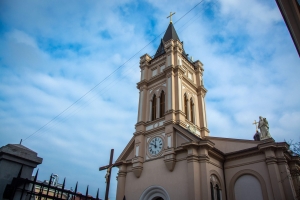
- Ruins of Catholic Church of Nativity Blessed Virgin Mary, Kamenka
Odesa region










Odesa Oblast is Ukraine’s most distinctly “separate” region. A different sea (the Black Sea), a different river (the Danube), a different historic land (Bessarabia), different languages (at the markets you’ll hear Ukrainian, Bulgarian, Gagauz, Moldovan and Greek all at once), different food (aubergines, mamalyga, Shabo wines, brynza with mustard) and even a different summer rhythm — the same one you feel in Bulgaria, Greece or Turkey.
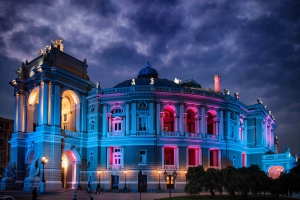
People come here for the sea (Zatoka, Serhiivka, Chornomorsk), for the fortresses of the Danube Line (Akkerman, Izmail, Kiliia, Vylkove), for Shabo wines, for the Danube Delta, for the limans and therapeutic muds of Kuialnyk. And, of course, for Odesa itself — one of Ukraine’s most powerful cities.
Important. Odesa and the oblast’s sea coast are subject to regular missile and drone strikes on port infrastructure. The beach season is limited (some beaches are closed due to mine risk). The south of the oblast (the Bessarabian part: Bilhorod-Dnistrovskyi, Izmail, Kiliia, Vylkove) is considerably safer. Before travelling — check the situation through official channels and the “Air Alert” app.
Region at a Glance
| Administrative centre | Odesa |
| Area | 33,314 km2 (one of Ukraine’s largest oblasts) |
| Population | ~2.3 million |
| Historic land | Southern Bessarabia (Budjak), Northern Black Sea coast, Transnistria lowlands |
| Main rivers and sea | Dnister, Danube, Southern Buh; Black Sea (~300 km of coastline) |
| Major limans | Kuialnyk, Khadjibey, Tylihul, Dnister, Sasyk, Kahul |
| Best time to visit | May–September (sea and limans); September–October (wine, Danube Delta); Odesa — year-round |
In This Article
- What kind of place is this and why come here
- Geography, landscapes, climate
- History in brief
- Legends and local lore
- Top sights of the oblast
- Day trips and weekend routes
- Must-do experiences
- FAQ
What Kind of Place Is This — and Why Come Here
Odesa Oblast is Ukraine that smells of the sea and the Danube. A Lutheran church in Odesa, a Bulgarian dinner in Bolhrad, Gagauz music at the market, Greek cafés in Chornomorsk, Austrian architecture in Izmail, a Genoese fortress in Akkerman. No other region of the country packs such a dense layer of cultures into a single square mile.
People come for five reasons. First — the sea: beaches at Zatoka, Serhiivka and Chornomorsk (subject to wartime restrictions). Second — the fortresses of the Danube Line: Akkerman, Izmail, Kiliia — one of Europe’s most concentrated stretches of fortress architecture. Third — the Danube Delta at Vylkove, where canals replace streets. Fourth — wine: Shabo is Ukraine’s best-known wine region, with a 200-year heritage. Fifth — Odesa itself, which deserves a trip of its own.
Geography, Landscapes, Climate
Odesa Oblast is coast and delta. To the east — the Black Sea shoreline from the Tylihul liman to the Danube, with beaches, estuaries and sand spits. To the south — the Danube Delta, the largest in Europe (second in the world after the Volga): a network of channels, branches and islands where pelicans, herons and fish that are cooked in every Vylkove courtyard make their home.
To the west — Bessarabia, part of the historic land between the Dnister and the Prut rivers. This is the dry steppe of the Budjak, with Scythian burial mounds and old Bulgarian, Gagauz and German colonies founded in the 19th century after the region was absorbed into the Russian Empire. To the north — the Black Sea Lowland, steppe with fertile black soil, vineyards and sunflowers.
The limans are a natural phenomenon unique to Odesa Oblast. The most celebrated is Kuialnyk liman, a hypersaline lake with therapeutic muds, a pinkish hue (caused by Dunaliella bacteria) and a salt concentration higher than the Dead Sea. Nearby stands the Church of St. Panteleimon the Healer at Kuialnyk, built by the spa resort for its patients.
When to visit. The sea and limans are at their best from late May to early October. The Danube Delta is finest in September–October (mild weather, bird migrations). Shabo wines — September–October, harvest season. Odesa — year-round, with May and September the sweet spots. In winter the oblast is quiet but museums, restaurants and thermal spa complexes remain open.
History in Brief
The lands of modern Odesa Oblast have one of the oldest histories in Ukraine. In the 6th century BC, Greeks founded the colony of Tyras on the site of present-day Bilhorod-Dnistrovskyi. In the medieval period, the Akkerman Fortress — Genoese, then Moldovan, then Ottoman — stood here as one of the Black Sea’s mightiest strongholds. The Roman poet Ovid served his exile in these very lands, in Tomis (modern Constanța) and its surroundings.
In 1764, Empress Catherine the Great ordered a new city to be built on the site of the Turkish fortress Khadjibey — and so Odesa was born (1794). Fifty years later it was already the third-largest city in the Russian Empire, the “southern capital” with the finest architecture and the most liberal atmosphere. Pushkin lived here in exile, Anna Akhmatova began writing here, Isaac Babel grew up here.
1918–1940: southern Bessarabia belongs to Romania. In the towns and villages of the multinational Budjak, a complex cultural mix took hold: Bulgarians in Bolhrad, Gagauz in Tarutyne, Germans in Artsyz, Moldovans everywhere, Ukrainians in the villages. In 1940 the region returns to the USSR; during World War II it is occupied by Romania again, then the USSR again. Odesa is liberated in 1944, but the post-war purge of “class enemies” leads to the deportation of entire families from the region.
2022. From the first days of the war, Odesa comes under missile strikes on its ports. The Black Sea is mined, maritime traffic drops to a minimum. In 2022–2023, the Battle for the Black Sea unfolds: Ukraine’s Armed Forces sink the cruiser Moskva and push the Russian fleet back from Crimea. The south of Odesa Oblast (Bessarabia) remains rear territory; the Danube ports of Izmail and Reni continue operating.
Odesa Oblast’s Danube ports (Izmail, Reni, Ust-Dunaysk) became the key alternative to Ukraine’s blockaded sea ports for grain exports in 2022–2024. The volume of traffic passing through these three modest river ports equalled what all of Odesa handled in peacetime.
Legends and Local Lore
1. Ovid in Exile at Akkerman
In 8 AD, the Roman poet Publius Ovidius Naso was banished by Emperor Augustus to the Black Sea coast — for a “crime never proven.” The most popular legend holds that Ovid spent time in ancient Tyras — on the site of modern Bilhorod-Dnistrovskyi. His Tristia (“Sorrowful Elegies”) can be considered the first text written by a European about the Ukrainian shore. From here he wrote to Rome begging to be allowed home. He never was.
2. The Lipovans and the Hidden Island of Old Believers
In the Danube Delta, in and around Vylkove, lives a remarkable ethnic group: the Lipovans. Russian Old Believers who fled Patriarch Nikon’s church reforms in the 17th century eventually settled in the delta, where neither Russian nor Ottoman authority could reach them. They built their lives on boats, navigating the channels between islands. They have their own dialect, their own cuisine, their own churches, their own wedding traditions. Today about 10,000 remain in Ukraine — a small but tenacious community.
3. Kuialnyk and Its Pink Water
Kuialnyk liman is one of the saltiest lakes on earth. On certain summer days its water turns a vivid pink, coloured by the microalgae Dunaliella that blooms in hot brine. Local legend offers its own explanation: supposedly in the 18th century a Turkish ship laden with raisins and saffron sank in the liman, and the cargo has been colouring the water ever since. Kuialnyk’s muds have a reputation for healing joints, skin and nerves that dates back to the 19th century.
Top Sights of the Oblast
Akkerman Fortress in Bilhorod-Dnistrovskyi
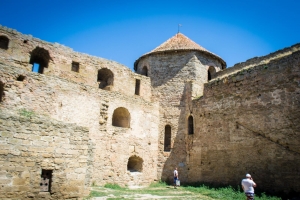
Bilhorod-Dnistrovskyi is one of Ukraine’s oldest cities with 2,500 years of continuous settlement. Its centrepiece is Akkerman Fortress, one of Eastern Europe’s largest defensive structures: 9 hectares, 26 towers, 5 kilometres of walls. The Genoese built it, the Moldovans rebuilt it, the Ottomans extended it, the Russians stormed it — every culture left its layer. The undisputed highlight of the region.
Shabo — Wine Country Bessarabia
Shabo is a village 60 km from Odesa where, in 1822, Swiss colonists from the canton of Vaud planted the vineyards that became the foundation of Ukraine’s best-known wine region. Today the Shabo Centre of Wine Culture offers a winemaking museum, a tasting room and access to the estate’s own cellars. One of the finest wine tourism destinations in the country.
Vylkove — Ukraine’s Venice
Vylkove is a small town in the Danube Delta where a network of waterways replaces ordinary streets. Houses stand on stilts and to visit a neighbour you take a boat. This is home to the Lipovans and their singular culture. In the delta you can spot white pelicans, white-tailed eagles and pink herons. Hire a motorboat and travel the channels all the way to the open sea.
Izmail — Suvorov’s Fortress and Danube Port
Izmail is a Danube city with a weighty history. In 1790, Alexander Suvorov’s army stormed the Turkish fortress here in one of the 18th century’s most celebrated military victories. The fortress itself is largely gone, but the city retains the Suvorov Historical Museum, the Struve Geodetic Arc at Stara Nekrasivka (a UNESCO World Heritage site!), an Old Believers’ church, and a riverfront with a restored river station.
Kiliia — the Danube’s Most Ancient Fortress Town
Kiliia is one of Ukraine’s oldest cities, with first mentions reaching back to antiquity. One of the key fortresses of the lower Danube once stood here, stormed by Moldovans, Ottomans and Cossacks alike. Little of the fortifications survives today, but the Old Believers’ Holy Intercession Cathedral endures, along with the authentic atmosphere of a quiet Danube town.
Kuialnyk Liman and Its Muds
Kuialnyk is a hypersaline liman with pink water and famous therapeutic muds. The spa resort has been operating since 1833 — one of Europe’s oldest mud-therapy establishments. Nearby stands the Church of St. Panteleimon the Healer, built for the resort’s patients in 1893.
The Moorish Palace at Petrivka
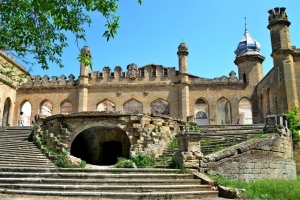
The Moorish Palace at the village of Petrivka is one of the region’s most surreal locations. A Moorish-style manor built in the 19th century by the Kuris family, it is now semi-derelict but utterly atmospheric. Inside: remnants of painted ceilings, ornate staircases and corridors that still hold their architectural logic.
Zatoka and Serhiivka
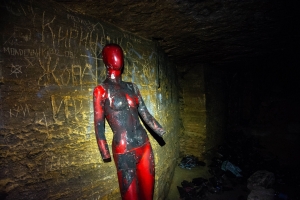
Zatoka is Odesa Oblast’s longest beach, stretching along the Budatska Spit between the sea and the liman. Before 2022 it was the region’s main summer resort. Nearby Serhiivka features the bridge over Budatskyi liman and the atmospheric abandoned Soviet hotel “Pivdenna” — a must for urban explorers. The beach season is currently limited due to mine risk — check which beaches are officially open before you go.
Bolhrad and Ethnic Bessarabia
Bolhrad is a town at the heart of the Budjak, the historic centre of Ukraine’s Bulgarian community. Founded in 1821 by Bulgarian settlers, it still has Ukraine’s largest Bulgarian Orthodox cathedral, a Bulgarian lyceum, its own cuisine and wedding traditions. Nearby lies the Gagauz village of Dmytrivka and the German-heritage town of Artsyz. Bessarabia is arguably the most multicultural part of Ukraine outside Zakarpattia.
Day Trips and Weekend Routes
Route 1. The Danube Line — 2–3 Days
The classic Bessarabia itinerary. Day 1: Odesa → Akkerman Fortress with a tour and lunch in Bilhorod-Dnistrovskyi. Overnight. Day 2: Izmail with the Suvorov Museum and the riverfront. Stay overnight in Izmail. Day 3: Kiliia → Vylkove with the canal quarter and a boat trip into the Danube Delta.
Route 2. Wine Country Bessarabia in a Day
Head south from Odesa. Shabo Wine Culture Centre (3–4 hours with tasting). Lunch at a local restaurant. Afternoon: Akkerman Fortress for 2–3 hours. Return in the evening. The go-to route for anyone who wants wine and a fortress in the same day.
Route 3. Limans and the Coast
South and south-west. Kuialnyk liman with its pink water and muds → Odesa city centre for lunch on Derybasivska Street → evening at Zatoka or Serhiivka with the bridge over Budatskyi liman. Check official beach status before travelling.
Route 4. Urban Exploration Odesa Oblast
For fans of abandoned places. The abandoned hotel “Pivdenna” in Serhiivka → the Moorish Palace at Petrivka → ruins of the Dormition Cathedral in Lymanske. Not for the faint-hearted — bring a torch and sturdy shoes.
Route 5. Ethnic Bessarabia — a Weekend Deep Dive
A two-day itinerary into the Budjak. Day 1: Bolhrad with its Bulgarian cathedral, lyceum and lunch at a local restaurant. Day 2: Tarutyne with its Gagauz heritage and Artsyz with remnants of its German colony. A route not for entertainment but for understanding just how genuinely multi-ethnic Ukraine is.
Must-Do Experiences in Odesa Oblast
- Climb the walls of Akkerman Fortress at sunset and watch 2,500 years of history turn orange.
- Drink Shabo white wine in Shabo itself — right on the vineyards from which it came.
- Take a canal boat in Vylkove with a local Lipovan who knows every turn of the delta.
- Slather yourself in Kuialnyk mud — the classic Odesa ritual, unchanged since the 19th century.
- Eat fresh Danube herring in Vylkove or Izmail — it is caught only in spring and smells like nothing else in the fish kingdom.
- Buy aubergine caviar at Bolhrad market — made to a recipe Bulgarian settlers brought across the Danube 200 years ago.
- See the Struve Arc at Stara Nekrasivka — a UNESCO World Heritage site and part of one of the 19th century’s greatest geodetic surveys.
- Walk Derybasivska Street in Odesa at night — even in wartime, it remains the pulse of the city.
- Buy delta honey — harvested from acacia trees on the Danube islands. Pale gold, with a delicate fragrance.
- Eat Bessarabian vertura — a traditional pastry with fillings ranging from brynza to apple. A local shop or home kitchen is best.
The Danube Delta is Europe’s most ecologically significant wetland. It is home to 320+ bird species, including more than 70% of the European population of the Dalmatian pelican. UNESCO World Heritage site.
Frequently Asked Questions
Is it safe to travel to Odesa Oblast now?
It depends on which part. Odesa and the sea coast are subject to regular missile and drone strikes on port infrastructure, with beach restrictions. Southern Bessarabia (Bilhorod-Dnistrovskyi, Izmail, Kiliia, Vylkove, Bolhrad) is considerably safer, with rare alerts. Always check the current situation through official channels before travelling.
Can you swim at Odesa beaches now?
Some beaches are officially open, others closed due to mine risk. The list is regularly updated by the Odesa Oblast Military Administration. Always follow the instructions of lifeguards, do not swim beyond the buoys, and avoid sections marked with mine warning signs.
What to see in Odesa Oblast in one day?
The fastest combination is Akkerman Fortress in Bilhorod-Dnistrovskyi plus Shabo Wine Culture Centre. If you want the Danube Delta — that’s a separate day, since Vylkove is about 250 km from Odesa.
What is Bessarabia?
The historic land between the Dnister and Prut rivers, part of which today forms the south of Odesa Oblast. Over the centuries, Bessarabia has belonged to the Moldovan Principality, the Ottoman Empire, the Russian Empire, Romania (1918–1940), the USSR, and now Ukraine and Moldova. It is Ukraine’s most ethnically diverse region, with Bulgarian, Gagauz, Moldovan and German communities.
Why is Vylkove called “Ukraine’s Venice”?
Because in the historic part of town, waterways replace streets. Houses stand on stilts, and to move between yards you use wooden boardwalks or boats. The town was founded by Lipovan Old Believers in the 18th century — they chose the location precisely because it was accessible only by water. Vylkove today is an eco-tourism destination and a living open-air museum.
Where to take children in Odesa Oblast?
Shabo Wine Culture Centre has a children’s programme. Akkerman Fortress offers a full day of adventure. Vylkove — a boat trip for all ages. In Odesa itself — the zoo, the dolphinarium (open with restrictions), city parks.
What are the most iconic dishes of Odesa Oblast?
Odesa forshmak (herring pâté), brynza with tomatoes and olive oil, mamalyga with brynza (Bessarabian classic), vertura, Danube herring, vyrubbata (fish with rolls), platsynda, plakia, sarmale (Bulgarian-style stuffed cabbage), aubergine caviar. For dessert — kutia and vertura with curd cheese.
What to bring back from Odesa Oblast?
Shabo wines (especially Chardonnay and “Blue Danube”), aubergine caviar from Bolhrad market, brynza from local dairies, Danube Delta honey, dried fish from Vylkove, ceramics from Gagauz villages, a box of Kuialnyk salt.
Odesa Oblast is Ukraine with everything international travellers already know: sea, fortresses, wine, multiculturalism, food with an accent, a rhythm that runs half a beat slower than the rest of the country. And yet it remains distinctly, stubbornly, gloriously itself.
If you have room for just one oblast in Ukraine this year — make it Odesa. There’s enough here for a week, a month, and really for a whole summer.
JoomShopping Download & Support