


- You are here:
-
Sights by Regions

-
Odesa region
-
Belgorod-Dnestrovskyy
- Akkerman Fortress (Belgorod-Dniester Castle)
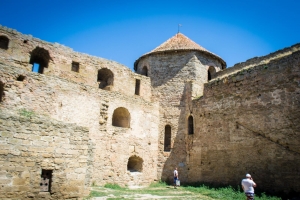

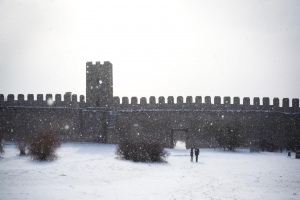
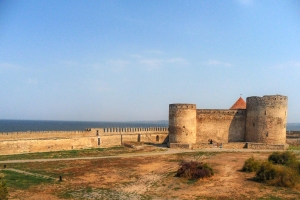

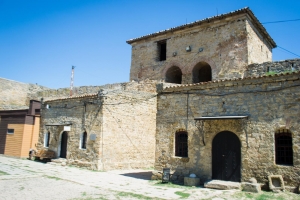
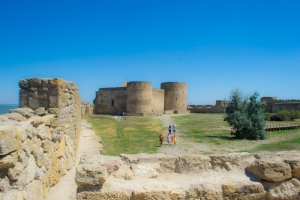
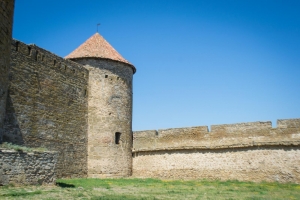
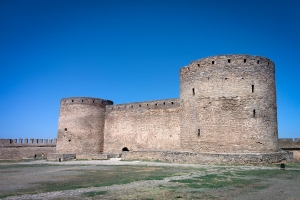
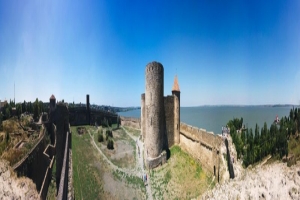
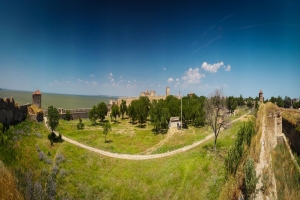
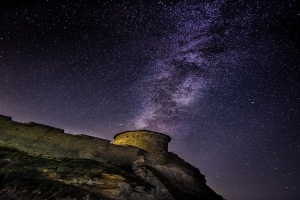
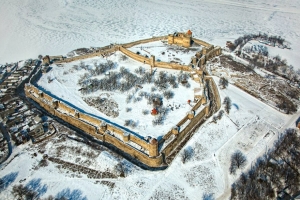

More than nine hectares of stone walls, three rings of defence, two dozen towers, and twenty-three centuries of history concentrated in a single location. This is Ukraine’s largest fortress — and one of the few that grew directly on the ruins of an ancient Greek city.
Akkerman Fortress (also known as Bilhorod-Dnistrovskyi Castle) stands on the rocky shore of the Dnister Estuary. A place where Greeks, Genoese, Moldavians, and Ottomans all left their mark — and where every stone has a story to tell.
Location Card
| Location | Bilhorod-Dnistrovskyi, Odesa Region |
| What it is | Ukraine’s largest fortress; museum-reserve |
| Age | walls 13th–15th c., on ruins of ancient Tyras |
| Time to visit | 2–3 hours |
| What to bring | comfortable shoes, water, camera, sun hat |
What It Is & Why Come Here
Akkerman Fortress is no ordinary castle: it is Ukraine’s undisputed record-holder, the largest fortress in the country by area. It rises on the rocky bank of the Dnister Estuary and impresses from the first glance — massive walls stretching into the distance, mighty towers, several inner courtyards.
People come here to feel real history: climb the towers, walk the fortress yards, look out over the estuary from the ramparts and try to imagine twenty-three centuries of events that unfolded here. The sea breeze adds a final touch — the fortress fits perfectly into any road trip through Odesa Region.
The fortress is divided into several courtyards: a civilian yard (where townspeople took shelter during attacks), a garrison yard (for the military), and the citadel — the most heavily fortified core of the castle.
History: From Greek Tyras to Ottoman Akkerman
It all started in antiquity: on this very spot stood the Greek city of Tyras, founded around the 6th century BCE. That means the site’s history spans approximately 2,300 years — an extraordinary antiquity even by Ukrainian standards.
The stone fortress itself was built over several eras. The citadel is associated with the Genoese period of the 13th–14th centuries, while the main fortifications were raised under Moldavian rule in the 15th century. The city and fortress later fell under the Ottoman Empire — it was the Turks who gave it the name Akkerman, meaning «white stone.»
Today
In 1944 the city was renamed Bilhorod-Dnistrovskyi, and the fortress became a museum-reserve. Since July 2019, Tyras and Akkerman Fortress have appeared on UNESCO’s Tentative List of World Heritage Sites. Today it is one of the most visited attractions in southern Ukraine.
Legends & Local Lore
A fortress with this much history is naturally full of legends.
1. Ovid’s Tower
One of the towers is traditionally linked to the Roman poet Ovid, who was exiled to the shores of the Black Sea (Pontus). Historians doubt he ever came specifically here, but the legend has proved remarkably persistent — and the name is undeniably romantic.
2. The Maiden’s Tower
A classic castle motif: the legend of a ruler’s daughter imprisoned (or who perished) in a tower because of forbidden love or betrayal. The details vary in different tellings, but the story adds a layer of tragic poetry to the stone walls.
3. Underground Passages Beneath the Estuary
Stories have long circulated about secret underground passages supposedly running from the fortress under the estuary or far beyond the walls. Some cellars genuinely exist; the rest is folk imagination that is hard to verify.
What to See & Do
The citadel. The most heavily fortified core of the fortress, with imposing towers — the defining image of the site.
The walls and towers. Climb up and walk along the ramparts to feel the full scale of Ukraine’s largest fortress.
The excavations of ancient Tyras. Remains of the Greek-Roman city within the complex — a step more than two thousand years back in time.
Views over the estuary. From the walls you get a sweeping panorama of the Dnister Estuary.
Getting There
By car. Bilhorod-Dnistrovskyi is south of Odesa; the fortress sits on the estuary shore near Admiral Ushakov Street. The drive from Odesa takes roughly 1–1.5 hours.
By public transport. Regular buses and minibuses run from Odesa; there is also a rail connection. From the town centre, continue to the fortress on foot or by local transport.
Important. This is a museum-reserve with opening hours and entry tickets — check the current schedule before you go. Odesa Region is subject to missile strikes, so monitor the security situation and air-raid alerts.
Visitor’s Checklist
- Comfortable shoes: the site is large, with plenty of uneven stone and steps.
- Sun hat and water: the open ramparts are hot in summer.
- Camera: the fortress and estuary are naturally photogenic.
- Time: allow at least 2–3 hours.
What NOT to do: climb onto unfenced sections of the walls or towers; descend into closed cellars without a guide; ignore air-raid alerts.
Frequently Asked Questions
Why is it called Akkerman Fortress?
«Akkerman» means «white stone» in Turkic — the name the Ottomans gave the city. Today the city is called Bilhorod-Dnistrovskyi.
How old is the fortress?
The stone fortifications date from the 13th–15th centuries, but they stand on the site of the ancient city of Tyras, founded around the 6th century BCE — making the location’s history more than 2,000 years old.
Is it really Ukraine’s largest fortress?
Yes — by area, Akkerman Fortress is considered the largest in Ukraine. It also appears on UNESCO’s Tentative World Heritage List.
Is it safe to visit during the war?
Odesa Region is subject to missile strikes. Before visiting, check the security situation, the reserve’s opening schedule, and always respond to air-raid alerts.
Akkerman Fortress is an open-air time machine: Greek Tyras, the Genoese citadel, Moldavian walls, Ottoman Akkerman — all in one place on the estuary shore. Ukraine’s largest castle, and a must-see at least once.
Climb the tower, lay your hand on two-thousand-year-old stone, look out over the estuary — and feel just how many stories these walls have witnessed. When Odesa Region is safe to visit, this journey will deliver one of the most powerful experiences southern Ukraine has to offer.
JoomShopping Download & Support