


- You are here:
-
Sights by Regions

-
Cherkasy region
- Cherkasy
Cherkasy





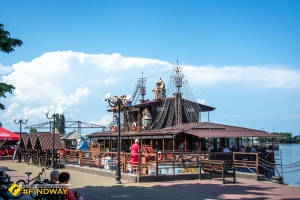


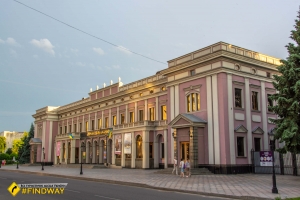

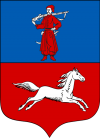
Imagine a city whose name became a synonym for an entire people. «Cherkasy» was once the word neighbours used for Ukrainian Cossacks — and it was here, on these Dnipro hillsides, that the Cossack movement first took root. Cherkasy is the city that gave its name to a free spirit.
Today Cherkasy is a calm, green regional capital perched above the water locals call the «Cherkasy Sea». No tour buses jostling for space, no queues. This is a city you feel rather than «do» — and the best place to start feeling it is Castle Hill, where the Dnipro and five centuries of Cossack history unfold in one sweeping view.
City at a glance
| Founded | First written record — late 13th century; one of the oldest Cossack centres in Ukraine |
| Admin status | Regional capital of Cherkasy Oblast |
| Historical region | Middle Dnipro region; one of the cradles of early Cossackdom |
| Population | ~270,000 |
| Area | ~68 km2 |
| Main river | Dnipro (here: the vast Kremenchuk Reservoir, the «Cherkasy Sea») |
| Nicknames | City on the Cherkasy Sea, the green city, Cossack cradle |
| Best time to visit | Year-round, subject to the security situation. May–September for the embankment, parks and beaches |
In this article
- What kind of city is this and why people visit
- Location and character
- Brief history
- Legends and mysteries
- Top sights in Cherkasy
- City itineraries
- Must-dos in Cherkasy
- FAQ
What kind of city is this and why people visit
Cherkasy is the gateway to Cossack history. One of the oldest Cossack strongholds, from which the free warriors once spread across the entire Dnipro region. The city doesn’t brand this heritage for tourists — it simply lives with it: in the name itself, in the monuments, in the hill that rises above the river.
People come for the open water. The Dnipro widens here into the Kremenchuk Reservoir until the far bank disappears from sight — hence the «Cherkasy Sea». The embankment, beaches, river islands and hillside panoramas all put water front and centre.
And many arrive as a convenient base. Cherkasy is an ideal launchpad for the region’s greatest landmarks: Tarasova Hora (Shevchenko’s burial hill) in Kaniv, the hetman capital of Chyhyryn, the forest sanctuary of Kholodnyi Yar (Cold Ravine), and Sofiyivka park in Uman. The city itself stays calm, leafy and unhurried — a good place to come home to in the evenings.
Location and character
Cherkasy sits on the high right bank of the Dnipro, at the point where the river swells into the wide Kremenchuk Reservoir. The elevation is noticeable: the city climbs away from the water, and from the upper streets and hilltops the views across the «sea» are spectacular.
It’s a young city in terms of layout: Cherkasy only became a regional capital in the mid-20th century, so most of it is broad green boulevards, tree-lined squares and Soviet-era parks. The main axis is Shevchenko Boulevard, running the full length of the centre. Navigation is easy and distances are manageable.
When to visit. Cherkasy is comfortable year-round, though any trip should be planned with current security conditions in mind. Weather-wise, May to September is the prime season: the embankment, beaches, parks and river cruises are all in full swing. The golden autumn looks great on the city’s tree-lined squares. Winter is quieter, but museums and theatres stay open.
Brief history
Cherkasy has been documented since the late 13th century. As part of the Grand Duchy of Lithuania and later the Polish–Lithuanian Commonwealth, the town grew into a frontier fortress on the edge of the steppe — and one of the earliest centres of Ukrainian Cossackdom. It is no coincidence that the word «cherkasy» was used for centuries as a common term for Cossacks in general.
In the 16th–17th centuries Cherkasy was an influential Cossack hub; Bohdan Khmelnytsky, the great Cossack hetman (leader), once served here as the town’s starost (governor). The city survived the Cossack wars, the Koliivshchyna uprising (a major 18th-century Cossack revolt), and repeated changes of rulers. Under the Russian Empire it settled into the quieter role of a provincial town; real growth came only in the 20th century.
In 1954 Cherkasy became the centre of a newly created oblast and began expanding rapidly: wide avenues, parks, and industry (primarily chemical). Around 1957–1960 the construction of the Kremenchuk Hydroelectric Station raised the Dnipro’s water level and turned the river beside the city into a vast «sea». Since 2022 Cherkasy has been a rear-area city — far from the front line but periodically targeted by missile strikes on infrastructure — continuing its daily life in a normal rhythm.
The word «cherkasy» in historical documents of the 16th–18th centuries often simply meant «Ukrainian Cossacks». In other words, for centuries this entire city bore a name that its neighbours used as a synonym for a whole people.
Legends and mysteries
Cherkasy is not the kind of city that peddles legends. But they exist — and they all circle back to Cossacks and water.
1. Where the name came from
There is no single answer, and that is very Cherkasy. The most popular version links the name to the Cossacks, who were themselves called «cherkasy». A second legend traces it to settlers from the Caucasus — the Circassians (Cherkesy in Ukrainian). A third points to an old word for a border sentry standing watch on the steppe frontier. Historians still argue; the city wears all three versions at once, unbothered.
2. Castle Hill and the underground passages
A real fortress once stood on Castle Hill — the frontier stronghold that gave the city its start. The castle is long gone, but it left behind the classic urban legend of underground tunnels said to have run from the hill to the Dnipro, built as an escape route during sieges. No serious excavation has been carried out, so how much truth lies beneath is anyone’s guess. What is fact, not legend: Castle Hill offers the finest view in Cherkasy.
3. The city beneath the «sea»
When the Kremenchuk dam was built in the late 1950s, rising waters swallowed the old riverside quarters of Cherkasy along with several nearby villages. Locals say that on still days you can hear the bells of drowned churches rising up through the reservoir. Romantic folklore or not, the «Cherkasy Sea» really does conceal an entire layer of the old city beneath it.
Top sights in Cherkasy
Castle Hill and the monument to Bohdan Khmelnytsky
The historic heart of the city and its best viewpoint. A frontier fortress once stood on Castle Hill; today a monument to Bohdan Khmelnytsky — the great hetman who once governed Cherkasy — crowns the summit. From here you see the wide Dnipro, the embankment and half the city. Sunset is the best time to make the climb. Castle Hill does not yet have a dedicated page on the site.
Cathedral of the Archangel Michael
One of the largest churches in Ukraine — a monumental cathedral visible from all over the city. Built after Ukrainian independence, it has become the new architectural focal point of Cherkasy. The scale inside impresses even those who are normally indifferent to cathedrals. The Cathedral of the Archangel Michael does not yet have a dedicated page on the site.
The embankment and the «Cherkasy Sea»
The city’s main promenade stretches along the Kremenchuk Reservoir. In summer there are beaches, boats and river cruises; at any time of year there is that vast expanse of water where the far shore sometimes vanishes entirely. The embankment is the single best explanation of why Cherkasy is called a city by the «sea». The Dnipro embankment does not yet have a dedicated page on the site.
Valley of Roses Park
One of the city’s largest and best-kept parks — rose gardens, shaded alleys, fountains and room to breathe. A classic green spot for a relaxed family afternoon. Explore Valley of Roses Park.
The «Motherland» monument on Glory Hill. A memorial complex on one of the city’s hills, with sweeping views over the Dnipro and the rooftops below. A place of remembrance and one of the most popular vantage points in Cherkasy. Explore the Motherland monument.
Cherkasy Regional History Museum. A large modern exhibition that maps the entire history of the region — from prehistoric times and the Cossack era through to the 20th century. The best two-hour crash course in Middle Dnipro history. Not yet covered by a dedicated page on the site.
Art Museum. One of the finest art collections in the region outside Kyiv — Ukrainian and international painting, graphic art and sculpture. A quiet, underrated gem. Not yet covered by a dedicated page on the site.
Shevchenko Boulevard. The main spine of the city — a wide, leafy boulevard lined with a monument to Taras Shevchenko (Ukraine’s national poet), pocket parks and cafes. The best way to «read» everyday Cherkasy is to walk its full length. Not yet covered by a dedicated page on the site.
Sosnivka Park and the river islands. A large pine forest park on the edge of the city, plus the Dnipro islands just offshore — prime territory for jogging, picnics and escaping urban noise. Not yet covered by dedicated pages on the site.
City itineraries
Itinerary 1. Cherkasy in one day (must-see highlights)
Start at Castle Hill with the Khmelnytsky monument and the view over the Dnipro. Descend to the embankment and stroll along the «Cherkasy Sea». Lunch in the centre. Afternoon — the Cathedral of the Archangel Michael and Shevchenko Boulevard. At sunset — Glory Hill with the Motherland monument.
Itinerary 2. Cherkasy in two days (full experience)
Day 1 — as per Itinerary 1: Castle Hill, embankment, cathedral, Shevchenko Boulevard. Day 2 — museums and greenery: the History Museum and Art Museum, Valley of Roses Park, Sosnivka Park. Save the second half of Day 2 for a river cruise or a day trip to Tarasova Hora in Kaniv.
Itinerary 3. Cherkasy on the water
For those who came for the «sea»: Dnipro embankment → city beach → reservoir cruise → Dnipro islands or Sosnivka Park. The most laid-back day in Cherkasy, with water in every shot from morning to evening.
Itinerary 4. Cherkasy with kids
Valley of Roses Park with its fountains and pathways → the embankment with space to run and boat rides → Sosnivka pine forest park → the History Museum for older children. Plenty of fresh air and virtually no queues.
Must-dos in Cherkasy
- Climb Castle Hill to the Khmelnytsky monument — the view takes in the Dnipro and five centuries of Cossack history at once.
- Walk the embankment along the «Cherkasy Sea» — that vast, shimmering expanse of water is the city’s greatest attraction.
- Step inside the Cathedral of the Archangel Michael — one of Ukraine’s largest churches, awe-inspiring even for non-believers.
- Walk Shevchenko Boulevard end to end — the fastest way to tune into the city’s rhythm.
- Watch sunset from Glory Hill — when the «sea» turns gold.
- Try Cherkasy borscht with pampushky and garlic — pampushky are soft garlic rolls traditionally served with borscht; the Middle Dnipro style is worth seeking out.
- Take a boat out on the reservoir — see the city from the water, as the Cossacks once did.
- Visit the Regional History Museum — to understand why Cossackdom radiated outward from exactly this place.
- Spend time in Sosnivka Park — the scent of pine forest, right inside a regional capital.
- Use Cherkasy as your base — and head out for a day to Kaniv, Chyhyryn or Kholodnyi Yar.
The Dnipro at Cherkasy is technically the Kremenchuk Reservoir, the largest by surface area on the entire Dnipro river. At its widest points the far shore is completely invisible — which makes the name «Cherkasy Sea» entirely deserved.
Frequently asked questions
What to see in Cherkasy in one day?
The essential loop: Castle Hill with the Khmelnytsky monument → Dnipro embankment → Cathedral of the Archangel Michael → Shevchenko Boulevard → Glory Hill at sunset.
What to see in Cherkasy in two days?
Day 1 — the centre (Castle Hill, embankment, cathedral, Shevchenko Boulevard). Day 2 — museums and green spaces: the History Museum and Art Museum, Valley of Roses Park, Sosnivka Park and a river cruise.
Is Cherkasy safe to visit right now?
Cherkasy is a rear-area city, far from the front line. Missile strikes on infrastructure occur periodically, but the city functions normally. Before travelling, check official Ukrainian government channels and the Povitrana Tryvoga app (Ukraine’s official air-raid alert application).
What to do in Cherkasy with kids?
Valley of Roses Park with its fountains, Sosnivka pine forest park, the embankment with boat rides and summer beaches, and the Regional History Museum for older children.
What is the «Cherkasy Sea»?
It is the local name for the Kremenchuk Reservoir — the largest reservoir by surface area on the Dnipro. It formed in the late 1950s when the Kremenchuk Hydroelectric Station was built. In the widest sections the opposite shore is invisible, so «sea» is a perfectly reasonable description.
What are the most famous dishes from the Cherkasy region?
Cherkasy-style borscht with pampushky (soft garlic rolls) and garlic, freshwater fish from the Dnipro, halushky (dumplings), varenyky with cherries (filled pasta similar to pierogi), baked apples with honey. It’s classic Middle Dnipro cuisine — hearty, honest and unfussy.
What to bring back from Cherkasy as a souvenir?
Souvenirs featuring Cossack motifs and the image of Khmelnytsky, postcards with views of the «Cherkasy Sea», honey from local apiaries, crafts from local workshops, and jams made from orchard fruit of the region.
Cherkasy is not a city that tries to dazzle you on first sight. It is calm, green and unhurried — and that honesty is precisely its charm. But climb Castle Hill, gaze out over that wide water and remember that «cherkasy» was once the word the world used for an entire Cossack people — and the city reveals itself in a completely different light.
If you’re still wondering where to start — start on the hill above the Dnipro. From there you can see both the «sea» and the reason you came.
JoomShopping Download & Support