


- You are here:
-
Sights by Regions

- Mykolaiv region
Mykolaiv region


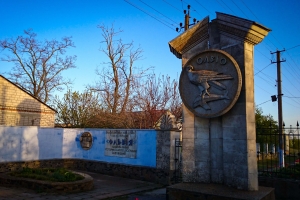



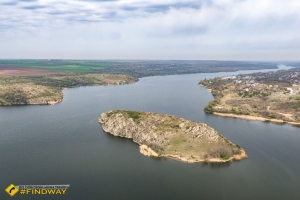


A steppe where Scythians roamed for a thousand years. Ruins of a Greek city that outlasted the Roman Empire. A canyon locals still call the “Valley of the Devil.” And a city built on Potemkin’s orders in 76 days — and from day one, it was launching warships for the Black Sea Fleet.
Mykolaiv Oblast is a region where the depth of time is measured not in centuries but in millennia. Here you literally walk across layers of civilizations: Greek beneath your feet, Cossack in the village names, Soviet in the street grid. And today — one more layer, the heaviest of all.
📍 Region at a Glance
| Administrative centre | Mykolaiv |
| Area | 24,598 km2 |
| Population | ~1.1 million |
| Historic land | Pontic steppe (Wild Field, former Zaporozhian Liberties) |
| Main rivers | Southern Buh, Inhul, Inhulets’ |
| Best time to visit | April–June and September–October; canyons — spring and autumn; Olbia — year-round |
In This Article
- What kind of place is this
- Geography and climate
- History
- Legends
- Top sights
- Routes
- Must-do experiences
- FAQ
What Kind of Place Is This — and Why Come Here
Mykolaiv Oblast is where the steppe meets the sea, and antiquity collides with industrial modernity. The region fits no obvious tourist template: no mountains, no resort coast, no medieval castles in the conventional sense. But there is Olbia — a Greek colony from the 7th century BC, where Herodotus gathered material for his Histories. There is Aktovskyy Canyon — a granite “Valley of the Devil” with 50-metre walls and a river with the ominous name Mertvovod (“dead water”). And there is Kinburn Spit — a sand finger stretching between the Black Sea and the estuary, where old-growth forests grow and where Suvorov, with just 1,600 men, repelled a Turkish landing force of five thousand.
This is a region for travellers who seek not a pretty picture but places with depth. People come here for the feeling of standing exactly where someone else stood thousands of years ago — looking at the same river, the same sea, the same cliffs.
Geography, Landscapes, Climate
Most of Mykolaiv Oblast is Pontic steppe: flat terrain, ravines, estuaries and long horizons. But the Southern Buh and its tributaries have carved deep rocky canyons into the crystalline bedrock — and that’s where the surprise begins. Aktovskyy and Arbuzynka canyons look as if someone cut a piece of New Zealand into the flat steppe. Granite walls up to 50 metres, waterfalls, emerald water — and none of the tourist crowds you’d find in the Carpathians.
In the south lies the Dnipro-Buh Estuary and access to the Black Sea. Kinburn Spit stretches 40 km between the estuary and the sea — relict forests, pink flamingos, sandy beaches and an almost total absence of roads. The climate is dry and hot in summer — the canyons and Olbia are best visited in spring or autumn.
History in Brief
From Scythians to Greeks
The Pontic steppe was one of history’s great migration corridors. Cimmerians, Scythians, Sarmatians, Goths, Huns — each left something in the soil and moved on. The Greeks were smarter: instead of passing through, they stopped and built cities. Olbia — the largest and most important Greek colony on the northern Black Sea coast — was founded around 647 BC and survived for nearly a thousand years. When Herodotus described Scythian customs and rituals in his Histories, he drew partly on the accounts of Olbians — people who lived side by side with the nomads and knew them from the inside.
A City Founded on St. Nicholas’s Day
Mykolaiv appeared on the map in 1789 — the very day Potemkin’s army stormed the Turkish fortress of Ochakiv: 6 December, the feast of Saint Nicholas. The city was named accordingly. The shipyard at the mouth of the Inhul was already under construction: the first ship of the line, “Saint Nicholas,” was launched just 76 days after building began. For the 18th century — almost impossibly fast. Mykolaiv knew its purpose from birth: to build warships.
Over 230 years, Mykolaiv’s shipyards launched more than 3,000 vessels — from the first Black Sea frigates of the 18th century to missile cruisers of the 20th. Including the aircraft carrier Varyag, which China bought as “scrap metal,” completed it, and now knows as the Liaoning.
Legends and Local Lore
1. The Valley of the Devil and the Dead Water
The ancient Greeks called the river running through Aktovskyy Canyon “Exampaeus” — meaning “sacred paths” or “dead water.” The Scythians considered this place sacred: according to Herodotus, ritual ceremonies and possibly royal burials took place near the Mertvovod (literally, “dead water”). Cossack kharakternyk (warrior-sorcerers) of later times regarded the canyon as a portal: legend held that here one could acquire extraordinary abilities, shapeshift into an animal, or simply vanish without a trace. Locals still call it the “Valley of the Devil” — and the cliff hanging over the water at a perfect right angle needs no further explanation.
2. King Skyles and the Secret Rites at Olbia
Herodotus recorded a story that would be hard to invent. The Scythian king Skyles secretly and regularly travelled to Olbia, where he changed into Greek clothing and took part in Bacchic rites in honour of Dionysus. The Scythians did not venerate Dionysus — and regarded such orgies as shameful. When his tribesmen spotted the king through a crack in the city wall, saw him in a Greek chiton amid the crowd of mystery-cult initiates — a revolt broke out. Skyles fled, but was eventually captured and executed by his own subjects. For joining a Greek cult. In Olbia. The very site where it all happened — and where archaeologists are still excavating those same city quarters today.
3. Suvorov at Kinburn Spit
1787. The Turkish fleet landed 5,000 soldiers on Kinburn Spit. Suvorov had 1,600. He did not retreat — he attacked. In the heat of battle, Suvorov took a bullet wound to the side. He kept commanding. A second wound — to the arm. He did not withdraw. A third — to the leg. His men forcibly carried him from the field — and he was still shouting orders from the stretcher. The Turkish landing force was destroyed. Suvorov survived. Potemkin wrote to him: “You have again won where winning was impossible.” On Kinburn Spit, cannonballs and human bones are still found to this day.
Top Sights in Mykolaiv Oblast
Olbia, Parutyne
The Olbia National Historical and Archaeological Reserve near the village of Parutyne is the best-preserved ancient city in Ukraine. Excavations have been ongoing for over 100 years — and still yield new finds. You walk along paved streets, past the remains of the agora, temples and residential quarters — knowing that all of this stood when Rome was still a small town. The reserve’s museum is modest in size but dense in content. Come with a guide: without context, ruins are just stones.
Aktovskyy Canyon
Five kilometres of granite canyon with walls up to 50 metres — and you’re in the middle of the steppe. Aktovskyy Canyon in Buzkyi Gard National Park is sometimes called “Little Crimea” — the landscape and atmosphere genuinely evoke mountain gorges. In spring there are waterfalls and green pools. In summer you can swim in crystal-clear water between the cliffs. Nearby is the Labyrinth tract in Trykraty Forest: a maze of narrow rock corridors where it’s genuinely easy to get lost.
Arbuzynka Canyon
Arbuzynka Canyon is Aktovskyy’s younger sibling: smaller, but no less striking. It contains unique Bronze Age rock carvings — petroglyphs thousands of years old. The canyon is part of the same Buzkyi Gard National Park system and can easily be combined with Aktovskyy in a single day trip.
Myhiia Radon Lake and the Hydroelectric Station
Near Pervomaysk lies Myhiia radon lake: a former quarry flooded by mineral springs with a natural radon content. The water is blue-green, transparent and cool even in the heat of summer. Nearby are the scenic Buh rapids and Myhiivska Hydroelectric Station — a tiny early-20th-century power plant that looks straight out of an adventure film set.
Ochakiv. The city at the entrance to the Dnipro-Buh Estuary — the former Turkish fortress of Achi-Kale, which Suvorov and Potemkin stormed in 1788 in just 16 hours. Today only earthen ramparts and a few towers remain, but the view from the shore across the estuary to the distant strip of Kinburn Spit is worth the trip.
Pink Lake (Martynivske). Near Ochakiv is a lake that turns a vivid pink at certain times of year, coloured by the microalgae Dunaliella salina — the same effect seen at the world-famous pink lakes of Australia. The colour is most intense in hot summer weather when water levels are low.
Day Trips and Weekend Routes
One Day: The Buh River Canyons
From Mykolaiv — 80 km to Aktove: Aktovskyy Canyon (2 hrs of cliff walking) → the Labyrinth tract in Trykraty Forest (1 hr) → on the way back — Arbuzynka Canyon with its petroglyphs (another 1.5 hrs). A complete off-the-beaten-path route through the natural wonders of the oblast.
Weekend: Antiquity and Steppe
Saturday: Mykolaiv (Maritime Museum, zoo, waterfront) → Olbia at Parutyne (40 km; the reserve, 2–3 hrs). Sunday: Ochakiv (fortress ramparts, estuary shore) → Myhiia radon lake and Myhiivska Hydroelectric Station near Pervomaysk → return via the canyons.
The “2,600 Years in Two Days” Route
A themed journey from Greek Olbia to Cossack fortifications: Olbia (7th century BC) → Aktovskyy Canyon (Scythian ritual sites, Buzkyi Gard) → Ochakiv (Turkish fortress and Suvorov, 1788) → Mykolaiv (1789, the historic shipyard). The timeline writes itself.
Must-Do Experiences in Mykolaiv Oblast
- Walk the streets of Olbia. The stone-paved streets where Greeks walked 600 years before Christ. This is not a metaphor — these are literally the same stones.
- Descend into Aktovskyy Canyon. From the top, it looks like a crack in the steppe. From the bottom — a different world. Choose spring or early autumn — summer brings heat and lower water levels.
- Get lost in the Labyrinth of Trykraty Forest. Narrow granite fissures where two people can barely pass each other. One of Ukraine’s most unusual natural formations — and virtually unknown outside the region.
- Swim in Myhiia radon lake. Clear, mineral, cool — and no crowds even at the height of summer.
- See the pink lake. If you catch the right moment (hot summer, low water level) — the colour is an intense pink, like shots from Bolivia. Real, not a filter.
- Try Mykolaiv oysters and rapana. Rapana (a type of whelk) from the Black Sea is a local delicacy found nowhere else in Ukraine. An oyster farm near Ochakiv cultivates them in the estuary. It doesn’t get fresher than this.
- Visit Mykolaiv Zoo. One of the oldest zoos in the country (founded 1901), with a genuinely large and diverse collection. Surprisingly impressive for a city of its size.
Frequently Asked Questions
What to see in Mykolaiv in one day?
The zoo (one of Ukraine’s oldest), the waterfront and Maritime Museum, Svyato-Kasperivsky Cathedral. If time allows — 40 km to Olbia at Parutyne: ruins of a Greek city that predates Christ by 600 years.
Is it safe to travel to Mykolaiv Oblast now?
The situation is uneven. The city of Mykolaiv and most of the oblast remain under Ukrainian control, but the region has been subject to missile and artillery strikes. Kinburn Spit is located near the front line and is not accessible to tourists at the time of writing. Always check the current status through official sources before travelling.
How do I get to Aktovskyy Canyon?
From Mykolaiv — about 80 km north towards Voznesensk, then turn off to Aktove. By car — about 1.5 hours. Public transport runs to Voznesensk; from there, take a local taxi or hitch a lift. The entrance fee to Buzkyi Gard National Park is nominal.
What is Olbia and is it worth visiting?
Olbia is an ancient Greek colony from the 7th century BC — the largest ancient city on Ukrainian soil. Today it’s a state reserve at the village of Parutyne. Excavations have been running for over 100 years. Go with a guide — without context, ruins speak less. Olbia is a genuinely unique site with no equivalent elsewhere in the country.
Where to take children in Mykolaiv Oblast?
Mykolaiv Zoo — large, historic, with rare animals. Aktovskyy Canyon — for kids who love cliffs and water. Myhiia radon lake — for swimming. Olbia — if the child is curious about ancient history.
What to bring back as a souvenir from Mykolaiv Oblast?
Crafts made from shells and sea glass — classic coastal souvenirs. Dried rapana or canned Black Sea seafood. Replica ancient coins from Olbia — sold at the museum shop. Mykolaiv honey from the Pontic steppe wildflowers.
Are there other granite canyons in Mykolaiv Oblast?
Beyond Aktovskyy, don’t miss Arbuzynka Canyon with its Bronze Age petroglyphs and the Labyrinth tract in Trykraty Forest. All three are part of Buzkyi Gard National Park and accessible in a single route.
Mykolaiv Oblast is a place where Ukraine is simultaneously its most ancient and its most heroic. Here, 2,600 years ago, Greeks built a city while Scythians watched from the steppe. Here, 250 years ago, shipyards were laid that turned the Black Sea into Potemkin’s “inland sea.” And here, right now, another chapter unfolds — one we hope will be the last — in the long war for this shore.
The canyons and the ruins are going nowhere. They wait.
JoomShopping Download & Support