


- You are here:
-
Sights by Regions

- Khmelnytskyi region
Khmelnytskyi region
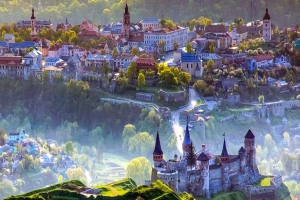
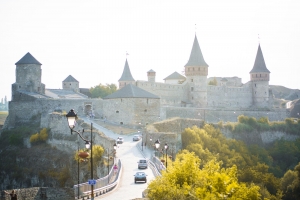

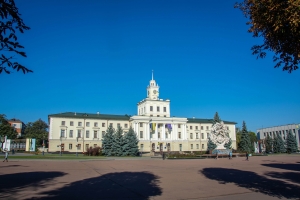

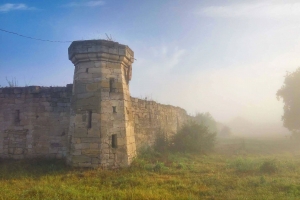


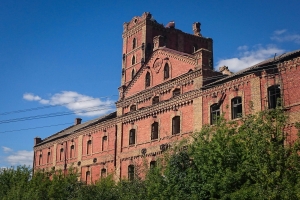
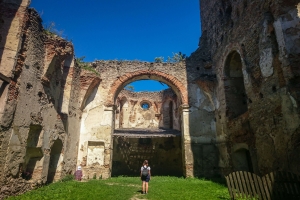
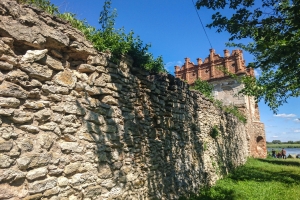
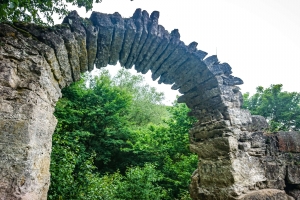






Some regions are places you go to “see something.” Others have a single destination so compelling that it justifies the entire journey on its own. Khmelnytshchyna with Kamianets-Podilskyi is the second kind. But if you stop only at the fortress, you’ll miss a castle perched above the confluence of two rivers, a 12th-century monastery submerged under a reservoir, and a small town where Hasidic Jews from around the world come to pray at the grave of their founder.
Podillia is not just geography. It has a character: limestone cliffs above canyons, castles on every hill, and rivers that carved their own beds through a stone plateau. Everything here is a little more monumental than you expect.
Region at a Glance
| Administrative centre | Khmelnytskyi |
| Area | 20 645 km2 |
| Population | ~1.26 million |
| Historical territory | Podillia |
| Major rivers | Southern Buh, Dnister, Smotrych, Zbruch |
| Best time to visit | May–September — ideal; April and October — fewer crowds and equally beautiful; Kamianets is stunning year-round |
In This Guide
What This Region Is and Why People Come
Khmelnytshchyna is the heart of Podillia. If there is a region in Ukraine where castles truly appear “on every corner,” it is here. Historians count more than 200 surviving defensive structures across Podillia in varying states of preservation: from mighty citadels to overgrown earthworks where the outlines of fortress walls are still visible today.
But Khmelnytshchyna cannot be reduced to castles alone. It is a region where three religions lived side by side for centuries: Orthodox monasteries cut into cliffs, Catholic churches fitted with minarets, and Hasidic cemeteries that still draw pilgrims from Israel, the United States, and Canada. Add the unique limestone ridges of the Tovtry hills, river canyons, and submerged villages — and it becomes clear why people return to Podillia routes again and again.
Geography, Landscapes, Climate
The terrain of Khmelnytshchyna is the Podilian Upland, cut through by deep river valleys. The main rivers are the Southern Buh (which rises here), the Dnister in the south, the Smotrych (which carved the famous stone island on which Kamianets stands), and the Zbruch, which once marked the border between Austro-Hungary and Russia. It was in the Zbruch, in 1848, that workers found the legendary Zbruch Idol — a four-faced Slavic deity now held in Krakow.
The region’s special feature is the Podilian Tovtry (Tovtry hills): a chain of limestone ridges stretching diagonally across the region from north-west to south-east. These are the remnants of an ancient coral reef from the Sarmatian Sea era — millions of years ago, waves lapped here. Today the Tovtry host a National Nature Park with caves, cliffs, and rare plant species.
The climate is temperate-continental, milder than eastern Ukraine. The best time to visit is May and September: warm, fewer tourists than in August, nature at its finest. Kamianets-Podilskyi is visited year-round — the snow-covered fortress is no less striking than in summer.
History in Brief
Podillia Between Everyone
Podillia never stayed in one pair of hands for long. Kyivan Rus princes, then Lithuania, then Poland, then the Ottoman Empire, then Poland again, then Russia — each power built or extended its own fortifications, monasteries, and markets here. The Kamianets-Podilskyi fortress changed hands so many times that researchers still argue over which portion of the walls belongs to which era.
The pivotal date is 1672: the Ottomans captured Kamianets and held it for 27 years. During that time the city became a provincial Ottoman centre with mosques and minarets. Poland returned in 1699 — and some of the transformations remain permanent.
Cossack and Jewish Podillia
Khmelnytshchyna is part of the “Cossack country” in the broadest sense: the main roads of the Hetmanate passed through these lands, Cossack garrisons were stationed here, and endless border skirmishes played out. At the same time, Podillia was one of the centres of Jewish spiritual life: in the 18th century, the Baal Shem Tov (Israel ben Eliezer, c.1700–1760) lived and taught in Medzhybizh — he was the founder of Hasidism, the most influential Jewish mystical movement. His legacy still draws thousands of pilgrims every year.
Legends and Mysteries of the Region
1. The Minaret with the Madonna
When the Ottomans took Kamianets in 1672, the Catholic cathedral was immediately converted into a mosque and a 36-metre minaret was added. But the agreement with the Poles included a strange compromise: a sculpture of the Virgin Mary was left at the very top of the minaret. The Ottomans agreed — perhaps they did not understand, perhaps they decided not to argue. And so appeared the only minaret in Ukraine (and one of very few in the world) with a Madonna on its tip. It still stands today — and it never looks like a joke.
2. The White Lady of Medzhybizh Castle
Medzhybizh Castle stands on a cliff precisely where the Buzhok river flows into the Southern Buh — and over several centuries it has accumulated so many legends they are impossible to count. The most famous is the White Lady: the ghost of one owner’s wife, who died tragically and has since wandered the halls in search of justice. Guests who stayed overnight spoke of footsteps, cold draughts, and the feeling of an unseen presence. The castle is currently being restored — perhaps the White Lady, too, has found a quieter corner.
3. Bakota Under Water
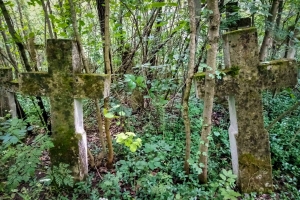
In 1981 the Dnister Reservoir flooded the ancient Podilian village of Bakota, along with a 12th-century cliff monastery. The monks and villagers had time to leave, but the remains of the church and cells stayed under water. On calm days, people say, you can see stone walls and crosses through the transparent water. Locals believe the place remains spiritually charged — and indeed, even after the flooding, people come to the shore to pray. Whether this is legend or simply very powerful memory of place is yours to decide.
Kamianets-Podilskyi Fortress was never taken by storm. When the Ottomans seized the city in 1672, they did so not through siege but through betrayal: the castle was opened from inside. Technically the fortress is undefeatable — it was just the people within it who turned out to be the weaker link.
Top Sights of Khmelnytskyi Region
Kamianets-Podilskyi Fortress and Old Town
Kamianets-Podilskyi stands on an island carved over millions of years by the Smotrych river — an almost-closed loop of canyon up to 60 metres deep. The fortress guards the only entrance to the island and has 11 towers; in the Middle Ages it was considered one of the most impregnable fortresses in Eastern Europe and is listed among Ukraine’s “Seven Wonders.” But the town around it is a separate wonder: lanes that narrow to a single metre, a tower topped with a minaret and a Madonna, Armenian and Polish quarters occupying the same streets. You plan one hour and stay a day. More about Kamianets Old Town.
Medzhybizh Castle
Medzhybizh Castle stands on a cliff exactly where the Buzhok joins the Southern Buh — a perfect position to control the river crossing, exploited as far back as the 12th century. Massive, angular, with several towers — more citadel than ceremonial castle. Nearby is the Jewish cemetery with the grave of the Baal Shem Tov, founder of Hasidism. Every year on the Jewish New Year (Rosh Hashanah), thousands of Hasidic Jews from across the world arrive here in traditional dress, filling the small Podilian town and transforming it into something completely unexpected.
Bakota
Once a large Podilian town and one of the region’s most important monasteries; today a quiet shore of the Dnister Reservoir with the ruins of a cliff monastery carved into a limestone bluff. The parts that didn’t go under water still stand: niches, cells, staircases hewn directly into the rock. The place is quiet, slightly unsettling, and very beautiful — on a clear day the blue water, white limestone, and green slopes compose a scene you want to look at in silence. Details about Bakota.
Sataniv
The name sounds ominous, but the place itself is anything but. Sataniv is a small town with a well-preserved 14th-century castle and unique mineral springs — sulphurous waters that once drew Polish nobility from across Podillia for cures. There is also a rare sculpture of a seated Christ here, one of very few in Ukraine. Sataniv is worth combining with Kamianets: just 50 km away, yet a completely different experience.
Otrokiv Castle (Stsybor-Markhots'kyi manor). A surviving Polish noble estate with castle architecture elements amid Podilian fields — one of the few such estates in Ukraine that has not become a ruin. More about Otrokiv Castle.
16th-century Defence Tower, Starokostiantyniv. A slender Renaissance defensive tower over 500 years old — still standing in the middle of town. Well preserved, with a good view from the top over the Sluch river. Defence Tower of Starokostiantyniv.
Podilian Tovtry. A National Nature Park on limestone ridges — remnants of an ancient sea reef. Karst caves, cliffs, canyons, and unique steppe plants found nowhere else in Ukraine. Perfect for hiking and off-the-beaten-track exploration.
Day Trips and Weekend Routes
One Day: Kamianets-Podilskyi
Morning — climb to the fortress, walk the towers and canyon rim (2–3 hrs). Then on foot through the Old Town: the Polish and Armenian Gates, the minaret with the Madonna, the Town Hall. Lunch at any restaurant in the centre. Afternoon — walk along the Smotrych canyon. If time allows — 50 km to Sataniv for the castle and mineral springs.
Weekend: Castles and Rivers of Podillia
Saturday: Khmelnytskyi (city) → Medzhybizh (castle, 1.5 hrs) → Kamianets-Podilskyi (overnight). Sunday: fortress and Old Town in the morning → on the way back — Bakota (cliff monastery and reservoir, 1 hr) → return. A full but not exhausting itinerary.
Route: Castles of Podillia
For those who want maximum fortresses in minimum time: Defence Tower, Starokostiantyniv → Otrokiv Castle → Medzhybizh → Sataniv → Kamianets-Podilskyi. Two full days of driving and exploring — but not a single stop will disappoint.
Must-Do Experiences in Khmelnytshchyna
- Enter Kamianets-Podilskyi Fortress via the Castle Bridge. If you have one stop for the entire region, this is it. Eleven towers, Renaissance, Gothic, and Cossack-era architecture all in one complex.
- Find the minaret with the Madonna. It stands in the Old Town — and the combination of Ottoman minaret with a statue of the Virgin at its tip needs to be seen in person to be believed.
- Stand on the shore at Bakota. Quiet, beautiful, and slightly eerie — especially if you know that the walls of a 12th-century monastery are standing under the water below.
- Visit Medzhybizh during Rosh Hashanah. If you happen to be there for the Jewish New Year, you will see a small Podilian town transformed into the destination of thousands of pilgrims. An unforgettable sight.
- Try Podilian borscht and halushky (dumplings cooked in broth). Local cuisine is hearty and rich, cooked on rendered lard. Restaurants with home-style menus can be found in Kamianets and Medzhybizh.
- Walk the Smotrych canyon. The views of the Old Town from the opposite bank are the best photographs in Podillia. The riverside trail takes one to two hours.
- Buy Podilian ceramics or embroidery. Khmelnytshchyna is one of the centres of traditional weaving and pottery. The market near the Polish Gate in Kamianets has good craft stalls.
Frequently Asked Questions
What to see in Kamianets-Podilskyi in one day?
The fortress (2–3 hrs), then on foot through the Old Town: the Polish Gate, the minaret with the Madonna, the Armenian Quarter, the Town Hall. After lunch — a walk along the Smotrych canyon for the best long-range photographs of the fortress. Possible with an early start.
Where to go for a weekend from Khmelnytskyi?
The most popular route: Medzhybizh (40 km) → Kamianets-Podilskyi (110 km from Khmelnytskyi). Two castles of different character and different eras — the classic Podilian weekend. If there is a third day, add Bakota or Sataniv.
Is it safe to travel to Khmelnytskyi region right now?
Khmelnytshchyna is one of the relatively stable regions during the war, far from the front line. The tourist infrastructure of Kamianets and Medzhybizh continues to operate. Check current advisories before travelling — but overall the region is open for tourism.
Where to go with children in Khmelnytskyi region?
Kamianets-Podilskyi Fortress with its towers, underground passages, and battlements is a child’s dream. Medzhybizh Castle is also excellent for families: compact and manageable with a great view. Podilian Tovtry Nature Park — for walks and picnics.
When is the best time to visit Khmelnytshchyna?
May and September are ideal: warm, nature at its best, fewer tourists than in August. Kamianets is beautiful in winter too — the snow-covered canyon and fortress without the crowds. Avoid August weekends: the town fills to capacity.
What to bring back from Khmelnytshchyna?
Podilian ceramics and pottery with local ornamental patterns. Embroidered goods — rushnyk towels, napkins, embroidered shirts (vyshyvanka). Honey and fruit infusions from local beekeepers. At the market near the Polish Gate in Kamianets there are permanent craft stalls.
What are the Podilian Tovtry and is it worth visiting?
The Tovtry are a chain of limestone ridges — remnants of an ancient sea reef. The National Nature Park protects karst caves, cliffs, and rare plant species here. Worth the trip if you enjoy off-the-beaten-track exploration — no crowds, quiet beauty, and excellent hiking conditions.
Podillia does not try to impress you — it simply exists, with its canyons, castles, submerged monasteries, and Hasidic pilgrims. It is one of those regions where every point on the map turns out to be more interesting than expected, and the “one day” plan naturally expands into three.
Start with Kamianets — and see how many times you come back to the Old Town page to check the route one more time.
JoomShopping Download & Support