


- You are here:
-
Sights by Regions

-
Khmelnytskyi region
- Khmelnytskyi
Khmelnytskyi

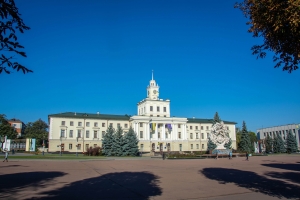

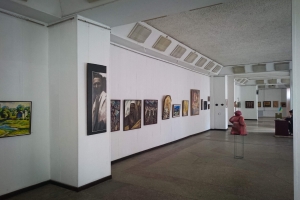
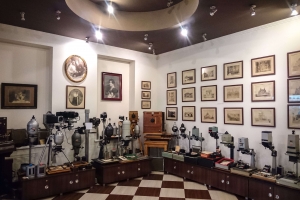

A city that changed its name three times: first Ploskyriv, then Proskuriv, then Khmelnytskyi. A city that in the 1990s was home to the largest market in Europe, drawing bargain hunters from across the former Soviet Union. A city that World War II erased from the map by 70% and that today looks like a brand-new urban layout complete with a city park, a pedestrian boulevard and the Southern Buh river quietly threading through the centre.
Khmelnytskyi is not Kamianets-Podilskyi. There is no medieval fortress here, no Smotrych Canyon, no Old Town perched on a rocky island. What there is — is a regional capital of Podillia living at its own calm modern pace, and a prime location on the route to the region’s major highlights. This is an honest guide to a city people usually pass through «on the way» — and a case for staying at least a day.
📍 City at a glance
| Founded | 1431 (first written mention of Ploskyriv) |
| Administrative status | Regional capital of Khmelnytskyi Oblast |
| Historical region | Podillia (formerly Grand Duchy of Lithuania, Poland, Russian Empire) |
| Population | ~274,000 |
| Area | ~86 km2 |
| Main river | Southern Buh (the city sits near its headwaters) |
| Former names | Ploskyriv (15th–18th c.), Proskuriv (18th c.–1954), Khmelnytskyi (from 1954) |
| Best time to visit | May–September for parks and boulevards; year-round for cultural sites |
In this article
- What kind of city is this and why people come
- Location and character
- History in brief
- Legends and urban myths
- Top attractions in Khmelnytskyi
- City and Podillia itineraries
- Must-do in Khmelnytskyi
- Frequently asked questions
What kind of city is this and why people come
The honest answer: usually — as a stopover. Khmelnytskyi sits on the Kyiv–Lviv highway and on a railway junction linking western Ukraine with the centre and south. Most visitors overnight here or grab lunch before heading to Kamianets-Podilskyi (90 km) or Medzhybizh Castle (40 km). This is not a destination in itself — it is a convenient base for exploring Podillia.
But stay at least a day and a few pleasant surprises emerge. Independence Square (Maidan Nezalezhnosti) is one of the largest and best-designed central squares in Ukraine. Lesia Ukrainka Boulevard is a pedestrian street lined with cafes, sculptures, the regional drama theatre, a cinema and all the signs of a lively city centre. Chekmana Park with its lake in the heart of the city is a green space that many European city centres would envy. And there is the fascinating story of the city’s name — three different ones over five centuries, still debating its own identity.
Add to this the wartime context: Khmelnytskyi is one of the cities most frequently struck by Russian missile and drone attacks, because a major Ukrainian Air Force base is located here. The city lives calmly, but strikes occur regularly.
Location and character
Khmelnytskyi stands on the Podillia Upland, near the headwaters of the Southern Buh river. This is not the mighty Buh that flows through Mykolaiv to the sea (same river though) — up here it is still a quiet stream, cutting through the city centre and feeding small ponds in Chekmana Park. Elevation: around 310 m. Terrain is gentle, no prominent hills.
The city was planned and rebuilt mainly in the Soviet era, and looks the part: wide straight streets, open squares, typical post-war architecture with a few Stalinist buildings in the centre. Lesia Ukrainka Boulevard is the main pedestrian spine. Independence Square is the civic heart. Chekmana Park is the city’s lungs.
When to visit. Best season: May through mid-October, when parks and boulevards are at their finest. Winters are mild with little snow. Summers are warm but not as scorching as lower Podillia (altitude helps). The 2022 full-scale invasion has not brought ground combat to the city, but periodic missile strikes on military infrastructure and the power station are a reality.
History in brief
Ploskyriv: a small Podillian town (15th–18th centuries)
The first written record of Ploskyriv dates to 1431: a small settlement on the left bank of the Southern Buh, within the Lithuanian principality, later Poland. The name derived from an archaic word for flat terrain. No castle, no major fortifications — just a small trading town on the route between Kamianets and Starokostiantyniv, with an artisan community, a Jewish quarter and a handful of churches. Tatars periodically burned the place; residents rebuilt and carried on.
Proskuriv: a Russian imperial district town (1795–1923)
After the Second Partition of Poland (1793), Ploskyriv was absorbed into the Russian Empire. In 1795 it was renamed Proskuriv (folk etymology links it to «proskura,» the ritual bread of Orthodox Christianity). This was the city’s golden age: churches, synagogues and cobbled streets were built; the railway arrived in the 1870s; Proskuriv became a significant imperial transport hub. Ukrainians, Poles, Jews, Germans and Czechs all called it home.
World War II: 70% destroyed
The city was under occupation from July 1941 to March 1944. During that time almost the entire Jewish community was murdered (they had made up about 30% of the pre-war population). Street fighting during the liberation of Proskuriv in March 1944 destroyed roughly 70% of the built fabric. What you see in the city centre today is largely post-war planning in Stalinist and Khrushchev-era styles. Only fragments of the older city survive.
Renamed in 1954: Khrushchev’s gift
In 1954 the Soviet Union was celebrating the 300th anniversary of the Pereiaslav Agreement — the 1654 treaty between Hetman Bohdan Khmelnytskyi (the Cossack leader who unified parts of Ukraine with Russia) and Tsar Alexei. Nikita Khrushchev decided on a «fraternal gesture»: one Ukrainian SSR city would bear the hetman’s name. Proskuriv was chosen. On 16 January 1954 the city became Khmelnytskyi. The irony? Bohdan Khmelnytskyi never visited this city during his lifetime. The name stuck so firmly that reverting it is not even discussed.
The Khmelnytskyi market: the 1990s as a defining era
A separate chapter in the city’s story: the Khmelnytskyi wholesale market, which in the 1990s and 2000s grew into the largest open-air market in Europe. On a site of over 50 hectares, more than 50,000 traders sold clothing sourced from Poland and Turkey; the goods were trucked across the entire former Soviet Union. It was not just a market — it was a regional economy. By the 2010s the market had faded under pressure from retail chains and online shopping, but for an entire generation «Khmelnytskyi» remains synonymous with «where the jacket came from.»
In the 1990s the Khmelnytskyi wholesale market employed over 50,000 traders — roughly the population of a mid-sized Ukrainian town. On busy days the city turned into a two-lane river of trucks: vans from Poland and Turkey rolling in, vans loaded with clothes rolling out to every corner of the former USSR.
Legends and urban myths
1. The city with three names
Ploskyriv → Proskuriv → Khmelnytskyi. Three identities in five centuries — a lot even for a borderland town. «Ploskyriv» was read as a reference to flat terrain. The 1795 renaming to «Proskuriv» was framed by Russian imperial administrators around a religious reference to the Orthodox liturgical bread «proskura.» And «Khmelnytskyi» in 1954 was pure political theatre for the Pereiaslav anniversary. Locals joke: «Let’s see what they call us next century.»
2. The market capital of Europe
A modern myth turning into history. The Khmelnytskyi wholesale market of the 1990s and 2000s really was Europe’s largest (50,000+ traders). Clothes from here were shipped across the former USSR; wholesalers came from Poland, Turkey and the Caucasus. A whole urban folklore grew up around the market era: tales of millionaire vendors, protection rackets, cash-stuffed overnight vans, improvised “checkpoints” on the city approaches. It all ended in the 2010s, but ask a local taxi driver about the market and you’ll get an hour-long story.
3. Why is there no castle?
Every neighbour of Khmelnytskyi has a castle: Medzhybizh, Kamianets, Starokostiantyniv, Letychiv, Zvanets. But Khmelnytskyi — old Ploskyriv — does not. The folk explanation: Ploskyriv was too small for a magnate to invest in stone fortifications; on Podillia you built a castle where there was something worth defending. The more strategic answer: there was no defensible position here — no rocky island, no river confluence, no commanding height. The Southern Buh here simply flows across a plain. A castle without natural defence is just scenery. So nobody built one.
Top attractions in Khmelnytskyi
Independence Square (Maidan Nezalezhnosti)
Independence Square is the civic centrepiece of Khmelnytskyi. Renamed in 1991 from Lenin Square (whose bronze statue was toppled in 1992). Today it is a broad open space with fountains, benches, Christmas trees and the backdrop for all official events and everyday strolls. The regional council building, the music-and-drama theatre and the Svyato-Pokrovskyi Cathedral all face onto it. The largest public space in the city.
Podillia Roerich Cultural Centre
The Podillia Roerich Cultural and Educational Centre is one of the most unexpected spots in the city. It promotes the legacy of the Roerich family — Nicholas, Helena and Sviatoslav — Russian artists, philosophers and Himalayan explorers who lived in India and founded the esoteric teaching of Agni Yoga. Inside: a collection of paintings, books, lectures and exhibitions about the Himalayas and Eastern philosophy. Not a tourist site at all, which is exactly why it’s interesting: a corner of a “different Khmelnytskyi” where local intellectuals and seekers gather.
Lesia Ukrainka Boulevard
Lesia Ukrainka Boulevard is Khmelnytskyi’s pedestrian spine. It runs from Independence Square toward Chekmana Park, lined with cafes, sculptures, benches, the regional drama theatre, the Planeta cinema and the regional philharmonic. In warm weather it hosts open-air concerts, small fairs and festivals. If you have only one hour in Khmelnytskyi — spend it here.
Chekmana Park
Chekmana Park is a large urban park (about 27 ha) in the city centre, with a lake, cycling paths, playgrounds and a summer stage. It is named after Mykhailo Chekmana, a Red Army soldier who died during the liberation of Proskuriv in 1944. City festivals, Christmas markets and concerts are held here. One of the most pleasant parks among regional capitals in western Ukraine.
Svyato-Pokrovskyi Cathedral. The city’s main Orthodox church, built between 1991 and 2006 on Independence Square. A modern five-domed structure in traditional style, built to replace the old cathedral demolished by the Soviets. Cathedral of the Khmelnytskyi-Kamianets eparchy of the Orthodox Church of Ukraine (OCU).
Christ the King Cathedral (Roman Catholic). A modern Roman Catholic church in the city centre, consecrated in 2002. Red-brick neo-Gothic architecture with a tall spire. Built to replace the old church destroyed in Soviet times. Several masses daily.
Khmelnytskyi Regional History Museum. Collections spanning from the Trypillia culture (a Neolithic civilization, c. 4500–3000 BCE) to the present, with a focus on Podillia history. The standout permanent exhibition documents the Jewish community of pre-war Proskuriv — with photographs, documents and artifacts from the synagogue that did not survive the occupation. One of the best such exhibitions in Ukraine.
Khmelnytskyi Museum of Photo Art. A small but high-quality photography museum with a permanent collection and regular exhibitions of contemporary Ukrainian photographers. One of the few specialist photography museums in Ukraine.
The Southern Buh in the city centre. The Southern Buh here is nothing like the wide river that reaches the Black Sea near Mykolaiv (same river, different scale). Near its headwaters it is a modest stream threading through the centre and feeding the lake in Chekmana Park. A pleasing thought: you could trace the whole river from here to the sea — starting in Khmelnytskyi, passing through Vinnytsia, ending at Mykolaiv and the Black Sea.
Monument to Bohdan Khmelnytskyi. In the square of the same name near the centre. An ironic footnote: the monument was erected in 1954, simultaneously with the city’s renaming, though Bohdan Khmelnytskyi (the 17th-century Cossack hetman after whom the city is named) never actually visited this place.
City and Podillia itineraries
Khmelnytskyi in one day
Independence Square → Svyato-Pokrovskyi Cathedral → Lesia Ukrainka Boulevard with its cafes and drama theatre → lunch in the centre → Podillia Roerich Centre → Regional History Museum → Chekmana Park at sunset. A complete programme in 5–6 hours.
Khmelnytskyi + Kamianets-Podilskyi over two days
Day 1 — Khmelnytskyi (itinerary above). Day 2 — drive to Kamianets-Podilskyi (90 km, 1.5 hours): the medieval fortress and Old Town on a rocky island, the minaret topped with a Marian statue, the Smotrych Canyon. This is the route most visitors come to the region for.
Castles of Khmelnytskyi Oblast in one day
Using the city as a base. Medzhybizh Castle (40 km) with the tomb of the Baal Shem Tov (founder of Hasidic Judaism) → 16th-century defensive tower in Starokostiantyniv (45 km north) → Otrokiv Castle in the north of the oblast. Three fortresses from three different eras in one packed day.
Southern Podillia weekend from Khmelnytskyi
Saturday: Khmelnytskyi morning → Medzhybizh → Kamianets-Podilskyi (overnight). Sunday: fortress and Old Town in the morning → Bakota (a submerged village with a cliff monastery above the Dnister reservoir) → return. A classic Podillia weekend.
Must-do in Khmelnytskyi
- Walk Lesia Ukrainka Boulevard. The liveliest stretch in the city. Cafes, sculptures and open-air events in warm weather.
- Stand on Independence Square. A large, airy space that shows how Soviet-era urban planning can be turned into a genuinely pleasant public space.
- Visit the Roerich Centre. A surprisingly serious venue for a regional city, with lectures and exhibitions on Eastern cultures.
- Stroll through Chekmana Park. Lake, cycling paths, playgrounds, summer stage — a green space any European city would be proud of.
- Let your taxi driver tell you about the 1990s market. Not a joke. This is living local history that has not yet made it into any museum but is vivid in people’s memory. Just ask.
- Try Podillian cuisine at a city-centre restaurant. Podillian borscht (beet soup), kyndyk (a cured pork sausage, local specialty), cherry dumplings, home-baked goods — all alive and well.
- Day-trip to Kamianets-Podilskyi. 90 km is a non-negotiable part of any visit to Khmelnytskyi. The city makes full sense only when you see what it is the gateway to.
- Visit the Regional History Museum. Especially the hall on the pre-war Jewish community — one of the best permanent exhibitions on this subject in Ukraine.
- Attend an organ recital at Christ the King Cathedral. A modern church with a quality organ; regular masses and concerts.
- Buy Podillian honey and sweets. At the central market or local bakeries — genuine regional produce without the tourist markup.
Frequently asked questions
What should I see in Khmelnytskyi in one day?
Independence Square, Svyato-Pokrovskyi Cathedral, Lesia Ukrainka Boulevard, Roerich Centre, Regional History Museum, Chekmana Park. The full round takes 5–6 hours.
Why is the city called Khmelnytskyi if Bohdan Khmelnytskyi never lived here?
The renaming happened on 16 January 1954, for the 300th anniversary of the Pereiaslav Agreement. It was a political move by Nikita Khrushchev: one Ukrainian SSR city was to carry the hetman’s name. Proskuriv was chosen. Bohdan Khmelnytskyi (the 17th-century Cossack leader) never set foot here, but the name has stuck completely.
What is there to see near Khmelnytskyi over two days?
Day one — the city itself. Day two — an excursion: Kamianets-Podilskyi (90 km, fortress and medieval Old Town) or Medzhybizh Castle (40 km, tomb of the Baal Shem Tov, founder of Hasidism). Classic combination: Khmelnytskyi — Medzhybizh — Kamianets.
Is it safe to visit Khmelnytskyi now?
The city is under Ukrainian control. Infrastructure is working, hotels and restaurants are open, the boulevard and parks are active. However, Khmelnytskyi is one of the more frequent targets of Russian missile and drone strikes due to a major Ukrainian Air Force base nearby. Check official channels and the “Air Alert” app before and during your trip.
Why does Khmelnytskyi have no castle?
Old Ploskyriv had no strategic position — no rocky island, no river confluence, no commanding high ground. The Southern Buh here simply flows across a plain. In Podillia, castles were built where nature provided natural defences (Medzhybizh, Kamianets, Sataniv). Ploskyriv was only a transit trading post.
What is there to do in Khmelnytskyi in the evening?
Lesia Ukrainka Boulevard is the classic choice (cafes, sculptures, occasional open-air events). Independence Square with its fountains. Chekmana Park at sunset. The regional music-and-drama theatre for performances. The philharmonic for classical and organ concerts.
What can families with children do in Khmelnytskyi?
Chekmana Park with cycling paths, playgrounds and a lake (pedal boats, bicycle hire). Independence Square with fountains. The Regional History Museum with interactive displays. In summer — beaches on the Southern Buh outside the city.
What souvenirs to bring from Khmelnytskyi?
Podillian honey and herbal balsams, ceramics from local craft workshops, embroidery with traditional Podillian patterns, home-made wine from the vineyards of southern Khmelnytskyi Oblast. And the off-beat option: T-shirts and fridge magnets playing on the theme of the city’s “three names.”
Khmelnytskyi is a city that changed its name three times, lost 70% of its buildings in 1944, rebuilt itself from scratch, hosted the biggest market in Europe in the 1990s, and today lives quietly as Podillia’s regional capital — with a good boulevard, a lake park and one of the largest central squares of any Ukrainian oblast capital.
People don’t come here as a destination. They come through it on the way to Kamianets-Podilskyi and Medzhybizh. But stay a day and you discover a city with genuine character, real local history and its own hidden charms. For a city with no castle, that’s a pretty decent consolation prize.
JoomShopping Download & Support