


- You are here:
-
Sights by Regions

- Luhansk region
Luhansk region

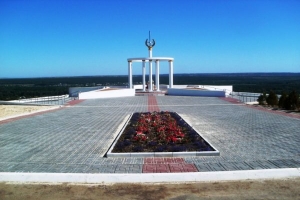

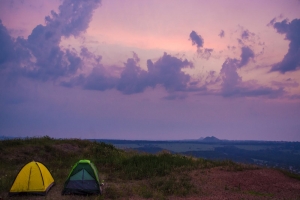

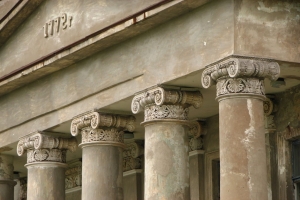

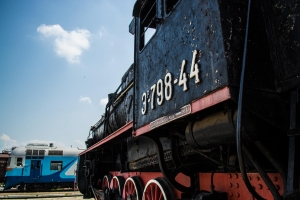


Luhansk Oblast is the most completely occupied region of modern Ukraine. Luhansk itself fell under Russian Federation occupation in 2014. Severodonetsk, Lysychansk and Rubizhne — the largest cities of the formerly controlled part — were seized by Russian forces in June–July 2022. Starobilsk, Kreminna and Svatove are also occupied. Only isolated strips along the borders with Kharkiv and Donetsk oblasts remained under Ukrainian control — and those too are now in the front-line zone.
This guide is not about active tourism — it is about a region’s heritage that deserves to be known and that awaits de-occupation. Luhansk Oblast is not a tourist centre in the conventional sense, but it is a land with powerful natural heritage (Striltsivskyi Steppe with wild horses), ancient spiritual heritage (Transfiguration Cave Monastery), the first coal capital of the Donbas (18th-century Lysychansk) and a difficult 20th-century industrial history.
Important. Tourist visits to Luhansk Oblast are currently impossible. Almost the entire territory is under Russian Federation occupation — since 2014 (Luhansk and the south) and since 2022 (Severodonetsk, Lysychansk, Starobilsk, Kreminna and others). Areas still under Ukrainian control form a narrow strip in the north of the region, in an active front-line zone with constant shelling. Access for civilians and tourists is impossible. This guide describes the region as national heritage, not as an active travel destination.
Region at a glance
| Administrative centre | Luhansk (occupied since 2014); administrative functions relocated |
| Area | 26 684 km2 |
| Population | ~2.1 million before 2014; ~1.5 million before 2022; tens of thousands in controlled territory |
| Historic lands | Wild Fields (Dike Pole), Slobozhanshchyna (north), Donbas (industrial since the 19th century) |
| Main rivers | Siverskyi Donets, Aidar, Luhan, Derkul, Yevsuh |
| Current status | Almost entirely occupied by the Russian Federation since 2014 and 2022 |
| When to visit | Tourist visits currently impossible; this guide is preserved for the day of de-occupation |
In this guide
- What this region is and why people came
- Geography, landscapes, climate
- History in brief
- Legends and local lore
- Temporarily occupied territories
- Top attractions of the region
- Itineraries — for when it is safe again
- Must-dos in Luhansk Oblast
- FAQ
What this region is and why people came
Luhansk Oblast is the northern edge of the Donbas, but with a character distinct from Donetsk Oblast. Less industry, more steppe, more forests and rivers. If Donetsk Oblast means «mines and factories,» Luhansk Oblast means steppe, Cossacks and the Siverskyi Donets river — at least in the historical sense.
Before 2014, visitors came to Luhansk Oblast for three reasons. First — nature: the Luhansk Nature Reserve with its three sections (Striltsivskyi Steppe, Stanychno-Luhanske, Provalskyi), home to wild horses (kiangs), marmots and imperial eagles. Second — spiritual heritage: the Transfiguration Cave Monastery in Nauholne, a rare underground sacred site in the otherwise flat steppe of Ukraine. Third — industrial heritage: Lysychansk as the Donbas’s first coal city, Severodonetsk as the model Soviet industrial city of the 20th century, Svatove as a 19th-century railway junction.
Geography, landscapes, climate
Luhansk Oblast has two landscape zones. The northern part (Svativshchyna, Kremenshchyna, Starobilshchyna) is Slobozhanshchyna forest-steppe with oak forests, the Aidar River, gentle hills and dense villages. The southern part is true steppe with burial mounds (kurgans), ravines, balkas and the Donetsk Ridge, with coal deposits and the man-made landscape of mine tips.
The Siverskyi Donets runs through the entire region — its largest river, with chalk cliffs, forested banks and fishing spots. Before 2022, the Siverskyi Donets was the favourite recreation zone for eastern Ukrainians; today it flows through an active combat zone.
A special natural feature of Luhansk Oblast is the Luhansk Nature Reserve, the largest steppe reserve in Left-Bank Ukraine, founded in 1968. It consists of three sections: Striltsivskyi Steppe (marmots and wild kiang horses), Stanychno-Luhanske (pine forest in the Siverskyi Donets floodplain) and Provalskyi Steppe (a benchmark fescue-feathergrass steppe). All three sections are currently in the occupied zone.
When to visit. Tourist travel to Luhansk Oblast is currently impossible due to full occupation. This guide is preserved for when the region becomes safe again. Under normal conditions the best season is April to October for nature, year-round for cultural sites.
History in brief
The lands of modern Luhansk Oblast were settled by Scythians and Sarmatians in the first millennium BC — some of the country’s richest Scythian burial mounds are found here. In the medieval period this was nomadic territory. In the 17th century, Don Cossacks arrived from the north and Ukrainian Slobozhanians from the west. In 1638, Svatove was founded — the first Slobozhanshchyna settlement in the modern region.
In 1795, the Russian Empire established the Luhansk Iron Foundry on the right bank of the Luhan River to cast cannon for the navy. This is the oldest industrial enterprise on the territory of modern Ukraine, predating the Yuzivka steelworks (1869) by 74 years. In the 19th century the region became a centre of the coal industry. Lysychansk — the first coal city of the Donbas — was founded in 1710 as Lysocha Balka, with industrial coal extraction beginning in 1796.
In the 20th century the region became one of the pillars of Soviet heavy industry. The Stakhanovite movement of «shock workers» (1935) began in Luhansk mines. In 1934 Luhansk was renamed Voroshylovhrad, restored in 1958, renamed again in 1970, and returned to Luhansk in 1990. In the 1950s, Severodonetsk was built as a model Soviet company town for nitrogen fertiliser production, with some of the finest postwar Stalinist Classical architecture in Ukraine.
2014. As in Donetsk, a separatist uprising backed by Russia erupted in Luhansk. In April 2014 the so-called «LPR» was proclaimed. By August 2014 it controlled the southern part of the region. Ukrainian forces held Severodonetsk, Lysychansk, Rubizhne, Svatove, Starobilsk and Kreminna.
2022–2024. The full-scale Russian invasion opened a second phase. In May–July 2022 Russian forces seized Rubizhne, Severodonetsk, Lysychansk and Kreminna. By late 2022 Luhansk Oblast was fully occupied de facto. The occupiers subsequently conducted sham referendums, population transfers, destruction of cultural sites and repression of pro-Ukrainian activists. Luhansk Oblast today is the most completely occupied region of Ukraine.
The Luhansk Iron Foundry (1795) was the first industrial enterprise on the territory of modern Ukraine. It cast cannon for the Black Sea Fleet that fought in the Crimean War of 1853–1856. Ukrainian metallurgy is 74 years older than Yuzivka.
Legends and local lore
1. The Transfiguration Cave Monastery and its depths
In the village of Nauholne, Starobilsk district, stands the Transfiguration Cave Monastery (Preobrazhenskyi Pechernyi Monastyr) — one of the most extraordinary sacred sites in Ukraine. The monastery is carved into a chalk hill: underground cells, corridors and church chambers on several levels, reaching a total depth of up to 30 metres. According to legend, the monastery was founded by monk-refugees from Kyiv in the 17th century who came to the Wild Fields (Dike Pole) and dug themselves an underground refuge. Another legend holds that the site is far older — a pre-Christian Slavic sanctuary later converted to a Christian monastery in the 17th century. Archaeologists continue to debate this. The monastery is currently under occupation; its condition is unknown.
2. The wild horses of Striltsivskyi Steppe
Striltsivskyi Steppe is the oldest section of the Luhansk Nature Reserve, established as early as 1948. It preserves one of the last remnants of virgin steppe in Europe, with feathergrass, nomadic mixed grasses, marmots — and, legendarily, wild kiang horses, descendants of the horses ridden by Scythian warriors. In the 1990s, kiangs from the Chornobyl Exclusion Zone (where a population had already established itself) were introduced here. It is said that in the evening steppe you can watch an entire herd grazing against the setting sun. Local legend holds that these horses are the spirits of Scythian warriors waiting for their riders to return. Striltsivskyi Steppe is currently under occupation.
3. Lysychansk’s spoil tips — mountains that remember all the history of coal
Lysychansk is dominated by terykon (spoil tips) — slag heaps from 200 years of coal mining. The tallest abandoned spoil tip in Lysychansk stands over 80 metres high and resembles an artificial mountain. You could climb it and look out over the entire region. Local legend holds that in the oldest spoil tips coal still smoulders: on damp days a thin wisp of smoke is sometimes visible. In Soviet times this was used as a folk weather forecasting method.
Temporarily occupied territories
Luhansk Oblast is effectively occupied in its entirety. Travel there without serious risk is not possible. But this is part of the national territory, and its history is worth knowing.
Luhansk. The regional capital, with 400,000 residents before 2014. Home to the Resurrection Cathedral, the Regional History Museum, Heroes’ Square, and the Luhansk Iron Foundry (1795) — the oldest industrial enterprise on the territory of modern Ukraine. Occupied since April 2014.
Severodonetsk. The second-largest city, with 100,000 residents before 2022. Built from 1934 as a model Soviet company town for nitrogen fertiliser production. Fine postwar Stalinist Classical architecture, the central Marshal Konev Street (now Independence Street), and the Palace of Culture of the Chemical Workers. Until 2022 it served as the de facto administrative centre of the region. Occupied in June 2022 after fierce fighting.
Lysychansk. The first coal city of the Donbas, founded in 1710. Industrial coal extraction began here in 1796, the origin point of the entire Ukrainian Donbas coal industry. Fine 19th-century architecture, a Belgian glass factory, towering spoil tips. Occupied in July 2022.
Starobilsk. A small historic town on the Aidar River, founded in 1685 as a Cossack sloboda. A well-preserved 19th-century historic centre with merchants’ townhouses, churches and a historic railway station. In the Stalinist era, a POW camp here held Polish officers before the Katyn massacre (1940). Currently occupied.
Kreminna. A forest town at the heart of the Kreminska forest massif — one of the largest forested landscapes in Left-Bank Ukraine. Once a resort zone with sanatoriums and holiday bases. Currently under occupation; large sections of the forest were damaged by combat operations in 2022–2023.
Svatove. The administrative centre of the northern area of the region until 2022. A railway junction and historic town. The Mavag locomotive monument (1953) — a postwar Hungarian locomotive that worked the Slobozhanshchyna railway and was preserved as a memorial — stands here as a reminder of the region’s railway heritage. Occupied.
Krasnodón. A town in the south of the region, known as the «city of the Young Guard» — named after Alexander Fadeyev’s novel about a wartime underground organisation of 1942–43. Soviet propaganda made Krasnodón an ideological town; post-Soviet assessments of the «Young Guard» history are contested. Occupied since 2014.
Top attractions of the region
All locations below are in occupied territory. This guide preserves them as national heritage, to be revisited after de-occupation.
Transfiguration Cave Monastery in Nauholne
Transfiguration Cave Monastery in the village of Nauholne is the most unique sacred site in Luhansk Oblast. An underground complex of cells and church chambers on several levels inside a chalk hill, reaching a total depth of up to 30 metres. The architectural parallel is the Kyiv Monastery of the Caves — but here the scale is comparable, set in open steppe. Founded no later than the 17th century, partially restored in the 1990s. Under occupation; condition since 2022 unknown.
Luhansk Nature Reserve
Luhansk Nature Reserve is the largest steppe reserve in Left-Bank Ukraine. Three sections: Striltsivskyi Steppe (marmots, kiang wild horses, virgin feathergrass steppe), Stanychno-Luhanske (pine forest in the Siverskyi Donets floodplain, rare flora), and Provalskyi Steppe (fescue-feathergrass steppe and Scythian burial mounds). Founded in 1968. All three sections are currently under occupation.
Lysychansk spoil tips and the Belgian glass factory
The tallest abandoned spoil tip in Lysychansk is a classic of Donbas urban exploration (urbex). Nearby stands the Belgian Glass Factory of Lysychansk, founded in 1913 by Belgian engineer Henri Morel. It is one of the finest industrial buildings of 20th-century Ukraine, with half-timbered façades in a German-Belgian style. Until 2014 it housed a glass museum; condition since occupation is unknown.
Pryvilnyanskyi Bridgehead Memorial Complex
Pryvilnyanskyi Bridgehead Memorial Complex is a memorial on the site of one of the key battles for the liberation of Luhansk Oblast from the Nazis in 1943. A sculptural ensemble from 1985 with a viewing platform over the Siverskyi Donets. Currently in occupied territory.
Mavag locomotive monument in Svatove
Mavag locomotive monument (1953) in Svatove is another point of the region’s industrial heritage. A postwar Hungarian locomotive that operated on the Slobozhanshchyna railway and was preserved as a memorial. Svatove is a railway town with a powerful 19th-century depot.
Severodonetsk — the model Soviet city
Severodonetsk is a showcase of postwar Soviet urban planning ideology. The entire city was designed as a single ensemble for workers of the Azot chemical plant: wide boulevards, neoclassical façades, palaces of culture, parks, fountains. Architecturally it is one of the most coherent Soviet-era cities in Ukraine. Before 2022 over 100,000 people lived here. After the battles of 2022 it is under occupation, with significant residential damage.
Kreminska forest massif
The Kreminska forest massif is one of the largest forested landscapes in Left-Bank Ukraine, covering over 40,000 hectares of pine, oak and birch. Before 2014 it was a resort zone with sanatoriums, holiday camps and mushroom-and-berry tourism. In 2022–2023, combat operations caused significant forest damage through fires, logging and mine contamination. Currently under occupation.
Itineraries — for when it is safe again
The itineraries below reflect how Luhansk Oblast was visited by tourists before 2014 and partly before 2022. They are currently entirely impossible due to occupation. This guide preserves them for the day the region becomes safe again.
Itinerary 1. Cave Monastery and Starobilsk
A themed pilgrimage route. Transfiguration Cave Monastery in Nauholne with its underground cells. Then Starobilsk with its 19th-century historic centre, churches, merchants’ houses and the Memorial to Polish Officers.
Itinerary 2. Steppe day — Striltsivskyi Steppe
A nature itinerary for lovers of wild landscapes. Striltsivskyi Steppe with herds of kiangs and marmot colonies. Bird-watching (imperial eagles, steppe eagles, bustards). The silence of the steppe and a sense of open space.
Itinerary 3. Industrial Luhansk Oblast — Lysychansk and Severodonetsk
A memory itinerary through Ukrainian Donbas. Tallest spoil tip in Lysychansk with a city-wide panorama from the top. The Belgian glass factory. Then Severodonetsk with its postwar Soviet ensemble. Currently impossible.
Itinerary 4. Kayaking the Siverskyi Donets
Before 2014 — a popular summer route: paddling the Siverskyi Donets from Kreminna to Svyatohirsk (Donetsk Oblast). Forested banks, chalk cliffs, fishing camps. Currently impossible — the river runs through an active combat zone.
Itinerary 5. Railway Luhansk Oblast — Svatove and the 19th-century depot
An itinerary for railway enthusiasts. Mavag locomotive in Svatove, the old 19th-century depot, historic stations. Nearby — Pryvilnyanskyi Bridgehead Memorial Complex. Currently impossible.
Must-dos in Luhansk Oblast (when it is safe again)
- Descend into the underground cells of the Transfiguration Cave Monastery — one of the most extraordinary sacred sites in Ukraine.
- Stand in Striltsivskyi Steppe at sunset — watching herds of kiangs graze among the feathergrass. This is what the steppe looked like in the time of the Scythians.
- Climb the tallest spoil tip in Lysychansk — 80 metres up, with a panorama over industrial Luhansk Oblast.
- Walk through the Belgian Glass Factory of Lysychansk — one of the finest industrial buildings in the Donbas.
- Stroll the central avenue of Severodonetsk — a postwar Stalinist Classical ensemble, rare in its completeness.
- Stand at the Memorial to Polish Officers in Starobilsk — a reminder of the Katyn crime of 1940.
- Try Slobozhanshchyna borscht with pork and tomatoes at a local restaurant in Svatove or Starobilsk — a different school of borscht from the Donetsk version.
- Stand on the chalk cliffs of the Siverskyi Donets near Kreminna — one of the most beautiful views in the region.
- Visit the Luhansk Regional History Museum — when it has been restored after occupation.
- Buy honey from the Luhansk steppe — a traditional product tied to the diverse wildflower meadows of the reserve.
Striltsivskyi Steppe is one of the few nature reserves in Europe that has preserved a virgin steppe with feathergrass, marmots and wild horses. Under normal conditions, tourists could only visit with a guide, as steppe is a fragile ecosystem. Today this steppe is under occupation — a threat not only to tourism but to the ecosystem itself.
Frequently asked questions
Can you travel to Luhansk Oblast now?
No. Tourist visits to Luhansk Oblast are currently impossible. Almost the entire territory is under Russian Federation occupation — since 2014 (Luhansk and the south) and since 2022 (Severodonetsk, Lysychansk, Starobilsk, Kreminna, Svatove). Travel there without extreme risk to life is not possible. Ukrainian-controlled areas in the north are directly in the front-line zone.
When will Luhansk Oblast be de-occupied?
De-occupation of Luhansk Oblast is a strategic goal of Ukraine. The exact timeline depends on the course of the war and subsequent military and diplomatic decisions. Ukraine does not recognise the occupation and is working to restore its territorial integrity. For now — we remember.
What happened to Severodonetsk and Lysychansk in 2022?
From May to July 2022, Russian forces carried out an offensive on the Severodonetsk salient. After two months of fierce fighting, Severodonetsk was occupied on 25 June 2022, and Lysychansk on 3 July. Ukrainian forces withdrew to the north of the region. Both cities suffered significant damage to housing, infrastructure and historic sites.
What was the Transfiguration Cave Monastery?
Transfiguration Cave Monastery in Nauholne is an underground sacred complex of the 17th century (possibly older), carved into a chalk hill. Multiple levels, underground cells, corridors and church chambers reaching a total depth of up to 30 metres. Unique in the Ukrainian steppe. It received pilgrims until 2014; under occupation since 2022 with unknown condition.
What is the Luhansk Nature Reserve?
The largest steppe reserve in Left-Bank Ukraine, founded in 1968. Three sections: Striltsivskyi Steppe (virgin steppe with wild kiang horses), Stanychno-Luhanske (pine forest in the Siverskyi Donets floodplain), Provalskyi Steppe (fescue-feathergrass steppe). All three are under occupation since 2022; ecological condition unknown.
Will Luhansk Oblast be open to tourism in the future?
Yes — after de-occupation. The region retains significant tourism potential: the Transfiguration Cave Monastery, Luhansk Nature Reserve, the Lysychansk Belgian Glass Factory, Severodonetsk as a postwar Classical ensemble, and the Siverskyi Donets as a water tourism corridor. This will mean the revival of regional tourism, alongside a network of memorial routes about the occupation of 2014–2024.
What are the iconic foods of Luhansk Oblast?
Slobozhanshchyna borscht with pork and tomatoes (a different school from Donetsk-style borscht), steppe lamb, sauerkraut, Luhansk varenyky (dumplings) with potato. In the north (Svatove, Kreminna) — the influence of Kharkiv Slobozhanshchyna cuisine: halushky (dumplings), pies with pumpkin and poppy seeds. In the south — miners’ food: boiled potatoes and salt pork.
What souvenirs to bring from Luhansk Oblast?
Until 2014, classic souvenirs included: Belgian glass from Lysychansk (vintage and new pieces), honey from the Luhansk steppe, miniatures with miners’ symbols, postcards of the Siverskyi Donets, local berry preserves. Today all of this can be found in shops run by evacuated craftspeople in Kyiv, Lviv and Dnipro.
Luhansk Oblast is a region that is today entirely under occupation. That is a fact that cannot be glossed over. But it does not mean that Luhansk Oblast is «not Ukraine.» It is Ukrainian steppe, forest-steppe and industrial land with its own heritage: an underground monastery in chalk hills, wild horses on Striltsivskyi Steppe, the Belgian glass factories of Lysychansk, the postwar Classical architecture of Severodonetsk.
This guide is preserved for the day the region is open again. Until then — we remember. Luhansk Oblast is Ukraine.
JoomShopping Download & Support
Attention! Part of Ukraine was occupied during Russia's unfounded military aggression against us and other democratic countries!
russia is a terrorist country, russians are murderers, thieves and rapists.
Russia's unhuman aggression against Ukraine since 2014 has led to the loss of homes and lives not only of many Ukrainians, but also of citizens of other countries and nationalities.
We consider any military actions against any state in the 21st century unacceptable and stupid, but unfortunately the Russians do not think so, and therefore many democratic countries, including Moldova, Georgia and our homeland, suffer from barbaric aggression.
Therefore, until the occupied parts of Ukraine are demilitarized and returned to our state, we remind users about the real danger of visiting the territories occupied by russia.