


- You are here:
-
Sights by Regions

-
Ternopil region
- Ternopil
Ternopil





A city that has kept a lake at its heart for five centuries before lakefront living became an urban trend. A city that was 85% destroyed in 1944 and rebuilt so thoroughly that today you can barely tell. A city from which you can conveniently set out to every castle and cave in Podillia — and which is more interesting on its own than it first appears.
Ternopil is not Lviv. There is no medieval old town with cobbled lanes and a cathedral of coffee culture. What there is instead: a massive lake right in the city centre, a castle from 1540, two cathedral churches (one Roman Catholic, one Greek Catholic), and a staggering concentration of castles, caves and the Galician Michelangelo Pinzel — within a 100 km radius. If Lviv is the «destination», Ternopil is the «base camp for exploring Podillia».
📍 City at a Glance
| Founded | 1540 (Magdeburg rights granted by King Sigismund I) |
| Administrative status | Regional capital of Ternopil Oblast |
| Historic territory | Western Podillia (historically Galicia-Volhynia, then Poland, then Austria) |
| Population | ~225 000 |
| Area | ~58 km2 (one of Ukraine’s most compact regional centres) |
| Main river | Seret (dammed to form Ternopil Lake, 300 ha) |
| Former name | Tarnopol (after the founder’s family, official until 1944) |
| Best time to visit | May–September for lakeside walks; year-round for cultural sites |
In This Article
- What kind of city is this and why people come
- Location and character
- History in brief
- Legends and folklore
- Top sights of Ternopil
- City and Podillia itineraries
- Must-do in Ternopil
- Frequently asked questions
What Kind of City Is This and Why People Come
Ternopil is a mid-size western Ukrainian regional capital with two defining features. The first is Ternopil Lake: an artificial reservoir of 300 hectares created back in 1548, sitting right in the city centre. You are not greeted by a medieval square or a stone ensemble — you are greeted by a wide expanse of water with fountains and kilometres of embankment. In the evenings the lights come on, music plays, and cafes fill up. Any other European city would have paid millions for this feature. Ternopil has had it since the 16th century.
The second is geography. Ternopil sits at the heart of Western Podillia — Ukraine’s most «castle-dense» region. Kremenets, Zbarazh, Buchach, Chortkiv, Skalat, Sydoriv, Mykulyntsi — all within 50–90 km. Crystal Cave, Optimist Cave, the Dnister Canyon — all nearby too. Ternopil is the headquarters from which you can radiate in every direction. Not a destination in itself so much as the hub of the chessboard.
It stands on its own merits as well: the Old Castle from 1540, two cathedral churches, a rebuilt post-war city centre, excellent coffee shops, a range of museums, and a surprisingly lively academic scene (the city has a powerful university, a music academy and a regional philharmonic).
Location and Character of the City
Ternopil lies on the Podillia Upland, in a gently rolling landscape with forests and steppe patches. Elevation is around 300 m above sea level. The city spreads along both banks of the river Seret, dammed as far back as the 16th century — which is how the famous lake was formed.
The city centre is compact and easily walkable. The main axis is Taras Shevchenko Boulevard: a broad pedestrian avenue stretching from the railway station through Shevchenko Square to Voli Square. On both sides: Catholic churches, Shevchenko Theatre, cathedral churches, cafes. The southern part of the centre gives onto the lakeside embankment.
When to go. Most comfortable from May to mid-September: warm, the lake functions as the city’s main public stage, with concerts and festivals around it. Winters are mild with light snowfall. Podillia is beautiful in autumn — October orchards and the ridges of the Kremenets Hills. The 2022 war did not directly affect Ternopil (it is a rear-echelon region), though periodic missile strikes on infrastructure do occur; tourist sites have not suffered direct hits.
History in Brief
Foundation in 1540: a fortress against the Tatars
On 15 April 1540, the Polish king Sigismund I the Old signed a charter granting the Crown Hetman Jan Tarnowski the right to found a city on the river Seret. Tarnowski was among the wealthiest magnates in Poland and needed a fortified outpost on the south-eastern frontier — to defend against Tatar raids that were laying waste to Podillia every year. The city was named Tarnopol after its founder. The Ukrainian form «Ternopil» (from teron — blackthorn bush, said to grow thickly on the hill) became established later; the modern name was officially adopted only in 1944.
The Castle and the Lake (16th century)
Eight years after the founding, in 1548, Tarnowski ordered the Seret dammed — creating Ternopil Lake, which remains to this day one of the largest urban water bodies in Ukraine. The dam simultaneously served as a defensive line: approaching the city from the south became nearly impossible. The Old Castle — the core of the defence — was built at the same time. It withstood numerous sieges, including a Turkish assault in 1675.
The Austrian Period (1772–1918)
After the first partition of Poland in 1772, Tarnopol became part of the Austrian (later Austro-Hungarian) Empire. This was the city’s golden age: churches, synagogues, schools, cobblestones, a network of squares and boulevards were built. A powerful Jewish community took root here — before World War II, nearly half the city’s population was Jewish. Tarnopol became a centre of Podillian Hasidism. Here Solomiya Krushelnytska grew up and studied — one of the greatest opera singers of the 20th century, whom Italians called «the finest Cho-Cho-san» after the revised premiere of Puccini’s Madama Butterfly.
World War II: 85% destroyed
The darkest chapter of the city’s history. In March–April 1944 Ternopil became the arena for a three-week street battle between the Red Army and the Wehrmacht. The city, declared by Hitler a «fortress» (Festung Ternopol), was to hold out to the last. The result: roughly 85% of the built fabric was destroyed — a level of loss that puts Ternopil in the same category as Stalingrad and Dresden. Almost everything you see in the city centre today (except certain individual buildings and the castle) was constructed after the war. This is a city that was literally rebuilt from scratch.
Before the war, about 35 000 Jews lived in Ternopil (then Tarnopol) — nearly half the population. After the Holocaust and the city’s destruction in 1944, almost no one remained. The old Jewish synagogue did not survive; in its place is a memorial marker on Shevchenko Boulevard.
Modern Ternopil
Since independence the city has rapidly become one of the «youngest-feeling» regional capitals in the country: a large student population, an active cultural scene, clean streets and a lively centre. The 2022 war brought waves of internally displaced persons (Ternopil received some of the largest numbers from Kharkiv, Mariupol and Kherson), and periodic missile strikes on infrastructure — but on the whole the city continues at full pace.
Legends and Folklore
1. The blackthorn bush and the city’s name
The official etymology traces the name to the Polish «Tarnopol» — meaning «Tarnowski’s city.» Popular legend tells a different story. According to tradition, before laying the foundations of the fortress, Jan Tarnowski personally scouted the area and chose a hill above the Seret thickly overgrown with blackthorn (Prunus spinosa). The hetman is said to have declared: «Here shall stand a city, and we shall name it after what grows here.» The Poles wrote «Tarnopol», the local Ukrainians wrote «Ternopil». Four hundred years later, the second version won. If the legend is true, the city’s name encodes a rare observation of local flora.
2. Underground passages of the castle
Like any self-respecting Galician castle, the Ternopil Old Castle is said to have had a network of underground passages. According to tradition, tunnels ran: beneath the lake (for supply during sieges), towards the northern suburbs (for secret sorties), and even as far as Zbarazh (25 km away — physically implausible, but folk imagination loves grand scale). In the 20th century, remnants of corridors were discovered several times beneath the city centre, though a complete map was never made. Local spelaeologists claim that parts of the passages still survive beneath the floors of old buildings.
3. Solomiya Krushelnytska and Ternopil’s operatic destiny
Not quite a legend, but a story told like one. Solomiya Krushelnytska (1872–1952) — one of the greatest sopranos of the 20th century — was born in the village of Biliavyntsi near Buchach, studied in Ternopil and Lviv, and performed at La Scala. In 1904 she saved the premiere of Puccini’s Madama Butterfly after its disastrous first night: when the composer rewrote the score and needed a star, he insisted on Krushelnytska. Ternopil people say: «The world’s finest Cho-Cho-san was from our Podillia.» Her statue stands on Shevchenko Boulevard; a street and the regional drama theatre both bear her name.
Top Sights of Ternopil
Ternopil Lake and Embankment
Ternopil Lake — the city’s defining landmark. Created in 1548 by damming the Seret, it covers about 300 ha and stretches 6 km through the entire centre. The embankment, several kilometres long, is laid out for walking: benches, fountains, cycle paths, cafes. In warm weather a musical fountain operates, and concerts, festivals and fairs take place here. In winter part of the lake is flooded for ice skating. For most visitors, the lake is the single best reason to spend at least one evening in Ternopil.
Ternopil Old Castle
Old Castle — the oldest structure in the city, founded by Tarnowski himself in 1540 on a high bank above the lake. A rectangular defensive structure with bastions, rebuilt several times (especially after damage by the Turks in 1675 and the Swedes in 1710). In the 19th century the Austrians converted it into barracks; in Soviet times it housed a sports school. Today the castle is partly restored; the outer walls and one tower are original 16th-century fabric. Best viewed from the lakeside.
Shevchenko Square and Boulevard
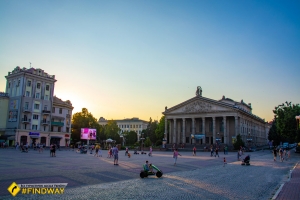
Shevchenko Square — the central city square with a monument to the poet Kobzar (one of the first in Ukraine, unveiled in 1992, after the brief removal of the Soviet Lenin statue that had stood in the same spot). Nearby: the Shevchenko Regional Drama Theatre, coffee shops, the regional philharmonic. From the square extends Taras Shevchenko Boulevard — the city’s main pedestrian street, with double chestnut-tree alleys, sculptures, benches and all the central cafes. In warm weather it is the liveliest spot in Ternopil.
Church of Divine Mercy
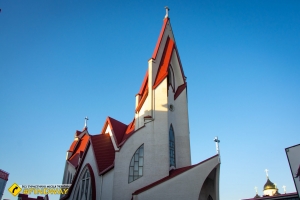
The Church of Divine Mercy and Our Lady of Perpetual Help on Shevchenko Boulevard — the city’s newest Roman Catholic church (consecrated in 2014). Modern architecture: massive white walls, a tall spire, minimalist interiors with stained glass. The contrast with the adjacent historic ensemble is sharp and arresting. A Roman Catholic parish is active here, with several masses daily.
Arcicathedral of the Immaculate Conception
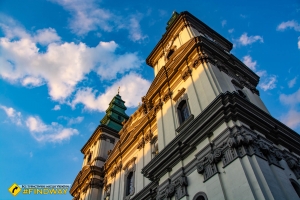
The Arcicathedral of the Immaculate Conception of the Blessed Virgin Mary — Ternopil’s main Roman Catholic church, built in 1903 in Neo-Gothic style. Two slender towers, red brick, stained glass — all the charms of early-20th-century European Neo-Gothic. In 1944 the cathedral was badly damaged but rebuilt. Today it serves as the seat of the Ternopil-Zboriv Archeparchy of the Ukrainian Greek Catholic Church.
Cathedral of the Immaculate Conception of the Blessed Virgin Mary (UGCC). The Greek Catholic cathedral of the city, built in 1745 and rebuilt in the 19th century. Baroque architecture with later additions, one of the few buildings in the centre to survive the war of 1944 with minimal damage.
Ternopil Regional Local History Museum. On Shevchenko Boulevard. Collections span from the Trypillian culture to the present day, with emphasis on the Polish and Jewish heritage of the Ternopil region, the castle culture of Podillia, and the history of the OUN-UPA (the museum holds unique documents of the insurgent movement).
Ternopil Art Museum. A small but excellent museum with a collection of 20th-century Ukrainian painting, a portrait gallery and a dedicated hall of Podillian sacred art. Key exhibits include works by Oleksa Novakivsky, Yosyp Bokshay, and representatives of the Transcarpathian and Galician schools.
Solomiya Krushelnytska Memorial. Monument to the great opera singer on Shevchenko Boulevard; the regional drama theatre bearing her name stands alongside. Krushelnytska was born in Biliavyntsi near Buchach (90 km from Ternopil) but received her education here.
National Revival Park. A large park in the centre (~25 ha) with alleys, ponds and cafes. Created on the site of an old Austrian military polygon. A popular destination for families, cyclists and joggers.
City and Podillia Itineraries
Ternopil in One Day
Shevchenko Square → Shevchenko Boulevard with all its cathedrals and cafes → Arcicathedral of the Immaculate Conception → lunch at one of the central restaurants → Old Castle with its view of the lake → Ternopil Lake with a sunset walk along the embankment. Core programme in 6–7 hours.
Ternopil and «With Fire and Sword» in Two Days
Day 1 — Ternopil city centre (itinerary above). Day 2 — Zbarazh (25 km): Vyshnevetsky Castle, where Sienkiewicz set the plot of With Fire and Sword, and the Bernardine Monastery. Or alternatively — Mykulyntsi (25 km south) with Mykulyntsi Castle from the 16th century and thermal springs.
The «Castles of Podillia» Route in Three Days
Ternopil as base. Day 1 — Kremenets with Queen Bona’s Castle and the local history museum. Day 2 — Zbarazh and Chortkiv with the Holsky Castle and the Carmelite Monastery. Day 3 — southern Podillia: Sydoriv Castle-Ship above the Zbruch and Pidhoryany Monastery in Terebovlia. In total — eight fortresses in three days without changing hotel.
Underground Ternopil Oblast Route
For the adventurous. From Ternopil — ~100 km to Kryvche: Crystal Cave (2.5 km of guided trail, gypsum crystals, +11 °C year-round). Nearby — the famous Optimist Cave (for speleological groups; the longest gypsum cave in the world, over 260 km of passages). Return via Chortkiv and Zalishchyky, with a stop at the Dnister Canyon.
Must-Do in Ternopil
- Walk the full lakeside embankment — from the castle to Topilche Park. 6 km of evening water, fountains and cafes. If you only do one thing in Ternopil, make it this.
- Have breakfast on Shevchenko Boulevard. The cafes here cannot match Lviv by reputation, but they are excellent and welcoming. Classic Podillian pastries are a must.
- Climb up to the Old Castle. The best vantage point in the city for understanding its geometry: below — the lake; left — the centre; right — the industrial edge.
- Visit the Solomiya Krushelnytska Regional Drama Theatre. Either for a performance or simply a tour — as an architectural monument of post-war reconstruction.
- Try Podillian cuisine. Kyslyak (soured milk), kyndyukh (stuffed stomach), kachanky (cherries with honey and dough), borscht with pampushky. In Ternopil this is not a «tourist performance» — it is the everyday menu.
- Listen to organ music in the Arcicathedral. Organ concerts and masses are held regularly. One of the finest organs in western Podillia.
- Take a day trip to Zbarazh. 25 km, half an hour’s drive. Zbarazh Castle — the very one from With Fire and Sword.
- Descend into Crystal Cave. One of the most accessible gypsum caves in Europe — two hours underground and you will understand why Podillia matters to speleology.
- Swim or fish on the lake in summer. Yes, in the city lake. Several equipped beaches, pedal-boat hire available.
- Buy Podillian honey and herbal balsam. Not a shelf souvenir — genuinely excellent products from apiaries around the Kremenets Hills.
Frequently Asked Questions
What to see in Ternopil in one day?
Shevchenko Square, Shevchenko Boulevard with the cathedral churches, the Arcicathedral of the Immaculate Conception, lunch in the centre, Old Castle, Ternopil Lake with a sunset walk along the embankment. Core programme in 6–7 hours.
What to see in Ternopil in two days?
Day one — city centre. Day two — a trip into Podillia: Zbarazh with the With Fire and Sword castle, or Mykulyntsi with the castle and thermal springs. For the more energetic — Kremenets with Queen Bona’s Castle (70 km).
Is it safe to travel to Ternopil now?
Yes. Ternopil is a rear-area city, far from the front line. Infrastructure is functioning; museums, restaurants and hotels are open. Periodic missile strikes on critical infrastructure do occur, but tourist sites have not suffered direct hits. Checking official channels and the «Air Alarm» app before travelling is standard practice.
What to do in Ternopil in the evening?
The lakeside embankment is the classic option (musical fountain, cafes along the shore). Shevchenko Boulevard for strolling and coffee. Solomiya Krushelnytska Theatre for performances. In warm weather, open-air concerts and festivals are held on the lake.
What to do with children in Ternopil?
The lakeside embankment with pedal boats and playgrounds, National Revival Park (large green space), Old Castle (courtyard and views over the water), the regional local history museum with interactive displays. Outside the city — Crystal Cave (an underground adventure for children aged 6+).
Where does the name Ternopil come from?
The city was founded in 1540 by Polish Hetman Jan Tarnowski, and the original name — Tarnopol — means «Tarnowski’s city.» The Ukrainian form «Ternopil» (from teron — blackthorn bush) developed later and was officially adopted in 1944. Folk etymology links the name to dense blackthorn thickets said to have covered the founding hill.
What are the most famous dishes of Ternopil?
Podillian borscht with pampushky, kyndyukh (stuffed pork stomach), kyslyak (home-made curd cheese with milk), kachanky (cherries cooked in dough and blanched), cherry varenyky, plasky with poppy seed, Ternopil pastries. A separate layer — post-war Jewish cuisine (tsimes, kugel) preserved in books and occasionally at fairs.
What to bring back from Ternopil as a souvenir?
Podillian honey from apiaries around the Kremenets Hills, Kremenets herbal balsam, ceramic miniatures of Ternopil region castles, a gypsum crystal from Crystal Cave, postcards and books about Podillia, grape wine from local wineries in southern Ternopil Oblast.
Ternopil is a city that has stood beside the same lake for five centuries. A city that Hitler declared a fortress and that was reduced to rubble in 1944, then rebuilt from the ground up. A city where Solomiya Krushelnytska learned to sing before she went to rescue Puccini in Milan. And a city from which you can most conveniently explore all of western Podillia — its castles, caves and canyon.
People do not come here for a medieval facade, as they come to Lviv. They come for the transparent horizon of water at the city’s heart and for a density of history per square kilometre that is unexpectedly high. And if you dine with a view of the sunset over the lake, you can forget that this is a regional capital of 225 000 people. It looks rather like a small Gdansk.
JoomShopping Download & Support