


- You are here:
-
Sights by Regions

-
Kharkiv region
-
Kharkiv
- Cathedral mosque, Kharkiv
Kharkiv




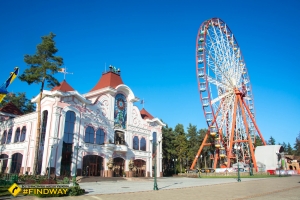
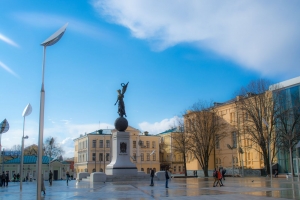
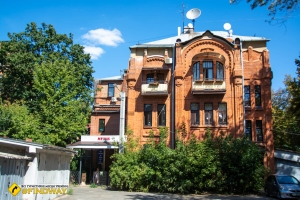
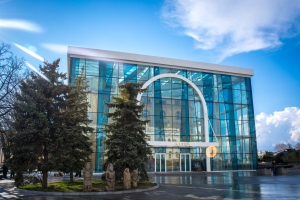


Imagine a city that someone always tries to write off. First it was «a province», then «a factory without a face», and since 2022 «a city about to fall». Every time, Kharkiv gives the same answer: no. It stood 40 kilometres from the border under artillery fire — and surrendered neither its centre nor its soul.
This city needs to be judged on its own terms, not someone else’s. Kharkiv is not Lviv and not Kyiv — it is steppe-born, direct, engineering-minded, student-driven, and stubborn. Here the first European skyscraper stands on one of the continent’s largest squares, and between classes students dash across a street named after Darwin. This is the First Capital. That is where to begin.
City card
| Founded | 1654 (Cossack fortification on University Hill between the Lopan and Kharkiv rivers) |
| Admin status | Regional capital of Kharkiv Oblast, Ukraine’s second largest city by population |
| Historic land | Slobozhanshchyna (historic capital of Slobidska Ukraine) |
| Population | ~1.4 million (pre-2022); despite its front-line status the city has largely returned to life |
| Area | ~350 km2 |
| Main rivers | Lopan, Kharkiv, Udi, Nemyshlia |
| Nicknames | First Capital, student capital, university city |
| Best time to visit | Year-round, subject to the security situation. May–September for parks and walks; cold months for museums |
In this article
- What kind of city is this, and why visit?
- Location and character
- History in brief
- Legends and mysteries
- Top sights of Kharkiv
- City itineraries
- Must-do in Kharkiv
- FAQ
What kind of city is this, and why visit?
Kharkiv is Ukraine’s capital of ideas. Not of golden domes or medieval walls, but of universities, factories, design bureaus, avant-garde architecture, and literature. The third university of the Russian Empire was founded here; tanks and rockets were built here; in the 1920s more writers and artists worked here than anywhere else in Soviet Ukraine.
People come for 20th-century architecture. Kharkiv has the highest concentration of Constructivism in the country: Derzhprom, the «Slovo» building, the main post office, entire districts from the 1920s–30s. If you are drawn not to «old and charming» but to bold, massive, and engineering-focused — this is your city.
People also come to see a city that held its ground. Kharkiv was never a tourist hotspot, and paradoxically that worked in its favour: there is nothing here polished «for visitors», everything is honest. And since 2022 Kharkiv has become a symbol of resilience — a city one step from the border that works, studies, and does not surrender.
Location and character
Kharkiv stands at the confluence of four small rivers — the Lopan, the Kharkiv, the Udi, and the Nemyshlia. The historic core is University Hill, where a Cossack fortification was established in 1654. From there the city spread for dozens of kilometres: there is no single compact «old town» — Kharkiv is a system of districts, each with its own character.
The main axis is Sumska Street, running from the centre past parks, theatres, and gardens. The heart of the city is Freedom Square, one of the largest in Europe, with Derzhprom dominating its head. The easiest way to navigate is by metro: it is deep, reliable, and during 2022 sheltered tens of thousands of people as an air-raid shelter.
When to visit. Kharkiv is alive year-round, but any trip must be planned with the security situation in mind — it is a front-line city and is periodically shelled. May–September is the time for parks, Sarzhyn Yar, and evening walks along Sumska. The cold months are for museums, of which Kharkiv has a surprisingly large and varied selection. Before travelling, check current recommendations and get used to monitoring air-raid alerts.
History in brief
The Sloboda fortress
Kharkiv was founded in 1654 by settlers from the Dnieper region who were fleeing Polish oppression to the free steppe borderlands — the «Wild Field.» This was the beginning of Slobidska Ukraine: free Cossack settlements with their own self-government. Kharkiv became the centre of one of the sloboda regiments and later the administrative capital of all Slobozhanshchyna. In 1805 a university was opened here — and the city became a student city forever.
The First Capital
In 1919–1934 Kharkiv was the capital of Soviet Ukraine — hence its defining nickname, «the First Capital.» This was when the city gained its distinctive appearance: the vast Freedom Square, Derzhprom, Constructivist districts. And this was when the Executed Renaissance blazed here — an entire generation of Ukrainian writers, directors, and artists who created a new culture in a matter of years before being destroyed in Stalin’s purges.
20th–21st centuries
After the capital was moved to Kyiv, Kharkiv became an industrial giant: tanks, tractors, turbines, and later rocket and aviation technology. Twice occupied and twice liberated during World War II. In independent Ukraine: a major industrial, scientific, and educational centre. In 2022 the city endured months of shelling; the northern Saltivka district suffered most; rockets struck buildings on Freedom Square itself. The Battle of Kharkiv ended with the enemy being pushed back — and Kharkiv remaining Ukrainian.
Kharkiv is located only ~40 kilometres from the border. It is the largest city in Europe that close to an active front line — and yet it continues to work, study, and rebuild.
Legends and mysteries
A city founded on open steppe had to build its legends from scratch. Here are four without which Kharkiv is not Kharkiv.
1. The Cossack Kharko who gave the city its name
The most popular legend says the city was founded by a Cossack named Kharyton, or Kharko for short — who allegedly set up a farmstead on these hills, and the name derived from his. Historians are sceptical (the city was more likely named after the Kharkiv River, which may in turn derive from the Polovtsian city of Sharukan nearby). But Kharko is unbothered: he stands on the monument to the city’s founders, pipe in hand, entirely confident in his own version.
2. Mirror Stream on the site of a cemetery
The gazebo-fountain «Mirror Stream» on Sumska Street — the unofficial symbol of Kharkiv, reproduced on magnets and postcards — hides a little-known fact. It was built in 1947 on the site of the old Myronosytska cemetery. That means the city’s most romantic spot, where dates are arranged and wedding photos taken, stands directly on a former graveyard. Kharkivians know — and come anyway.
3. The curse of the «Slovo» building
The «Slovo» (Word) building was constructed in the 1920s specifically for the Ukrainian creative elite — writers, directors, actors. Its floor plan was reportedly laid out in the shape of the letter «C» (for «Slovo») so the building would be legible from the sky. It proved legible to the secret police as well: in the late 1930s almost all of the building’s residents were arrested and shot. The building still stands and is still residential — but it is said to be the most tragic address in 20th-century Ukrainian culture.
4. Underground Kharkiv
Like every old city, Kharkiv has its underground myth: a network of passages said to connect the cathedrals, monasteries, and merchants’ mansions of the centre. Some were reportedly used by smugglers, some by monks. How much is truth and how much local legend no one can say precisely — no serious excavations have been undertaken. But every Kharkivian has heard the story of the «passage under the Lopan» from some older relative.
Top sights of Kharkiv
Freedom Square and Derzhprom
Kharkiv’s main square and one of the largest in Europe. Its centrepiece is Derzhprom, the first skyscraper of the Soviet Union and one of the pinnacles of world Constructivism: built in 1928 from monolithic reinforced concrete, it still looks futuristic today. Freedom Square is both an architectural masterpiece and a place where a Russian missile struck in 2022. Today it is a symbol of both glory and resilience. See Freedom Square and Derzhprom.
Mirror Stream
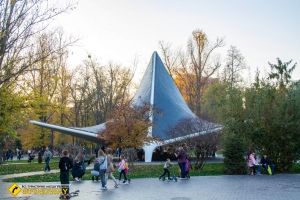
The white-and-blue gazebo-fountain on Sumska Street, opposite the opera house — Kharkiv’s most recognisable symbol. Built in 1947, it has become for the city what the Eiffel Tower is for Paris: small, but irreplaceable. Beside it is Victory Park, the ideal spot for your first photograph in Kharkiv. Mirror Stream does not yet have a dedicated page on the site.
Holy Protection Monastery
The oldest surviving structure in Kharkiv — the Protection Cathedral of the monastery was built in 1689 in the style of Ukrainian Cossack Baroque, with three tiers of domes. This is one of those rare moments in Kharkiv where you can touch the 17th century. A quiet monastery courtyard right in the centre of a metropolis. See the Holy Protection Monastery.
Annunciation Cathedral. Kharkiv’s largest church — a huge Neo-Byzantine cathedral of the 19th century with striped red-and-white facades and a bell tower over 80 metres tall. Visible from far away; impossible to confuse with anything else. Does not yet have a dedicated page on the site.
Assumption Cathedral and the Oleksandrivska Bell Tower. One of Kharkiv’s oldest churches, whose 90-metre bell tower was built to commemorate the victory over Napoleon — and long remained the tallest structure in the city. Does not yet have a dedicated page on the site.
Shevchenko Garden and Zoo
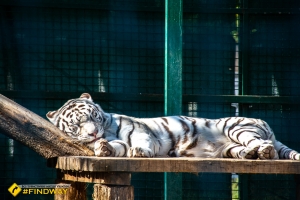
Kharkiv’s central park — the green heart of the city, with shady alleys, the Shevchenko monument (one of the finest in Ukraine), and a famous «mirror» cascade. The Kharkiv Zoo, one of the oldest in Ukraine, is also here; it survived 2022 thanks to the dedication of its staff. See Shevchenko Garden.
Gorky Park. A large central recreation park with amusements, concert venues, and a cable car connecting it to the forest park. The classic weekend destination for several generations of Kharkivians. See Gorky Park.
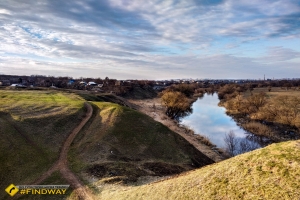
Sarzhyn Yar Botanical Garden. A deep green ravine almost in the city centre, with a spring, footpaths, and varied terrain. A favourite Kharkivian spot for morning runs and unhurried walks. See Sarzhyn Yar.
Sumtsov Historical Museum. The best place to spend a couple of hours putting the entire history of Slobozhanshchyna in order — from Scythian gold to the 20th century. See the Sumtsov Historical Museum.
LandauCenter. An interactive science museum at Karazin University, named after Nobel Prize-winning physicist Lev Landau. Here science means buttons, experiments, and «try it yourself.» Perfect for teenagers. See LandauCenter.
Karazin University Natural History Museum. One of the oldest natural history museums in Europe, with a vast collection from ancient animal skeletons to minerals. See the Natural History Museum.
Museum of Cosmonautics and Ufology. A very Kharkivian museum in spirit: serious space technology alongside a section on «the unexplained.» A city that built rockets has every right to joke about the topic too. See the Museum of Cosmonautics and Ufology.
Southern Railway History Museum. An outdoor museum of real locomotives and carriages you can climb aboard. The railway made Kharkiv what it is, so this is a museum about the city’s very essence. See the Southern Railway Museum.
The «Slovo» Building. The Constructivist letter-shaped building erected for the Ukrainian creative elite of the 1920s. Today it is a residential block and a memorial to the Executed Renaissance. Best viewed from outside, with respect for what happened here. Does not yet have a dedicated page on the site.
City itineraries
Itinerary 1. Kharkiv in one day (essential highlights)
Start at Freedom Square and Derzhprom, then walk down Sumska past Mirror Stream to the historic centre. Visit the Holy Protection Monastery and the Annunciation Cathedral. Lunch in the centre. Afternoon: stroll through Shevchenko Garden.
Itinerary 2. Kharkiv in two days (complete)
Day 1 — as in Itinerary 1: Freedom Square, Sumska, monastery, cathedrals, Shevchenko Garden. Day 2 is for museums and parks: Sumtsov Historical Museum, LandauCenter, and a relaxing visit to Gorky Park with the cable car.
Itinerary 3. Constructivist Kharkiv
For those who came for 20th-century architecture: Derzhprom and Freedom Square → Constructivist districts around it → the «Slovo» building → Darwin Street with its Art Nouveau mansions. A whole century of bold architecture in a single walking day.
Itinerary 4. Museum Kharkiv
For a rainy day or dedicated museum-goers: Sumtsov Historical Museum → Karazin Natural History Museum → Museum of Cosmonautics and Ufology → Retro Car Museum «Autoreliquiia». Four very different Kharkivs in a single day.
Itinerary 5. Kharkiv with children
LandauCenter with interactive experiments → Southern Railway Museum with real locomotives to climb aboard → zoo and Shevchenko Garden → Gorky Park with rides. Plenty of space and not a trace of museum boredom.
Must-do in Kharkiv
- Stand on Freedom Square and take in Derzhprom — the first skyscraper of Europe looks futuristic even a hundred years on.
- Get your photo at Mirror Stream — without this shot a visit to Kharkiv officially doesn’t count.
- Step into the Holy Protection Monastery courtyard — touching the 17th century in the middle of a metropolis.
- Ride the Kharkiv metro — deep, reliable, the shelter that protected thousands of people in 2022.
- Try a real «Kharkiv coffee» at one of the city-centre cafes — the city has long maintained the standard.
- Take the cable car in Gorky Park — the most serene way to see the city from above.
- Stand before the «Slovo» building and remember the names of those who lived here. The quietest and most important stop on the route.
- Descend into Sarzhyn Yar — the green ravine where Kharkivians escape the city noise.
- Press every button in LandauCenter — even if you are well past 14. Especially if you are well past 14.
- Buy a book from a Kharkiv publisher — the city was and remains one of the country’s publishing capitals.
- Try Slobozhanshchyna-style borscht with pampushky — hearty, with garlic, exactly as it should be.
- Walk evening Sumska Street — from Mirror Stream to Shevchenko Garden. This is Kharkiv in concentrated form.
Derzhprom was built in 1928 in under three years — almost without construction machinery, largely by hand. At the time it was the tallest building in the Soviet Union and one of the largest reinforced-concrete structures in the world.
Frequently asked questions
Is Kharkiv safe to visit now?
Kharkiv is a front-line city, located close to the border, and periodically comes under missile and drone attacks. At the same time the city functions: transport, museums, cafes, and businesses are open. A trip must be planned consciously: monitor current recommendations, respond to air-raid alerts via the official «Air Alert» app, and know the nearest shelters, including metro stations.
What to see in Kharkiv in one day?
The essential loop: Freedom Square and Derzhprom → Sumska Street with Mirror Stream → Holy Protection Monastery and Annunciation Cathedral → Shevchenko Garden.
What to see in Kharkiv in two days?
Day one: the centre (Freedom Square, Sumska, monastery, cathedrals, Shevchenko Garden). Day two: museums and parks — Sumtsov Historical Museum, LandauCenter, Gorky Park.
Where to go in the evening in Kharkiv?
Walk evening Sumska from Mirror Stream to Shevchenko Garden, drop into one of the city-centre cafes. Theatres and concert halls operate — subject to the security situation and curfew.
Where to go with children in Kharkiv?
LandauCenter, Southern Railway Museum with real locomotives, Natural History Museum, zoo, Gorky Park with rides.
Why is Kharkiv called the First Capital?
In 1919–1934 Kharkiv was the capital of Soviet Ukraine — before Kyiv held that role. Hence the nickname «First Capital.» It was during that period that the city gained Freedom Square, Derzhprom, and its Constructivist districts.
What are the signature dishes of Kharkiv?
Slobozhanshchyna cuisine: borscht with pampushky and garlic, halushky (dumplings), varenyky with potato and cracklings, uzvar (dried fruit compote). Kharkiv is also a city with a strong cafe culture and its own bakeries.
What to bring back from Kharkiv as a souvenir?
Books from Kharkiv publishers, souvenirs featuring Derzhprom and Mirror Stream, locally roasted coffee and honey, items from Kharkiv craft workshops. The best souvenir is the one that tells the story of the city.
Kharkiv is a city that does not fit on a postcard. It is too large, too intellectual, and too stubborn to be just a «tourist destination.» You don’t sightsee it — you get to know it, and that acquaintance tends to last.
If you are still wondering where to start — start at Freedom Square. Stand in front of Derzhprom, look up, and understand: a city that built this a hundred years ago and defended it since then is worth more than a single day.
JoomShopping Download & Support