

- You are here:
-
Sights by Regions

-
Kharkiv region
-
Kharkiv
- Children's Small Southern Railway, Forest Park Gorkogo, Kharkiv
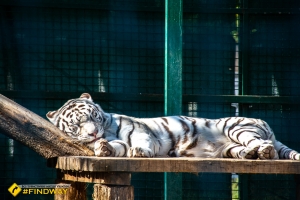
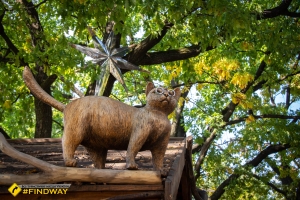
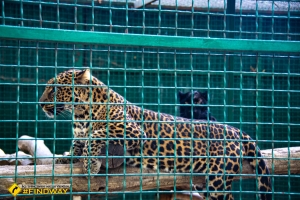
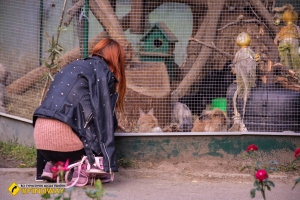
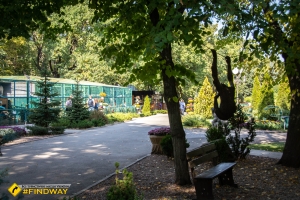
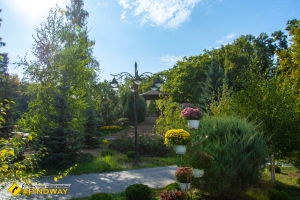
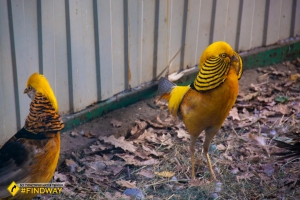

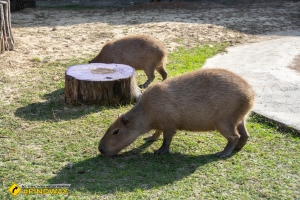
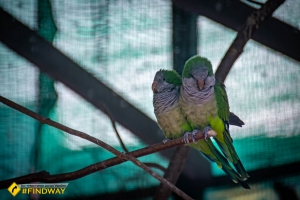

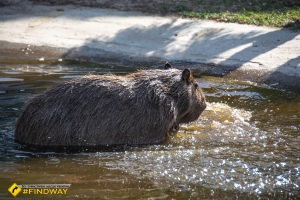

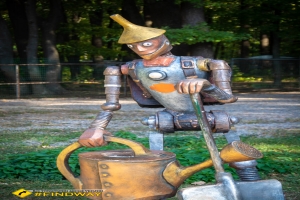


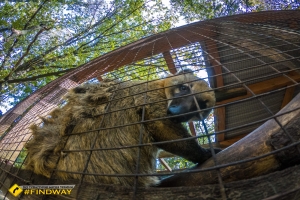
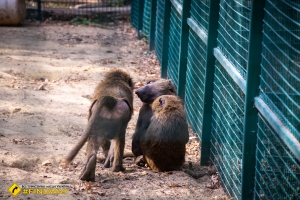


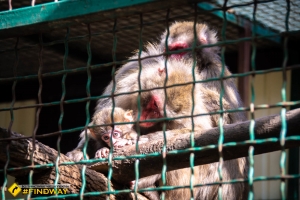

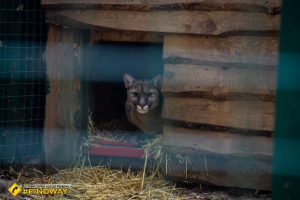


In the first weeks of the full-scale war, Feldman Ecopark on the outskirts of Kharkiv found itself directly on the front line: animals perished, and so did six staff members and volunteers who kept carrying food to the animals under shelling. Today the park is alive again — cygnets are being raised, injured birds are treated, and every spring rescued bats are released back into the sky.
Feldman Ecopark is a space of nature, rescue, and family leisure, where scenic landscapes, themed attractions, animal welfare, and social programmes for people all come together in one place.
Location at a Glance
| Location | Lisne settlement, Kyivske Highway, 12 — northern edge of Kharkiv |
| Distance | around 15 km from Kharkiv city centre |
| Opening hours | daily 10:00–18:00 (check official channels before you go) |
| Admission | free entry — the park is a charitable project |
| Time needed | 3–5 hours; the grounds are extensive |
| What to bring | comfortable shoes, water, cash for coffee and a donation to the fund, a charged phone with an air-raid alert app |
In This Article
- What it is and why visit
- History and the present day
- Rescue stories
- What to see on site
- How to get there
- Visitor checklist
- Frequently asked questions
What It Is and Why Visit
The park covers 240 hectares, and every corner has its own atmosphere. You can encounter an extraordinary range of residents — from tiny golden lion tamarins to majestic tigers, bond with horses, watch a dazzling variety of birds, and discover the natural world in a completely new way.
But Feldman Ecopark is not a classic zoo. People come here for three things at once: to wander through landscapes and themed attractions such as Ukraine’s largest megalith park, to see rescued animals at the Good Home shelter, and to connect with the social programmes the park runs for people.
History and the Present Day
The park grew from the charitable project of the Oleksandr Feldman Foundation, north of Kharkiv, near the settlements of Lisne and Cherkaska Lozova. Before the full-scale invasion it was home to around 5,000 animals of nearly 300 species, and the Good Home rescue centre has been operating since 2010.
On 24 February 2022, the very first day of the full-scale invasion, Russian artillery struck the park. For almost three months it remained on the front line: animals were killed, and six staff members and volunteers who tried to feed them were also killed. Evacuation ran from March to May 2022 under constant shelling — most of the surviving animals were transported and temporarily housed at other zoos across Ukraine.
Six staff members and volunteers were killed trying to save the animals under shelling. That is the price Feldman Ecopark paid for staying true to its mission.
After the de-occupation of Kharkiv Oblast the park began to recover. Animals are gradually returning, enclosures have been rebuilt — including the chimpanzee summer enclosure destroyed by the war. Strikes continue: on 1 January 2026, guided aerial bombs damaged the predator winter house and the aviary, injuring a volunteer. Despite this, the park keeps operating, welcoming visitors, and never stopping its rescue work.
Rescue Stories
There are no legends here in the traditional sense — but there are real stories that make your heart tighten. Every one of them is about someone’s chance at a new life.
Good Home: rescue and rehabilitation centre
The Good Home at Feldman Ecopark is a rescue and rehabilitation centre where every life matters. Since 2010 it has provided care for wild, exotic, and domestic animals that have suffered from human negligence, poaching, injuries, or loss of home.
Since the start of the full-scale war, Good Home has become a refuge for thousands of animals evacuated from combat zones or rescued after shelling. Those who cannot speak about their pain find help here: exhausted birds, wounded deer, abandoned cats and dogs, and many other animals in need of care and safety.
Treatment, rehabilitation, adaptation, and return to the wild or rehoming — this is the daily work of the centre’s team. Over the years, thousands of rescue stories have passed through Good Home, and behind every one of them is a chance at a new life.
Social projects and animal-assisted therapy
Feldman Ecopark is also a place that helps people. The psychosocial rehabilitation centre runs dozens of programmes for children and adults.
A special place is held by the projects «Ukraine Sees with Its Heart» and «Ukraine Hears with Its Heart», created for people with visual and hearing impairments. Their goal is to help participants adapt to the surrounding world and improve their psychological wellbeing through specially designed sessions.
An important part of the programmes is animal-assisted therapy — direct interaction with the contact-group animals. These encounters help overcome fear, improve emotional state, and provide a sense of safety and trust.
Spring bird release
One of the most moving traditions at Feldman Ecopark is the spring release of rescued birds back into the wild. This tradition dates to the park’s founding and symbolises its core mission: to help and give a chance at a new life.
Every year dozens of birds arrive at Good Home after suffering from the war, human negligence, or poaching. They sustain injuries from explosions and shelling, become entangled in nets and anti-drone barriers, or lose the ability to fly due to damaged wings or exhaustion.
After treatment, rehabilitation, and recovery, the park’s specialists return those ready for independent life back to their natural habitat. And every such release is not just an event — it is one more saved story and a reminder of the importance of caring for the natural world.
Bat rehabilitation centre
Each spring, Feldman Ecopark hosts another warm and heartening event — the release of rescued bats into the wild. Throughout the winter, specialists at the Bat Rehabilitation Centre shelter, nurse, and preserve the lives of hundreds of tiny animals that have ended up in danger due to cold, exhaustion, or human activity.
In 2026 the centre held its 14th traditional bat release, and over more than ten years of operation it has saved over 40,000 bats.
Today the Bat Rehabilitation Centre is one of the park’s key conservation projects and a place where thousands of small winged residents receive their chance to return to the wild every year.
What to See on Site
Stone Park — Parents’ Park
One of the most remarkable attractions is the Stone Park — Parents’ Park — a place full of deep meaning and symbolism. This space is dedicated to parents, grandmothers, grandfathers, and all the people thanks to whom we came into the world. Amid green meadows lies a genuine open-air nature gallery — Ukraine’s largest megalith park.
Hundreds of stones have been brought here from cities all across Ukraine — from tiny specimens weighing just a few dozen grams to enormous boulders reaching 34 tonnes. It is no wonder the place is called the park of a thousand stones: each one has its own shape, colour, texture, and story, and together they create a special atmosphere — a space of strength, unity, and memory. The Stone Park has become a kind of stone map of Ukraine, where nature and time have come together in a single space.
Swan Lake
This spot got its name from nine rescued mute swans that became its first residents. Special floating platforms were set up for the birds so they could rest and recover.
Over time the lake became a true haven for waterfowl. Hundreds of swans, ducks, geese, and other water birds now live here, filling the space with natural sounds. Today it is also a destination for injured and traumatised birds — those with damaged wings, legs, or shell-shock. At Feldman Ecopark they find the help they need.
Alpaca Valley
Alpaca Valley is one of the warmest and most atmospheric spots in the park. These gentle animals have long been a favourite with visitors thanks to their calm nature, curiosity, and soft fleece. In their specially designed enclosure the alpacas feel at ease, and guests can get up close and learn more about how these remarkable creatures live.
How to Get There
From Kharkiv by public transport. The easiest option is from the Derzhprom and Barabashovo metro stations, then take the park’s own free shuttle bus or minibus route No. 159 (about 30 minutes). Direct bus No. 259 also runs every 20 minutes from 8:00 to 18:00.
Free park shuttle buses. The park’s own buses run on a fixed schedule from Derzhprom metro station and from the Barabashovo shopping centre.
By car. From central Kharkiv, head north along Kyivske Highway to Lisne settlement — roughly 20–30 minutes in normal traffic. Parking is available on site.
A note on safety. Kharkiv Oblast is a frontline region and the park has periodically come under attack. Check the park’s official pages before your visit and do not ignore air-raid alerts on site.
Visitor Checklist
What to bring:
- Comfortable shoes — the grounds are large and you’ll cover a lot of ground.
- Water and a snack, although there is a café on site.
- Cash — for coffee and a donation to the fund that cares for the animals.
- A charged phone with an air-raid alert app — the region is close to the front.
- A camera — the alpacas and swans are absolutely worth it.
What not to do:
- Do not feed the animals with food you have brought — the park has its own rules and approved feed.
- Do not plan your trip blindly: check whether the park is open on the day you intend to visit.
Frequently Asked Questions
Is Feldman Ecopark open now?
Yes. Despite the shelling of Kharkiv Oblast and damage from strikes, the park is open to visitors. Check the official pages for current hours and any restrictions before you travel.
How much does entry cost?
Admission is free — the park is a charitable project. You can support it by donating to the fund that cares for the animals.
How do I get from Kharkiv without a car?
From Barabashovo and Derzhprom metro stations there is a free park shuttle bus, minibus route No. 159, or direct bus No. 259. The journey takes around 30 minutes.
Is it safe to visit?
Kharkiv Oblast remains a frontline region, so safety cannot be guaranteed. Monitor air-raid alerts, have a plan for reaching a shelter, and make your decision carefully.
Is it worth visiting with children?
Absolutely. Alpacas, swans, contact animals, and wide open spaces for walking make the park a great destination for families with kids.
When is the best time to visit?
Spring is the most atmospheric season, when the park holds its traditional releases of rescued birds and bats back into the wild.
Feldman Ecopark is more than a park. It is a place where nature, care, memory, and hope come together in a single space open to everyone.
And perhaps the most important thing to know about it: it has been nearly erased from the map several times — yet every spring it releases rescued birds into the sky again. If you find yourself near Kharkiv, give it an hour or two of your time. It is worth it.


JoomShopping Download & Support