


- You are here:
-
Sights by Regions

-
Kharkiv region
-
Kharkiv
- Abandoned elevator, Kharkiv
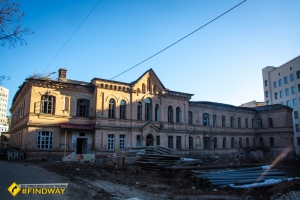
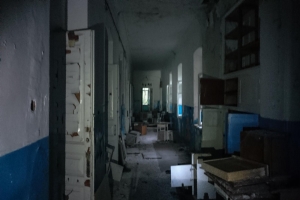
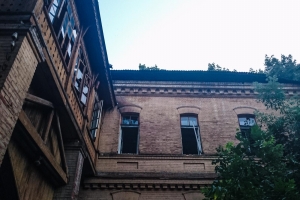
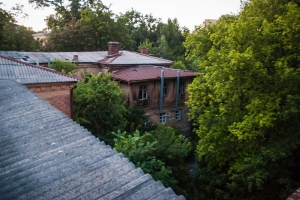
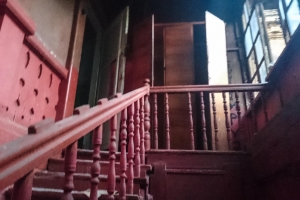
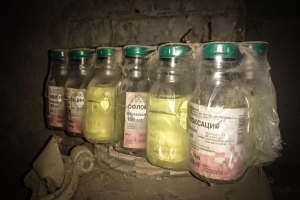
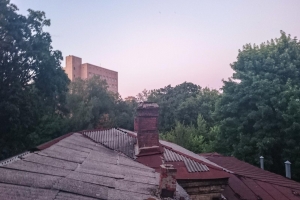
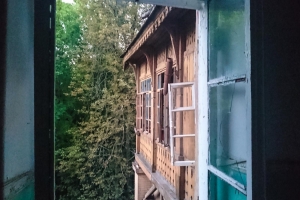
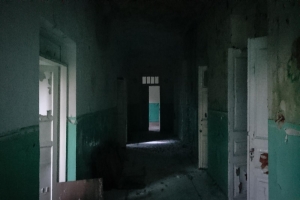

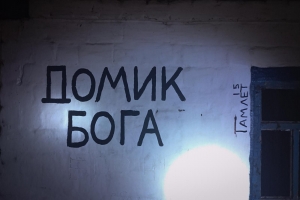
Once, this was where they treated one of the most feared diseases of the 20th century. Now the wards have no windows, plaster litters the floors, and the corridors hold that particular silence that only an abandoned hospital can produce.
The abandoned tuberculosis hospital near Beketova metro station is one of Kharkiv’s most well-known derelict sites — a place with a heavy past that draws everyone who loves exploring empty buildings.
Location Card
| Location | Kharkiv, near «Beketova» metro station |
| What it is | abandoned tuberculosis hospital |
| Condition | derelict, buildings empty |
| Time needed | 1–2 hours |
| What to bring | flashlight, respirator, gloves, sturdy boots |
What It Is and Why Visit
Abandoned hospitals are their own genre within urban exploration — arguably the most powerful one. Unlike a factory or a summer camp, everything here is threaded through with themes of the human body, pain, and recovery. When the building in question is a tuberculosis facility — a disease that killed millions just a century ago — the atmosphere becomes doubly charged.
That atmosphere is exactly what people come for: long empty corridors, walls peeling in that institutional shade of paint, remnants of tiling, rusty bed frames, the occasional forgotten medical detail. This is not a place for a cheerful day out. It’s a place for those who consciously seek out the quiet-horror aesthetic and know how to conduct themselves in derelict buildings.
Tuberculosis was historically treated in separate, isolated facilities — away from residential areas, often in a green zone. That is why former TB sanatoria and dispensaries so frequently end up half-swallowed by forest and make perfect urbex locations.
History: A Building That Outlived Its Era
Kharkiv is one of Ukraine’s oldest medical and university cities, and its network of specialist hospitals was built up over decades. TB facilities played a particular role: at a time when tuberculosis was a mass killer, these hospitals and dispensaries saved thousands of lives.
As medicine advanced, treatment approaches changed, and the healthcare system was rationalised, some older buildings became redundant. Treatment was relocated to modern facilities and the old building was simply left — no repairs, no heating, no future. The institution that once fought for lives became a ruin itself.
The detailed history of this specific building is poorly documented — as is often the case with departmental medical facilities. But it is precisely that air of untold stories that makes the location a magnet for atmosphere seekers.
Legends and Local Lore
An abandoned hospital is practically an industrial legend factory. Here are the most popular ones.
1. Footsteps in an Empty Corridor
The classic: explorers hear footsteps behind them, but turn to find no one there. The rational explanation is the acoustics of long, empty hallways and draughts. In the half-dark of a former TB ward, though, that explanation feels unsatisfying.
2. The Ward Where It’s «Hard to Breathe»
Local lore singles out one particular ward where visitors reportedly feel short of breath and want to leave. Psychologists would call it autosuggestion: knowing that this was a lung disease ward, the brain «shuts off» the air supply on its own. The story persists regardless.
3. «The Doctor Who Never Left»
The most romantic legend: one of the old physicians never truly left the hospital even after death and still «does his rounds» through the empty wards. Pure invention — but very much in the spirit of a place where someone spent decades saving lives.
What to See and Do
Main building and corridors. The signature «infinite perspective» of a hospital hallway — the most iconic shot at any abandoned medical facility.
Wards. Rusty bed frames, peeling paint, the occasional forgotten object. Deeply photogenic and deeply unsettling at the same time.
Stairwells. Light filtering through broken windows onto old steps — a favourite subject for urbex photographers.
The surrounding green zone. The overgrown hospital grounds add a layer of desolation to every frame.
Getting There
Metro. The most convenient reference point is Beketova station (Oleksiivska / Kholodnohirsko-Zavodska line). From there it’s a walk; pin down the exact spot using satellite maps and recent explorer reports.
By car. Drive to the Beketova metro area and navigate from there. Note that access routes and conditions may change.
Critical note. Kharkiv is a frontline city subject to regular shelling. Any visit is only possible with full awareness of the security situation and readiness to respond to air-raid alerts.
Traveller’s Checklist
- Respirator: an old hospital means dust, mould, and spores — protect your airways.
- Gloves: do not touch rust, glass, or medical debris with bare hands.
- Flashlight: dark inside, some rooms have no windows at all.
- Sturdy boots: broken glass and rubble everywhere.
What NOT to do: pick up or take any medical «souvenirs», explore alone, use damaged staircases, or ignore the fact that this is a frontline city with ongoing shelling risk.
Frequently Asked Questions
Is it safe to enter a former TB hospital?
The bacterium that causes tuberculosis does not survive for years in an empty, abandoned building, so «catching it from the walls» is not a realistic concern. The real risks are dust, mould, fungal spores, and sharp debris. A respirator and gloves are non-negotiable.
Is it safe to visit during wartime?
Kharkiv is a frontline city that is regularly shelled. Any outing here is only possible with full awareness of the security situation, staying near shelters, and responding to air-raid alerts.
Can I bring children?
No. Structural hazards, dust and mould, sharp debris, and the security risks of a frontline city make this an entirely unsuitable destination for children.
Is there an entry fee?
The site is unmanaged and has no official access or ticket booths. Note that the building may have an owner or security — act cautiously and stay within the law.
The abandoned TB hospital near Beketova is a place with heavy energy — and it is not for everyone. There are no turquoise lakes or scenic views here, only empty wards, long corridors, and the feeling of time standing still.
If you do decide to visit — come with a respirator, a clear head, and respect for the place. Once, these walls fought for someone’s breath. The least you can offer in return is to leave nothing behind but footprints in the dust.
Tuberculosis remains a serious disease today. If you have concerns about your own health, seek answers from a modern doctor — not from abandoned walls.




JoomShopping Download & Support