


- You are here:
-
Sights by Regions

- Chernihiv region
Chernihiv region


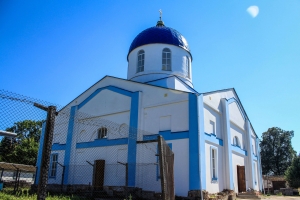


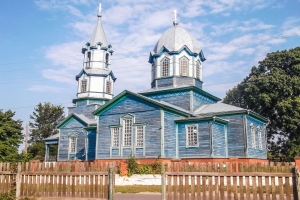
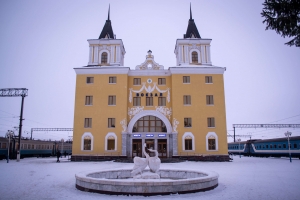
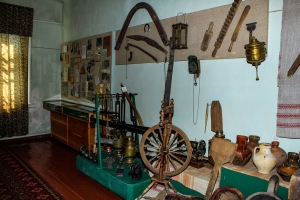
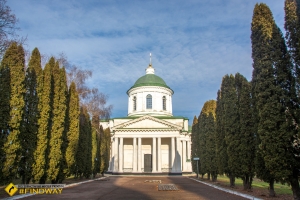


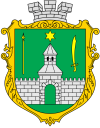


Chernihiv region is Ukraine’s most «chronicle-worthy» land. This is where 11th–12th-century cathedrals still stand that witnessed Prince Mstislav the Bold and Sviatoslav Olhovych (yes, the one from the Tale of Ihor’s Campaign). This is where Baturyn, the second capital of the Hetmanate, was burnt to ashes by Peter the Great. This is where Anthony of the Caves, Taras Shevchenko, Mykola Hohol, and Oleksandr Dovzhenko all lived. This is Sivershchyna — one of the oldest historical lands in Ukraine.
From 24 February to the end of March 2022, much of Chernihiv region was either occupied or under siege. The city of Chernihiv itself held out through a 39-day siege without surrendering. After the Kyiv counteroffensive of April 2022, the region was fully de-occupied. The northern part remains a frontline zone due to its proximity to Belarus and Russia’s Bryansk region, with regular shelling. Tourist sites are open in the vast majority of cases.
Important. Chernihiv region is de-occupied, but the northern part (Chernihiv, Snovsk, Semenivka, Novhorod-Siverskyi) is a frontline zone with regular artillery and missile strikes from Belarus and Russia. Before visiting, always check the current situation through official channels and the «Air Alert» app. The southern part (Pryluky, Bakhmach, Nizhyn) is considerably safer.
Region at a glance
| Administrative centre | Chernihiv |
| Area | 31,865 km2 (second largest region in Ukraine) |
| Population | ~890,000 |
| Historical land | Sivershchyna (Siverian Principality, later Hetmanate), Polissia (north) |
| Main rivers | Desna, Seym, Snov, Oster, Uday |
| Best time to visit | May–October for nature; year-round for cathedrals and museums |
In this article
- What makes this region special and why people come
- Geography, landscapes, climate
- History in brief
- Legends and mystique
- Top attractions in the region
- Day trips and weekend routes
- Must-do experiences in Chernihiv region
- FAQ
What makes this region special and why people come
Chernihiv region is the oldest continuously inhabited land in modern Ukraine. Chernihiv was the capital of the Siverian Principality long before Kyiv and Lviv took on their present form. The Transfiguration Cathedral in Chernihiv (1030s) is the oldest surviving church on the territory of the former Kyivan Rus’. Only here can you see what Kyivan Rus’ looked like in the 10th–11th centuries — not from a reconstruction, but from the original.
Visitors come for three main reasons. First, Chernihiv’s princely heritage: five cathedrals from the 11th–12th centuries, St Anthony’s Caves, and Boldyna Hora hill with its princely burial mounds. Second, Hetman-era Baturyn: the restored Rozumovsky Palace, Mazepa’s citadel, and the memorial to the victims of the 1708 massacre. Third, the noble estates of Sivershchyna: Kachanivka, Sedniv, Sokyryntsi, Trostianets — a magnificent 18th–19th-century layer of history.
Geography, landscapes, climate
Chernihiv region lies in the Polissia lowland: pine forests, peatlands, slow rivers, marshes. The north borders Belarus and Russia’s Bryansk region — this is Ukraine’s most «Polissian» corner, with rare wooden churches, hunting forests, and a dense network of rivers.
Running through the centre of the region is the Desna — the most beautiful left tributary of the Dnipro, whose landscapes inspired Oleksandr Dovzhenko (the film The Enchanted Desna). To the south, the region transitions into forest-steppe with fertile black soils and Cossack villages. Near the southern border, at the confluence of the Desna and Dnipro, lies Liubech — one of the oldest Slavic settlements in Ukraine, dating to the 9th century.
Best time to visit. Late April through late October for nature and manor estates. Chernihiv and its cathedrals are good year-round, but late summer and early autumn are optimal. Winter is quiet but all museums are open. In January–February it pairs well with Kyiv’s Christmas season (Chernihiv is 140 km from the capital).
History in brief
The lands of modern Chernihiv region were home to the Siveriane — one of the early East Slavic tribes. In the 9th–10th centuries, Chernihiv became the capital of the Siverian Principality, one of the most powerful in Kyivan Rus’. In the 11th century, Prince Mstislav the Bold founded the Transfiguration Cathedral — a masterpiece of Byzantine architecture that still stands today.
In the 12th century, Prince Ihor Sviatoslavych of the Novhorod-Siverskyi Principality led his famous campaign against the Polovtsians (1185), immortalised in the Tale of Ihor’s Campaign — the most important literary monument of medieval Rus’ literature. In 1239, the Mongols destroyed Chernihiv; nearly all the cathedrals survived (they simply couldn’t bring down the stone structures).
In the 16th–17th centuries Sivershchyna was a borderland between Lithuania, Poland, and Muscovy. With the rise of the Hetmanate, the region became one of the key Cossack territories. From 1669–1708 the Hetmanate capital was Baturyn, under Hetmans Ivan Samoilovych and then Ivan Mazepa. In November 1708, after Mazepa switched allegiance to the Swedish king, Russian forces under Menshikov carried out the Baturyn Massacre: they razed the city and killed its entire population (roughly 11,000–15,000 people). This is one of the most horrific chapters in Ukrainian history, suppressed for centuries under Russian and Soviet rule.
In the 19th century Chernihiv region became a centre of classical Ukrainian nobility: the Galahans, Rozumovskys, Tarnovskys, and Lyzohubs all built estates here. Kachanivka — the Tarnovskys’ ancestral home — became a cultural magnet: Shevchenko, Hohol, Kulish, Mykola Kostomarov, and Mykhailo Hlinka all visited. In the 20th century the region lived through the Holodomor, World War II, and Soviet collectivisation. In 1986 the northern part was affected by Chornobyl fallout.
2022. On 24 February Russian forces entered Chernihiv region from Belarus, heading for Kyiv. Chernihiv withstood a 39-day siege, with critical infrastructure heavily damaged. The northern districts (Snovsk, Semenivka) saw partial occupation. After the Kyiv counteroffensive in April 2022 the Russians withdrew and the region was liberated. Today it retains frontline status due to its proximity to the border.
The Baturyn Massacre of 1708 is one of the bloodiest events in Ukrainian history. Around 11–15 thousand civilians and Cossacks were killed on the orders of Tsar Peter I. Menshikov personally commanded the operation. The city was burnt to the ground and not rebuilt for nearly 100 years. This was not «wartime brutality» but deliberate terror designed to intimidate all of Ukraine. For centuries Ukrainian history could not speak about this under Russian rule. Today the memorial in Baturyn is one of the most powerful sites of remembrance in the country.
Legends and mystique of the region
1. St Anthony’s Caves in the Boldyna Hora hills
Beneath the Boldyna Hora hills in Chernihiv lies an underground network of St Anthony’s Caves, carved into the sandstone as far back as the 11th century. According to legend, they were founded by Anthony of the Caves — the very same monk who established the Kyiv-Pechersk Lavra. The caves run across three levels, reaching a depth of 30 metres, and contain several underground churches, monks’ cells, and passages. In the 17th–18th centuries monks of the Trinity-Elias Monastery lived here, some of them never surfacing for years. Today part of the cave complex is open for guided tours. The Trinity-Elias Monastery with its caves is one of Chernihiv’s unmissable highlights.
2. Mazepa and the lost treasure of Baturyn
In October 1708, before switching sides to the Swedes, Ivan Mazepa allegedly spirited away the Hetmanate’s treasury from Baturyn: gold coins, Hetman regalia, important documents. Exactly what was taken — and where it ended up — remains unknown. The most popular theory puts the gold somewhere in the forests of Sivershchyna, possibly near the Desna. Treasure hunters have been searching for centuries, occasionally turning up individual coins but never the main hoard. Local legend holds that the gold lies in a vault beneath Baturyn, in the very spot where Mazepa slept on his last night before fleeing.
3. Kachanivka and its famous guests
The palace at Kachanivka belonged to the Tarnovskyi family from the 1820s, who turned it into the most significant literary and artistic salon in Sivershchyna. Taras Shevchenko stayed here three times (in the 1840s–50s), as did Mykola Hohol, Mykhailo Hlinka (who composed his opera Ruslan and Liudmyla here), Panteleimon Kulish, Mykola Kostomarov, and Illia Repin. Some say that on certain summer evenings in the park you can hear voices — the discussion of a new poem, piano chords, the laughter of women in white dresses. Whether you believe it or not is your call. The park absolutely holds the atmosphere.
Top attractions in the region
Chernihiv — the princely capital of Sivershchyna
Chernihiv is arguably Ukraine’s oldest continually inhabited city, with an unbroken history spanning more than 1,100 years. It has the highest concentration of 11th–12th-century cathedrals in Ukraine: the Transfiguration Cathedral (1030s), Boris and Hlib Cathedral (12th c.), Friday Church (12th c.), Church of Elijah, Church of Mykhailo and Fedir, and the Church of All Saints of Chernihiv. Add to this Detynets Park with its ancient ramparts, Krasna Square, and the Hryhorii Halahan Art Museum.
Trinity-Elias Monastery and St Anthony’s Caves
The Trinity-Elias Monastery in Chernihiv is the largest monastic complex in Sivershchyna, founded in the 11th century. It houses St Anthony’s Caves on three sandstone levels — carved before even the Kyiv-Pechersk Lavra caves. Underground churches, monks’ cells, and passages reaching 30 metres deep. One of the very few cave complexes in Ukraine you can explore with a guide and a torch.
Baturyn — Mazepa’s capital and the site of the massacre
Baturyn was the capital of the Hetmanate from 1669 to 1708. Today it is a National Historical and Cultural Reserve «Hetman’s Capital»: the restored Palace of Kyrylo Rozumovskyi (the last Hetman), Mazepa’s Citadel with a reconstructed Hetman’s house, and a museum. Standing alone is the Memorial to the Victims of the 1708 Baturyn Massacre — one of the most emotionally powerful memorials in modern Ukraine.
Novhorod-Siverskyi — the city of the Tale of Ihor’s Campaign
Novhorod-Siverskyi is an ancient chronicle city — the capital of the 12th-century Novhorod-Siverskyi Principality, from which Ihor Sviatoslavych set out on his ill-fated campaign against the Polovtsians. The 12th-century Transfiguration Monastery, the 1786 Triumphal Arch, and a handsome historic centre with merchant townhouses make this one of Ukraine’s most atmospheric small towns — though its frontline status currently limits access.
Kachanivka — the Tarnovskyi estate
Kachanivka is a National Historical and Cultural Reserve and one of the most beautiful aristocratic ensembles in Ukraine. A neoclassical palace (18th–19th centuries), a landscape park spanning 500 hectares, artificial lakes, grottos, and gazebos. Shevchenko, Hohol, Hlinka, Kulish, and Repin all came here — it was the premier literary and artistic salon of Sivershchyna. Not yet covered as a separate page on the site.
Sedniv — a village turned open-air museum
Sedniv is a small village 25 km from Chernihiv that doubles as an open-air museum. The Lyzohub Manor (18th century, where Shevchenko stayed and painted), the stone St George’s Church of 1747 (location for several Ukrainian historical films), ruins of Sedniv Castle, and a park of spruce alleys. Atmospheric and underrated.
Pryluky and its cathedral
Pryluky is a small town in the south of the region with a rich Cossack-Hetmanate history. The main highlights are the Transfiguration Cathedral (1705–1720, founded by Hetman Ivan Skoropadskyi) and the Nativity of the Virgin Cathedral. Nearby sits the Hustynskyi Monastery, a 17th-century complex on an island in the Uday river — one of the most beautiful monastic ensembles on Ukraine’s Left Bank.
Nizhyn — Hohol’s lyceum and famous pickles
Nizhyn is a historic Greek trading town on the Oster river with a strong literary legacy. The Nizhyn Lyceum of Higher Sciences named after Prince Bezborodko (1820) — where Mykola Hohol studied — is the centrepiece. A charming historic core with merchant buildings, a Greek church, and museums. And yes, the famous Nizhyn pickled cucumbers, made here since the 18th century, are still very much a thing.
Liubech — the oldest settlement
Liubech is a small settlement at the confluence of the Desna and Dnipro rivers. In 1097 the Congress of Princes of Kyivan Rus’ was held here, making it the first place in Europe to formally declare the principle of hereditary rule — «let each prince hold his patrimony.» Remains of the hillfort, defensive ramparts, and old churches are still visible. One of the oldest Slavic sites in mainland Ukraine. Not yet described as a separate page on the site.
Monasteries of Sivershchyna
A category all of its own. The Domnytskyy Monastery of the Holy Nativity in the south of the region is a fine example of Ukrainian Cossack Baroque. The Ruins of Maksakivskyi Monastery on the left bank of the Desna were once a fortified 17th-century monastery founded under the patronage of Hetman Ivan Mazepa.
Day trips and weekend routes
Route 1. Princely Chernihiv in a day
About 140 km from Kyiv. Start the morning at Detynets Park with the princely ramparts. Work through the cathedrals: Transfiguration, Boris and Hlib, Friday Church, Church of Elijah. Lunch on Krasna Square. Afternoon — Trinity-Elias Monastery with St Anthony’s Caves. Check security status first: Chernihiv is a frontline zone.
Route 2. Baturyn and Mazepa’s legacy
About 200 km from Kyiv. Spend the full day in Baturyn: Rozumovskyi Palace, Mazepa’s Citadel, the Hetmanate Museum, and the massacre memorial. Stroll the historic centre. On the way back, stop in Pryluky for the Transfiguration Cathedral.
Route 3. Noble estates weekend
Two-day itinerary. Day 1: Kachanivka — spend the whole day at the Tarnovskyi palace and park. Overnight in Nizhyn. Day 2: Nizhyn with Hohol’s Lyceum and Greek heritage, then Sedniv with St George’s Church and the Lyzohub Manor.
Route 4. Chronicle Sivershchyna — when it becomes safe again
A special route for enthusiasts of Kyivan Rus’ history. Liubech with the 1097 princely congress site → Chernihiv with its 11th–12th-century cathedrals → Novhorod-Siverskyi, the setting of the Tale of Ihor’s Campaign. Currently limited due to the frontline status of northern Chernihiv region.
Route 5. Monastery trail of Sivershchyna
A pilgrimage route. Trinity-Elias Monastery with St Anthony’s Caves → Hustynskyi Monastery near Pryluky → Domnytskyy Monastery → Ruins of Maksakivskyi Monastery.
Must-do experiences in Chernihiv region
- Step inside the Transfiguration Cathedral in Chernihiv — the oldest surviving church of Kyivan Rus’. These walls are original 11th-century stonework.
- Descend into St Anthony’s Caves with a torch and walk all three levels of underground churches.
- Stand at the Baturyn Massacre memorial — a place of both power and profound grief.
- Walk through Rozumovskyi Palace in Baturyn and feel what the Hetmanate looked like at its height.
- Wander every alley in Kachanivka park — somewhere along each one, Shevchenko or Hohol once stood. Now you do.
- Buy Nizhyn pickled cucumbers straight from the producer. A historic delicacy invented here in the 18th century.
- Sit on a bench by the Desna in Sosnytsia — the hometown of Oleksandr Dovzhenko, where The Enchanted Desna begins.
- Watch birds in the Polissia wetlands near Snovsk (when the security situation allows).
- Catch an organ concert at the Hohol Lyceum in Nizhyn — occasional events in the restored hall.
- Pick up Chernihiv honey-cakes with traditional Siverian patterns — the best local souvenir you can find.
The Transfiguration Cathedral in Chernihiv (1030s) is the oldest fully preserved church of Kyivan Rus’. Kyiv’s St Sophia Cathedral (1037) was heavily rebuilt in Baroque style in the 17th–18th centuries, so its «original» appearance is partly a reconstruction. The Chernihiv Spas retains its 11th-century walls and proportions untouched. A singular building on a European scale.
Frequently asked questions
What to see in Chernihiv region in one day?
The quickest option is Chernihiv with its 11th–12th-century cathedrals and St Anthony’s Caves. Another option is Baturyn with Rozumovskyi Palace and the 1708 massacre memorial. Or head to Kachanivka for the Tarnovskyi palace and grounds.
Is it safe to visit Chernihiv region now?
It depends on which part. Southern Chernihiv region (Pryluky, Bakhmach, Nizhyn, Kachanivka) is considerably safer, with infrequent air alerts. Northern Chernihiv region (Chernihiv city, Snovsk, Semenivka, Novhorod-Siverskyi) is a frontline zone with regular artillery strikes from Belarus and Russia. Always check official channels before travelling.
What happened to Chernihiv region in 2022?
On 24 February 2022 Russian forces entered the region from Belarus, heading for Kyiv. Chernihiv city withstood a 39-day siege (24 February — 4 April 2022): the stadium, Training Centre, and parts of the historic centre were destroyed, but the city never fell. The northern districts saw partial occupation. After the Kyiv counteroffensive of April 2022 the region was liberated.
What was the Baturyn Massacre?
On 2 November 1708, after Hetman Ivan Mazepa allied with the Swedish king Charles XII, Russian forces under Alexander Menshikov stormed Baturyn (the Hetmanate capital) and massacred its inhabitants — between 11,000 and 15,000 civilians and Cossacks. The city was burnt to the ground. It was deliberate terror designed to intimidate the rest of Ukraine. Today Baturyn has a memorial to the victims — one of the most powerful in the country.
What is Kachanivka?
A National Historical and Cultural Reserve in Ichniansky district. An aristocratic palace from the 18th–19th centuries, the ancestral home of the Tarnovskyi family. One of the most beautiful park-and-manor ensembles in Ukraine (500 hectares). In the 19th century it was the premier literary and artistic salon of Sivershchyna: Shevchenko, Hohol, Hlinka, Kulish, and Repin all visited.
Where to go with children in Chernihiv region?
Detynets Park in Chernihiv with ramparts and open space to run around, Kachanivka with its park, ponds, grottos, and gazebos. Sedniv for its historic village atmosphere. In Nizhyn you can show kids the cucumber pickling process on a tour.
What are the most famous dishes of Chernihiv region?
Chernihiv-style borscht with pampushky rolls and garlic, Siverian dumplings (halusky) with young garlic, Nizhyn pickled cucumbers (invented here in the 18th century), Baturyn honey, Polissia buckwheat with crackling, Pryluky honey cakes. In the north — Polissia cooking based on mushrooms, berries (cranberry, blueberry), and river fish.
What to bring back from Chernihiv region?
Nizhyn pickled cucumbers (the classic souvenir), Chernihiv honey-cakes with traditional Siverian patterns, honey from Sivershchyna apiaries, postcards of Baturyn Palace, ceramic miniatures of Chernihiv cathedrals, Pryluky cakes and wild-berry preserves.
Chernihiv region is a foundation. Not of modern Ukraine, not of Cossack Ukraine, not of Soviet Ukraine — of the oldest layer, the one where it all began. These walls date to the 11th century, and names were carved into them both in the age of Kyivan Rus’ and in the age of the Hetmanate. The Baturyn Massacre happened here, and Ukraine is still reckoning with it. Hohol and Dovzhenko lived here; so did Kulish and Hlinka.
This is not a region for entertainment. It’s a region for understanding how ancient Ukraine really is. Very ancient.
JoomShopping Download & Support