


- You are here:
-
Sights by Regions

- Lviv region
Lviv region
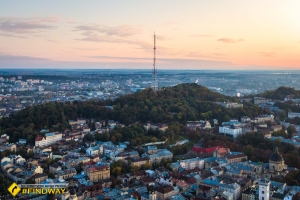
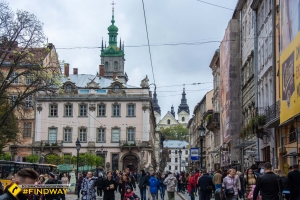

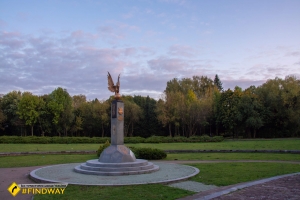
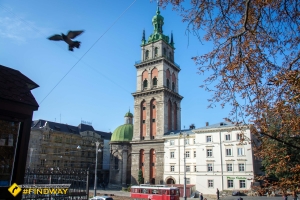
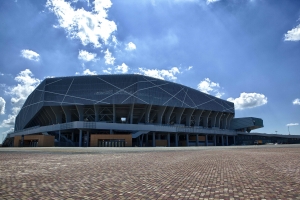
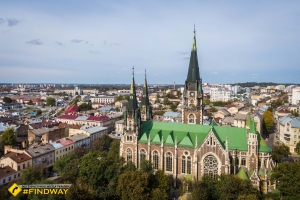


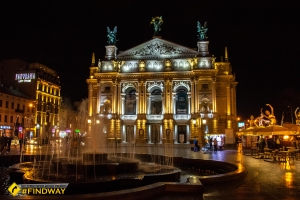

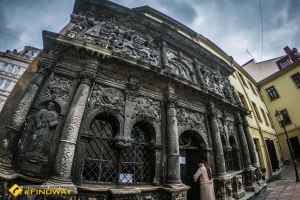






Lviv Oblast is a region where two buildings on the same street can stand on three different historical state borders. An Austrian façade, a Polish stairwell, a Soviet elevator and a Ukrainian grandma with pies on the landing — that’s the average apartment block in central Lviv. And that’s the entire region: layers of empires stacked so tightly that you can’t tell where Galicia ends and the myth about it begins.
People come here to drink coffee on Rynok Square, scramble up Mount Parashka, descend into salt mines, hunt for opryshky treasure and hear a young soprano let loose in the Opera House against century-old plaster. And one more thing: everything here is a café — even the pharmacy.
Region at a glance
| Administrative centre | Lviv |
| Area | 21 833 km2 |
| Population | ~2.4 million (significantly more including IDPs) |
| Historic lands | Galicia (Roztocze, Opillia, Boikivshchyna — depending on the corner of the region) |
| Main rivers | Dnister, Western Bug, Stryi, San, Poltva (the one that flows under Lviv in a pipe) |
| Best time to visit | Lviv — year-round; Carpathians — May–October for hiking, December–March for skiing |
In this guide
- What this region is and why people come
- Geography, landscapes, climate
- History in brief
- Legends and local lore
- Top attractions of the region
- Day trips and weekend itineraries
- Must-dos in Lviv Oblast
- FAQ
What this region is and why people come
Lviv Oblast is Ukraine’s most «European» region — not because the roads are any good (they’re not), but because Lviv lived in the same cultural rhythm as Kraków, Vienna and Prague for over 600 years, and learned to wear several historical masks at once: Polish, Austrian, Jewish, Armenian, Ukrainian. Within a 200 km radius you won’t find this density of castles, churches, synagogues and monasteries anywhere else in the country — alongside neon coffee shops and artisan chocolate workshops.
Visitors come for an urban weekend in Lviv, for off-the-beaten-path Carpathians in Skolivski Beskydy, for castle-hopping across Galicia, for spa retreats in Truskavets and Morshyn, and for silence — in rock-hewn monasteries and abandoned Gothic churches. All of it fits in one region.
Geography, landscapes, climate
The region sits at the junction of three landscape worlds. In the north — Roztocze, quiet forested hills dotted with springs and abandoned manor houses. In the centre — Podilska Upland and Opillia, with open views over fields and medieval castle ruins. In the south — the Ukrainian Carpathians, specifically the Skolivski Beskydy range and the Skolivski National Nature Park, home to lynxes, bears and legends of opryshky (Carpathian outlaws).
A unique main European watershed runs through here: water on the left flows to the Baltic Sea (via the Western Bug and San rivers), water on the right heads to the Black Sea (via the Dnister and Dnipro). On a single day’s hike you can fill a bottle from a stream whose water reaches two different seas.
When to visit. Lviv is alive year-round: spring for April festivals and rainy jazz on cobblestone streets; summer for café terraces; autumn is the best season for strolling Stryiskyi and Lychakivskyi parks; winter for nativity plays, Christmas markets and mulled wine. Head to the Carpathians from late April to October for hiking and waterfalls, or December to March for ski resorts.
History in brief
Lviv was founded by Danylo of Halych (Danylo Halytskyi) in the mid-13th century, named after his son Lev. Within a century it became the region’s trading capital: routes to Kraków, Kyiv, Istanbul and Venice all crossed here. Spices, silk, weapons and books flowed through Lviv — making it one of the few European cities where Ukrainian, Polish, Armenian, Jewish and German communities officially coexisted with their own courts.
The region belonged to Poland and the Polish–Lithuanian Commonwealth for over 400 years, then to the Austrian Empire from 1772. It was the Austrian period that shaped the Lviv visitors recognise today: the opera house, cobblestones, café culture, the Secession architecture of its facades, the university tradition. These same years saw Ivan Franko, Mykhailo Hrushevsky, Metropolitan Andrei Sheptytsky, Sholem Aleichem and Bruno Schulz all live and work here — each a culture unto himself.
The 20th century was Lviv Oblast’s harshest. World War I, the Polish–Ukrainian War of 1918–19, interwar Poland, two Soviet occupations, Nazi occupation with the total destruction of the Jewish population, the Vistula (Wisla) Operation (the forced resettlement of Lemko people), and UPA guerrilla resistance in the Carpathians until the mid-1950s. And yet — it was here that the independence movement was born that shook the Soviet Union from within in the late 1980s.
In 1998, Lviv’s historic centre was inscribed on the UNESCO World Heritage List. The Allies did not bomb the city in World War II — so virtually the entire medieval Lviv survived intact. Dresden and Warsaw were not so fortunate.
Legends and local lore
Lviv Oblast is arguably the most legend-saturated region in Ukraine. Here are three that local guides and visitors love most.
1. The lion sealed beneath the city
They say a stone lion still lives in the tunnels beneath the Old Town — the very lion that inspired Danylo to name the city Lviv (from «lev,» lion). While the lion sleeps, the city stands. If it wakes, all the buried epochs will surface at once. Finding it is supposedly impossible, as the passages keep being rebuilt. Locals have made peace with this and simply spill coffee on the cobblestones — for luck.
2. The White Monk of Pidkamin
Above the village of Pidkamin (Podkamin) stands a massive rock topped by a Dominican monastery. Local legend tells of a white monk who descends from the cliff every misty morning to find whoever stole the monastery’s chalice 400 years ago. If he finds them — he vanishes forever. If not — he returns the next morning. Hundreds of people have seen him. The chalice — no one.
3. The White Lady of Pidhirtsi Castle
Pidhirtsi Castle (Pidhoretsky zamok) was home to the beautiful Maria Zhevuska, the hetman’s wife whom, legend has it, he walled up in the castle for infidelity. Ever since, a woman in a white dress has occasionally appeared in the mirrors of the grand hall, drifting silently through the room before vanishing. Reportedly seen even during Soviet-era restoration works — the workers simply left the site and refused to return. The most famous ghost in Galicia.
4. Oleksa Dovbush’s treasure at the Bubnishche rocks
The Carpathian outlaw Dovbush (think Robin Hood of the Beskydy) stashed his fortune in the cracks of Skolivski Beskydy cliffs. It has been «found» at least a dozen times — in folktales. Every treasure-hunter returned empty-handed, with the unsettling conviction that the rocks had spoken to them in the night. The Dovbush Rocks are the most photogenic part of the legend, whether you believe in the treasure or not.
Top attractions of the region
Lviv — an open-air museum city
Lviv’s Old Town is Rynok Square with its 44 medieval tenements (each more astonishing than the last), High Castle with its panoramic viewpoint, the Lviv National Opera Theatre, the Pharmacy Museum «Under the Black Eagle» with 18th-century prescriptions still on display, the remarkable Boim Chapel with its intricate white-stone carvings, and the unmissable Lychakiv Cemetery — a necropolis you visit not for mourning but for history. Also worth a half-day: Shevchenkivsky Grove, an open-air museum of genuine wooden churches, farmhouses and windmills brought from across Galicia.
The Golden Horseshoe castles — Olesko, Pidhirtsi, Zolochiv
The Golden Horseshoe of Galicia is a trio of castles within 30 km of each other that together deliver a complete cross-section of Polish–Galician baroque and Renaissance architecture. Olesko Castle is the birthplace of Polish King Jan III Sobieski — the man who halted the Ottoman army at the Gates of Vienna in 1683. Today it houses a branch of the Lviv Art Gallery with a unique collection. Pidhirtsi Castle is Galicia’s most beautiful Renaissance palace complex, once the residence of Hetman Konetspolsky, complete with grand halls and the legend of the White Lady. Zolochiv Castle rounds out the horseshoe with a museum of Eastern art and a famous Chinese Palace. All three are a classic must-see on any Lviv Oblast itinerary.
Tustань — a rock fortress in Urych
Tustань is a uniquely European wooden fortress from the 9th–13th centuries, built directly on top of 50-metre sandstone crags in the village of Urych near Skole. The walls themselves are long gone — what remain are the slots carved into the rock where the timber beams were once anchored, plus reconstruction models on site. The historic-cultural reserve hosts medieval culture festivals each summer. One of the most photogenic sites in the Carpathians and the only rock defensive structure of this scale in all of Ukraine.
Dovbush Rocks and Mount Parashka — Carpathians without the crowds
The Skole area is the off-the-beaten-path alternative to the packed Carpathians of Prykarpattia. Dovbush Rocks near Polyanytsia are towering stone megaliths where you can scramble for an entire day without encountering a single selfie stick. Mount Parashka (1,268 m) is the highest peak of the Skolivski Beskydy; from the summit the entire Carpathian ridge stretches to Poland. Hurkalo Waterfall is short but loud, sitting on the trekking route to Parashka. Grave of Zakhar Berkut in Tukhlia — a literary pilgrimage for fans of Ivan Franko’s historical novel.
Pidkamin — a village of wonders and rocks
A small village in the Brody district that grows the strangest rock formations in Lviv Oblast. Chortiv Kamin (Devil’s Rock) is an enormous boulder the height of a three-storey building which, legend has it, the devil was carrying to hurl at Lviv’s churches but dropped before he got there. The Dominican Monastery of Pidkamin on the neighbouring cliff was once the pilgrimage heart of Galicia. Nearby — a cave and several ancient churches.
The Salina salt plant in Stebnyk
Stebnyk’s Salina salt factory is far more than an industrial site — it’s an underground gallery where salt was produced for centuries. Guided tours take you below ground to breathe the salty air (considered therapeutic), and to explore 19th–20th century wooden infrastructure. Nearby Boryslav was once the cradle of the global oil industry — old Galicia’s other hidden gem.
Rock monastery in Rozgirche
The rock monastery in Kozulky (Rozgirche) is one of Galicia’s oldest monastic sites. Monks’ cells are carved directly into the sandstone cliff, with a mountain stream running past. The atmosphere is pure medieval — no CGI required.
Krekhiv Monastery
Krekhiv Monastery of St Nicholas is one of the Ukrainian Greek Catholic Church’s major pilgrimage sites. Founded in the 17th century by monks who lived in the cave cells cut into the rock nearby (which can also be visited). A quiet valley, bells, herb fairs. The perfect place for a day without a schedule.
Zhovkva — a Renaissance fortress town
Zhovkva is a small town 30 km from Lviv, purpose-built as an ideal Renaissance fortress city in the late 16th century by Hetman Stanislaw Zolkiewski. A rectangular market square, a castle, St Lawrence’s Church, a wooden Holy Trinity church, a fortress-synagogue, remnants of defensive walls and gates — all within easy walking distance. Zhovkva is on the UNESCO World Heritage List (for its wooden Trinity church) and makes an ideal half-day excursion from Lviv.
Starosilsky Castle
Stare Selo Castle near Lviv is a massive 17th-century defensive fortress — one of the largest on the territory of modern Ukraine. Unrestored, with crumbling ceilings and the silence of surrounding forest. An absolute must for ruin enthusiasts.
Day trips and weekend itineraries
Itinerary 1. Lviv in one packed day
Start at Rynok Square with a morning coffee. Continue to the Pharmacy Museum, then stroll to the Boim Chapel and the Dominican Cathedral. Lunch somewhere near the Coffee Mine. Afternoon — climb High Castle for the sunset, then spend the evening at the Opera.
Itinerary 2. Carpathian loop for the weekend
Day 1: drive south from Lviv to Skole. Hike up Mount Parashka, stopping at Hurkalo Waterfall on the way. Overnight in Skole or Tukhlia. Day 2: Dovbush Rocks, then stop in Tukhlia to see the Grave of Zakhar Berkut. Return via Stryi.
Itinerary 3. Rock wonders and monasteries (1 day)
Head west from Lviv to Krekhiv Monastery, continue through Zhovkva (whose historic core is a UNESCO site) to the rock monastery in Rozgirche. Return via Stare Selo Castle. A full day, but very doable.
Itinerary 4. The Golden Horseshoe of Galicia in one day
The classic Lviv Oblast castle tour. Head east from Lviv to Olesko Castle (~70 km) — birthplace of Jan III Sobieski. Then Pidhirtsi Castle (8 km away), the Renaissance palace with the grand hall and the White Lady legend. Finish at Zolochiv Castle (15 km further) with its Chinese Pavilion and Oriental art collections. Three castles in one day, none more than 30 minutes’ drive apart.
Itinerary 5. Pidkamin and the legends of Brody district
Drive east into the region. Chortiv Kamin (Devil’s Rock), the Dominican monastery, the cave. If time permits, continue to Brody for a look at the old town. Less trodden than the Carpathian routes, which is precisely why the atmosphere is so good.
Must-dos in Lviv Oblast
- Drink coffee on Rynok Square at seven in the morning, while the city is still asleep. It’s a completely different place — trust us.
- Try lvivski syrnyk (cottage cheese fritters with raisins) and «Galician pliatsky» (pastries) — not in a tourist chain, but in a neighbourhood café in the Lychakiv district.
- Pick up a hand-painted chocolate bar from Lvivska Maisternia Shokoladu (Lviv Chocolate Workshop) — the unofficial souvenir number one.
- Hike to the summit of Parashka — the most accessible 1,200-metre-plus peak in the region, with genuine Carpathian panoramas.
- Go underground in the Stebnyk salt mine and breathe what doctors call «haloclimate» therapy.
- Attend an evening service at St George’s Cathedral. The sound of bells over Lviv is the city’s sonic brand.
- Order a bottle of Lvivske craft beer at the Museum of Beer History — the oldest operating brewery in Galicia, brewing since 1715.
- Watch a performance at the Opera from the gallery. The cheapest ticket in the country for the most beautiful stage.
Lviv has over 1,500 officially registered architectural monuments. At one per day, a full circuit would take more than four years. And that’s before you even leave the city.
Frequently asked questions
What to see in Lviv in one day?
The essential loop: Rynok Square → Boim Chapel → Pharmacy Museum → High Castle → evening at the Opera or simply on the cobblestones with a coffee.
How to plan a weekend trip to Lviv Oblast from Kyiv?
The standard formula: Friday evening — overnight train to Lviv. Saturday — the city itself. Sunday — day trip to the Skolivski Beskydy (Mount Parashka + Hurkalo Waterfall) or towards Zhovkva and Krekhiv Monastery.
What is the «Golden Horseshoe of Galicia»?
It’s a classic castle-hopping route covering three sites within 30 km of each other: Olesko (birthplace of Jan III Sobieski), Pidhirtsi (the finest Renaissance palace in the region) and Zolochiv (with its museum of Oriental art). Easily done as a single full day, leaving Lviv around 9:00 and returning by 19:00.
Is it safe to travel to Lviv Oblast now?
Lviv Oblast is Ukraine’s westernmost region, far from the front line. Missile strikes on infrastructure do occur, but tourist locations have not been targeted. Before any trip, monitor air-raid alerts via the official «Air Alarm» app.
Where to go with children in Lviv Oblast?
In Lviv itself — Shevchenkivsky Grove (a full day: wooden churches, ponds, horses), Stryisky Park, a miniature railway and a circus. Outside the city — Hurkalo Waterfall (an easy family hike) and the Resort Park in Morshyn.
What is the best season for visiting Lviv Oblast?
Lviv: late April–October for sightseeing and festivals; December–early January for the Christmas market. Carpathians: May–October for hiking, January–March for skiing. November is the least appealing: fog, rain and muddy trails.
What are the iconic foods of Lviv Oblast?
Lvivski syrnyk (cottage cheese fritters), banosh (Carpathian polenta with cheese — a Hutsul staple), deruny (potato pancakes) with sour cream, café-style pliatsky pastries, Galician-style ham, borscht with little ear dumplings (ushky), and «Lviv sandwiches.» For dessert — handmade chocolate and honey cake.
What souvenirs to bring from Lviv?
Chocolate from Lvivska Maisternia Shokoladu, coffee from Svit Kavy or Kofeyin, ceramics with Opishnia folk motifs, a bell from the town hall workshop, a book by Yuri Andrukhovych or Liubko Deresh. The best souvenir is one that smells of Lviv.
Lviv Oblast is unlike any other region in Ukraine, and that’s its greatest asset. In a single day you can pass through four different centuries, drink coffee, get lost in a courtyard-well, hear an organ in a Gothic church and climb a mountain with a view to Poland. All of it reachable by one regional bus.
If you haven’t decided where to start — start with a café. In Lviv, that’s not a break from the itinerary. That’s the main item on it.
JoomShopping Download & Support