


- You are here:
-
Sights by Regions

- Chernivtsi region
Chernivtsi region


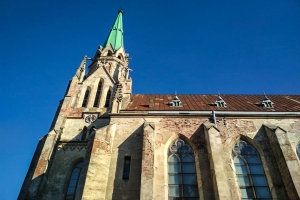

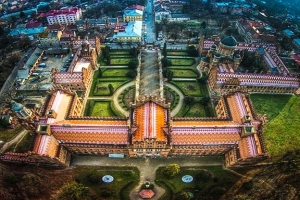


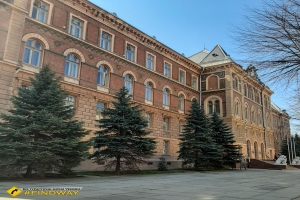



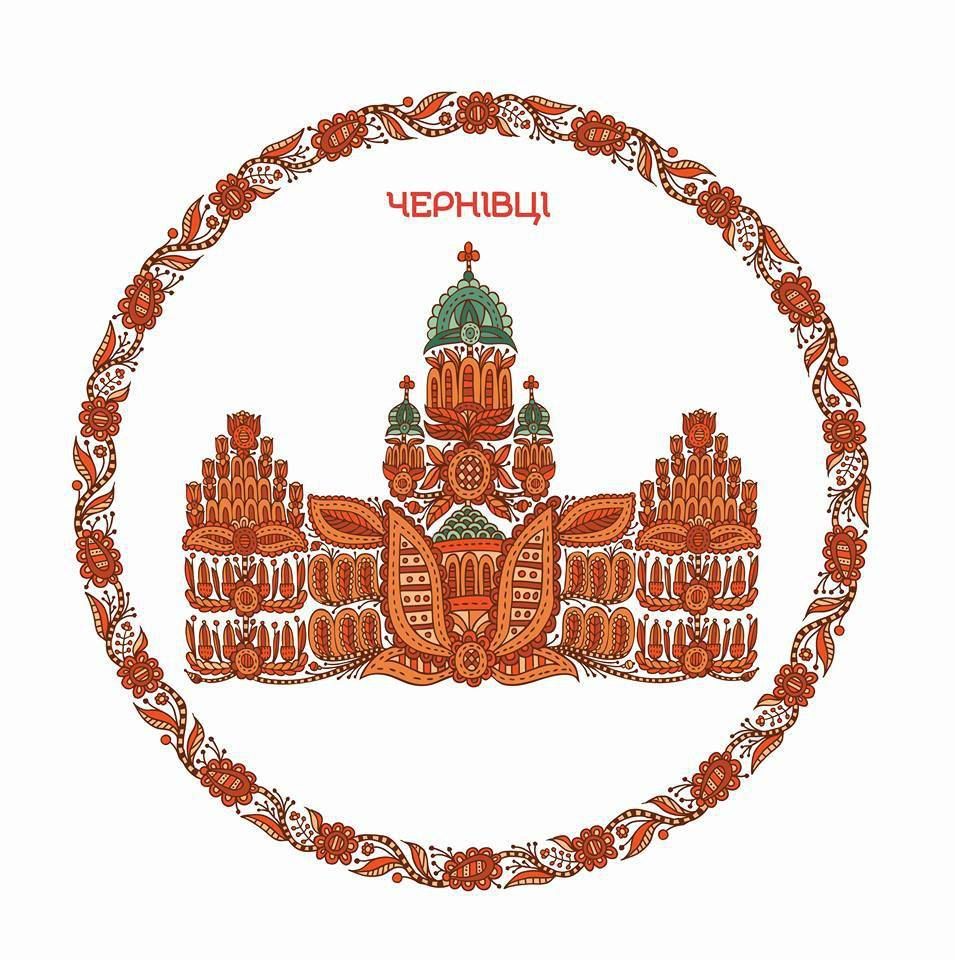
Chernivtsi Oblast is Bukovyna — Ukraine’s most multicultural region and the one that looks least stereotypically Ukrainian, yet feels entirely Ukrainian in spirit. On a single street you’ll find an Orthodox cathedral, a Catholic church, an Armenian chapel and a synagogue standing side by side. Locals once called Chernivtsi the “Little Vienna” and the “Jerusalem on the Prut.” And here stands the Residence of the Metropolitans of Bukovyna and Dalmatia — one of the most beautiful architectural ensembles in Eastern Europe, a UNESCO World Heritage Site.
Travellers come for four reasons: Chernivtsi — one of Ukraine’s most beautiful cities, its Austrian-era old town almost untouched; the Metropolitans’ Residence — a fairy-tale complex now serving as a university; Khotyn Fortress — one of the Seven Wonders of Ukraine; and the Hutsul Carpathians in the south — Vyzhnytsia, Putyla, the Cheremosh river valley.
Region at a glance
| Administrative centre | Chernivtsi |
| Area | 8 097 km2 (Ukraine’s smallest oblast) |
| Population | ~0.9 million |
| Historic lands | Northern Bukovyna (most of the oblast), Khotynshchyna (Bessarabia), Hutsulshchyna (south) |
| Main rivers | Dniester, Prut, Cheremosh, Siret |
| Best time to visit | Chernivtsi — year-round; Hutsul Carpathians — May–October for hiking, December–March for skiing |
In this article
- What this region is and why people come here
- Geography, landscapes, climate
- History in brief
- Legends and folklore
- Top places in the oblast
- Day trips and weekend routes
- Things you must do
- FAQ
What this region is and why people come here
Chernivtsi Oblast is Ukraine’s smallest region by area, yet one of its richest in experiences. This is Bukovyna — a historic land that for centuries stood at the crossroads of Ukrainian, Romanian, Jewish, German, Polish and Armenian cultures. Before the First World War, Chernivtsi was the capital of the Austrian Duchy of Bukovyna, complete with a university, opera culture, coffee houses and several languages spoken on the same street.
People come here, first, for Chernivtsi itself — a city that survived the Second World War almost unscathed and kept its Austrian architecture virtually intact. Second, for the Residence of the Metropolitans of Bukovyna and Dalmatia, a breathtaking Neo-Moorish ensemble that UNESCO added to its World Heritage List. Third, for Khotyn Fortress, one of Ukraine’s best-preserved medieval castles. And fourth, for the Hutsul Carpathians in the south — Vyzhnytsia, Putyla, the Cheremosh valley.
Geography, landscapes, climate
Chernivtsi Oblast packs three distinct landscape zones into a remarkably compact territory. The north is flat, with fertile fields, the meandering Dniester and the Khotyn Upland (where Khotyn itself sits). The centre is foothills country — rolling hills, beech forests (the name Bukovyna literally means “land of beeches”), and the Prut and Siret rivers. The south is Hutsul Carpathian terrain: the Pokuttya-Bukovyna range, the turbulent Cheremosh gorge, and the mountain villages of Putyla and Selatyn.
The northern edge of the oblast is cut by the Dniester Canyon — the same gorge that stretches through Ternopil and Khmelnytskyi oblasts. Novodnistrovsk sits beside the Dniester Reservoir. In the south, Hutsul (highland Ukrainian ethnic group) territory offers waterfalls (the most famous is on the Putylyvka stream), alpine meadows called polonynas, and wooden churches.
When to go. Chernivtsi is beautiful year-round — with a special atmosphere in autumn and at Christmas. Khotyn Fortress is best May–October. The Hutsul Carpathians are prime May–October for hiking and December–March for skiing (the Myhove resort). The 2022 war has not touched the oblast directly: Chernivtsi Oblast is a rear-area region, one of Ukraine’s safest, and welcomed hundreds of thousands of evacuees in 2022.
History in brief
The lands of present-day Chernivtsi Oblast were once part of the Principality of Galicia-Volhynia, then passed to the Principality of Moldavia in the 14th century. Khotyn Fortress and Chernivtsi served for centuries as frontier strongholds between Moldavia, Poland and the Ottoman Empire. The Battle of Khotyn in 1621 was decisive: a joint Polish-Cossack army led by Hetman Petro Sahaidachnyi halted the Ottoman forces of Sultan Osman II here, effectively saving Central Europe from a Turkish advance.
In 1774 the region was annexed by the Austrian Empire. The Austrian era (1774–1918) shaped Chernivtsi into what it is today: the capital of the Duchy of Bukovyna, with a university (1875), the Metropolitans’ Residence, an opera house and a multilingual population. The city was nicknamed the “Little Vienna”: Ukrainian, Romanian, German, Yiddish and Polish all rang out simultaneously. It was one of the most tolerant cities in Europe.
From 1918 to 1940 Bukovyna was part of Romania. In 1940 it was incorporated into the Ukrainian SSR. Chernivtsi suffered almost no wartime destruction in the Second World War — which is why its Austrian architecture survives nearly complete. The darkest chapter is the Holocaust of Bukovyna’s Jews: before the war Jews made up a third of Chernivtsi’s population; most perished in Transnistria. In 1991 the oblast became part of independent Ukraine.
2022. Chernivtsi Oblast was a rear-area region with no direct fighting. In the early months of Russia’s full-scale invasion it received hundreds of thousands of internally displaced people, becoming one of the country’s main safe havens. Occasional missile strikes targeted infrastructure, but tourist sites were not directly hit.
Before the First World War, Chernivtsi had four official languages of administration: German, Ukrainian, Romanian and Polish. A single street could hold an Orthodox church, a Greek Catholic church, a Roman Catholic church, an Armenian church and a synagogue. The city was called the “Jerusalem on the Prut.” Today its historic centre is one of the best-preserved examples of Austro-Hungarian urban planning outside Austria itself.
Legends and folklore of the region
1. The Residence the architect never saw completed
The Residence of the Metropolitans of Bukovyna and Dalmatia was built between 1864 and 1882 to designs by Czech architect Josef Hlavka. Legend holds that Hlavka poured so much of himself into the project that he fell ill and went blind before construction was finished — and never saw the completed ensemble with his own eyes. He lived for decades more and founded an academy of sciences in Prague, but the fairy-tale Residence he had imagined he could only picture in his mind. Today it is a UNESCO site and the main building of Chernivtsi National University.
2. Khotyn Fortress and the ghost girl
Khotyn Fortress, looming above the Dniester, carries the legend of a girl named Olenka who was walled alive into the fortifications. According to tradition, when the walls kept collapsing during construction, the builders decided to entomb a living person inside — an ancient belief that this gives a structure its soul. A young woman was chosen. On one wall of the fortress there is a dark, permanently damp patch that never dries out — said to be Olenka’s tears. The stain is real; geologists explain it as a groundwater seep, but the legend outlasts the geology.
3. Bila Krynytsia — the Old Believers’ spiritual capital
In the 19th century the village of Bila Krynytsia in the north of the oblast became the spiritual centre of the Lipovan Old Believers — a branch of Russian Orthodox Christians who rejected the 17th-century church reforms — and the seat of the Old Believer Metropolitan (the Belokrinitsa Hierarchy). Local legend says the site was chosen because of a spring with “white” water said to heal the sick and never freeze. The Old Believer cathedral in Bila Krynytsia is enormous and neo-Gothic, utterly unexpected in a Bukovyna village. It looks like a piece of another world dropped among beech-covered fields.
Top places in the oblast
Chernivtsi — Ukraine’s “Little Vienna”
Chernivtsi is one of Ukraine’s most beautiful cities, its Austrian-era historic centre almost entirely intact. Must-see stops include: Olha Kobylianska Street (a pedestrian boulevard lined with coffee houses), the Central Square with City Hall, the Jesuit Church of the Sacred Heart of Jesus in neo-Gothic style, the Armenian church, the Turkish Bridge and the “Drunken Church” (St Nicholas Cathedral, whose domes spiral in a corkscrew twist). The city is compact enough to cover on foot in a single day.
Residence of the Metropolitans of Bukovyna and Dalmatia
The Residence of the Metropolitans of Bukovyna and Dalmatia in Chernivtsi is the region’s signature attraction and a UNESCO World Heritage Site (since 2011). Built between 1864 and 1882, the ensemble blends Neo-Moorish and Byzantine architecture with mosaic-tiled roofs, colonnaded courtyards, a Seminary Church and a Synodal Hall. It now houses the main building of Yuriy Fedkovych Chernivtsi National University. Not yet covered as a standalone page on the site, but an absolute must-see in Ukraine.
Khotyn Fortress
Khotyn is one of Ukraine’s oldest towns (over 1,000 years of recorded history), perched on the right bank of the Dniester. Khotyn Fortress is one of the country’s best-preserved medieval strongholds and ranks among the Seven Wonders of Ukraine. Massive walls, watchtowers and a keep rise above the river. The fortress was the stage for the famous Battle of Khotyn in 1621 and has been the backdrop for dozens of historical films — making it one of Ukraine’s most “cinematic” landmarks.
Vyzhnytsia and the Hutsul gateway to the Carpathians
Vyzhnytsia is a small town on the Cheremosh river, the gateway to the Bukovyna Carpathians. It is the hub of Hutsul culture in Bukovyna (the Hutsuls are a Ukrainian highland ethnic group known for wood-carving, weaving and pysanka egg-painting). Nearby is Vyzhnytsia National Nature Park with ancient beech forests, waterfalls and mountain trails. From here routes branch out into the Hutsul highlands — toward Putyla, Selatyn and the Cheremosh valley. Not yet covered as a standalone page on the site.
Putyla — the Hutsul heart of Bukovyna
Putyla is a mountain Hutsul village in the south of the oblast, the heartland of Bukovyna’s Hutsul culture. Highlights include the Putylyvka waterfall, wooden Hutsul churches and the estate-museum of Bukovyna’s beloved poet Yuriy Fedkovych in the neighbouring village of Storonets-Putyliv. Each autumn the village hosts the “Sunset on the Polonyna” festival (polonyna is the Carpathian term for a high alpine pasture) — a Hutsul celebration of shepherding, music and fresh brynza cheese. Not yet covered as a standalone page on the site.
Storozhynets and the Arboretum
Storozhynets is a small town 20 km from Chernivtsi. Its main draw is the Storozhynets Arboretum (founded 1900), home to rare specimens including Japanese, North American and Caucasian tree species. The surrounding area also features attractive Romanian and German architecture reflecting the town’s historically mixed population.
Bila Krynytsia — a neo-Gothic cathedral in a Bukovyna village
Bila Krynytsia is a village right on the Romanian border, the historic centre of the Lipovan Old Believers community. Its Dormition Cathedral (1900–1908) is an enormous neo-Gothic temple that looks entirely out of place in a Ukrainian village — as if transplanted from Cologne. Not yet covered as a standalone page on the site, but one of Bukovyna’s most surreal locations.
Novodnistrovsk and the Dniester Canyon
Novodnistrovsk is a young town built around the Dniester hydroelectric complex. It provides access to the Dniester Canyon — the same dramatic gorge that winds through Ternopil and Khmelnytskyi oblasts. Rocky cliffs, calm reservoir waters, fishing and kayaking make this a great base for active water-based recreation.
Day trips and weekend routes
Route 1. Chernivtsi in one day
A compact city made for walking. Morning — Metropolitans’ Residence (guided university tour, 1.5–2 hours). Then — Olha Kobylianska Street, Central Square with City Hall, the Jesuit Church. Lunch at a coffee house. Afternoon — Armenian church, the “Drunken Church,” a stroll through the Austrian quarters.
Route 2. Khotyn Fortress day trip
About 70 km from Chernivtsi. Spend a full day in Khotyn: walk the walls and towers of Khotyn Fortress and the keep overlooking the Dniester, then explore the town. Pairs well with a visit to Kamianets-Podilskyi in Khmelnytskyi Oblast (~30 km away).
Route 3. Hutsul Bukovyna weekend
A two-day trip south. Day 1: Vyzhnytsia with Hutsul craft workshops and Vyzhnytsia National Park waterfalls. Overnight in Vyzhnytsia or Putyla. Day 2: Putyla — the waterfall, wooden churches and the Fedkovych estate. The Cheremosh valley. Perfect for travellers who want authentic Carpathian highlands without the crowds of better-known Prykarpattia.
Route 4. Multicultural Bukovyna
A themed one-day route. Chernivtsi — Armenian church, synagogue, Catholic churches, Orthodox cathedrals. Bila Krynytsia — the neo-Gothic Old Believer cathedral. Storozhynets — Romanian and German heritage. One day to understand just how deeply Bukovyna was a crossroads of civilisations.
Route 5. The Dniester frontier
Head north. Novodnistrovsk and the Dniester Reservoir and canyon. Fishing, kayaking, cliff-side walks. A great active-outdoors trip that links naturally with the Ternopil and Khmelnytskyi sections of the canyon.
Things you must do in Chernivtsi Oblast
- Step into the inner courtyard of the Metropolitans’ Residence — mosaic roofs, arcaded walkways, architecture so ornate it looks unreal. A UNESCO site that feels like a film set.
- Have a coffee on Olha Kobylianska Street — the pedestrian heart of the “Little Vienna.”
- Stand on the walls of Khotyn Fortress above the Dniester — one of the Seven Wonders of Ukraine.
- Track down the “Drunken Church” in Chernivtsi — St Nicholas Cathedral, whose domes spiral as if caught mid-spin.
- Try Bukovyna mamalyha with brynza and crackling — mamalyha is a polenta-like cornmeal porridge, a staple of the local Romanian-Ukrainian kitchen.
- Hear a Hutsul trembita in Vyzhnytsia or Putyla — the long alpine horn (similar to an alphorn) whose sound carries for kilometres.
- See the neo-Gothic cathedral in Bila Krynytsia — a piece of another world amid Bukovyna’s fields.
- Walk the ancient beech forests of Vyzhnytsia National Park — the very trees that gave Bukovyna its name.
- Buy a Hutsul vyshyvanka or carved wooden plate in Vyzhnytsia — the Bukovyna school of folk art has its own distinctive motifs.
- Try Bukovyna borscht and tokan (tokan is a thick corn porridge, a cousin of mamalyha) at a local Chernivtsi restaurant.
In 2011 the Residence of the Metropolitans of Bukovyna and Dalmatia was inscribed on the UNESCO World Heritage List. It is one of seven UNESCO sites in Ukraine (alongside St Sophia’s Cathedral in Kyiv, the historic centre of Lviv, Chersonesus, the wooden churches of the Carpathians, the Struve Geodetic Arc and the beech forests). Architect Josef Hlavka fused Byzantine, Moorish, Gothic and local Bukovyna elements into an ensemble that somehow reads as a single, coherent whole.
Frequently asked questions
What can I see in Chernivtsi Oblast in one day?
The obvious answer is Chernivtsi — the Metropolitans’ Residence, Kobylianska Street and the Austrian old town. The city is compact and entirely walkable. If you want an alternative, Khotyn with its fortress is only ~70 km away.
What is the Metropolitans’ Residence?
An architectural complex built in 1864–1882 in Chernivtsi to designs by Czech architect Josef Hlavka, originally the seat of the Orthodox metropolitans of Bukovyna and Dalmatia. It blends Byzantine, Moorish and Gothic styles. Since 2011 it has been a UNESCO World Heritage Site. Today it serves as the main building of Yuriy Fedkovych Chernivtsi National University.
Is it safe to visit Chernivtsi Oblast right now?
Yes. Chernivtsi Oblast is one of Ukraine’s safest regions — a rear-area oblast far from the front line. In 2022 it received hundreds of thousands of people evacuating from frontline regions. Occasional missile strikes have targeted infrastructure, but tourist sites have not been directly hit.
Why is Chernivtsi called “Little Vienna”?
Chernivtsi spent over 140 years (1774–1918) as part of the Austrian Empire — as the capital of the Duchy of Bukovyna. During that time the city acquired Austrian architecture, a university, a vibrant cafe culture and a multilingual character. Its historic centre emerged from the Second World War almost unscathed, so the Austrian streetscape survives virtually intact — hence the comparison with Vienna.
Where should I take children in Chernivtsi Oblast?
Khotyn Fortress is made for playing knights. The Storozhynets Arboretum is great for a leisurely walk. Vyzhnytsia National Park has waterfalls. Chernivtsi with its trams and coffee houses works well for older children.
What are the most famous dishes of Chernivtsi Oblast?
Bukovyna cuisine is a crossroads of Ukrainian, Romanian and Jewish traditions: mamalyha with brynza and crackling (mamalyha is a thick cornmeal porridge akin to polenta), tokan (a similar corn dish), Bukovyna borscht, holubtsi with corn grits (stuffed cabbage rolls), plachynda (a Romanian-style filled pastry), sarmale (Romanian stuffed cabbage). In the Hutsul south: banosh (corn porridge cooked in cream), brynza and mountain cheeses. For dessert — Bukovyna strudel with its Austrian roots.
What should I bring home from Chernivtsi Oblast?
A Hutsul vyshyvanka (embroidered shirt) or carved woodwork from Vyzhnytsia, Bukovyna cheese and brynza, a postcard of the Residence, a miniature of Khotyn Fortress, Bukovyna wine, honey from Carpathian apiaries, ceramics from local workshops.
Chernivtsi Oblast is Ukraine’s most compact tourist region: the country’s smallest oblast, yet within a 100-km radius you get a city-museum on a par with European capitals, a UNESCO World Heritage Site, one of the Seven Wonders of Ukraine and the Hutsul Carpathians. This is Bukovyna — a place where cultures did not fight each other but lived side by side, and you can feel that in every block of Chernivtsi.
If you have a single free day and no idea where to go — Chernivtsi is almost always the right answer.
JoomShopping Download & Support