


- You are here:
-
Sights by Regions

-
Kyiv region
- Kyiv
Kyiv









Imagine a city that is fifteen hundred years old and has been destroyed, burned and written off so many times over that any other capital would long since have given up. Kyiv rebuilt itself each time — and came back bigger. In 2022 it did it again: the world was certain the city would fall in three days, but it held.
Kyiv cannot be contained in a single visit — and it doesn’t even try. Here, on one hill stands an 11th-century cathedral, on the next a glass business centre, and between them in a ravine lurks a glade where, according to legend, witches once gathered. This is not a city you «do» — it is a city you begin to know. This article is the first step.
City at a Glance
| Founded | Traditionally — late 5th century; first chronicle mention — 862. According to legend founded by Kyi, Shchek, Khoryv and their sister Lybid |
| Administrative status | Capital of Ukraine, city with special status, administrative centre of Kyiv Oblast |
| Historic territory | Core of Kyivan Rus, centre of the Middle Dnipro region |
| Population | ~3 million (Ukraine’s largest city) |
| Area | ~839 km2 |
| Main river | Dnipro, which divides the city into the right (historic) and left banks |
| Nicknames | City of seven hills, city of chestnuts, «mother of Rus cities» |
| Best time to visit | Year-round. Late April — for chestnuts, summer — for Dnipro beaches, September–October — for golden parks, December — for the Christmas market on Sofiivska Square |
In This Article
- What kind of city is this and why people come
- Location and character
- History in brief
- Legends and folklore
- Top sights of Kyiv
- City itineraries
- Must-do in Kyiv
- FAQ
What Kind of City Is This and Why People Come
Kyiv is the city where Ukrainian statehood began. This is where the capital of Kyivan Rus stood, where an entire country was baptised, where cathedrals older than most European capitals rise above the hills. But mistaking Kyiv for an open-air museum is an error. This is a living, loud, ambitious capital of three million people, with nightclubs, third-wave coffee shops and IT quarters next to thousand-year-old walls.
People come for the contrast of eras on a single street. In half an hour on foot you move from 11th-century mosaics to Soviet Constructivism, from Baroque bell towers to glass and steel. Kyiv is not «preserved» the way some European old cities are — it lives all its layers at once, and that is its greatest quality.
And people come to understand Ukraine. The Maidan, where the country’s fate was decided twice. The Lavra, around which debates still rage. A city that did not fall in 2022. Kyiv is not just a list of sights — it is the place where Ukrainian history has not ended but is continuing right now, in front of your eyes.
Location and Character of the City
Kyiv stands on the Dnipro — and this river defines everything about it. The right bank is high, cut through with hills and ravines: this is where the historic centre, cathedrals, government buildings and main museums are. The left bank is flat, younger, mostly residential, with wide boulevards and access to beaches. Local identity is partly built on this division: «right-bankers» and «left-bankers» jokingly consider themselves different peoples.
Historic Kyiv is a city of seven hills (like Rome, only older than most of Rome’s surviving buildings). Starokyivska Hill, Zamkova Hill, the Pechersk hills — the relief itself creates Kyiv’s drama: you are always either climbing up to a cathedral or descending a narrow descent to Podil. There are practically no flat routes here; comfortable footwear is not advice but a requirement.
The centre of Kyiv is not compact — this is not Lviv, which can be done in a day. However there is an excellent metro: three lines connect almost all the key locations, and «Arsenalna» station is one of the deepest in the world. A car in the centre is more of an enemy than a helper.
When to go. Kyiv is good year-round but has its seasons. Late April is the chestnut-blossom season — the city’s unofficial symbol. Summer brings Dnipro beaches, terraces, festivals, though it can be hot. September and October are the best time: golden hillsides, soft light, the most comfortable period. December means the Christmas fair on Sofiivska Square with the country’s main tree.
History in Brief
The Princely Age
According to legend, the city was founded by brothers Kyi, Shchek, Khoryv and their sister Lybid — and named after the eldest. In 882 Prince Oleh made Kyiv the capital, proclaiming it «the mother of Rus cities.» Then came the golden century: in 988 Volodymyr the Great baptised Rus, and his son Yaroslav the Wise in the 11th century built St Sophia Cathedral and the Golden Gate, turning Kyiv into one of the largest capitals in contemporary Europe. The city was intermarried with royal courts from France to Scandinavia.
From decline to empire
In 1240 Kyiv was almost entirely destroyed by the Mongol invasion. For several centuries the city was provincial — under the Grand Duchy of Lithuania, then the Polish-Lithuanian Commonwealth. Kyiv received Magdeburg rights, gradually recovered, and in the 17th–18th centuries flourished in the style of Cossack (Ukrainian) Baroque — it was then that the golden domes for which the city is known appeared. After that came over a century in the Russian Empire.
The 20th century and independence
The 20th century was brutal even by Kyiv’s standards. The Ukrainian revolution and the UNR, Red Terror, the Holodomor, Babyn Yar and the Nazi occupation, the blown-up Khreshchatyk. From 1934 Kyiv was the capital of Soviet Ukraine. In 1991 — the capital of an independent state. Twice, in 2004 and 2013–2014, the fate of the country was decided on the Maidan. And in spring 2022 Kyiv withstood an assault attempt — the Battle for Kyiv became one of the key victories of the first year of the full-scale war.
St Sophia Cathedral and the Kyiv-Pechersk Lavra are UNESCO World Heritage Sites. Sophia is almost a thousand years old without the main structure being rebuilt: you walk on the same floor as Yaroslav the Wise.
Legends and Folklore
A city with this biography simply cannot be without myths. Kyiv has hundreds — here are four without which no local guide is complete.
1. Kyi, Shchek, Khoryv and Lybid
The city’s founding legend. Three brothers and a sister came to the Dnipro hills and founded a city, naming it after the eldest — Kyi. The younger ones left their names on the map: Shchekavytsia Hill, Khorevytsia Hill, the Lybid River. The founders’ monument with a boat by the water on Podil is one of the city’s most recognisable sculptures and an obligatory photo for any visitor.
2. The prophecy of the Apostle Andrew
According to tradition, the Apostle Andrew the First-Called climbed the Kyiv hills, planted a cross and declared: on this place shall shine a great Christian city with countless churches. A millennium later, St Andrew’s Church was built on that very hill — and there, it is said, standing water is never found: it all drains away, because the «ground is holy.» Sceptics point to drainage and relief. Kyiv residents point to the apostle.
3. The witches of Lysa Hora
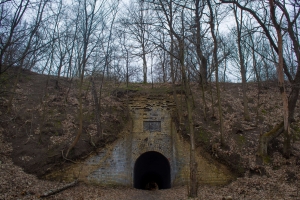
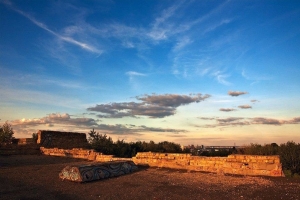
The Lysa Hora grove south of the centre is Kyiv’s equivalent of the German Brocken. According to legends, witches flew here for their Sabbath for centuries, performed rituals, and later — the condemned were buried here too. Today it is a forest park with the remains of a tsarist fortress, very popular among neo-pagans, role-players and lovers of mystical walks. A place with character — at night it is better not to go alone.
4. Buried treasure of the Golden Gate
A lesser-known legend says that during the Mongol invasion Kyiv residents buried the city treasury in the ground near the Golden Gate — gold, church plate, princely regalia. The city fell, those who hid the treasure perished, and since then the treasure has been sought for nearly eight centuries. Never found. Archaeologists say — because most likely there was none. Treasure hunters say — because nobody looked hard enough.
Top Sights of Kyiv
St Sophia Cathedral
Kyiv’s greatest shrine and one of the oldest surviving structures in Eastern Europe. The cathedral was built by Yaroslav the Wise in the 11th century — and inside, authentic frescoes and mosaics of that era are still preserved, including the famous «Oranta.» The bell tower is worth climbing for a panorama of Sofiivska Square. This is a UNESCO site, the logical place to begin getting to know the city. St Sophia Cathedral — a landmark not to miss.
Kyiv-Pechersk Lavra
The country’s largest monastic complex, founded in 1051. Golden domes, a bell tower from which you can see half of Kyiv, and most importantly — the caves: underground labyrinths with the relics of monks, where people prayed and were buried for centuries. The Lavra is also a UNESCO site and still a very «living» place around which contemporary church disputes continue. Allow at minimum half a day for a complete visit. Kyiv-Pechersk Lavra — the most important religious and historical site in the city.
Andriivskyi Descent and St Andrew’s Church
The most romantic street in Kyiv — a steep cobbled lane connecting the Upper Town to Podil. Here are art stalls, galleries, the Bulgakov Museum, cafes in basements and the very atmosphere people come for. Crowning the descent is St Andrew’s Church — a Baroque gem by Rastrelli on the hill of the apostolic legend. Andriivskyi Descent and St Andrew’s Church — the most charming street in the city.
Independence Square (Maidan) and Khreshchatyk
The heart of modern Kyiv and the country’s main square. This is where Ukraine’s fate was decided in 2004 and 2013–2014. On ordinary days it is a lively city space with fountains, street musicians and Khreshchatyk, closed to traffic on weekends. The place where the capital’s pulse is most vividly felt. Independence Square (Maidan) — the symbolic centre of Ukraine.
The Golden Gate
The ceremonial entrance to Kyiv in the time of Yaroslav the Wise — ambassadors and princes rode into the city through these gates. What you see today is a reconstruction above authentic 11th-century remains; a museum operates inside. Nearby stands the monument to Yaroslav the Wise holding a model of the city, which Kyiv residents affectionately call the «man with the cake.» The Golden Gate — a symbol of Kyivan Rus.
St Michael’s Golden-Domed Cathedral
An azure-and-gold cathedral on the hill facing Sophia. The 12th-century original was blown up by Soviet authorities in the 1930s; the present church was rebuilt in independent Ukraine — and became a symbol that what was destroyed can be returned. From Mykhailivska Square there is one of the finest views of the Dnipro. St Michael’s Golden-Domed Cathedral is not yet described on the site as a separate page.
Kontraktova Square and Podil. Kyiv’s historic lower district — formerly the merchant, artisan and student quarter. Today Podil is the city’s hippest area: bars, cafes and galleries in old buildings. Also here — the founders’ monument near the water. Kontraktova Square — the heart of Podil.
Volodymyrsky Cathedral. The city’s main Neo-Byzantine church of the 19th century, famous for paintings by Vasnetsov and Nesterov. One of the most beautiful interiors in the city. Volodymyrsky Cathedral — the finest 19th-century church in Kyiv.
Mystetskyi Arsenal. The country’s largest cultural complex in the building of the old military arsenal: large-scale contemporary art exhibitions, book fairs, festivals. Come here for what Kyiv is living today. Mystetskyi Arsenal — the leading venue for contemporary culture in Ukraine.
National Museum of the History of Ukraine. If you want to lay out all of Ukrainian history on the shelves in two hours, this is the best address in the city, from Trypillian ceramics to the present day. National Museum of the History of Ukraine — the main historical museum of the country.
National Chornobyl Museum. One of Kyiv’s most emotionally powerful museums — about the 1986 catastrophe, the evacuation, the liquidators and the Zone. Small, but you leave it a different person. National Chornobyl Museum — an essential museum for understanding Ukraine’s 20th century.
Lysa Hora Grove. A forest park with a mystical reputation, the remains of a tsarist fortress and the finest «wild» views within the city. For those who have had enough of cathedrals and want Kyiv’s legend live. Lysa Hora Grove — Kyiv’s most mysterious natural area.
Pyrohiv — Open-Air Museum of Folk Architecture. A vast skansen on the city outskirts: genuine wooden cottages, churches and windmills from all regions of Ukraine. A whole village under the open sky, ideal for families with children. Not yet described on the site as a separate page.
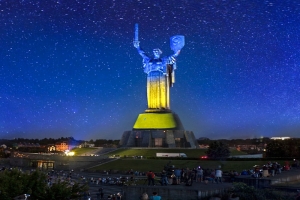
Monument «Ukraine-Maty» (Motherland Monument). A 102-metre titanium figure above the Dnipro (formerly «Rodina-Mat’», on whose shield the Soviet coat of arms was replaced with a trident in 2023). At its base — a museum complex and an open-air exhibition of military hardware. Not yet described on the site as a separate page.
City Itineraries
Itinerary 1. Kyiv in One Day (must-see concentrate)
Start at St Sophia Cathedral in the morning while there are no queues. Then through Mykhailivska Square to the Golden Gate and down Andriivskyi Descent with St Andrew’s Church. Lunch in Podil near Kontraktova Square. Afternoon — Maidan and Khreshchatyk, evening — the Dnipro embankment.
Itinerary 2. Kyiv in Two Days (complete)
Day 1 — as in Itinerary 1: Sophia, Golden Gate, Andriivskyi Descent, Podil, Maidan. Day 2 devote to the left part of the centre: Kyiv-Pechersk Lavra for half a day, the Motherland Monument, then National Museum of the History of Ukraine or Mystetskyi Arsenal.
Itinerary 3. Princely Kyiv
A route for those who came for thousand-year-old history: St Sophia Cathedral → St Michael’s Golden-Domed Cathedral → Golden Gate → National Museum of the History of Ukraine on Starokyivska Hill → Kyiv-Pechersk Lavra. A thousand years in one walking day.
Itinerary 4. Museum Kyiv
For a rainy day or museum lovers: Mystetskyi Arsenal → National Chornobyl Museum → Museum of Water → Museum of the Formation of the Ukrainian Nation. Four very different perspectives on one country.
Itinerary 5. Kyiv with Children
Kyiv in Miniature Park in the morning → Antonov Aviation Museum with huge aircraft → Open-Air Military Hardware Museum → a walk in Muromets Park or Pushcha-Vodytsia. Lots of space, minimal queues and museum boredom.
Must-Do in Kyiv
- Climb the bell tower of St Sophia Cathedral — from here you can see how a thousand-year-old city lies in layers.
- Walk Andriivskyi Descent on foot, from the church down to Podil, stopping at every art stall.
- Pass through the caves of Kyiv-Pechersk Lavra by candlelight — an experience that cannot be conveyed in a photograph.
- Eat a Kyiv perepichka at the historic kiosk near Khreshchatyk — a hot sausage in pastry, local street food with cult status.
- Taste a genuine Kyiv cake — with a crispy hazelnut-meringue base, not the shop-bought imitations.
- Ride the metro to «Arsenalna» station — one of the deepest stations in the world; the descent itself is an attraction.
- Watch the sunset from Volodymyrska Hill or Paysazhna Alley — with a view of the Dnipro and the left bank.
- Drink coffee in Podil — this is where Kyiv’s third-wave coffee culture is concentrated.
- Stand on the Maidan in silence for a few minutes — this is not just a square; it is the place where the country changed twice.
- Walk around Pyrohiv — a whole day among wooden cottages and windmills without leaving the city.
- Swim in the Dnipro in summer on Trukhaniv Island — a city beach reached by a pedestrian bridge from the centre.
- Buy a chestnut souvenir — the unofficial symbol of Kyiv, which the city even carries on its own district emblem.
Kyiv officially has over 3,700 cultural and historical monuments. If you visited one per day, a complete tour would take more than ten years. The strategy of «seeing it all» simply does not work — choose your Kyiv.
Frequently Asked Questions
What to see in Kyiv in one day?
The essential circuit: St Sophia Cathedral → Mykhailivska Square → Golden Gate → Andriivskyi Descent → Podil (Kontraktova Square) → Maidan.
What to see in Kyiv in two days?
Day one — historic Upper Town and Podil (Sophia, Golden Gate, Andriivskyi Descent, Maidan). Day two — Pechersk: Kyiv-Pechersk Lavra, Motherland Monument and one large museum of your choice.
What to do in the evening in Kyiv?
Head to Podil for bars and coffee shops, to the Dnipro embankment for the view, to Paysazhna Alley or Volodymyrska Hill for the sunset. In summer, Khreshchatyk and the Maidan become pedestrian on weekends.
What to do with children in Kyiv?
Kyiv in Miniature Park, Antonov Aviation Museum, Open-Air Military Hardware Museum, Muromets Park and the Pyrohiv skansen.
Is Kyiv safe now?
Kyiv functions as a capital: transport, museums, cafes, business. At the same time the city periodically comes under missile and drone attacks on infrastructure. Before and during a trip, monitor air alerts through the official «Air Alarm» app and know the location of the nearest shelter.
What is the best season to visit Kyiv?
Late April — chestnut blossom; September–October — golden hillsides and soft light, the most comfortable period. December — Christmas fair on Sofiivska Square. Summer is warm but can be hot.
What are the most famous dishes of Kyiv?
Kyiv cutlet (chicken Kyiv), Kyiv cake with hazelnut meringue, Kyiv perepichka as street food, borscht, varenyky. The city has also become one of the region’s coffee capitals — good coffee is available almost everywhere.
What to bring back from Kyiv as a souvenir?
Kyiv cake, souvenirs with chestnuts and the city’s symbols, ceramics and embroidery from Andriivskyi Descent, books from Ukrainian publishers, locally roasted Kyiv coffee.
Kyiv is a city you do not visit to «tick it off a list.» It is too large, too old and too alive to fit into a single must-see rundown. The same descent in spring and autumn is two different streets. The same Sophia at eight in the morning and at six in the evening is two different cathedrals.
If you have not yet decided where to begin — begin with a hill. Any hill. In Kyiv from any hill you can see ten more reasons to stay longer.
JoomShopping Download & Support