


- You are here:
-
Sights by Regions

-
Chornobyl Exclusion Zone
- Pripyat
Pripyat


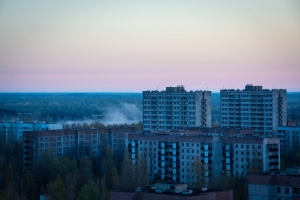

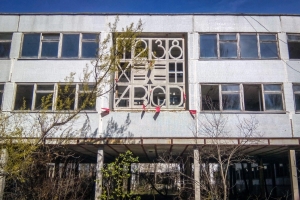


Picture a city of 50 thousand residents, where the average age is 26, boasting three swimming pools, a cinema, an amusement park, a hotel, a river port, a music school, and a central square worthy of a regional capital. A city built entirely from scratch in just fifteen years as an exemplary atomic city of the future. Now, imagine that not a single soul is left inside. Not one. For 40 years now.
This is Pripyat. The most famous ghost town in the world. Until 2022, hundreds of thousands of tourists — from Japan, Australia, the USA, Brazil — traveled here just to witness what a civilization looks like when its people are scooped out in a mere 36 hours. The most mesmerizing thing about Pripyat is that it isn't destroyed. It stands. It just stands there, gradually being swallowed by the forest.
Important. Pripyat has been closed to tourists since February 24, 2022. Following the temporary occupation of the Chornobyl Exclusion Zone by Russian troops and its subsequent liberation in April 2022, the territory was designated as a highly protected zone of military significance. Parts of the area are mined. Tourist access has not been reinstated, and there are no official reopening dates. This article describes the city — for those who once visited and for those planning to see it someday.
City Fact Sheet
| Year Founded | February 4, 1970 (officially granted city status in 1979) |
| Administrative Status | Former city of regional significance; currently an uninhabited city within the Exclusion Zone |
| Historical Region | Kyiv Polissya (northern Kyiv region, 16 km from the border with Belarus) |
| Population | Before 26.04.1986 — ~49 360 people. Currently — 0 |
| Total Area | ~6 km2 |
| Main River | Pripyat River (after which the city was named) |
| Monikers | The Ghost Town, the ideal atomic city, the ninth atomograd of the USSR |
| Current Status | CLOSED to tourists since February 2022 |
In this article
- What kind of city is this and why do people visit
- Location and layout of the city
- A brief history
- Legends and mysticism
- Top hidden gems of Pripyat
- Exploration routes
- Must-do things in Pripyat (once it reopens)
- FAQ
What kind of city is this and why do people visit
Pripyat was the ninth atomic city of the USSR, built entirely from scratch starting in 1970 as a flagship project for the “communist future.” The finest architects, most progressive urban layouts, and premium materials were allocated here. Pripyat was meant to showcase to the world that Soviet science and urban planning could provide the ideal home for workers of the nuclear industry. On paper, it was flawless. In reality, it lasted only 16 years.
Travelers used to flock here for three main reasons. First, to see the iconic Ferris wheel in the amusement park with their own eyes — it is one of the most recognizable symbols of the disaster in global pop culture. Second, to walk through a time capsule of a Soviet city frozen in 1986: shops featuring retro signs, vintage soda fountains, and “Glory to the CPSU” banners still clinging to the walls. Third, to grasp the sheer human tragedy: to envision the apartments, daily routines, and plans for the upcoming May Day holidays — and how everything was instantly cut short in a single day.
Pripyat is a destination where the context matters far more than the concrete walls themselves. Without knowing its backstory, half the sites might look like any abandoned post-Soviet neighborhood. With context, it transforms into the largest open-air museum of the 20th century.
Location and layout of the city
Pripyat sits on the right bank of the Pripyat River, right at the core of the Chornobyl Exclusion Zone. The distance from the city center to the ill-fated Reactor No. 4 of the Chornobyl NPP is merely 3 kilometers. The nearest inhabited Ukrainian town (Ivankiv) is 50 kilometers away. Kyiv lies roughly 100 km to the south, while the Belarusian border is just 16 km to the north.
The city was constructed following a masterfully integrated architectural plan. The heart of Pripyat is a spacious central square hosting the “Energetik” Palace of Culture, the “Polissya” Hotel, the “Pripyat” cafe, a grand grocery department store, and the “Prometei” cinema. Radiating outward are five micro-districts filled with standard 5- and 9-story apartment blocks. Everything was engineered so that no resident had to walk more than 500 meters to reach a kindergarten or a school. The avenues were exceptionally wide, and sidewalks were lined with horse chestnuts and poplars. Today, those trees have morphed into a wild jungle engulfing the entire city.
Back when life was normal. It was a booming young city — with an average age of 26, welcoming more than 1,000 newborns every year. The infrastructure was unmatched by Soviet standards: three swimming pools, two stadiums, four high schools, 15 kindergartens, a music school, a cinema, and a sprawling hospital complex. Salaries for Chornobyl NPP employees were significantly higher than the Soviet average, and apartments were handed out after waiting just 3 to 5 years. By Soviet metrics, it was paradise.
When to visit. Before 2022, the official tourism season ran from April through October. Currently, visiting is strictly prohibited. The city remains locked down as extensive demining operations and restoration of the Chornobyl NPP infrastructure continue. No official reopening dates for tourists have been announced.
A brief history
Foundation and Growth (1970–1979)
On February 4, 1970, the first construction stake was driven into the right bank of the Pripyat River. The city was meticulously designed to accommodate the workforce of the upcoming Chornobyl Nuclear Power Plant, which saw its first reactor grid connection in 1977. The first residents moved into their homes in 1971 — mostly young nuclear physicists, engineers, and construction workers. In 1979, Pripyat was officially granted full city status. By 1986, the population had swelled to around 49,360 residents.
April 26, 1986
At 01:23:40 AM, during a scheduled systems test at Chornobyl NPP's Reactor No. 4 — just 3 km from the residential quarters — a series of catastrophic thermal and steam explosions occurred. The reactor core was completely destroyed. A massive plume of radioactive material erupted into the atmosphere, drifting directly over Pripyat faster than any other settlement. For the first 36 hours following the blast, the residents were left completely in the dark: children attended school as usual, a local football match was played on Saturday, April 26, and families strolled through the parks. Even though civil defense dosimeters were maxing out, officially, nothing had gone wrong.
The Evacuation of April 27, 1986
At 2:00 PM on Sunday, an urgent announcement echoed from the city's public radio network: “A temporary evacuation is being ordered for three days. Bring only your documents and essentials; leave your pets behind.” Within a mere three hours, a fleet of 1,200 buses evacuated the entire population — 49,000 people. Most residents left their apartments exactly as they were: milk sat in refrigerators, half-eaten meals remained on tables, and bookmarks rested in open novels. They genuinely believed they would return in a week. They never did. A month later, the mandatory evacuation expanded to adjacent villages, removing another 67,000 people. In total, 116,000 people were displaced over those 36 hours.
Pripyat Post-Evacuation
Throughout 1986–1987, the city underwent aggressive “decontamination” efforts: workers scraped away topsoil layers, scrubbed facades with industrial chemical solutions, and bulldozed heavily contaminated patches of forest. It was to no avail. Pripyat was permanently designated within the 10-kilometer inner Exclusion Zone. Valuable items from the apartments (such as libraries and select furniture) were partially recovered, but a vast majority of personal belongings were left behind due to the radiation risks. By the 1990s, looters began actively targeting the city, stripping it of metals, plumbing, and even floor linoleum. By the early 2000s, almost everything of value had been pillaged.
Tourism and War (2010–2022)
In the 2010s, the Chornobyl Exclusion Zone transitioned into a fully licensed tourism hot spot. The 2019 HBO miniseries “Chernobyl” transformed it into a massive global brand, driving annual visitor numbers to nearly 120,000. However, in February 2022, Russian troops launched an invasion from Belarus, advancing through Pripyat toward Kyiv and occupying the zone. The Chornobyl NPP remained under occupation for over a month. Russian soldiers dug trenches in the highly radioactive Red Forest; many were subsequently evacuated to Belarusian hospitals displaying symptoms of acute radiation sickness. Following the successful Kyiv counteroffensive in April 2022, the zone was liberated, but tourist access remains suspended indefinitely.
The Pripyat Paradox: A city built to embody the peak of Soviet futuristic achievement ultimately became the ultimate monument to the structural flaws of the Soviet system. What was supposed to prove ideological supremacy instead documented its collapse. In 1986, Western excursions to Pripyat were unimaginable. Three decades later, visitors from Japan and Canada were traveling across the globe specifically to observe its ruins.
Legends and mysticism
1. The Park That Never Opened
The city's most poignant legend. The Pripyat Amusement Park was scheduled for a grand opening on May 1, 1986, celebrating International Workers' Day. The Ferris wheel, bumper cars, and swings stood fully operational. Due to the meltdown five days prior, the park never officially opened — not a single officially registered resident ever got to ride it. Rumor has it that a few children managed to sneak into the park on the morning of April 27 before the evacuation, and sympathetic operators turned on the rides for them briefly. While unconfirmed, the story has firmly embedded itself in local lore.
2. The Voice of Aleksandr from Entrance 23
A classic stalker urban legend from the early 2000s. Stalkers whisper that within one of Pripyat's residential districts, there is a specific apartment entrance where, at dusk, a faint male voice can be heard calling out: “Aleksandr, it's time to come inside.” Explorers who overnighted in the city swear they have experienced this firsthand. Skeptics explain it as an acoustic anomaly: rapid temperature drops inside the empty concrete structures cause air to rush through broken pipes, mimicking muffled human voices. Romantics cling to the idea that Aleksandr is a 9-year-old boy who didn't make it back home in time for the final evacuation bus.
3. The Dolls of School No. 3
Inside the abandoned kindergartens of Pripyat, hundreds of toys — dolls, teddy bears, plastic toy soldiers — lie scattered. Over the years, some stalkers and tourists have purposefully rearranged these items to create increasingly dramatic or eerie photo opportunities. As a result, visitors returning to the same classroom a year later often find dolls sitting in entirely different configurations. Tour guides are well aware of this and strictly prohibit moving artifacts. Nevertheless, rumors about “dolls moving on their own” continue to circulate online.
Top hidden gems of Pripyat
Amusement Park with the Ferris Wheel
The Pripyat Amusement Park stands today as the absolute number one symbol of the Chornobyl disaster in global culture. The vibrant yellow Ferris wheel, the rusted bumper cars of the “Autodrom,” and the static swings — none of it ever fulfilled its purpose. Footages of this wheel have starred in countless documentaries, video games, and music clips. It is invariably the first major milestone of any guided tour.
The Ghost Town: Central Square and Micro-districts
Exploring Pripyat as an entity is an architectural journey in itself. The central plaza features the grand “Energetik” Palace of Culture, the stained-glass windows of the “Pripyat” cafe, the “Prometei” cinema, and a massive department store. Completely vacant, silent, and overgrown with wilderness, it represents the largest intact 1970s Soviet architectural ensemble anywhere on Earth — whereas other cities modernized and evolved, time here was permanently frozen.
Hotel «Polissya»
The Hotel “Polissya” dominating the central square is a classic 9-story Soviet lodging facility. It once provided some of the finest panoramic vistas of the young city. In May 1986, Soviet liquidators used its rooftop as a spotting post to guide helicopter operations dropping sand, lead, and boron into the burning core of Reactor No. 4. Today, it stands as a hollow concrete skeleton with blown-out windows, crumbling plaster, and remnants of old antennae on its roof.
«Lazurny» Swimming Pool
The “Lazurny” Swimming Pool remains one of the most hauntingly beautiful structures in the town. It features a massive, dried-out 25-meter pool basin lined with faded blue tiles and an intact high-dive platform. An interesting fact: this pool actually remained operational until 1998 — over twelve years after the city's evacuation — servicing the liquidators and engineers who continued operating the remaining units of the Chornobyl NPP. The adjoining fitness hall still holds rusty weights and workout mirrors.
«Avangard» Stadium
The “Avangard” Stadium was the proud home arena of Pripyat's local football squad. It was fully prepped to host its inaugural major match of the season on May 1, 1986. Today, the soccer field has transformed into a thick, 40-year-old birch forest, the spectator grandstands are buried in weeds, and the scoreboard stands completely blank. It is one of the most melancholic spots in the entire city.
School No. 5 and «Cheburashka» Kindergarten
Undoubtedly the most emotionally overwhelming locations to visit. School No. 5 features thousands of decaying textbooks from 1986 strewn across floors, civil defense gas masks carpeting the hallways, portraits of Lenin on walls, and dusty chessboards resting on window sills. Meanwhile, the “Cheburashka” Kindergarten No. 10 displays tiny metal cribs with matching mattress springs, children's wall drawings, and forgotten dolls. A profoundly moving experience is guaranteed.
Chornobyl NPP and the Sarcophagus
The Chornobyl Nuclear Power Plant sits technically 3 km outside Pripyat city limits, yet it is completely intertwined with its fate. Rising above the destroyed Reactor No. 4 is the New Safe Confinement (NSC), a colossal steel arch measuring 165 meters in length, 110 meters in width, and 108 meters in height. It ranks as the largest movable land-based structure ever engineered by humanity and was successfully slid over the original legacy sarcophagus in 2016.
The Unfinished Reactors No. 5 and 6
The Third Phase of the Chornobyl NPP consists of the unfinished Reactors No. 5 and 6. Construction kicked off in the early 1980s, and by 1986, Reactor No. 5 was nearly ready for launch. After the disaster, all construction was frozen on the spot. Today, it remains a gigantic unfinished complex with tower cranes still perched on the rooftop, never dismantled. It is one of the most surreal sights in the entire Zone.
The Red Forest — the Deadliest Patch of the Zone
The Red Forest (Rudyi Lis) is a stretch of pine woodland between Pripyat and the Chornobyl NPP that absorbed a lethal dose of radiation within the first hours after the explosion. The needles turned yellow, then a rusty red (hence the name), and the trees died off. Most of them were felled and buried in trenches. Today, a young new forest grows here, marked by mutations and radiation levels that remain dangerously high. Tours don't venture in, but the road between the checkpoint and the NPP runs right past it.
The River Port and Cafe
Lesser-known but legendary among dedicated urban explorers — the abandoned Pripyat River Passenger Port showcases striking late-Soviet modernist architecture. Directly adjacent stands the “Pripyat” Cafe, renowned for its magnificent colored stained-glass windows facing the water. On bright afternoons, the sun filtering through these intact glass panes casts surreal reflections onto the decaying walls.
Exploration routes
The itineraries outlined below represent how Pripyat was showcased to tourists from 2010 through 2021. Once the zone reopens, operators will undoubtedly return to these verified paths.
Route 1. Pripyat Essential (Half-Day)
Arrival at the city checkpoint (usually as part of a classic 1-day tour departing from Kyiv). Walk across the Central Square past Hotel Polissya and the Palace of Culture → the Amusement Park with the Ferris Wheel → School No. 5 → the “Lazurny” Swimming Pool → Chornobyl NPP main observation deck. Duration: ~4–5 hours.
Route 2. Deep Pripyat (One Day)
Everything from Route 1 plus the “Cheburashka” Kindergarten → the “Avangard” Stadium → the Hotel “Polissya” with a rooftop climb (in the past) → the “Pripyat” Cafe with its stained-glass windows → the river port. A full day inside the city.
Route 3. Pripyat + Chornobyl NPP (One Day)
Half a day in the city following Route 1, then an inspection of the Chornobyl NPP from the observation deck beside the sarcophagus, followed by the unfinished Reactors No. 5 and 6. The most “engineering-focused” route of them all.
Route 4. Pripyat + Duga (Two Days)
Day 1 — Pripyat following Route 2, with an overnight stay in Chornobyl town. Day 2 — the Duga OTH Radar deep in the forest 9 km from the NPP, the Chornobyl-2 command post, and the vehicle graveyard. The most atmospheric two-day itinerary.
Route 5. The Specialized «S.T.A.L.K.E.R.» Fan Route
Designed for enthusiasts of the acclaimed gaming franchise. Visiting real-world location prototypes featured in the games: the central plaza of Pripyat, the Amusement Park, the towering Duga Array, the reactor sarcophagus, and the unfinished cooling channels. Best undertaken with a guide who can bridge virtual rendering with historical reality.
Must-do things in Pripyat (once it reopens)
- Take a photo of the iconic Ferris wheel in the amusement park. The definitive visual representation of the Zone. The classic composition is shot from ground level looking up against the sky.
- Step into a classroom inside School No. 5 and see a 1986 textbook left open on a desk. One of the most haunting impressions the city can leave.
- Peer down into the empty pool basin of «Lazurny» from the diving platform. Five meters of hollow, tiled blue space — absolutely hypnotic.
- Stand on the main observation deck of the Chornobyl NPP. Just 200 meters away from the site of the worst technological catastrophe of the 20th century.
- Admire the stained glass at the «Pripyat» Cafe during sunset — the surviving colorful panes project stunning mosaics onto the rotting interior.
- Listen to the absolute silence. Pripyat has no traffic hum, no people, no commercial advertisements. There is only the call of birds, wind rustling through branches, and the distant flow of the river.
- Measure radiation levels across different spots: on the concrete parapet of the central square, on a residential rooftop, or near the notorious “liquidation claw.” The readings will jump in ways you don't expect.
- Hunt for your “favorite” piece of graffiti on a wall. Throughout the 2010s, guerrilla artists left dozens of works across Pripyat — from children's silhouettes to full-scale murals.
- Photograph a birch tree growing out of a 9th-floor window. It's the finest example of nature reclaiming the city for itself.
- Buy a Ferris-wheel fridge magnet at the souvenir shop in Chornobyl town — it's the bread-and-butter economy of those who stay on to work in the zone.
49,360 people lived in Pripyat on the morning of April 26, 1986. 0 people — by the evening of April 28. 36 hours — the full cycle from “ideal atomic city” to “ghost town.” It is one of the fastest transitions of an entire settlement from full operation into oblivion in the history of the 20th century.
FAQ
Can I legally visit Pripyat right now?
No. Official tourist access has been entirely halted since February 24, 2022. The city is subject to strict wartime security regulations due to ongoing military presence, landmine hazards across surrounding woodlands, and heightened security protocols at the Chornobyl NPP. No official reopening dates have been set.
Is it safe regarding radiation levels in Pripyat?
Within the city limits — yes, provided you strictly follow safety guidelines: stay exclusively on designated paths laid out by your guide, do not sit on the ground, avoid touching moss or lichens, and do not eat or drink outdoors. The cumulative radiation dose received during a standard 1-day tour is roughly 2–4 microsieverts, which is less than the radiation exposure during a commercial flight from Kyiv to London. Notorious “hotspots” (such as the basement structures near the “Lazurny” Pool) are only shown by guides from a safe distance.
Do people live in Pripyat today?
No. Pripyat is a completely abandoned city. The elderly returnees (known as self-settlers or samosely) who slipped back into the Exclusion Zone after the disaster chose to resettle in outlying agricultural villages or within Chornobyl town itself, but never within Pripyat — the ambient radiation levels here remain significantly higher and urban utility grids are entirely non-functional.
What happened to the apartments and belongings of Pripyat residents?
Most of it was left behind in the apartments after the evacuation. Throughout the 1990s and 2000s, a significant share was looted (metal, plumbing, furniture). Valuable archives, the library, and some household appliances were removed officially. Today, the apartments mostly hold small items: magazines, dishes, clothing, posters, and children's toys. By law, all of it remains state property.
How does Pripyat look now compared to 2019?
The 2022 Russian occupation did not cause catastrophic destruction within the city itself, but many areas around Pripyat and along the road to the NPP were mined, and the radiation-monitoring infrastructure was damaged. Nature didn't stand still either — over four years without tour agencies and groups, trees have grown into other structures, and some roofs and floors have collapsed through ordinary decay. The city is becoming “even more of a ghost” than it was.
Why is Pripyat the most famous ghost town globally?
For three core reasons. First, its sheer scale: this is a full-fledged city built for 50,000 residents with comprehensive infrastructure, not an isolated mining outpost. Second, its time-capsule nature: the swift evacuation over 36 hours preserved everything exactly as it was. Third, its massive cultural footprint: the 2019 HBO “Chernobyl” series, the S.T.A.L.K.E.R. gaming franchise, and dozens of global documentaries have cemented it as the definitive global icon of technological catastrophe. No other ghost town matches this level of pop-culture relevance.
What is happening at the Chornobyl NPP now?
The Chornobyl NPP officially ceased all electricity generation in 2000, when its last remaining operational reactor (Unit 3) was permanently shut down. Today, specialized staff remain on site to oversee the containment structures, manage the cooling grids for spent nuclear fuel, and execute continuous radiological monitoring. Personnel rotate on 4-day shifts, residing in Chornobyl town. While the 2022 military occupation did not compromise the structural safety of the safe confinement arch, it did result in looting of laboratory equipment and brief disruptions to automated monitoring data flows.
How can I experience Pripyat today without physical access?
The 2019 HBO miniseries “Chernobyl” offers the most historically accurate visual reconstruction of the city's atmosphere. Outstanding documentaries include Discovery's “The Battle of Chernobyl” and the BBC's “Chernobyl: 30 Years On.” For interactive media, you can use Google Maps Street View (which features extensive 360° panoramas captured before 2022) or explore the S.T.A.L.K.E.R. video game series, where the spatial geometry of Pripyat's central square was digitally modeled with incredible accuracy.
Pripyat is a lesson without a single word. A city built as the future became a monument to the past. The concrete walls still hold, but the trees already tower over the nine-story buildings. The chestnuts planted by schoolchildren in the 1970s have grown into a forest. In twenty years, perhaps, the roads here will no longer be visible at all.
Will people ever return? Someday, maybe. A hundred, a thousand years from now — no one knows. For now, Pripyat stands and waits. Quiet, silent, untouched. A city that outlived everyone who built it.
JoomShopping Download & Support