


- You are here:
-
Sights by Regions

-
Odesa region
-
Odesa
- 411 battery - Memorial to the heroic defense of Odesa
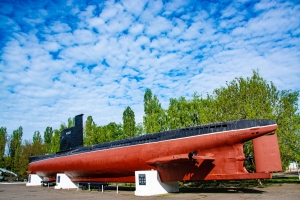

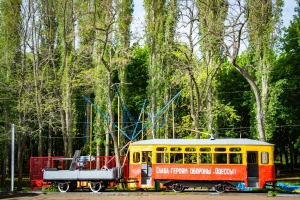

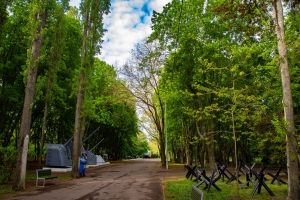

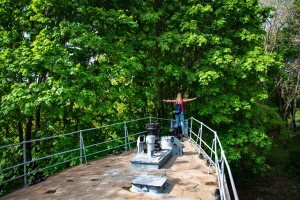
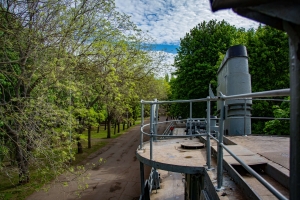
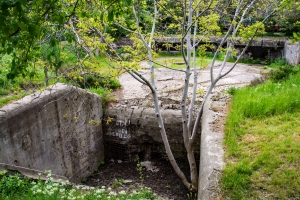
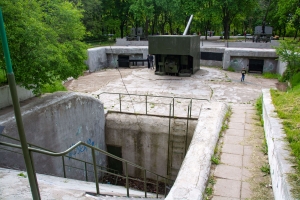

At four o’clock in the morning on 16 October 1941 the battery fired its last «shot» — blowing itself up. The guns that had held the defence of Odesa for 73 days were not to fall into enemy hands. Decades later, a memorial grew up on that same ground — one of the country’s most impressive open-air war museums.
Battery 411 is the Memorial of the Heroic Defence of Odesa on the city’s southern outskirts: 16 hectares under open sky, filled with tanks, artillery pieces, an aircraft, an armoured train and even a submarine. Families with children come here, history enthusiasts come here, and so does anyone who wants to understand what the defence of Odesa really meant.
Location card
| Location | southern outskirts of Odesa (Velykyi Fontan / Chornomorka district) |
| What it is | memorial and open-air military hardware museum |
| Area | ~16 hectares |
| Time needed | 1.5–2 hours |
| Bring | water, comfortable shoes, a camera |
Safety note
Odesa has been subject to missile and drone attacks since 2022. Check the current security situation and the memorial’s opening hours before visiting — many venues operate on modified schedules.
What it is and why visit
The memorial combines two things: remembrance of the 1941 defence of Odesa and a vast open-air hardware exhibition. Spread across 16 hectares are examples of WWII military equipment: the «Malyutka» submarine, an armoured train, tanks (including Odesa’s improvised «Scare Tank»), an aircraft, artillery pieces and missile systems. There are also sculptural compositions, a stele and an eternal flame.
Children love clambering around real tanks; adults read the history behind each exhibit. It’s a rare format where the museum isn’t behind glass — it surrounds you.
During the defence of Odesa, Battery 411 fired 220 combat salvos. On 16 October 1941, on the order of the command, the battery was blown up so as not to leave it to the enemy.
History: 73 days of defence
Coastal Battery 411 began construction in May 1934 and was completed by June 1936, when a government commission accepted it with an «excellent» rating. It was a powerful defensive installation covering the sea approaches to Odesa.
The battery fired its first salvo at the enemy at 9 a.m. on 5 August 1941 — at the opening of the defence of Odesa, which lasted 73 days. Throughout that time the battery shelled enemy troop and vehicle concentrations, firing 220 combat salvos in total. When the city was evacuated on command, at 4 a.m. on 16 October 1941 the battery was blown up and its crew evacuated to Sevastopol.
How the memorial came to be
On 9 May 1975 a memorial was formally opened on the site of the battery. Since then it has been one of the main WWII commemorative sites in Odesa and a major open-air museum.
Stories behind the exhibits
The most compelling thing here is the small individual histories of specific machines.
1. The «Scare Tank»
During the defence of Odesa, cut off from supplies, defenders improvised armoured vehicles from tractors and whatever scrap armour was available. They were nicknamed «Scare Tanks» because they sometimes terrorised the enemy more through appearance and noise than through actual firepower. The «Scare Tank» has become a symbol of Odessan ingenuity under siege.
2. A submarine on dry land
Seeing a real «Malyutka» (Baby) submarine in the middle of the steppe is the sight that astonishes children most. The little sub, hauled ashore, is one of the star subjects of photos taken at the memorial.
What to see
Hardware exhibition. Tanks, artillery pieces, an aircraft, an armoured train, missile systems, a submarine.
Stele and eternal flame. The centrepiece of the commemorative area.
Sculptural compositions. Dedicated to the defenders of Odesa.
Getting there
By car or public transport: the memorial is on Odesa’s southern outskirts; the route is well signposted and public transport runs in that direction.
Tip: venues in Odesa may operate on modified schedules — confirm opening hours before you go.
Traveller’s checklist
- ✅ Check the security situation and opening hours
- ✅ Water and a hat (all exhibits are outdoors)
- ✅ Camera — there is plenty of hardware and it photographs well
- ✅ Comfortable footwear for a long walk across 16 hectares
- ❌ Do not climb on exhibits where it is prohibited
Frequently asked questions
Why is it called Battery 411?
That is the number of the coastal battery that guarded Odesa from the sea and fired 220 combat salvos during the 1941 defence before being blown up.
Will children enjoy it?
Yes, this is one of Odesa’s most popular family attractions: real tanks, artillery and a submarine out in the open air captivate children of any age.
How long should I allow for the visit?
Usually 1.5–2 hours — the 16-hectare site is large and there are many exhibits to take in.
Battery 411 is a place where history weighs literally tonnes of steel. The guns here once destroyed themselves rather than surrender, and now an entire field of hardware tells the story of 73 days when Odesa held out. Walk among the tanks, stop at the eternal flame — and that page of history will feel tangibly closer.
JoomShopping Download & Support