


- You are here:
-
Sights by Regions

-
Volyn region
-
Kovel
- Abandoned stadium «Lokomotiv», Kovel
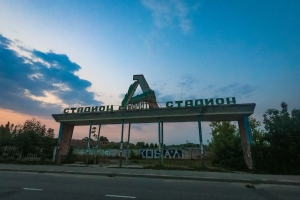
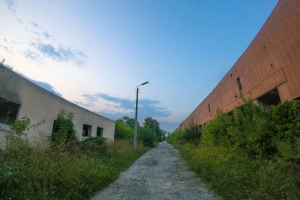


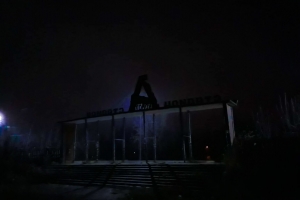


On July 6, 1972, the stands were packed solid — the reopening of the renovated arena was timed to coincide with City Day. Half a century later, those same concrete steps were overgrown with grass, and the wind blew old tickets across the running track.
This is the story of one stadium that managed to be a source of pride, then a ruin, then a source of pride again — all within the lifetime of a single generation of Kovel residents.
Location card
| Location | Kovel, Volyn region |
| Distance from Lutsk | about 70 km (43 mi) northwest |
| Time needed | 30–60 minutes |
| What to bring | comfortable shoes, water, a camera, and a bit of patience for the distant sound of train whistles |
What it is and why it’s worth a visit
Kovel is a railway town. Lines to Poland, Belarus, and half of Ukraine cross here, and for centuries the entire identity of the city has revolved around its station and depot. The stadium with the telling name “Lokomotyv” was the sporting heart of this railway hub — on Sundays, whole families came here to cheer, not just to “watch some football.”
Today people come here for two reasons. First, to see a rare example of a near-lost Soviet-era stadium that wasn’t demolished for redevelopment but restored instead. Second, for Kovel itself — a compact, quiet town with its own character that most travelers usually pass straight through by train, without ever stepping onto the platform.
History
A Polish beginning and a postwar revival
The first stadium on this site appeared back under Polish rule, in 1933. The war put those plans on hold, and the arena wasn’t properly developed until 1950, with the first full football match played here the following year.
In the 1960s–70s, the city decided to turn the stadium into something serious. Funding came from everywhere — local enterprises chipped in for free, and even the most diehard fans pitched in with construction work. The grand reopening of the renovated arena took place on July 6, 1972 — deliberately timed to coincide with City Day.
The golden years
In its best decades, Lokomotyv hosted football matches at the republic and regional level. Players from Kyiv’s Dynamo even came to play in this small town — an event that was talked about for years afterward.
A stadium that the whole town built — and the whole town later mourned, as it began to fall apart.
Decline
When the Soviet Union collapsed, funding for the arena’s upkeep disappeared. The stands emptied, the concrete cracked, the field grew over, and the rooms beneath the stands turned into storage for emptiness. For decades Lokomotyv stood half-abandoned — this is how generations of Kovel residents remember it, and it was under the label “abandoned stadium” that it ended up in the lenses of urban explorers.
A second life
The chance came through cross-border EU programs. The reconstruction was split into three phases: first the rooms beneath the stands and a building for an intercultural dialogue center were renovated, then the surrounding grounds were upgraded, and finally a fully functional sports core was built — a football pitch, running track, athletics sectors, drainage, and an electronic scoreboard. The sports facilities cost about 20 million hryvnias from the state budget plus another 4 million from the local community. The stadium officially reopened in 2023 after the major reconstruction.
Local lore and stories
You won’t find any grand mystical legends here — but there’s something better: the town’s living memory.
1. The stadium built by everyone, together
Old-timers still tell how the 1972 arena was essentially built collectively: enterprises supplied materials and equipment “free, for our own,” and fans turned out for volunteer work days as if for a holiday. For Soviet-era Kovel, this was the rare case where “community initiative” actually meant the community, not an order from above.
2. The day Dynamo came to town
The visit by Kyiv Dynamo players to provincial Kovel has acquired all the trappings of a real legend: some swear they saw specific star players on the pitch, others insist tickets had sold out a week in advance. How much of it is true and how much is embellishment is impossible to verify by now — but stories like these are exactly what the town’s myth about its stadium is made of.
What to see on site
The renovated sports core. A fresh football pitch, running track, and electronic scoreboard where ruins once stood — the best illustration of a “before and after.”
The old stand architecture. Even after the renovation, the arena’s outline still reads as 1970s Soviet sports aesthetics — recognizable lines that photographers love just as much as the ruins themselves.
The intercultural dialogue center. The renovated building beneath the stands now serves a new, entirely peaceful purpose — a cultural space instead of derelict storage rooms.
Kovel itself, all around. The railway station, quiet streets, and the atmosphere of a junction town — the stadium fits naturally into a short walk through the center.
How to get there
By train. The most logical option: Kovel is a major railway hub with direct connections to Kyiv, Lviv, Lutsk, and other cities. From the station to the stadium is a few minutes across town.
By car. From Lutsk, it’s about 70 km (43 mi) along the highway to the northwest, roughly an hour’s drive. Coming from Lviv or Rivne, it’s easy to route through Kovel as a hub point.
On site. The stadium is located within the town, so head for the center of Kovel and follow local signs; it’s best to set the address or the pin in your navigation app in advance.
Traveler’s checklist
- Comfortable shoes — you’ll do some walking around the stadium and the town.
- Camera or phone — the contrast between the “new core + old stand outlines” is worth capturing.
- Water and a snack — the visit itself is short, but a walk around Kovel is worth extending.
- Train schedule — if you’re traveling by rail, check it in advance.
- Air raid alert app — relevant for any trip in Ukraine during wartime.
What NOT to expect: wild, derelict ruins for urban exploration — the stadium has already been restored, so go for the history and the town’s atmosphere rather than for urbex.
Frequently asked questions
Is the stadium still abandoned?
No. Lokomotyv earned its “abandoned” reputation during decades of decline after 1991, but in 2023 it officially reopened after a major reconstruction with a new sports core and renovated stands.
How much does it cost to visit?
Walking around the grounds itself is free. Specific matches or events may have their own entry rules — worth checking ahead of time.
Is it safe to visit Kovel right now?
Kovel is in the far west of the country, far from the front line, so it’s relatively safe for travel. But this is Ukraine during wartime: air raid alerts are possible, so keep a relevant app running and respond to alerts.
Is it worth a special trip just for the stadium?
Honestly — not as a destination on its own. But as part of a walk around Kovel, especially if you’re passing through by train, it’s an interesting stop with a great revival story.
Lokomotyv Stadium is a small but very precise story of a Ukrainian town: built together, abandoned for lack of money, and revived during a time of independence and war. There’s no mystique of an abandoned nuclear plant or Soviet radar here — instead, there’s something rarer: a place that was actually saved in time.
So if you’re ever passing through this railway town, step off the train for half an hour. Sometimes the most honest stories aren’t told by castles, but by ordinary city stadium stands.
JoomShopping Download & Support