


- You are here:
-
Sights by Regions

-
Kharkiv region
-
Zmiiv
- Zmievsky steep slopes, Zmiev
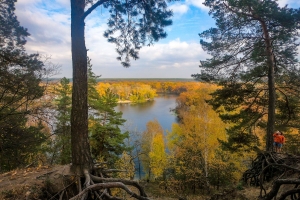

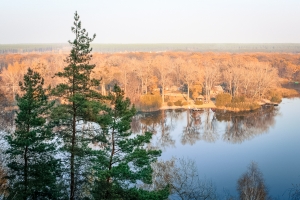


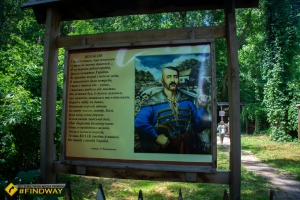


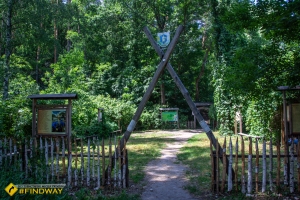
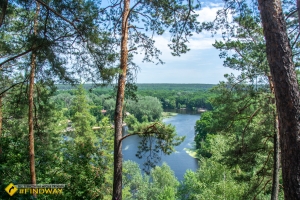
A sixty-meter vertical drop over the Siverskyi Donets River — this is where the history of the Sloboda region literally plunges into the abyss. Once home to one of Ukraine's most mystical monasteries, today Kozacha Hora (Cossack Hill) serves as the Kharkiv region's main "widescreen TV": instead of pixels, you get the deep blue of the river winding toward the horizon and endless oak forests that have stood for over three hundred years.
Korobovi Khutora (now the village of Koropove) has long earned its reputation as "Kharkiv’s Switzerland," though the only thing Swiss here might be the prices in some of the riverside restaurants. Everything else is pure Ukrainian soul: chalk slopes, sandy spits, and the lingering feeling that a Cossack gold coin is buried somewhere beneath the roots of an ancient oak. If you’re looking for a place to simultaneously "unplug your brain" and give your legs a workout on the steep climbs — this is it.
Location Card
| Location | Koropove village, Zmiiv hromada, Kharkiv region |
| Distance from Kharkiv | ~50 km |
| Time to explore | from 4 hours to a full weekend |
| What to bring | comfortable shoes, insect repellent, power bank |
What is it and why visit?
The Homilshansky Forests are among the oldest protected woodlands in Ukraine. Here, the oaks remember Scythian settlements and Cossack fortifications. The central point of attraction is Kozacha Hora. It’s not just a hill, but the southern edge of the Zmiiv Cliffs.
People come here for the vistas. The Donets River makes a sharp loop here, creating the perfect frame for any camera lens. Beyond the aesthetics, there's a powerful historical vibe: the Zmiiv Mykolaivskyi Monastery once stood nearby, serving as a "retirement outpost" for Cossacks who sought a quiet life after years of warfare.
History and the Monastery Drama
The main drama unfolded here in 1788. By order of Catherine II, the Zmiiv Monastery was slated for destruction — the local Cossack monks were simply too freedom-loving for the empire. Troops surrounded the cloister, and as legend tells it, the Cossacks, refusing to surrender, threw themselves from the cliff directly into the river.
The elders used to say that the "Kharakternyks" (warrior-mages) didn't perish in the water, but simply vanished into the currents of the Donets to reappear elsewhere.
Only the foundations remain of the monastery today, but the spirit of the "last stand" is still palpable. Later, Korobovi Khutora became a favorite retreat for the Kharkiv intelligentsia and eventually evolved into a popular resort area filled with recreation centers.
Legends and Mystery
Kozacha Hora without legends is just a mound of sand and clay. But here, we have the full package:
1. The Monks' Gold
It is said that before the final assault, the monks managed to bury the monastery’s treasury deep within the hill's underground passages. Treasure hunters have been searching for over two hundred years, but the hill only yields ceramic shards and old shell casings. Perhaps the gold is enchanted to reveal itself only to those with pure intentions.
2. Invisible Cossacks
Local fishermen sometimes tell stories of strange splashes under the cliff on foggy mornings — as if someone massive is diving into the water without a sound. Believers are convinced these are the spirits of the Cossacks continuing their eternal watch.
What to See and Do
Climb the Viewpoint. A mandatory stop. The trail up Kozacha Hora is marked; the climb isn't too strenuous, but it can be slippery after rain.
Find the "Patriarch Oak". Giants that are 400 to 600 years old grow in the Homilshansky Forests. One of them is Mazeppa’s Oak (though there’s no documented proof the Hetman sat under it, the tree is still impressive).
Walk by White Lake. Located nearby, this picturesque lake is a favorite nesting spot for herons. It's the place for those seeking absolute silence and meditation.
Explore Korobovi Khutora. Walk past the old wooden houses and modern villas, reach the bridge over the Donets, and feed the local ducks, who are professional bread-scammers when it comes to tourists.
How to Get There
By Car: From Kharkiv, head toward Zmiiv, then go through Zadunetske to Koropove. The road to Zmiiv is usually decent; further on, it narrows, but it's passable for any car.
By Public Transport: From the "Prospekt Gagarina" (Levada) metro station, take a bus to Zmiiv, then a local minibus to Koropove or a taxi. Watch the schedule, as it's harder to leave in the evening.
GPS Coordinates for Kozacha Hora: 49.5768, 36.3314
Traveler's Checklist
- What to bring: comfortable sneakers (flats are a mistake), water supply, mosquito spray (the forest residents are very "welcoming"), and a power bank.
- What NOT to do: don't try to descend Kozacha Hora off-trail — the slopes are very loose; don't leave trash; don't light fires outside designated zones.
FAQ: Quick Answers
Is there anywhere to stay overnight?
Yes, Koropove is full of hotels and recreation centers catering to every budget — from Soviet-era cabins to luxury spa complexes.
Is it safe to visit now (due to the war)?
The National Park is open, but it is vital to stay on the marked trails and remember that forest areas may be under military surveillance. Always check the latest news before traveling.
When is the best time to visit?
Golden autumn (October) is the peak of beauty when the forest turns yellow and red. Spring is the time for early blooms. In summer, it's great for swimming, but expect crowds on weekends.
Kozacha Hora is a place where you feel like a tiny speck against the backdrop of massive history. You should come here at least once to watch the sun set over the Donets horizon and realize that the Cossacks definitely had a taste for great views.
Even if you don't find the monks' gold, you will certainly bring back lungs full of fresh air and a few photos you'll want to revisit. Just watch your step and don't forget to thank the hill for its hospitality.


JoomShopping Download & Support