


- You are here:
-
Sights by Regions

-
Zaporizhia region
- Zaporizhia
Zaporizhia


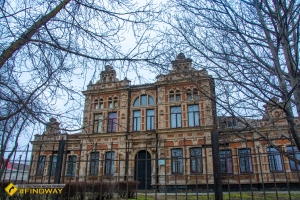


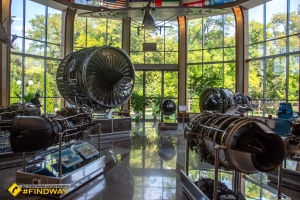
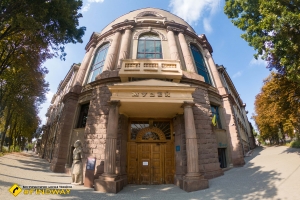

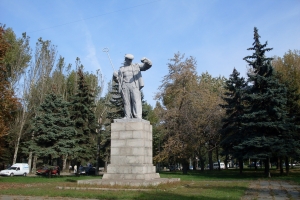

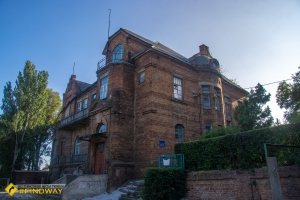
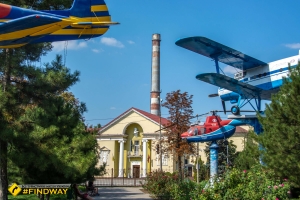


Imagine a city that has an island in the middle of its river — and that island matters more than the city itself. Khortytsia is thousands of years older than Zaporizhzhia: the Scythians were here, Prince Sviatoslav died near here, and the first Zaporizhzhia Sich stood here. Zaporizhzhia is a city that grew up around its greatest landmark.
And this is a city that is holding the line right now. Zaporizhzhia is a regional capital just a few dozen kilometres from the front, and it never evacuated — it kept working: museums open, Cossack re-enactments running, the DniproHES dam standing, the 700-year-old oak remembering Khmelnytsky. Here is where to begin.
Important. Zaporizhzhia is a frontline city that regularly comes under missile and drone attack. The museums and sites on Khortytsia are open, but any visit requires careful planning: check the current security situation through official channels, respond to air-raid warnings via the «Air Alert» app, and know the location of the nearest shelter.
City at a glance
| Founded | 1770 (as the Oleksandrivsk fortress of the Dnipro Line); the name Zaporizhzhia adopted in 1921. Khortytsia has been inhabited since ancient times |
| Status | Regional capital of Zaporizhzhia Oblast, one of Ukraine’s largest cities |
| Historic region | Lands of the historic Sich; former Wild Field |
| Population | ~700 000 before 2022; actual population lower due to frontline status |
| Area | ~334 km2 |
| Main river | Dnipro; in the middle of the city lies Khortytsia, the Dnipro’s largest island |
| Nicknames | Cossack capital, city on the island, industrial heart of the south |
| Best time to visit | Subject to the security situation. May and September are the most comfortable for Khortytsia; in summer the steppe dries out and the heat is intense |
In this article
- What kind of city is it and why people come
- Location and character
- History in brief
- Legends and mysteries
- Top attractions in Zaporizhzhia
- City itineraries
- Must-do in Zaporizhzhia
- FAQ
What kind of city is it and why people come
Zaporizhzhia is an island city. Not in the geographical sense (the city itself is on the banks), but in terms of meaning: everything here revolves around Khortytsia — the Dnipro’s largest island, the birthplace of the Cossacks, one of the Seven Wonders of Ukraine. You cannot imagine Zaporizhzhia without Khortytsia, and the island is the reason most people come.
They come for living Cossack history. This is not just a museum — there is a reconstructed Sich with barracks and a church, a horse theatre with sabres and muskets, and an oak tree under which, according to legend, the famous letter to the Turkish sultan was written. Zaporizhzhia is the best place in the country to feel what the Cossacks actually were, rather than simply reading about them.
And they come for the industrial epic. The DniproHES — a dam that was once the largest hydroelectric station in Europe. Constructivist housing blocks from the 1930s. Mennonite heritage. And, since 2022 — for the sense of a city that stands close to the front and refuses to give in.
Location and character
Zaporizhzhia stretches along the Dnipro for dozens of kilometres — it is one of Ukraine’s longest cities. The river curves here and wraps around Khortytsia — an island about 12 kilometres long that sits right in the middle of the city, connected to both banks by bridges.
The city divides clearly into parts. The old core — the former Oleksandrivsk, with its merchant architecture. The most recognisable district is the socialist city next to the DniproHES: an entire Constructivist quarter from the 1930s, designed as an «ideal workers’ city». Between them stretches one of the country’s longest avenues. Distances are large, so walks are best combined with transport.
Best time to visit. Any trip to Zaporizhzhia must be planned with the security situation in mind — this is a frontline city. Weatherwise, the best months are May (the steppe blooms, Khortytsia is green) and September (the heat eases). In summer the steppe dries out and temperatures can exceed 35°C — long walks on the island become difficult. In winter the city is quieter, but the museums are open.
History in brief
Khortytsia and the Sich
Khortytsia has been inhabited since the Bronze Age: Scythian burial mounds, ancient sanctuaries, Greek sailors knew it as the Holy Island. In 972 Prince Sviatoslav died somewhere nearby. And in the mid-16th century the Cossacks built the Zaporizhzhia Sich on the Dnipro islands — a self-governing military republic with an elected hetman. The Sich moved location several times, but it was the Khortytsia lands that became the heart of Cossack freedom for over two centuries.
Oleksandrivsk and the DniproHES
In 1770 the Oleksandrivsk fortress was built here as part of the Dnipro defensive line. Later, German Mennonites arrived and founded the Khortytsia colony, leaving the city their architecture. The real turning point came in 1932 with the launch of the DniproHES — a giant hydroelectric power station that made Zaporizhzhia an industrial centre but flooded the legendary Dnipro rapids. The city received its modern name in 1921.
Zaporizhzhia today
The 20th century made Zaporizhzhia one of Ukraine’s most powerful industrial cities — metals, energy, machine-building. After the full-scale invasion of 2022 the city found itself a few dozen kilometres from the front line. Zaporizhzhia did not evacuate: it became a rear hub for frontline communities while itself coming under regular shelling. The city keeps working — and that is its main contemporary story.
Khortytsia was named one of the Seven Wonders of Ukraine in 2009 — alongside St. Sophia’s Cathedral in Kyiv, the Kyiv-Pechersk Lavra and Kamianets-Podilskyi. It is the only island location in the entire list of seven.
Legends and mysteries
Zaporizhzhia is a city where legends were not invented for tourists — they grew from real Cossack history. Here are the four main ones.
1. The Cossack sorcerer-warriors
Among the Zaporozhians, legends circulated about kharakterniky — warrior-sorcerers said to be able to stop bullets, become invisible, turn into wolves and read the enemy’s mind. The most famous of them was the hetman Ivan Sirko, feared by both the Crimean Tatars and the Poles. It is said that after his death the Cossacks carried his hand with them for years as a battle talisman. The tradition is still invoked on Khortytsia at Cossack re-enactments and festivals.
2. The 700-year-old oak and the letter to the sultan
In Upper Khortytsia stands the 700-year-old Zaporizhzhia Oak — one of the oldest trees in Ukraine. According to legend, it was under this tree that the Cossacks composed their famous defiant letter to the Turkish sultan — the very letter that Illia Repin later immortalised in his painting. This cannot be documented, of course, but the tree still stands, propped up and carefully tended, and the people of Zaporizhzhia treat it as a living national relic.
3. The death of Prince Sviatoslav
According to the chronicles, in 972 Kyiv’s prince Sviatoslav the Brave was returning from campaign and fell into a Pecheneg ambush somewhere near the Dnipro rapids, not far from Khortytsia. The Pecheneg khan, according to the tale, ordered Sviatoslav’s skull to be made into a drinking cup. So the steppe beside the future Zaporizhzhia became the death site of one of the most warlike princes of ancient Rus — long before any Cossacks appeared here.
4. The rapids hidden by the water
Until 1932 the Dnipro near Zaporizhzhia forced its way through rapids — rocky ridges that made navigation mortally dangerous. The most fearsome rapid was called Nenasets — «the insatiable one», because it swallowed boats and men. The construction of the DniproHES raised the water level and buried the rapids forever. The people of Zaporizhzhia say: the rapids haven’t gone anywhere, they’re just sleeping under the water — and this legend gives the Dnipro near the city a special, slightly eerie depth.
Top attractions in Zaporizhzhia
Khortytsia Island
The main reason to come to Zaporizhzhia and one of the Seven Wonders of Ukraine. The Dnipro’s largest island, 12 kilometres long, with protected steppe, rocky outcrops, ancient sanctuaries and Cossack history in every gully. Khortytsia is not one location — it is a full day: allow time for the walking trails and viewpoints over the «great Dnipro». Most of the landmarks are in the northern part of the island.
Historical and Cultural Complex «Zaporizhzhia Sich»
A reconstructed Cossack settlement on Khortytsia: barracks, a church, a tavern, defensive palisade. The buildings were erected for the filming of «Taras Bulba» and afterwards turned into an open-air museum. The best place to physically experience how life in the Sich was organised. See the Zaporizhzhia Sich complex.
Museum of the History of Zaporizhzhia Cossacks
The main museum of Khortytsia, opened in 1983, with the largest collection of Cossack relics in Ukraine — weapons, banners, documents, household items. The best place to build a complete picture of what the Zaporizhzhia Sich was. See the Museum of the History of Zaporizhzhia Cossacks.
The 700-Year-Old Zaporizhzhia Oak
One of the oldest trees in Ukraine, in Upper Khortytsia — around 36 metres tall, with a trunk circumference of over 6 metres. A national natural monument surrounded by a small memorial park. The very oak under which the letter to the Turkish sultan was supposedly born. See the 700-Year-Old Zaporizhzhia Oak.
The DniproHES Dam
The city’s key industrial symbol. Built in 1927–1932, it was once Europe’s largest hydroelectric station. The DniproHES flooded the Dnipro rapids, survived demolition in 1941 and post-war reconstruction. Today it is not merely an engineering landmark but also a structure the city guards carefully in wartime. See the DniproHES Dam.
The Sanctuary-Observatory. An ancient prehistoric ritual site on Khortytsia — stone structures aligned with astronomical events. A place where the island’s history reaches back to times long before the Cossacks. See the Sanctuary-Observatory.
The Lapidary «Scythian Camp». A collection of stone «babas» — steppe sculpture-stelae thousands of years old. In the open air, among the Khortytsia steppe. See the Lapidary «Scythian Camp».
The «Chaika» Museum. A navigation museum with a genuine Cossack chaika boat raised from the Dnipro riverbed. A rare chance to see an authentic vessel the Cossacks used on their sea raids. See the «Chaika» Museum.
The Horse Theatre «Zaporizhski Cossacks». A spectacular show with Cossack cavalry, sabres, muskets and nagaikas. Better than any textbook for transmitting the energy of the Sich, and a guaranteed hit with children. See the Horse Theatre «Zaporizhski Cossacks».
The «Ukrainian Pysanka» Monument. A bright red egg on Khortytsia, erected in 2007 — one of the island’s most recognisable contemporary symbols and a favourite photo spot. See the «Ukrainian Pysanka» Monument.
The Mennonite School and Regional Museum. Traces of the German Mennonite community that lived here from the late 18th century as a distinct society. The Mennonite School is one of the surviving buildings of that era, and the regional museum of local history lays out the full history of the area.
The shrine of Veles and Mokosh — and the Khortytsia floodplains. For those who want a completely different Khortytsia — a modern pagan shrine and the Khortytsia floodplains with the Protovche sanctuary: wild nature, water, reeds and the sense of a place outside time.
Urban exploration in Zaporizhzhia. The city is rich in atmospheric abandoned sites. The abandoned Institute of Animal Husbandry Mechanisation is a classic of the genre, while the Buddhist Dharma Chakra stupa is an entirely unexpected find on the city’s outskirts.
City itineraries
Itinerary 1. Khortytsia in one day (must-see concentrate)
Start — the historical and cultural complex «Zaporizhzhia Sich» in the morning. Then — the Museum of the History of Zaporizhzhia Cossacks and the «Chaika» Museum. Lunch. Afternoon — the Sanctuary-Observatory, the Lapidary and the «Ukrainian Pysanka». Evening — the show at the Horse Theatre.
Itinerary 2. Zaporizhzhia in two days (full)
Day 1 — all of Khortytsia: the Sich, museums, Lapidary, Horse Theatre. Day 2 — mainland Zaporizhzhia: the DniproHES dam, the 700-year-old oak in Upper Khortytsia, the Mennonite School and the regional museum.
Itinerary 3. Industrial Zaporizhzhia
A route about the 20th century: the DniproHES dam → the Constructivist socialist city around it → the Mennonite School → the regional museum of local history. Zaporizhzhia as the city that built a country’s industry.
Itinerary 4. Wild Khortytsia and the unexpected
For those who want more than museums: the Khortytsia floodplains with the Protovche sanctuary → the shrine of Veles and Mokosh → the Buddhist stupa on the outskirts. A different, non-«postcard» Khortytsia and Zaporizhzhia.
Itinerary 5. Zaporizhzhia with kids
The Horse Theatre «Zaporizhski Cossacks» with its Cossack show → the reconstructed Sich → the Children’s Railway → Zaporizhzhia Circus. Plenty of action, sabres and impressions.
Must-do in Zaporizhzhia
- Walk through the reconstructed Zaporizhzhia Sich on Khortytsia and imagine Cossack life 400 years ago.
- Touch the 700-year-old oak in Upper Khortytsia — a tree older than the city itself.
- Watch the Horse Theatre «Zaporizhski Cossacks» show — sabres, horses, muskets and genuine Cossack energy.
- Find a stone «baba» in the Lapidary — a steppe sculpture breathing thousands of years of history.
- Stand on a cliff above the «great Dnipro» on Khortytsia — from here you can see almost the whole island.
- Walk across the DniproHES dam and reflect on everything it has survived: demolition, reconstruction, war.
- See a genuine Cossack chaika at the navigation museum — a boat raised from the Dnipro’s bed.
- Try Zaporizhzhia borscht with pampushky and garlic at a restaurant in the Khortytsia complex.
- Take a photo next to the «Ukrainian Pysanka» — the island’s most colourful contemporary symbol.
- Buy a miniature mace or a Cossack embroidered shirt — the most honest souvenir from the Cossack capital.
- Visit the regional museum — to understand the Mennonite layer of the city’s history.
- Stand on a quiet path through the Khortytsia floodplains — where steppe and water look exactly as they did a thousand years ago.
Until 1932 the Dnipro near Zaporizhzhia forced its way through nine large rapids. The most fearsome, Nenasets, swallowed boats and men for centuries. The construction of the DniproHES raised the water level — and the rapids disappeared beneath the surface forever.
Frequently asked questions
Is Zaporizhzhia safe to visit now?
Zaporizhzhia is a frontline city that regularly comes under missile and drone attack. The city is functioning: transport, museums and Khortytsia sites are open. But any visit requires careful planning: check the current security situation through official channels, respond to air-raid warnings via the «Air Alert» app, and always know the location of the nearest shelter.
What to see in Zaporizhzhia in one day?
The essential circuit — Khortytsia: the Zaporizhzhia Sich complex, the Museum of Cossack History, the Lapidary and in the evening — the Horse Theatre.
What to see in Zaporizhzhia in two days?
Day one — all of Khortytsia (the Sich, museums, Lapidary, Horse Theatre). Day two — the mainland city: the DniproHES dam, the 700-year-old oak, the regional museum.
How to get to Khortytsia?
The island is linked to Zaporizhzhia by bridges; the drive from the centre takes little time. Khortytsia is large (about 12 km), so navigate to specific sites — the Zaporizhzhia Sich, the Cossack Museum. Most landmarks are in the northern part of the island.
What was the Zaporizhzhia Sich?
A self-governing military republic of Ukrainian Cossacks, which existed from the mid-16th century until 1775. The Sich moved location several times across southern Ukraine, but the Khortytsia lands were its heart. The most famous hetman was Ivan Sirko. Today a reconstructed «Zaporizhzhia Sich» complex operates on Khortytsia.
What to do with kids in Zaporizhzhia?
The Horse Theatre «Zaporizhski Cossacks» with its Cossack show, the reconstructed Zaporizhzhia Sich, the Children’s Railway and Zaporizhzhia Circus.
What are the most famous dishes of Zaporizhzhia?
Zaporizhzhia borscht with pampushky and garlic, Cossack kulish with millet, home-made sausage, steppe pancakes with sour cream. The Mennonite heritage left German-inspired dishes in the city’s culinary tradition — strudel and klopse.
What to bring back from Zaporizhzhia as a souvenir?
An embroidered Cossack shirt, a miniature mace — the hetman’s symbol, pottery with Cossack motifs, postcards of Khortytsia, Cossack honey from steppe apiaries.
Zaporizhzhia is a city you cannot understand without its island. Khortytsia is thousands of years older than the city, and it is the island that explains why Zaporizhzhia is not merely an industrial centre on the Dnipro but a Cossack capital with an unbroken tradition that has no equal in Ukraine.
While the city holds the line, Khortytsia remains open. And if you haven’t decided where to start — start with the island. That’s where all of Ukrainian freedom began too.
JoomShopping Download & Support
Attention! Part of Ukraine was occupied during Russia's unfounded military aggression against us and other democratic countries!
russia is a terrorist country, russians are murderers, thieves and rapists.
Russia's unhuman aggression against Ukraine since 2014 has led to the loss of homes and lives not only of many Ukrainians, but also of citizens of other countries and nationalities.
We consider any military actions against any state in the 21st century unacceptable and stupid, but unfortunately the Russians do not think so, and therefore many democratic countries, including Moldova, Georgia and our homeland, suffer from barbaric aggression.
Therefore, until the occupied parts of Ukraine are demilitarized and returned to our state, we remind users about the real danger of visiting the territories occupied by russia.