


- You are here:
-
Sights by Regions

- Zhytomyr region
Zhytomyr region


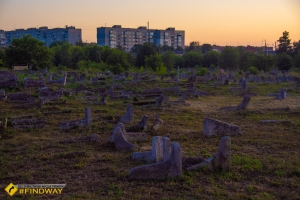
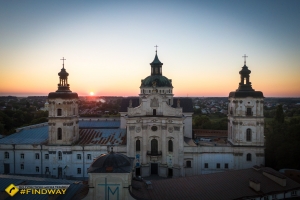

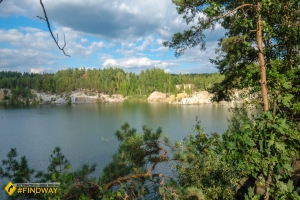


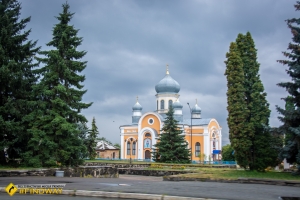
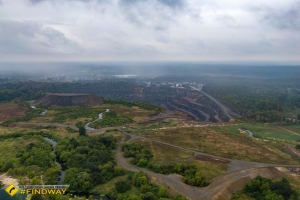





Zhytomyrshchyna is Polissia built on a granite backbone. Pine forests, unusually deep rivers, soft Polissian hills — and beneath them one of the oldest crystalline shields in Europe, which has been breaking through to the surface for centuries in the form of unique quarries, canyons and rocky formations. This is where the Drevlyans killed Prince Ihor, where Balzac married Evelina Hanska, where Serhiy Korolev was born — the chief designer of the Soviet space programme. A region that fuses ancient chronicle history with the rocket engineering of the 20th century.
People come here for four reasons: Zhytomyr itself with Korolev’s Museum of Cosmonautics, Berdychiv with its Carmelite Church where Balzac wed, the granite quarries of Korostyshiv with turquoise lakes and canyons, and Drevlyanska with Stone Village and Radomyshl Castle. This is a rear-area region with a powerful heritage where tourist crowds are almost unheard of.
Region at a Glance
| Administrative centre | Zhytomyr |
| Area | 29,832 km2 |
| Population | ~1.17 million |
| Historical land | Drevlyanska (most of region), Polissia (north), Podilian foothills (south) |
| Main rivers | Teteriv, Sluch, Uzh, Ubort, Huiva |
| Best time to visit | May–October for nature and canyons; year-round for Zhytomyr and Berdychiv |
In this article
- What kind of region this is and why people come
- Geography, landscapes, climate
- History in brief
- Legends and mystique
- Top sights of the region
- Day trips and weekend routes
- Things you must do
- FAQ
What kind of region this is and why people come
Zhytomyrshchyna is one of Ukraine’s most underrated tourist regions. There are no Carpathians, no sea, no castles of the Golden Horseshoe — but there is a rare combination of Polissia and a granite shield, 19th-century Jewish heritage and 20th-century rocket science, Drevlyan antiquity and Polish noble culture.
People come here, first of all, for the granite quarries of Korostyshiv: submerged turquoise cliffs that look like Italian Sardinia, two hours from Kyiv. Second, for Berdychiv with its Carmelite Church, where in 1850 Honoré de Balzac married Evelina Hanska (dying five months after the wedding). Third, for Korolev’s Museum in Zhytomyr, the essential place for understanding the Soviet space programme (Korolev was born in Zhytomyr in 1907). Fourth, for Stone Village — a geological wonder of the Olevsk district.
Geography, landscapes, climate
Zhytomyrshchyna is a geological wonder. It is home to the Ukrainian Crystalline Shield, one of the oldest rock formations on the planet (approximately 3 billion years old). This explains the granite quarries of Korostyshiv, the cliffs along the Teteriv, and the stone boulders of the Drevlyansky Reserve. Stone Village in the Olevsk district is a cluster of giant granite boulders that looks like the ruins of a cyclopean city. Locals joke that it’s “Scandinavia that never made it home”.
In the north lies classic Polissia: pine forests, peat bogs, slow rivers. Part of the Drevlyansky Nature Reserve falls here — the largest reserve in the forest-steppe Polissia. In the south are the Podilian foothills, with fertile fields and Polish noble estates. Running through the entire region is the Teteriv — one of the most beautiful rivers in Right-Bank Ukraine, with granite cliffs near Denyshi and Tryhirsky Monastery.
When to go. The best season is from late April to mid-October. Korostyshiv quarries with their turquoise water are best in July–August (swimming) and September (golden autumn among rocky shores). Drevlyanska and Polissia — late summer and early autumn. Zhytomyr and Berdychiv — year-round. The 2022 war has not directly affected the region: Zhytomyrshchyna is a rear area, with only occasional missile strikes on infrastructure.
History in brief
The lands of modern Zhytomyrshchyna are the historical homeland of the Drevlyans, one of the oldest Slavic tribes. Their capital Iskorosten (modern Korosten) is one of Ukraine’s most chronicled places. In 945 AD, Kyivan Prince Ihor the Elder came to Drevlyan lands to collect tribute. Feeling shortchanged, he turned back and demanded more. The Drevlyans tied him to two bent trees and released them — tearing the prince in two. A year later Princess Olha, Ihor’s wife, arrived with an army to take revenge. She burned Iskorosten with what chronicles call “birds of fire”, after which the Drevlyans were absorbed into Kyivan Rus.
In the Middle Ages the region was part of the Kyivan principality, then Lithuania, then Poland. In the 16th–18th centuries Zhytomyrshchyna became a Polish noble region: Catholic churches, estates and monasteries were built here. In 1764 the Carmelite Monastery opened on the slopes of the Teteriv in Berdychiv, becoming one of the main pilgrimage centres of Right-Bank Ukraine.
In the 18th–19th centuries Berdychiv became the main Jewish city of Right-Bank Ukraine — Jews made up as much as 80% of the population. Hasidism flourished here (the Berdychiv Zaddikim), as did Jewish culture and trade. Sholem Aleichem was born here in 1859. In the 19th century Lesya Ukrainka was born in Zvyahel (Novograd-Volynsky) — the very birthplace that inspired her literary world.
1907 — Serhiy Korolev was born in Zhytomyr, the future chief designer of the Soviet space programme. Without him there would have been no Sputnik, no Gagarin. In 1986 the northern part of the region (Olevsk, Luhyny, and parts of Malyn districts) was affected by Chornobyl fallout — some villages remain “closed” due to elevated radiation levels to this day.
2022. On 24 February, Russian forces entered the Malyn district from the direction of Belarus. Within two weeks they controlled several villages and briefly encircled Malyn. Following the counteroffensive of April 2022, northern Zhytomyrshchyna was de-occupied. The region overall is a rear area, with occasional missile strikes on infrastructure (including strikes on Zhytomyr airport and Berdychiv).
Serhiy Korolev was born on 12 January 1907 in Zhytomyr, at 5 Dmytryvska Street. His childhood home now stands as the foundation of the Museum of Cosmonautics. Without the Zhytomyr-born Korolev, the USSR could not have launched Sputnik in 1957, could not have sent Gagarin into space in 1961, and could not have built the R-7 rocket — the foundation of modern space technology. Ukraine as a nation gave the world the chief designer of the Space Age.
Legends and mystique of the region
1. Olha and the revenge at Iskorosten
In 945 AD, Kyivan Prince Ihor the Elder came to Drevlyan lands to collect tribute. Feeling it was not enough, he turned back and demanded more. The Drevlyans tied him to two bent trees and released them — tearing the prince apart. A year later, Princess Olha, Ihor’s wife, came with an army. She burned Iskorosten (modern Korosten) using “burning birds”: legend says that Olha demanded a “light tribute” from the residents — one dove per household. Smouldering tinder was tied to the doves and they were released — the birds flew home and set the city ablaze. The most bloodthirsty legend of Ukraine’s princely era.
2. Balzac and Berdychiv
In 1832 the French writer Honoré de Balzac received a letter from a mysterious “Foreigner” (Étrangère) in the Russian Empire. She was the Polish countess Evelina Hanska, hereditary owner of an estate in Verkhivnia (Zhytomyrshchyna). They corresponded for over 17 years, meeting in Switzerland, Austria and Ukraine. Balzac visited her in Verkhivnia. On 14 March 1850 they were married in the Carmelite Church of Berdychiv. Balzac was already terminally ill at the time — five months later he died in Paris. His last great love was a Ukrainian-Polish noblewoman from the Berdychiv area. The church still stands today.
3. Stone Village — a Scandinavian wonder in Polissia
In the village of Rudnya-Zamyslovychi (Olevsk district), deep in the forest, lies Stone Village — dozens of giant granite boulders two to ten metres tall, scattered haphazardly through the woodland. How they got there is debated by geologists (a glacier from Scandinavia, or volcanic activity 1.5 billion years ago). Local legend holds that it was a bewitched devil, on his way with stakes to destroy Christian churches, who was caught by sunrise and turned to stone together with all his rocks. The site does not yet have its own page on the website, but it is one of the most photogenic geological locations in Ukraine.
Top sights of the region
Zhytomyr — the regional centre with a space-age flavour
Zhytomyr is a compact, calm regional city with a powerful heritage. Its main draw is the Museum of Cosmonautics named after S. P. Korolev, with the designer’s family estate. Beyond that: the Regional Museum of Natural History, the Cathedral of St Sophia, and the Monument of Eternal Glory in Glory Park. The city boasts a fine forest-park, a Teteriv riverside promenade and handsome 19th-century architecture.
Berdychiv — Carmelite Church and Balzac
Berdychiv is one of the most atmospheric small towns in Right-Bank Ukraine. The Carmelite Church of St Mary (18th century) is where Balzac married Evelina Hanska in 1850. Nearby stands the monastery with its extensive library, the historic centre with its Jewish heritage (synagogue, historic Hasidic quarters), and the Church of St Barbara. Close by is the Isle of Love in Stary Solotvyn with its landscape recreation park.
Korostyshiv Canyon and quarries
The geological wonder of the region. Korostyshiv is the granite-quarrying centre of Zhytomyrshchyna. Korostyshiv Canyon — granite cliffs twenty metres above the Teteriv, a photogenic spot on a par with the Italian Dolomites. The flooded granite quarry of Korostyshiv is a turquoise lake set among granite banks, a beloved summer swimming spot for Kyivans. Nearby is the High Stone quarry in Horodske with its viewing platform.
Korosten — capital of the Drevlyans
Korosten is a historic city, the ancient capital of the Drevlyans, burned by Princess Olha in 946 AD. Today Korosten has Drevlyansky Park with sculptures themed around the legend of Olha and the birds, viewpoints over the Uzh river, and a museum of Princess Olha. Nearby is the Korosten Regional Museum. The city is less famous than it deserves to be.
Novograd-Volynsky (Zvyahel) — birthplace of Lesya Ukrainka
Novograd-Volynsky (its historical name Zvyahel was restored in 2022) is a town on the Sluch river where Lesya Ukrainka (Larysa Kosach) was born in 1871. The Lesya Ukrainka Literary-Memorial Museum occupies the Kosach family estate. The town lives by her name: a monument on the central square, a school, a library, even a local bread brand. An atmospheric destination for literature lovers.
Malyn — stone bridge and Polissia
Malyn is a town on the Irsha river, known for its unique stone bridge from the 17th century (one of the oldest bridges in Ukraine) and the Stone Cross — an ancient sacred object, possibly pre-Christian. Nearby is the Polissian Reserve with rare animals and birds. In March 2022, Malyn briefly came under threat of occupation but was liberated.
Olevsk and Stone Village
Olevsk is a small town in the north of the region with a historic centre and the Church of St Nicholas. The main draw of the area is Stone Village in Rudnya-Zamyslovychi (30 km from Olevsk): dozens of giant granite boulders in the forest — a unique geological site. Not yet described on the website as a separate page.
Radomyshl — the Sheremet manor-castle
Radomyshl is a small town on the Teteriv, known for the manor-castle of Olha Bohomolets: a reconstructed 17th-century paper mill transformed into a unique museum of Ukrainian icons by Bohomolets. One of the most atmospheric private museums in Ukraine. Not yet described on the website as a separate page.
Ovruch and the Vasyliv Church
Ovruch is one of Ukraine’s oldest cities (first mentioned in chronicles in 977 AD). Here stands the Vasyliv Church — a rare surviving 12th-century church founded by Prince Volodymyr the Great. It was restored by Oleksiy Shchusev (the same architect who built Lenin’s Mausoleum) in 1908–1911. Not yet described on the website as a separate page.
Day trips and weekend routes
Route 1. Zhytomyr + Korolev Museum in one day
About 140 km from Kyiv. Morning — stroll through the centre of Zhytomyr along the Teteriv embankment. Korolev Museum of Cosmonautics for the whole morning (2–3 hours). Lunch. Afternoon — the Regional Museum and Cathedral of St Sophia. Return in the evening.
Route 2. Granite Zhytomyrshchyna — Korostyshiv quarries
The most photogenic route in the region. Korostyshiv Canyon above the Teteriv in the morning. The flooded granite quarry with its turquoise water — swimming in summer. Lunch in Korostyshiv. Afternoon — the High Stone quarry in Horodske.
Route 3. Berdychiv and Balzac for a day
The classic literary route. The Carmelite Church with the spot where Balzac and Hanska were wed. A walk through the historic centre of Berdychiv with its Jewish heritage. Lunch. Afternoon — the Isle of Love in Stary Solotvyn for a stroll.
Route 4. Drevlyanska weekend — Korosten, Malyn, Stone Village
A two-day trip to the north of the region. Day 1: Korosten with Drevlyansky Park and the memory of Olha. Malyn with its stone bridge. Overnight. Day 2: Olevsk and Stone Village in Rudnya-Zamyslovychi.
Route 5. Literary Zhytomyrshchyna
A route for literature lovers. Novograd-Volynsky (Zvyahel) with the Lesya Ukrainka Museum → Berdychiv with the Carmelite Church of Balzac and Hanska. A two-day route.
Things you must do in Zhytomyrshchyna
- Visit the Korolev Museum of Cosmonautics in Zhytomyr and see the childhood desk at which the future chief designer of the USSR drew his first rocket models.
- Swim in Korostyshiv’s granite quarry — turquoise water within granite banks, the feel of an Italian getaway just 1.5 hours from Kyiv.
- Stand inside Berdychiv’s Carmelite Church at the very spot where Balzac married Evelina Hanska in 1850.
- Find every boulder of Stone Village in the forest near Rudnya-Zamyslovychi — a geological wonder of Ukraine.
- Walk through Korostyshiv Canyon above the Teteriv — the finest view in Polissia.
- Visit the Lesya Ukrainka Museum in Zvyahel in the Kosach family estate. Here is everything from which her literary legacy grew.
- Buy Zhytomyr raisins in Berdychiv — sold at the local market, a traditional Jewish dried fruit.
- Try Polissian mushroom borscht at a local restaurant in Malyn or Olevsk.
- Stand on the viewing platform over the Uzh in Korosten — where Princess Olha stood and watched Iskorosten burn.
- Breathe the air in the pine forests of the Polissian Reserve — the most fragrant air in Ukraine.
The Ukrainian Crystalline Shield, which runs through Zhytomyrshchyna, is one of the oldest geological formations on Earth (approximately 3 billion years old). This means that the rock you stand on in Korostyshiv Canyon is older than 70% of Earth’s surface. This stone is older than the oxygen in our atmosphere.
Frequently asked questions
What can you see in Zhytomyrshchyna in one day?
The quickest option is Zhytomyr with the Korolev Museum. Another option is the Korostyshiv quarries with their turquoise water (especially in summer). Or — Berdychiv with the Carmelite Church of Balzac.
Why is Serhiy Korolev considered Ukrainian?
Serhiy Korolev was born on 12 January 1907 in Zhytomyr, in the family of a Ukrainian gymnasium teacher. He lived in Zhytomyr until 1914, then the family moved to Kyiv where he attended school and the Kyiv Polytechnic Institute. Korolev later became the chief designer of the Soviet space programme. Ukraine as a nation gave the world the chief designer of the Space Age — a fact rarely emphasised in the Soviet era.
What is Stone Village?
A geological site in the village of Rudnya-Zamyslovychi (Olevsk district, Zhytomyr region). Dozens of giant granite boulders two to ten metres tall, scattered haphazardly through pine forests. It looks like the ruins of a cyclopean city. The geological origin is attributed to either glaciation or tectonic activity 1.5 billion years ago. One of the most photogenic geological locations in Ukraine.
Is it safe to travel to Zhytomyrshchyna now?
Yes. Zhytomyrshchyna is a rear-area region, far from the front line. Occasional missile strikes on infrastructure occur (especially targeting Zhytomyr and Berdychiv), but tourist sites have not received direct hits. In 2022 the north of the region (Malyn district) experienced a brief threat of occupation and was liberated in March–April 2022.
Why is Berdychiv associated with Balzac?
On 14 March 1850, in the Carmelite Church of St Mary in Berdychiv, French writer Honoré de Balzac married Polish countess Evelina Hanska, with whom he had corresponded for 17 years. Balzac was already terminally ill and died in Paris five months after the wedding. The church and the site of the ceremony are preserved — this is one of Europe’s key literary landmarks.
Where to go with children in Zhytomyrshchyna?
Korolev Museum of Cosmonautics (rockets, spacesuits, models — perfect for children). Korostyshiv granite quarry for swimming in summer. Stone Village in the forest — adventure among giant boulders. Radomyshl Castle with the Bohomolets icon museum for older children.
What are the most famous dishes of Zhytomyrshchyna?
Polissian mushroom borscht, Drevlyan millet kulish, Zhytomyr “Kashovka” sausage, Berdychiv tsymes and pliatsky (Jewish heritage), Malyn potato dumplings with cracklings, Olevsk forest-flower honey. In the north — classic Polissian cooking with mushrooms and berries.
What to bring back from Zhytomyrshchyna?
Granite souvenirs from Korostyshiv (miniatures, jewellery boxes), honey from Polissian apiaries, cranberry jam from northern Zhytomyrshchyna, Berdychiv tsymes sweets, postcards from the Korolev Museum, ceramic miniatures from Radomyshl Castle.
Zhytomyrshchyna is a region that asks little of your time but gives back several times more. In a single day you can see space (Korolev Museum), a turquoise granite quarry, the church where Balzac was married, and a stone village of giant boulders. All within 1.5 hours of Kyiv.
Polissian calm on a granite backbone — that’s the short formula. Come here when you’ve already seen everything else. Or when everything else has grown tiresome.
JoomShopping Download & Support