


- You are here:
-
Sights by Regions

-
Odesa region
- Church, Primorske


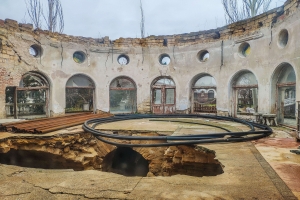
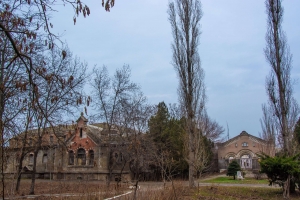




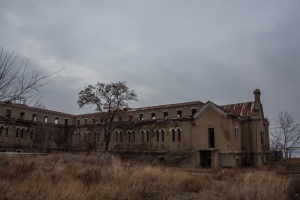


For almost two centuries — ever since the first wooden mud-bath house was built here in 1833 — people have come to the shores of the Kuyalnytskyi estuary to heal. Today trees grow through the roof of one of the old buildings, and graffiti blooms across the stucco.
Old Kuyalnik is a story of how the empire's trendiest resort turned into a melancholy ruin — without losing its grandeur.
Location card
| Location | shore of the Kuyalnytskyi estuary, northern outskirts of Odesa |
| Distance | ≈ 10 km from central Odesa |
| Time needed | 1–2 hours |
| What to bring | sturdy shoes, a flashlight, water, a camera, caution |
What it is and why visit
Kuyalnik is a legendary mud-bath resort on the shore of the estuary of the same name, whose black silty mud has been considered therapeutic for centuries. At its heart stood the Pirogov clinical sanatorium, with its grand mud-bath buildings.
Today there's a striking contrast: the resort is partly still alive, but the old building has become a classic case of "abandoned grandeur." People come for the architecture that remembers imperial times, for the estuary's surreal pink water in the heat — and for that feeling of time standing still.
History
The resort's official history begins in 1833, when the first wooden mud-bath house was built on the estuary's shore. Kuyalnik's fame grew rapidly — aristocrats, intellectuals, and renowned physicians flocked here.
The real boom came in the second half of the 19th century — especially after the Kuyalnik–Odesa rail line opened in 1868. Local lore holds that some of the era's most prominent figures visited the resort; the sanatorium's name is linked to surgeon Nikolai Pirogov and writer Lesya Ukrainka.
Trains once carried patients here along this rail line from across the empire. Now a draft drifts through the same corridors.
Decline
Decorative elements are crumbling, trees push through holes in the roof, floors have partly collapsed, and the walls are peeling and covered in graffiti. Natural decay has been compounded by property disputes: in 2024, reports emerged of a state registrar being suspected of illegally re-registering ownership of the sanatorium. The fate of the old building remains an open question.
Legends and lore
A grand resort with nearly two centuries of history could hardly avoid collecting a few legends.
1. Mud that restores youth
The most persistent tale: Kuyalnik mud supposedly doesn't just heal — it "rejuvenates." The mud's real therapeutic properties are confirmed, but eternal youth, sadly, you'll have to look for elsewhere.
2. The pink estuary
In intense heat, the estuary's water can turn pink in places. There's nothing mystical about it — it's algae and microorganisms that thrive in salty water. But it looks as if someone poured wine into the lagoon.
What to see on site
The old mud-bath building. The main highlight: a facade and interiors that still carry traces of imperial luxury despite the decay.
The Kuyalnytskyi estuary. A salty mirror of water with black mud beaches and pink hues in the heat.
The resort's overall panorama. The contrast between active and abandoned buildings is clearly visible from the surrounding hills.
Getting there
On the situation. The Odesa region is further from the front line but still occasionally hit by missile and drone strikes. When planning your trip, keep an eye on air-raid alerts and official restrictions.
By car. From central Odesa to Kuyalnik is about 10 km north along the estuary — a short, simple drive.
Public transport. City transport from Odesa runs to Kuyalnik; from there it's a walk along the resort area.
Important. The old building is structurally unsound. Exploring the interiors carries a risk of collapse — much of it is safer viewed from outside.
Traveler's checklist
- Sturdy shoes and a flashlight — debris, dark rooms, collapsed floors.
- Water — not always easy to find on the edge of the resort.
- A camera — the texture of these walls is incredible.
- Attention to alerts — the region sees periodic strikes.
What NOT to do: walk under the sagging ceilings of the old building, climb onto the roof, or ignore an air-raid siren for "one more shot."
Frequently asked questions
Is it safe to go there?
The Odesa region is relatively far from the front line but does see periodic strikes, so keep an eye on air-raid alerts. The old building itself is structurally unsound, so be very careful inside.
Is the resort still operating?
Part of Kuyalnik's infrastructure is functioning, but the old mud-bath building specifically is abandoned and structurally unsound.
Why does the estuary's water sometimes turn pink?
It's caused by algae and microorganisms that become active in salty water during hot weather — a natural phenomenon, not "chemicals."
Since when has the resort existed?
Its official history begins in 1833, when the first wooden mud-bath house was built on the estuary's shore.
Old Kuyalnik is a lesson in the fragility of grandeur. A building where, for nearly two centuries, the era's finest people came to heal now stands on nothing but its own history and the stubbornness of its walls.
Maybe one day it'll be saved and restored. For now, it's worth at least seeing this palace from afar — and thinking about how many lives it once got back on their feet.
JoomShopping Download & Support