


- You are here:
-
Sights by Regions

-
Lviv region
-
Lviv
- Abandoned Maksymilianska tower №3 (fortification complex Citadel), Lviv
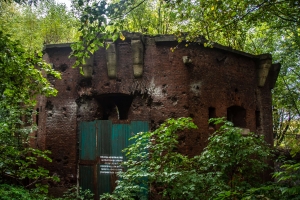


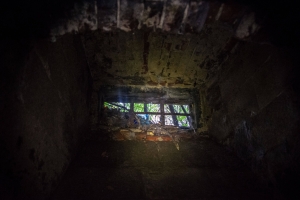
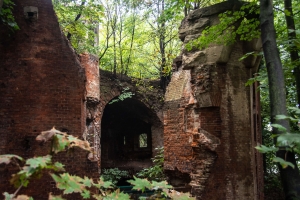

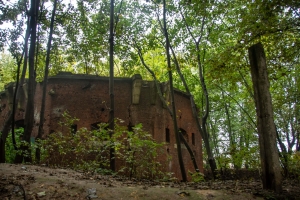


On the hills in the heart of Lviv stand four stone towers of an Austrian fortress. Two have been converted into a hotel and a library, the fourth was restored. But the third — the smallest and most ruined — still stands as a silent witness to the darkest chapter of this place.
The abandoned Maximilian Tower No.3 is part of the Lviv Citadel fortification complex. A place that is picturesque and sobering at the same time: beautiful historic architecture, behind which lies the memory of a concentration camp where tens of thousands of people perished.
Location Card
| Location | Hrabovskoho Street area, central Lviv |
| What it is | half-ruined tower of the Citadel fortress (1850s) |
| Status | nationally listed architectural monument |
| Time needed | 30–60 minutes (full complex — longer) |
| What to bring | camera, comfortable shoes, respect for the site |
What It Is and Why Visit
The Lviv Citadel is a mid-19th-century Austrian fortress on the hills at the very heart of the city. Its core consists of four round artillery towers — known as Maximilian towers — and a barracks block. Since 2012 the entire complex has held the status of a nationally listed architectural monument.
The towers have had different fates. No.1 was adapted as a library stack, No.2 became a hotel, No.4 was restored. Tower No.3 — the smallest — still stands half-ruined. It preserves the spirit of the old fortress most strongly: authentic stone, the marks of time, the feel of abandoned history. People come here for the architecture and to pay their respects to the memory of the place.
This is not simply a «picturesque ruin». During the Second World War a Nazi prisoner-of-war camp operated on the Citadel grounds — and that is worth remembering as you step onto this site.
History: A Fortress That Became a Camp
The Citadel was built by Austrian authorities in the 1850s (approximately 1852–1856) as a defensive fortress commanding the city. The round towers were designed according to an artillery system associated with Austrian Archduke Maximilian — hence the name «Maximilian towers».
Tower No.3 is a two-storey casemate artillery structure with a basement and a flat terrace crowned by battlements and machicolations (defensive projections). The smallest of the four towers, it was not spared by time: it has survived to the present in a half-ruined state, parts of which were subsequently reinforced at state expense.
Stalag 328 — The Darkest Chapter
In July 1941 the Nazis established a prisoner-of-war camp for Soviet prisoners on the Citadel grounds — Stalag 328. Estimates suggest that tens of thousands of people perished here — figures reach approximately 140,000. Tower No.2 was used for interrogations and holding those condemned to death, earning the grim name «Tower of Death». The Citadel is therefore not only an architectural monument but also a place of remembrance for the victims of war.
Local Lore and Memory
Places with such a heavy history always accumulate stories — here they are more about memory than entertainment.
1. The «Tower of Death»
The name attached to Tower No.2 has long taken on a life of its own in local lore. Lviv residents speak of the «heavy energy» of this corner of the Citadel. Behind these stories lies a real tragedy — which is precisely why they deserve to be taken seriously rather than treated as an attraction.
2. The Underground Passages of the Citadel
Stories of a network of underground tunnels and casemates beneath the fortress have circulated for a long time. Some basements and casemates do genuinely exist — a feature of fortification architecture. The rest is urban folklore that is difficult to verify.
What to See and Do
Tower No.3. Half-ruined and the most authentic of the four: stone, battlements, machicolations, the marks of time. View it from the outside.
The full Citadel complex. All four towers and the barracks block together give a complete picture of an Austrian fortress above a city.
Lviv panorama. The Citadel stands on hills, offering beautiful views of the city.
A place of remembrance. Read about Stalag 328 before you come — understanding the history makes the visit meaningful rather than merely «photogenic».
Getting There
On foot. The Citadel is in central Lviv, near Hrabovskoho Street, close to the historic old town. From the centre it is a short uphill walk.
By public transport. Take any city transport to Lviv’s centre, then walk. The complex is open-access; part of the grounds is near the hotel in Tower No.2.
Important. Tower No.3 is a half-ruined monument; do not enter. Conduct yourself with respect at this site of memory.
Traveller’s Checklist
- Camera: the architecture and city views are worth it.
- Comfortable shoes: hills, cobblestones, uneven ground.
- Historical background: read about Stalag 328 before you come.
What NOT to do: climb into the half-ruined tower, hold «fun» photo sessions on the site of a former concentration camp, or treat this location as entertainment.
Frequently Asked Questions
What are the Maximilian towers?
They are the round artillery towers of the Lviv Citadel, built by the Austrians in the 1850s using a fortification system associated with Archduke Maximilian. There are four in total.
Why is Tower No.3 abandoned?
It is the smallest of the four towers and has survived to the present in a half-ruined state. Unlike the others (hotel, library, restored No.4), it was never repurposed.
What was Stalag 328?
A Nazi prisoner-of-war camp for Soviet prisoners, established on the Citadel grounds in July 1941. Estimates suggest tens of thousands of people perished here. That is why the Citadel is also a site of remembrance.
Is it safe to visit Lviv during wartime?
Lviv is relatively in the rear, but missile strikes are possible anywhere in Ukraine. Monitor air-raid alerts and follow the current situation.
Maximilian Tower No.3 is beauty and pain in a single structure. From the outside — a romantic ruin of an Austrian fortress with a panorama of Lviv. Inside the history — one of the city’s most tragic chapters.
Come, look, photograph — but remember where you stand. The best thing to do here is not to «tick it off a list» but to pause for a moment and think of those for whom these walls were the last thing they saw.
JoomShopping Download & Support