


- You are here:
-
Sights by Regions

-
Kharkiv region
-
Kharkiv
- Glory Memorial Complex, Kharkiv
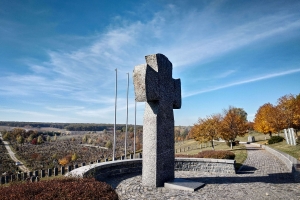


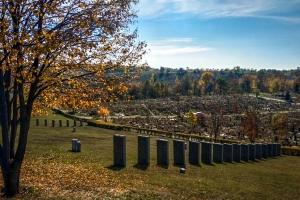
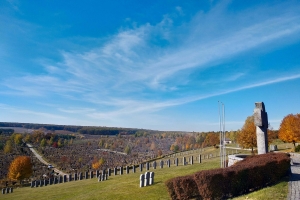


This page begins with an essential warning: Cemetery No. 17 in Kharkiv is currently closed to visitors due to mine hazard. This is therefore not an invitation to travel — it is an account of a memorial site that can only be revisited once it is safe to do so.
The German Cemetery (Cemetery No. 17) contains military burials from the Second World War on the grounds of Kharkiv’s largest municipal cemetery. A place of mourning that speaks to the cost of war — past and present.
Location Card
| Location | Kharkiv, Ring Road area |
| What it is | German WWII military burials within Cemetery No. 17 |
| Status | closed due to mine hazard |
| Nature of site | memorial site, not a tourist attraction |
| Note | this article is provided as historical reference only |
What It Is
Cemetery No. 17 is Kharkiv’s largest municipal cemetery, located near the Ring Road. Within its grounds lies a section of German military burials from the Second World War — the so-called German cemetery. Maintained war cemeteries of this kind exist in many countries and are tended in accordance with international agreements on the care of war graves.
This is not an «attraction» or an urban exploration site — it is a place of remembrance. The purpose of such places is not dramatic photography but a reminder of the millions of lives ground up by war. It deserves to be treated accordingly: quietly and with respect.
War cemeteries exist so that even fallen enemies receive a dignified burial, and so that the living are reminded what war brings about. They are not about glorification — they are about memory and warning.
History & Context
Kharkiv was the scene of exceptionally bloody fighting in the Second World War: the city changed hands multiple times and losses on all sides were enormous. It is from those events that the military burials in the city — including the German ones — originate.
In time, properly maintained war cemeteries became part of a broader European practice of honouring the fallen regardless of which side they fought on. The care of such graves is typically governed by inter-state agreements and is intended as a process of reconciliation with the past, not its glorification.
A New War, a New Danger
Russia’s full-scale invasion of 2022 turned Kharkiv into a front-line city once again. Cemetery No. 17 found itself in a shelling zone and was reportedly subjected to remote mining. Because of the high mine hazard it remains closed to visitors — unlike several of the city’s other cemeteries. History’s bitter irony: a site of burials from one war has been made dangerous again by another.
Why This Place Matters
Unlike other locations in this section, this is not the place for talk of «legends» or entertainment. Instead, here is the point of it.
Memory and warning. War cemeteries are a physical reminder of how many lives war takes, and a call not to repeat it.
European context. Caring for the graves of all the fallen is part of the culture of reconciliation that took root in post-war Europe.
A present-day reckoning. That a burial site has once again been placed in the line of shelling and mines is the most powerful possible argument against any war.
Getting There & Safety
For now — you cannot. Cemetery No. 17 is closed due to mine hazard, and visiting is both prohibited and life-threatening.
This description is preserved as historical reference material — to record the context of the memorial site. The question of visiting can only be reopened after full demining and the official reopening of the grounds.
Frequently Asked Questions
Can Cemetery No. 17 be visited now?
No. It is closed due to high mine hazard following shelling and possible remote mining. Visiting is prohibited and life-threatening.
What is the German cemetery in Kharkiv?
It is a section of German military burials from the Second World War within Cemetery No. 17. War cemeteries of this kind are maintained under inter-state agreements.
Which Kharkiv cemeteries are open?
According to city authorities, several other municipal cemeteries remain open, while No. 17 is specifically closed due to mine hazard. Check official sources for the current list.
Why publish an article about a site you cannot visit?
As historical reference material: to preserve the context of this memorial site for the future, when the grounds are demined and reopened.
The German cemetery at Cemetery No. 17 is a place where two wars have intersected: the one that left burials here, and the one that has made them inaccessible again because of mines. It is hard to imagine a sadder symbol of the pointlessness of war.
While the grounds remain dangerous, the best way to respect this place is to stay away. And when it is demined and reopened, may it serve the purpose it should: a quiet reminder of the price paid for war by the living and the dead alike.
JoomShopping Download & Support