


- You are here:
-
Sights by Regions

-
Kharkiv region
-
Kharkiv
- Abandoned antituberculosis Hospital (Kharkiv, m.Beketova)


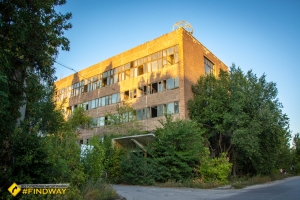
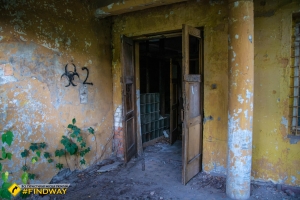

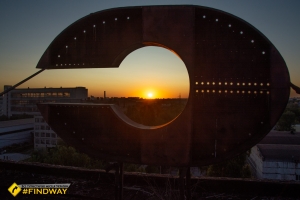
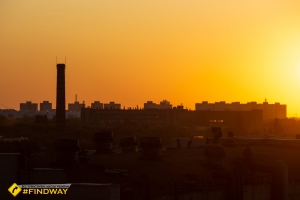
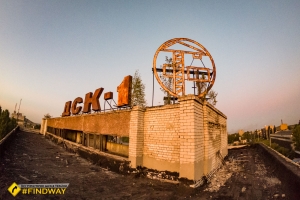

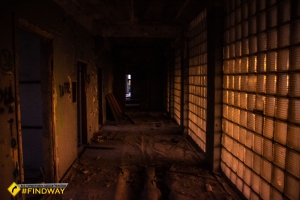
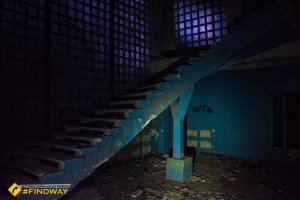
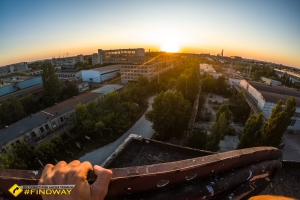


This enterprise literally assembled half of Kharkiv: here they cast the concrete panels that were then snapped together, kit-style, into entire residential districts. The irony is inescapable — the factory that put a roof over hundreds of thousands of people is now without a roof of its own.
The abandoned DSK-1 building (DSK — Domostroitelny Kombinat, «house-building combine») in Kharkiv is an industrial urbex location with powerful symbolic resonance. The place where panel housing estates were born, now in silence.
Location Card
| Location | Kharkiv |
| What it is | abandoned prefab housing factory (DSK-1) |
| Condition | derelict, workshops empty |
| Time needed | 1–2 hours |
| What to bring | torch, sturdy footwear, water, power bank |
What It Is and Why Visit
A DSK was a house-building combine — the engine of Soviet prefab construction. These enterprises mass-produced reinforced concrete panels, from which nine- and sixteen-storey apartment blocks were assembled at breakneck speed across entire new districts. Without the DSK, the vast «dormitory suburbs» where half the country still lives would never have existed.
When the era of mass panel construction ended, some of these combines shut down. The DSK-1 building in Kharkiv is one of them. Today it’s a place of empty workshops with raw industrial character: vast cathedral-like bays, concrete, overhead crane rails, elevated walkways. People come for the austere beauty of dead industry — and for that unavoidable irony: a factory of homes, now itself a ruin.
Every other prefab apartment block in the city is a «child» of a factory like this. The abandoned DSK isn’t just a derelict plant — it’s a monument to an entire era of mass housing construction.
History: The Combine That Built the City
This particular building is one of those sites with little documented history in any publicly accessible source: exact dates of opening and closure are not recorded. But the broad story is clear.
During the era of industrial mass housing, DSK combines ran at full capacity: the country needed homes fast and in enormous quantities, and the panel factories delivered them on a production-line basis. As construction technology shifted — towards cast-in-place concrete-frame buildings — and economic conditions changed, demand for the old panel series collapsed. Production lines stopped, workshops emptied, and the factory became an abandoned location.
Atmosphere and Imagery
Large abandoned factories create atmosphere rather than folklore.
1. The City, Assembled Here
Explorers like to point out: looking at the empty DSK, you’re seeing the «skeleton» of all the panel neighbourhoods around it. Every apartment block in the district once «came out» of a workshop just like this one.
2. Echo of the Production Line
The empty bays produce a booming echo. It takes almost no imagination to fill it with the whir of cranes and the thud of moulds — as if the factory is about to start up again.
What to See and Do
Main workshop bays. Towering spans with overhead cranes — the defining industrial shot.
Elevated walkways and crane rails. The characteristic geometry of prefab production.
Raw concrete textures. Old walls, rebar, traces of the casting moulds — rich urbex material.
Light play. Shafts of light through openings in the roof and walls — a photographer’s classic.
Getting There
By public transport or car. The building is within the city of Kharkiv, in an industrial zone. For the exact address, check satellite maps and recent explorer reports.
Access. Abandoned factories often have a legal owner or security. Respect private property and the law.
Critical note. Kharkiv is a frontline city that is regularly shelled. Check the security situation before going and always respond to air-raid alerts.
Traveller’s Checklist
- Torch: workshops and basements are dark.
- Sturdy closed-toe footwear: rebar, broken glass, debris.
- Go with someone: a large abandoned factory is not a place to explore alone.
- Power bank: for navigation and communication.
What NOT to do: climb elevated walkways or unsafe floors, walk under suspended structures, go alone, or underestimate the fact that this is a frontline city.
Frequently Asked Questions
What is a DSK?
A DSK (Domostroitelny Kombinat) was a Soviet house-building combine — a factory that produced reinforced concrete panels for mass residential construction. Entire housing estates were built from their output.
Is it safe to go inside?
It’s an abandoned factory: hazards include unsafe floors, elevated walkways, rebar and broken glass. Explore carefully, never alone, and don’t climb to height. And Kharkiv is a frontline city.
Is it legal to visit?
The building may have an owner or security. Respect boundaries and the law; explore only what is openly accessible and leave no trace.
Is it safe to travel to Kharkiv during the war?
Kharkiv is regularly shelled. Any visit is only possible with careful attention to the security situation and a commitment to responding to air-raid alerts.
The abandoned DSK-1 building is a monument to the era when housing was produced on a conveyor belt and entire neighbourhoods rose in a matter of years. A factory of homes that became homeless itself.
If you visit when the region is safe — go with company, a torch, and caution. And remember: the prefab blocks all around, still full of people living their lives, once began in workshops exactly like these.
JoomShopping Download & Support