


- You are here:
-
Sights by Regions

-
Chornobyl Exclusion Zone
-
Pripyat
- Boat Motor Station, Pripyat
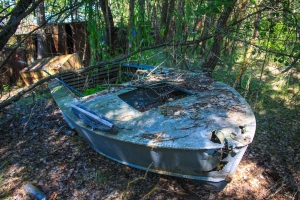
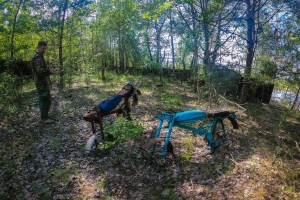


Sometime in April 1986, someone in Pripyat was probably planning to take their boat out over the weekend. The boat stayed at the station. The owner didn’t. The city was evacuated, and no one ever came back to the river.
The motor boat station is one of the quietest spots in Pripyat. There are no high-rises or Ferris wheels here — just water, a concrete pier, and the feeling of ordinary life cut off mid-sentence.
Quick facts
| Location | bank of the Pripyat River, city of Pripyat, Exclusion Zone |
| What it is | an abandoned station for storing residents' motor boats |
| Access | currently closed: the Exclusion Zone is off-limits to tourists |
| Bring | for now, only your imagination of a city that once buzzed with life |
What it is and why people visit
Pripyat stood on the river of the same name, and the water was part of everyday life for residents. Besides a large river port and the "Pripyat" café on the embankment, the city had a motor boat station — a place where residents kept their private motor boats.
For a Soviet city, this was a sign of the good life: a young, by the standards of the era well-off, city of nuclear plant workers could afford fishing trips, boat rides, and private boats. Today the station is interesting precisely because of this contrast — it doesn’t tell the story of disaster, but of a peaceful, almost resort-like life that ended within hours.
History
Pripyat was founded in 1970 as a satellite town for the Chornobyl Nuclear Power Plant. It was a model Soviet city: the average resident's age was around 26, salaries were high, and the infrastructure was modern. The river naturally became a recreation zone — beaches, a port, boats.
The boat station served residents’ private small craft. People came here before weekends, launched their boats, fished, and went for rides. All of it stopped on April 27, 1986, when the city's evacuation began a day after the explosion at the Chornobyl plant.
"For three days"
People were told the evacuation was temporary, just a few days. So personal belongings, cars, and boats were left where they were. No one returned. Abandoned private vehicles, including ones on the water, became one of the most powerful symbols of how everyday life was halted by a single radio announcement.
The most chilling thing about Pripyat isn’t the ruins — it’s the traces of ordinary plans: a weekend boat trip, a fishing day, a ride down the river. All of it stayed in a schedule that was cancelled forever.
Lore and stories
The riverbank at Pripyat has produced plenty of stories — from entirely real to half-legendary.
1. Giant catfish under the pier
The Zone’s most famous "legend" is giant catfish in the cooling pond of the plant and in the river. The rational explanation is simple: the fish here haven’t seen anglers for decades and have grown to their natural large size. No "mutation" involved — just peace and quiet and an absence of people.
2. Boats that "drift away on their own"
Among stalkers there are stories of boats supposedly shifting position or disappearing from the pier. In reality this is the work of water, ice, scrap hunters, and time — but against the backdrop of a dead city, such stories sound especially eerie.
What to see on site
The pier and the station. Concrete structures along the bank, the remains of infrastructure for storing and launching boats — the main focal point of the location.
The Pripyat River. The water itself, reclaiming a place once shaped by human civilization, is a powerful visual and emotional accent.
Nearby embankment sites. Close by are the river port and the legendary "Pripyat" café with its stained-glass windows, together telling the story of the city’s waterfront leisure life.
Getting there
Important: there is currently no legal way to get there. After the full-scale invasion of 2022 and the occupation of the Chornobyl Zone, tourist routes were suspended. Part of the territory has been mined, and the Zone now has the status of a closed area of military significance.
Who can enter. Access is currently limited to people with accreditation from the Ministry of Defence or relevant state agencies, researchers, and Zone staff — not tourists.
When it will reopen. In 2025–2026, some routes are gradually being restored, but under tighter controls due to martial law. Always check the official access status before making any plans.
Traveler’s checklist
- Check: the official access status of the Exclusion Zone before making any plans.
- Understand: entering the Zone without authorization carries legal liability and a real danger from mines.
- Travel: only with a licensed operator and proper permits, once (and if) routes reopen.
- Be careful: the riverbank and water are higher-risk areas — don’t approach the water unnecessarily.
- Don’t: take anything away from the site — many objects are radioactive.
Frequently asked questions
What is the boat station in Pripyat?
It's the place where Pripyat residents kept their private motor boats. After the 1986 evacuation, the station, like all the city's private vehicles, was left abandoned.
Can you visit it now?
No. The Chornobyl Zone is closed to tourists due to the war and mining. Legal access is limited to accredited individuals, researchers, and Zone staff.
Is it true that the river has giant catfish?
Yes, the large fish here are real, but it's not a "mutation". Without anglers for decades, fish simply grow to their natural large size.
What else can you see nearby?
Nearby on the embankment are the river port and the famous "Pripyat" café with its stained-glass windows. Together they tell the story of the city's waterfront leisure life.
The boat station is Pripyat without dramatic ruins: just a riverbank, a pier, and water. But it’s here that you feel most strongly that the city expected to keep going — fishing, boating, relaxing by the water.
One day people with cameras will come here again. For now, the river flows past an empty pier the boats never returned to.
JoomShopping Download & Support