

- You are here:
-
Sights by Regions

-
Sumy region
-
Sumy
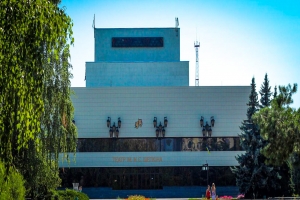
- Trinity Cathedral, Sumy
Sumy


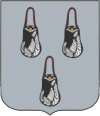
A city whose coat of arms shows three leather bags. A city founded by a Cossack ataman in 1655 and transformed into an almost-European centre over 250 years by a single family of sugar barons. A city whose streets Russian columns failed to seize in February 2022 — and which now lives 30 kilometres from the border that fires every day.
Sumy is not Lviv, not Kyiv, not Odesa. It is a quiet, leafy regional capital of Slobozhanshchyna, situated at the confluence of three rivers, home to one of Ukraine’s most beautiful central gazebos and two near-identical cathedrals commissioned by the Kharytonenko family. If you’re not from Sumy, you probably know the city through sugar, chocolate, or the war. This guide covers all three — and a little more.
⚠️ Current situation. Sumy is a frontline city. The Russian border runs ~30 km away; artillery, drone, and missile strikes from the Bryansk, Kursk and Belgorod directions are a regular occurrence. The city functions normally, but air-raid alerts are a daily reality. Before any visit, check the current security situation through official channels and the «Air Alarm» app.
📍 City at a Glance
| Founded | 1655 (Ataman Herasym Kondratiev established the sloboda) |
| Status | Regional capital of Sumy Oblast |
| Historical region | Slobozhanshchyna (Slobidska Ukraine) |
| Population | ~256,000 (pre-war estimate) |
| Area | ~95 km2 |
| Main rivers | Psel, Sumka, Strilka (city at the confluence of three rivers) |
| Symbol | Altanka gazebo in Kharytonenko Square (depicted on the coat of arms) |
| Best time to visit | May–September for parks and the riverfront; factor in safety conditions |
In this article
- What kind of city is this and why people visit
- Location and character
- History in brief
- Legends and local lore
- Top attractions in Sumy
- Itineraries in Sumy and the region
- Things you must do
- Frequently asked questions
What kind of city is this and why people visit
Sumy is the quintessence of Slobozhanshchyna: wide boulevards, green squares, an unhurried southern rhythm, ornate sugar-baron palaces standing beside 18th-century Cossack churches. The city began as a Cossack sloboda in 1655, became the regimental town of the Sumy Cossack Regiment (1658–1765), and evolved into the sugar capital of the Russian Empire in the 19th century, all thanks to the Kharytonenko family. Each of these layers left a physical imprint on the city centre.
People used to come here — mostly before 2022 — for four things. First: the Altanka in Kharytonenko Square — a white wrought-iron 19th-century gazebo, the city’s symbol, depicted on the coat of arms. Second: the Kharytonenko legacy — cathedrals, palaces, parks, and hospitals built at the family’s own expense. Third: Slobozhanshchyna architecture — Cossack churches in Lebedyn and Okhtyrka, noble estates in Trostianets. Fourth: Sumy Oblast as a gateway to the north — to Hetman-era Hlukhiv, to Putyvl with its «Yaroslavna’s wall», and to the Trostianets chocolate factory.
Since 2022 an additional context has been layered onto all of this. Sumy was «lucky» not to fall under occupation in the opening weeks of the full-scale invasion (while Trostianets and Okhtyrka were held by Russian forces for about a month), but its border location has made it one of the most frequent targets of missile and drone strikes.
Location and character
Sumy sits at the confluence of three rivers: the Psel (one of Ukraine’s cleanest rivers, flowing from the west), the Sumka (which may have given the city its name) and the Strilka. The terrain is forest-steppe on the Slobozhanshchyna upland, at around 130 m above sea level — gently rolling, with no hills worth noting. The Russian border lies 30 km to the north-east; the nearest towns in the oblast (Hlukhiv, Putyvl, Trostianets, Okhtyrka) are 40–110 km away.
The city centre is compact and very walkable. The main axis is Soborna Street (a former pedestrian zone, lined with cafes and sculptures) and Kharytonenko Square with the Altanka. To the west of the centre lie Pokrovska Square with its civic buildings, the Psel embankment, and several parks.
When to visit. The best season runs from May to mid-October: warm, green, the Psel embankment comes alive, flowers bloom in the squares. Winters are moderately cold with snow. Summers are warm without the scorching heat of southern Ukraine. The standard caveat for a frontline city applies: air-raid alerts are real, and any trip needs to account for the risk.
History in brief
Founded 1655: a Cossack sloboda at three rivers
In 1655, Cossack ataman Herasym Kondratiev led a group of Cossacks and peasants fleeing Right-Bank Ukraine to escape Polish oppression and the ongoing wars, and established a sloboda at the confluence of three rivers. The location was chosen strategically: water on three sides, forest all around, fertile land. Within a few years the sloboda became a full regimental town and the seat of the Sumy Cossack Regiment — one of five Slobidska Ukrainian Cossack regiments of the Hetmanate. From 1658 to 1765 Sumy was governed by colonels from the Kondratiev family, who effectively founded the local aristocracy.
Abolition of the regimental system (1765)
In 1765 Catherine II dissolved the Slobidska Ukrainian Cossack Host, converting the Cossack regiments into regular hussar units. Sumy lost its Cossack status and became a county town of the Slobidsko-Ukrainian Governorate, later Kharkiv Governorate. This was the beginning of a long, quiet provincial 19th century — until one particular family arrived on the scene.
The Kharytonenko era (1860–1917)
Ivan Herasymovych Kharytonenko — a former clerk in the sugar trade who became one of the wealthiest sugar magnates in the Russian Empire in the 1860s. In a single generation his family built dozens of sugar factories in and around Sumy, turning the region into the empire’s «sugar capital». But the Kharytonenkos did something rare for Russian oligarchs: they ploughed enormous sums back into the city itself — funding cathedrals, schools, hospitals, parks, libraries, and art galleries. Ivan’s son Pavlo Kharytonenko was an even greater patron: the Trinity Cathedral, a cadet corps building, a psychiatric hospital, gymnasiums, the Altanka, the first paved streets — all from the family budget. Without exaggeration: the modern centre of Sumy is the Kharytonenkos’ project.
Before the 1917 revolution the Kharytonenko family was one of the three wealthiest in the Russian Empire (alongside the Morozovs and the Tereshchenkos). Their annual income was estimated at several million gold roubles. Almost all of it went to philanthropy: in Moscow, Pavlo Kharytonenko assembled one of the largest private collections of icons and paintings in the country (now in the Tretyakov Gallery); in Sumy, he rebuilt the city centre.
Revolution, Soviet era, war
After 1917 the Kharytonenkos emigrated, their estates were nationalised, and the sugar factories passed to the state. In the Soviet period Sumy became an industrial regional capital (from 1939) with heavy manufacturing, universities, and cultural institutions. World War II left Sumy without the scale of destruction suffered by cities like Ternopil or Proskuriv.
2022: the northern axis
On 24 February 2022 Russian forces entered Sumy Oblast from the Bryansk and Kursk directions. Armoured columns pushed south towards Kyiv through Konotop, Shostka, and the northern part of the oblast. Sumy itself was not occupied, but for about a month the city was in a partial encirclement: Russian units held positions on the outskirts, fighting took place, and infrastructure came under attack. On 4 April 2022 the Ukrainian Armed Forces fully liberated the oblast. The city was awarded the title «Hero City of Ukraine» on 24 March 2022 — while still under partial encirclement. Since then Sumy has remained a frontline city, subject to weekly missile and drone strikes on infrastructure, civilian facilities and the energy grid.
Legends and local lore
1. The three bags on the coat of arms
Look at the Sumy coat of arms and you’ll see three leather bags (hunting pouches) on a blue shield. Why? The official explanation is etymological: «Sumy» derives from the river Sumka. The folk legend tells a different story. When Ataman Kondratiev was choosing the site for his sloboda in 1655, so the tale goes, his Cossacks found three abandoned bags of gold on the riverbank — left behind by fleeing Tatars. They took it as a sign: a city will rise here. The bags on the coat of arms commemorate that omen. Folklore, obviously, but it became the city’s official founding myth: benches, sculptures, and souvenirs bearing bags are everywhere in Sumy.
2. The abandoned Kharytonenko pyramid
In the old city park, among overgrown vegetation, stands an abandoned pyramidal structure — the Kharytonenko family mausoleum, built in the late 19th century in the shape of an Egyptian pyramid. A surprising choice for the Russian provinces (Ivan Kharytonenko was a devotee of ancient Egyptian culture). After the revolution the mausoleum was looted, the bodies removed, and the structure abandoned. Today the pyramid stands half-ruined in the park — one of Sumy’s most atmospheric and eerie spots, around which locals have invented a dozen ghost stories. It’s off the main tourist trail, but worth seeking out.
3. The Altanka that witnessed the 1905 Revolution
The white filigree Altanka in Kharytonenko Square was built in the early 1900s as the city’s gift to Pavlo Kharytonenko — in recognition of his contribution to Sumy’s development. The design is simple but elegant: eight slender columns, a lacy dome, benches all around. In 1905, during the First Revolution, revolutionary speeches were delivered from this very Altanka — an ironic choice, given whom it was dedicated to. Locals say: «The Altanka hears everything.» It was remodelled several times in the Soviet era and restored in independent Ukraine. Today it is the city’s obligatory photo spot and its official heraldic symbol.
Top attractions in Sumy
Altanka in Kharytonenko Square
The Altanka is Sumy’s most recognisable symbol. The white wrought-iron rotunda with eight columns stands in Kharytonenko Square right in the city centre. Built in the early 1900s at the initiative of the townspeople for Pavlo Kharytonenko. Depicted on the official city coat of arms alongside the three bags. The classic spot for photos, rendezvous, and wedding shoots. In warm weather the surrounding area is filled with cafes, benches, concerts, and street musicians.
Trinity Cathedral
Trinity Cathedral — the main Orthodox church of Sumy, built between 1901 and 1914 at Pavlo Kharytonenko’s expense. A monumental Neo-Byzantine structure: five domes, facade mosaics, a marble interior, a unique ensemble of early-20th-century icons and frescoes. At the time of its completion it was considered one of the finest contemporary churches in the empire. Inside: a soaring space beneath the central dome, remarkable acoustics, regular services. If you have time for only one stop in Sumy — make it this one.
Church of the Annunciation of Mary
Church of the Annunciation — a Roman Catholic church in the heart of Sumy, built in the early 1900s in Neo-Gothic style. Brick walls, two slender towers, stained glass. In the Soviet era the church was closed and converted into a warehouse; after independence it was returned to the Catholic community and restored. Today it operates as an active Roman Catholic church, with masses and organ concerts. One of the most «Western European» architectural landmarks of Slobozhanshchyna.
Old City of Sumy
Old City of Sumy — the historic centre with merchant architecture of the 19th and early 20th centuries. Here you’ll find Kharytonenko family buildings, trading arcades, banks, gymnasiums, and the first paved streets. Not Lviv and not Kamianets, but a very well-preserved ensemble of «Kharytonenko-era» Sumy: symmetrical classical streetscapes, acacia-lined avenues, quiet side streets. Pedestrianised Soborna Street is the backbone of the old centre, lined with cafes and sculptures.
Abandoned Kharytonenko Estate
The Abandoned Kharytonenko Estate — the ancestral manor of Sumy’s wealthiest 19th-century family, left to decay after 1917 and never restored. A two-storey mansion in the classical style, with a former park and outbuildings. Today one of the city’s most compelling urban-exploration sites: overgrown, surrounded by historic trees, with fragments of original interior detailing surviving. Adjacent to the pyramid mausoleum. Off the beaten path, but deeply atmospheric.
Spaso-Preobrazhenska Cathedral. The oldest church in Sumy, built in 1788 on the site of a 17th-century wooden Cossack church. Classic Slobozhanshchyna Baroque architecture: white walls, green domes, gold crosses. It was the city’s main church before the Trinity Cathedral was built.
Independence Square. The central civic square with the Regional Council, Regional State Administration, and the New Year’s tree. Before the Maidan Revolution it was called Lenin Square.
Sumy Regional History Museum. Collections spanning the Trypillia culture to the present day, with emphasis on the Cossack history of Slobozhanshchyna, ethnography, sugar production, and the Kharytonenko era. A separate exhibition covers the events of 2022.
Sumy Art Museum named after Nykanov Onatsky. One of the best regional art museums on the Left Bank. Collection includes Ukrainian painting of the 20th century, Western European graphic art, icons, and the sacred art of Slobozhanshchyna. Part of the collection was evacuated from the city in 2022.
Psel Embankment. The Psel at Sumy is wide, clean, with beaches and pedal-boat hire in warm weather. A landscaped embankment with cafes, benches, and a cycle path. On a sunny day, one of the most enjoyable places in the city.
Kozhedub Culture and Recreation Park. The large central park with tree-lined alleys, playgrounds, and a summer stage. Named after three-time Hero of the Soviet Union Ivan Kozhedub, a native of Sumy Oblast (village of Obrazhiivka). The park hosts city festivals, concerts, and open-air events.
Itineraries in Sumy and the region
Sumy in one day
Altanka in Kharytonenko Square (essential photo) → stroll along Soborna Street through the Old City → Trinity Cathedral (interior, mosaics) → Church of the Annunciation → lunch in the centre → Sumy Art Museum (Onatsky) → Abandoned Kharytonenko Estate with pyramid → Psel Embankment at sunset. A comfortable 6–7-hour programme.
Sumy + Trostianets over two days
Day 1 — Sumy city centre (itinerary above). Day 2 — Trostianets (50 km south-west): Golitsyn Palace, the Round Court of 1749, the «Neskuchne» arboretum with the Nymph Grotto, the chocolate factory. Trostianets is in the central, relatively safe part of the oblast.
Slobozhanshchyna churches weekend
A two-day route. Day 1: Okhtyrka (60 km) with the Pokrovsky Cathedral — a masterpiece of Slobozhanshchyna Baroque. Day 2: Lebedyn and Romny with Holy Spirit Cathedral and Vasylivska Church. The wooden Church of the Holy Trinity in Pustovoitivka.
Hetman heritage — when it becomes safe again
A specialist route to the north of the oblast, planned for when security returns to the border zone. Hlukhiv (130 km) as the Hetmanate capital 1708–1782, with the Kyiv Gate and the Waterworks Tower; Putyvl with «Yaroslavna’s wall» from the «Tale of Igor’s Campaign» and the Museum of Partisan Glory in Spadshchansky Forest. Currently a frontline zone.
Things you must do in Sumy
- Photograph the Altanka. The white wrought-iron rotunda in Kharytonenko Square. This isn’t a tourist cliché — it’s the city’s heraldic emblem. No trip to Sumy is complete without it.
- Step inside Trinity Cathedral. A monumental Neo-Byzantine church from 1914, built by Pavlo Kharytonenko at personal expense. One of the most impressive interiors in Slobozhanshchyna.
- Find the abandoned Kharytonenko pyramid. Not on the tourist maps, but it exists. Next to the derelict estate, in the overgrown section of the old park.
- Walk Soborna Street and the Old City. The liveliest pedestrian street, with cafes, sculptures, and the «Kharytonenko ensemble».
- Visit the Church of the Annunciation. If you catch an organ concert or mass — this is one of the few venues in Slobozhanshchyna with a quality pipe organ.
- Stroll the Psel Embankment. The Psel here is clean and wide; the embankment is well maintained, and on a warm evening it’s the finest place in the city.
- Try Slobozhanshchyna cuisine. Borsch with pampushky and garlic, kyndyukh, homemade varenyky, Lebedyn cheese — all very much alive. Available in the city-centre restaurants and at the market.
- Take a day trip to Trostianets. 50 km: Golitsyn Palace, the Round Court, the arboretum, the chocolate factory. The classic day excursion from Sumy.
- Visit the Sumy Art Museum (Onatsky). One of the best regional art museums on the Left Bank.
- Buy Trostianets chocolate or Sumy honey. The Trostianets factory is one of the largest in Ukraine; Sumy honey comes from the Hetman National Nature Park.
Frequently asked questions
What to see in Sumy in one day?
Altanka in Kharytonenko Square, Trinity Cathedral, Church of the Annunciation, Old City with Soborna Street, the art museum, the Abandoned Kharytonenko Estate, Psel Embankment. A 6–7-hour programme.
Is it safe to visit Sumy right now?
Sumy is a frontline city; the Russian border is ~30 km away. The city has been under Ukrainian control since 2022 and functions normally, but is regularly targeted by missiles and drones, with frequent air-raid alerts. Visits are technically possible but require full awareness of the risks. Before travelling, check the latest security situation through official channels, the regional military administration (OVA), and the «Air Alarm» app.
Why are there three bags on the Sumy coat of arms?
The official explanation is that the city’s name comes from the Sumka River on which it stands. Folk legend says that when Ataman Kondratiev founded the sloboda in 1655 he found three abandoned bags of gold on the riverbank, left behind by fleeing Tatars. This story became the city’s official founding myth: three leather bags on a blue shield — the coat of arms since the 17th century.
Who were the Kharytonenkos and why is their name everywhere in Sumy?
Ivan and Pavlo Kharytonenko were 19th-century sugar magnates, one of the three wealthiest families in the Russian Empire. They turned Sumy Oblast into the empire’s «sugar capital» and invested the bulk of their profits in the city itself: they built Trinity Cathedral, a cadet corps, hospitals, gymnasiums, parks, the Altanka, and the first paved streets. The modern city centre of Sumy is, in large part, their creation.
What happened to Sumy in 2022?
On 24 February 2022 Russian forces entered Sumy Oblast from the Bryansk and Kursk directions. Columns drove through the oblast towards Kyiv. Sumy itself was not occupied, but for roughly a month the city was in partial encirclement, with fighting on the outskirts and strikes on infrastructure. The oblast was liberated on 4 April 2022. Sumy was awarded the title «Hero City of Ukraine» on 24 March 2022.
Where to go in the evening in Sumy?
Kharytonenko Square with the illuminated Altanka and fountains. Pedestrianised Soborna Street with its cafes. The Psel Embankment in warm weather. The Regional Drama Theatre for performances. Note that in the frontline context many evening events are cancelled or moved to shelters.
Where to go with children in Sumy?
Kharytonenko Square with the Altanka. Kozhedub Park with playgrounds. The Psel Embankment with pedal boats and bike hire in warm weather. Sumy History Museum with interactive displays. Just outside the city — the ostrich farm in Verkhnia Syrovatka.
What are the most famous dishes of Sumy cuisine?
Slobozhanshchyna borsch with pampushky and garlic, Sumy halushky (dumplings), homemade varenyky with sour cherries and honey, kyndyukh (stuffed pig’s stomach), Lebedyn cheese, Okhtyrka pumpkin pies. On the sweet side: Trostianets chocolate, poppy-seed «Kharytonenko» pastries, Sumy honey from the Hetman National Nature Park.
What to bring back from Sumy as a souvenir?
Items featuring the three-bag motif (the city symbol), postcards of the Altanka, Trostianets chocolate, Sumy honey, pottery from Romny workshops, embroidered goods with the characteristic Slobozhanshchyna ornament, books and magazines about the region — especially about the defence of Sumy Oblast in 2022.
Sumy is a city where a Cossack sloboda became a «sugar capital» because of one family, then a regional centre, then a Hero City. The coat of arms carries three bags and one Altanka. The Kharytonenko cathedral and their abandoned pyramid stand in the same neighbourhood. The Russian border is 30 kilometres away, but Trinity Cathedral continues to hold services.
People don’t come here as a primary destination. They come to understand Slobozhanshchyna — a place that keeps a deep layer of Cossack and sugar history beneath a perfectly ordinary regional capital. And to see what a Hero City looks like when the park is open, the cafe is serving, and an air-raid alert has become background noise.
JoomShopping Download & Support