


- You are here:
-
Sights by Regions

-
Sumy region
-
Sumy
- Trinity Cathedral, Sumy


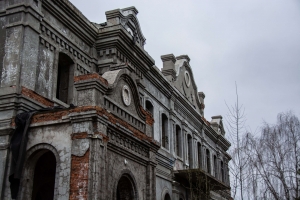


The man who gave Sumy its bridges, hospitals, churches, and entire city blocks started life as an ordinary shop assistant. Ivan Kharytonenko became the «Sugar King» — and his family estate on the banks of the Psol river still stands in the city centre, waiting for its former glory to be restored.
The Kharytonenko Estate in Sumy is the ancestral home of the dynasty that essentially built modern Sumy. A national heritage architectural monument, it has survived moments of greatness and years of neglect, and now awaits its revival.
Location Card
| Location | Troitska St., city centre, Sumy |
| What it is | estate complex of the Kharytonenko family |
| Status | national heritage architectural monument |
| Time to visit | 30–60 minutes |
| What to bring | camera, comfortable shoes |
What It Is & Why Visit
To understand Sumy, you need to know the name Kharytonenko. Sugar manufacturers Ivan and his son Pavlo were among the wealthiest people in the Russian Empire in the 19th century — and at the same time generous patrons who quite literally built their home city. Their estate is the ancestral heart of that dynasty.
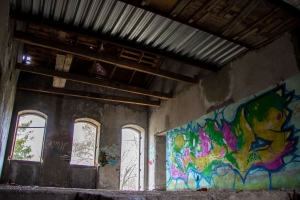
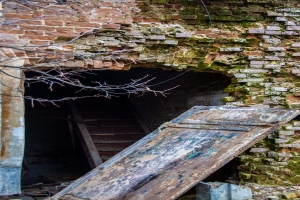
Today the complex is a national heritage architectural monument: the main house, the former trading office, the remains of a garden. Some buildings are derelict; others are under reconstruction. People don’t come here for dramatic ruins — they come for the history: to stand before the manor of the family without whom Sumy as we know it simply would not exist.
The estate was established at the confluence of the Psol and Sumka rivers, where Ivan Kharytonenko purchased land in the 1860s. It is the ancestral core of an entire sugar empire.
History: The Dynasty That Built a City
Ivan Kharytonenko (1822–1891) rose from a simple trader to a sugar magnate of empire-wide stature. In the 1860s he bought land in the centre of Sumy, where the estate complex took shape: a trading office, the family mansion, and a garden.
His son Pavlo Kharytonenko carried the work forward — famous not only for sugar but for colossal philanthropy and an outstanding art collection. The Kharytonenkos funded churches, hospitals, schools, and the bridge over the Psol in Sumy; much of what the city is proud of today was built at their expense.
Decline and Hope for Revival
After the revolution the family lost everything, and the estate was nationalised and put to various uses. Over the years the complex fell into decline. It now holds protected status as a national heritage monument, and the main house is undergoing reconstruction — the city is working to restore the manor to the dignity it deserves.
Legends & Local Lore
The manor of the «sugar kings» has inevitably collected its share of stories about wealth and secrets.
1. The Hidden Kharytonenko Treasure
The classic legend of a wealthy family: supposedly, before fleeing after the revolution, the Kharytonenkos hid part of their fortune somewhere in the estate or garden. No treasure has ever been found, of course — but no aristocratic manor is complete without such a story.
2. The Underground Passage to the Psol
Sumy folklore tells of a secret tunnel running from the estate to the river. Hard to verify, but the estate’s position at the confluence of the Psol and Sumka makes the legend hard to resist.
3. The Spirit of the Benevolent Master
Unlike ghost stories, the tales about the Kharytonenkos are told with warmth: some say the spirit of the great patron still «watches over» his city. Not mysticism — but a folk gratitude that has survived a century.
What to See & Do
The main manor house. The centrepiece of the complex — even mid-reconstruction it retains its noble character.
The former trading office. Part of the estate ensemble, a reminder of the business side of the Kharytonenko empire.
Traces of the old garden. Remnants of the former park at the river confluence.
The Kharytonenko legacy around the city. A walk through Sumy will reveal other landmarks built at the family’s expense — from bridges to churches.
Getting There
On foot. The estate is in the city centre near Troitska Street, at the confluence of the Psol and Sumka rivers — a few minutes’ walk from the centre.
By public transport. Take city transport to the centre of Sumy, then walk.
Safety note. Sumy Region is a border area that comes under regular shelling. Always check the security situation before visiting and respond to air-raid alerts.
Visitor’s Checklist
- Camera: the architecture and history are well worth it.
- Comfortable shoes: for a stroll through the centre and the estate grounds.
- A little background: read about the Kharytonenkos beforehand — the visit becomes far richer with context.
What NOT to do: enter fenced-off reconstruction zones; go into unsafe or derelict rooms; ignore air-raid alerts in a border city.
Frequently Asked Questions
Who were the Kharytonenkos?
Ivan and Pavlo Kharytonenko were a family of 19th-century sugar manufacturers, among the wealthiest people in the Russian Empire and generous patrons who played a major role in building Sumy.
What condition is the estate in today?
It is a national heritage architectural monument. Part of the complex is derelict; the main house is under reconstruction.
Can I go inside?
Access depends on the current state of reconstruction. Parts of the complex can be viewed from outside; do not enter closed or unsafe rooms.
Is it safe to travel to Sumy during the war?
Sumy Region is a border area regularly subjected to shelling. A visit is only possible with full awareness of the security situation and strict compliance with air-raid alert procedures.
The Kharytonenko Estate is not simply an old manor — it is a key to understanding Sumy. This is where the family lived that turned sugar into schools, hospitals, and bridges still serving the city today.
Stand by the old walls, recall the story of the «sugar kings,» and look at Sumy through their eyes. When the reconstruction is complete and the region is safe again, the estate will shine as its owners once imagined.
JoomShopping Download & Support