


- You are here:
-
Sights by Regions

-
Sumy region
-
Sumy
- Trinity Cathedral, Sumy

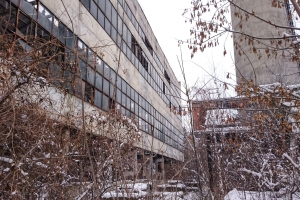
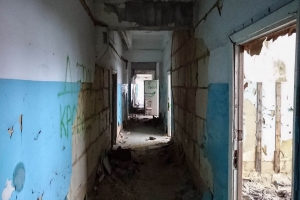
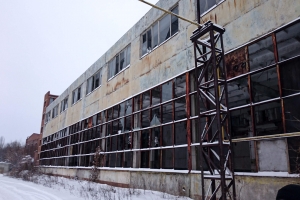
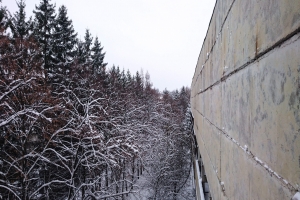

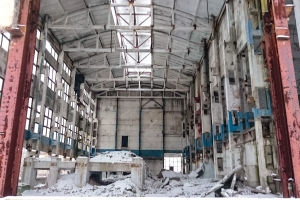


From here, thousands of tonnes of refined sugar once made their way not just across Europe, but as far as Persia. Today all that remains of the sugar giant are shattered windows, collapsed floors, and brickwork that locals have been quietly carting off for personal use.
The Pavlivsky (Sumy) Sugar Refinery is more than an industrial ruin. It is the rubble of the Kharytonenko family’s sugar empire — the very enterprise that transformed Sumy into the major industrial city it became.
Location Card
| Location | Sumy city, Sumy Oblast, near the river and railway |
| What it is | ruins of a sugar refinery founded in 1869 |
| Founded by | sugar industrialist and philanthropist Ivan Kharytonenko |
| Time needed | 1–2 hours |
| What to bring | sturdy footwear, a torch, caution, and respect for private property |
What It Is and Why Visit
Sumy is a city that literally grew on sugar. The Pavlivsky refinery was the heart of that story: one of the largest sugar enterprises in the Kharytonenko empire, around which an entire city’s life was shaped.
Visitors come here not for dramatic Chornobyl-style shots, but for a sense of vanished scale. Red brick industrial architecture from the 19th century, soaring arches, traces of former industrial might — all of it quietly recalls that world-class production once roared through these walls.
Sugar from this factory travelled not only to Europe but to the Middle East — including Persia. Sumy refined sugar was known thousands of kilometres from the city itself.
History: From Sugar Empire to Ruins
The factory was founded in 1869 by prominent sugar industrialist and philanthropist Ivan Kharytonenko. The plant was named «Pavlivsky» — after the founder’s son Pavlo. The location was well chosen: a nearby river supplied water for production, and the railway made raw material deliveries straightforward.
It was Pavlo Kharytonenko who pushed the factory to its peak. He modernised the equipment, scaled up production, and expanded into new markets. Thousands of tonnes of refined sugar flowed into Europe and the Middle East. The Kharytonenkos became some of the wealthiest people in the empire — and generous philanthropists who poured money back into Sumy: hospitals, churches, schools.
The enterprise survived revolutions, wars, and Soviet nationalisation, continuing to operate until 2008 as the Sumy Refinery. But the times changed: by 2004 the former Pavlivsky plant had run up debts, and in January 2006 bankruptcy proceedings were launched.
The end was both sad and literal. On 16 January 2014, the remaining walls of the former sugar factory were demolished. All that was left of the empire that had fed half of Europe were ruins.
Legends and Local Stories
The «sugar kings» of Sumy Oblast have always attracted a good share of legends — as befits a family that commanded genuine wealth.
1. A City Built on Sugar
The local saying goes that half of old Sumy — from its cathedrals to its hospitals — was built on Kharytonenko sugar money. There is very little exaggeration in that: the family’s philanthropy genuinely shaped the face of the city, and the echoes of that are still felt today.
2. The Bricks That Spread Across the City
Locals joke that the old factory bricks are still «alive» in Sumy’s backyards and garages: after the demolition of the buildings, the brickwork was carted off for private use. A piece of the sugar empire may well be sitting in someone’s garden wall right now.
What to See and Do
Ruins of the industrial buildings. Red brick, arches, and remnants of load-bearing walls — classic industrial architecture of the late 19th century.
Industrial-style photography. Textured old brickwork and light playing through empty window openings make for ready-made urbex shots.
A «sugar city» walking tour. Combine the factory with the churches and buildings funded by the Kharytonenkos — the full story snaps into place as a single picture.
How to Get There
By car. The factory is within the city limits of Sumy, near the river and railway. Head for the industrial part of the city; the access road is unpaved in places.
By public transport. Reach Sumy by train or bus from regional centres, then take local transport or a taxi to the factory district.
Combine with the city. The historic centre of Sumy with its Kharytonenko heritage is nearby, making the factory easy to fold into a full-day itinerary.
Traveller’s Checklist
- Sturdy footwear: rubble, broken brick, and exposed rebar surround the ruins.
- Torch: dark inside, floors unreliable.
- Camera: textured old brickwork rewards the photographer.
- Caution: unstable structures can collapse without warning.
What NOT to do: climb shaky walls or flooring, explore the depths of the ruins alone, ignore air-raid alerts (Sumy Oblast is a frontline region), or damage or remove anything from the site.
Frequently Asked Questions
What is left of the factory today?
Mainly the ruins of brick buildings: part of the walls were demolished as early as 2014. It is more a place of memory for the sugar era than a fully preserved site to explore.
Who were the Kharytonenkos?
A family of sugar industrialists and philanthropists who made Sumy a major industrial city. Ivan founded the factory in 1869, and his son Pavlo took the enterprise to a global scale.
Is it safe to visit during the war?
Sumy Oblast is a frontline region subject to shelling, with active air-raid alerts. Monitor the security situation and official warnings carefully before making the trip.
The Pavlivsky refinery is a reminder that entire cities once grew from a single product. Sumy’s refined sugar was known from Europe to Persia — and now all that remains is a quiet brick ruin.
Come and see what is left of the sugar empire, take a few shots — but stay clear of unstable walls and remember that this is someone else’s history, worth respecting rather than dismantling brick by brick.
JoomShopping Download & Support