


- You are here:
-
Sights by Regions

-
Lviv region
- Zahar Berkut's Tomb, Tuhlya


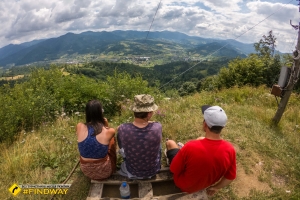
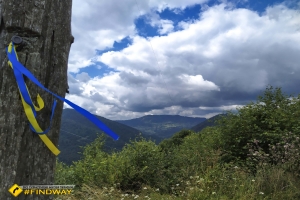


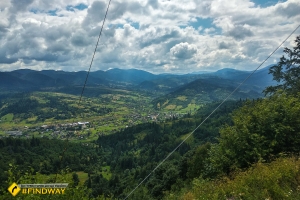
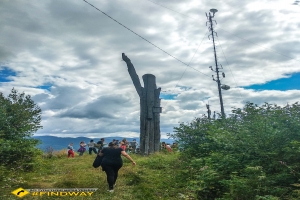
How can someone have a grave if they never lived? In the Carpathian village of Tukhlia, the answer is simple: people come and lay flowers anyway.
Zakhar Berkut is the hero of a novel by Ivan Franko — a fictional elder said to have lived here in 1241. The character is literary, but the reverence for him is entirely real. On a hill above the village stands his symbolic grave, reached by trails that bring tourists in steadily.
Location card
| Location | Tukhlia village, Skole community, Lviv region (Carpathians) |
| Distance | ≈ 130 km south of Lviv; ≈ 20 km from Skole |
| Time needed | 1–2 hours including the climb and a walk |
| What to bring | hiking shoes, water, a raincoat (it's the Carpathians!), a copy of Franko's novel for atmosphere, and a camera for the views |
What it is and why visit
Tukhlia is a small mountain village in the Skole district, right in the heart of the Ukrainian Carpathians. On its own it's quiet and picturesque, but it owes its fame to literature: it's the setting Ivan Franko chose for his historical novel "Zakhar Berkut".
The main draw for travellers is the symbolic grave of Zakhar Berkut, built in honour of the literary hero. It's not a real burial site but a memorial that turned a fictional elder into something close to the village's patron.
People come here for a combination found nowhere else: vivid Carpathian nature, a powerful literary legend, and the feeling of standing on the very ground where Franko "settled" his free Tukhlia community.
History: how fiction became a shrine
Ivan Franko wrote "Zakhar Berkut" in 1882–1883. The story is set in 1241, as a Mongol horde pushes through the Carpathian passes into Europe. The free community of Tukhlia, led by the wise old elder Zakhar Berkut, decides not to submit to the invaders.
Franko turned Tukhlia into the image of an ideal community — united, self-governing, ready to give its life for freedom. The novel became a classic of Ukrainian literature, required reading for generations of schoolchildren, and a symbol of resistance.
The paradox of this place: Zakhar Berkut is a completely fictional character. Yet his "grave" above Tukhlia has become a real site of reverence, where people come with flowers as if visiting a genuine hero.
A second wind: the film
In 2019, a large-scale Ukrainian historical film, "Zakhar Berkut," based on the novel, was released. It brought renewed attention to Tukhlia and introduced a younger audience to the source of the legend. After the premiere, the flow of tourists to the village rose noticeably.
The legend that holds it all together
At the heart of the story is a legendary battle in which the people of Tukhlia defeated a far stronger enemy not with weapons, but with intelligence and knowledge of their own mountains.
1. The drowned horde
In the story, when the Mongols entered the Tukhlia valley, the community dammed a mountain river and flooded the narrow basin along with the trapped army. The water did what spears couldn't: an enemy used to open steppe perished in the cramped Carpathian gorge. This is the novel's climax, and the image most often recalled while standing above the valley.
2. The elder's last wish
Before his death, Zakhar Berkut urges the community to stay together and put the common good above personal interest. This scene made the character a symbol of unity, and his "grave" above the village a place where that message still seems to echo.
3. The spirit of the free mountains
Locals like to say the Tukhlia valley has a special energy — that the mountains still "remember" that victory. A skeptic would call it ordinary Carpathian mist in a narrow valley. A romantic would say it's the legend itself breathing. Everyone is welcome to their own view.
What to see on site
The grave-monument itself. A landscaped memorial honouring the hero, with views over the valley. The main point of the route and the best spot to picture scenes from the novel.
The Tukhlia valley. The very basin where Franko's story has the horde "drowned". Worth simply standing and taking in the terrain — the mountains here really do squeeze the road into a narrow corridor.
Tukhlia village. A typical but very picturesque Carpathian village with wooden buildings, a church, and mountain streams. Good for a leisurely walk.
The wider Skole area. Nearby are plenty of other natural attractions — waterfalls, mountain trails, and national park routes. Zakhar Berkut's grave fits easily into a longer Carpathian itinerary.
Getting there
By car. The most convenient option. From Lviv, head south toward Skole and continue on the road toward Slavske/Tukhlia (about 130 km, 2–2.5 hours on mountain roads). In the village itself, follow local signs to the grave.
By train. A rail line on the Lviv — Lavochne/Mukachevo route passes through Tukhlia. You can take a local or regular train to Tukhlia or a nearby station, then continue on foot.
On foot uphill. From the village, a short climb along a trail leads to the memorial. Nothing extreme, but your shoes should be suitable for mountain terrain.
Traveller's checklist
- Hiking shoes. The climb to the grave is on a trail — smooth-soled sneakers will slip.
- A raincoat. Carpathian weather changes fast, even in summer.
- Water and snacks. There's almost no infrastructure along the trail.
- Franko's novel. Re-reading the key scenes before your visit makes the place come alive in a whole different way.
- A charged phone. For navigation and photos — mobile signal in the mountains can be patchy.
What NOT to do: rush through in "ten minutes" — without a walk through the valley the place won't reveal itself; and don't litter on the trails.
Frequently asked questions
Did Zakhar Berkut actually exist?
No. He's a fictional character from Ivan Franko's historical novel. The grave in Tukhlia is symbolic, built in honour of the literary hero rather than a real burial site.
Is it safe to visit the Carpathians near Skole right now?
Yes. Lviv region is far from the front line, and the mountain areas remain open to tourists. It's worth checking the weather forecast and air raid alerts, and carrying ID with you.
How much time should I plan for the visit?
The grave and a walk through the valley take about 1–2 hours. But Tukhlia pairs well with a broader full-day route around the Skole region.
Is it suitable for a trip with children?
Yes, as long as the kids can manage a short climb on a trail. It's a great chance to show them, in person, a place from a novel they may know from school — literature sticks better that way.
Zakhar Berkut's grave is a rare case where a community took a fictional hero and gave him a home in a real landscape, simply because it felt necessary. Franko provided the legend, the mountains provided the stage, and the people provided the reverence usually reserved for the genuinely real.
Perhaps that's the point: sometimes a fictional elder from a novel can teach us about staying together better than any real figure. And the valley below still falls silent, as if it truly remembers something.
JoomShopping Download & Support