


- You are here:
-
Sights by Regions

-
Lviv region
-
Lviv
- Museum of Archeology, Lviv


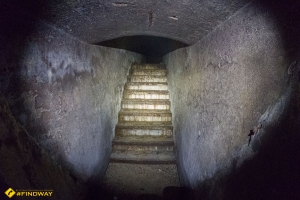


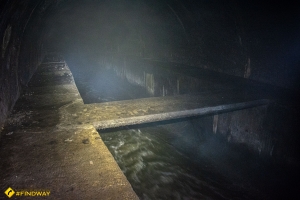
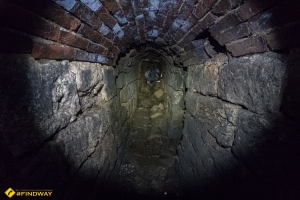


Freedom Avenue (Prospekt Svobody) is Lviv's grandest street — the Opera House, chestnut trees, benches, street musicians. And almost no one strolling here in the evening thinks about the fact that a few metres beneath the cobblestones, a real river is flowing.
Its name is the Poltva. The city once stood on its banks. Today it stands right on top of it — the water sealed under a concrete vault, with some of Galicia's most expensive real estate built above.
Location card
| Location | Lviv; the riverbed runs beneath Freedom Avenue and the Opera House |
| What it is | a river hidden inside an underground culvert in the 19th–20th centuries |
| Access | officially closed underground; the surface is open for a free city-centre walk |
| What to bring | comfortable walking shoes, curiosity about the city's «invisible» side, and imagination — you'll have to picture the rest |
What it is and why it matters
The Poltva is a small river, a left tributary of the Western Bug. It was on its marshy banks, in the mid-13th century, that Lviv was founded. The city was literally born beside this water: it supplied fish, turned mill wheels, and filled the moats of the defensive walls.
The paradox is that today you can't see the Poltva anywhere in central Lviv. It wasn't drained or diverted — it was simply hidden underground. The river now runs through a culvert beneath the city's most famous streets, while Freedom Avenue, the Opera House and entire grand neighbourhoods grew on top.
It's worth knowing about the Poltva because without it, Lviv doesn't quite make sense. This is a case where the city's geography isn't what you see — it's what's underneath.
History: how the river vanished underground
For centuries the Poltva flowed openly through the centre. But by the 19th century it had become a problem. As the city grew, everything was dumped into the river, and the once life-giving stream turned into a foul-smelling sewage ditch running through the middle of Lviv. In summer it was hard to breathe near it, and it spread disease.
The solution was radical: the river would be sealed off. In stages, from the mid-19th century into the first half of the 20th, the Poltva was enclosed in underground vaults section by section. Boulevards were laid over the filled-in riverbed.
Lviv's grandest boulevard — today's Freedom Avenue — was created exactly where the open Poltva once flowed. Strolling along the «city's main promenade», you're effectively walking on the roof of a river.
An opera house over water
A particularly bold piece of engineering is the Lviv Opera House. Built at the turn of the 19th and 20th centuries, it sits directly above the hidden Poltva. To keep such a heavy building from sinking into the damp ground, its foundation was built on a special platform. The city placed one of its grandest landmarks literally on top of a river — and engineers are still impressed by it today.
Legends and city lore
Hidden underground waters always collect stories. The Poltva is no exception.
1. A city above an abyss
Locals love to repeat that the city centre stands «on water», and that a river still flows beneath the Opera House — audible if you put your ear to the right manhole cover. There's some truth in it: the culvert really is there, and in quiet moments you can pick up its hum.
2. What the river took with it
Among urban explorers and tunnel enthusiasts, there are tales of strange finds in the culvert — old coins, remnants of ancient bridge piers, even supposed «collapses» into even older passages. Most of these have no documented proof, but it's exactly this uncertainty that draws seekers in.
3. The hidden river's revenge
There's also a darker version: that the river should never have been hidden, and every so often it «reminds» the city by flooding basements downtown during heavy rain. Engineers explain this with plain hydrology, but romantics prefer the story of a river that never forgave being walled in.
What to see on the surface
Freedom Avenue. The main axis of the route. Walking from the Taras Shevchenko monument toward the Opera House, keep one simple thought in mind: there's a river beneath you. The city literally covered it with its grandest boulevard.
Lviv Opera House. An architectural gem standing over water. Photograph it from the far end of the avenue — the classic Lviv shot — and remember the foundation hidden in the damp ground below.
Old manholes and street levels. A sharp eye will notice that the centre's terrain «drains» toward one invisible line. That's the former valley of the Poltva.
Getting there
On foot. The easiest way. Any walk through central Lviv eventually leads to Freedom Avenue — and so, to the Poltva running beneath it.
By public transport. Numerous tram and bus routes lead to the centre; look for stops near the Opera House or Mickiewicz Square.
Important note about the tunnels. Descending into the culvert on your own is forbidden and dangerous — it's a technical facility with risks of sudden flooding and oxygen shortage. Seeing the river «live» is only possible during the rare organised events that occasionally take place — leave the rest to your imagination.
Traveller's checklist
- Comfortable shoes. The «Poltva route» is a walking tour of the city centre.
- A map of old Lviv. It's fascinating to compare today's streets with old plans showing the river still on the surface.
- Evening light for atmosphere. Freedom Avenue is especially beautiful in the evening.
- A bit of imagination. The main attraction here is invisible — you'll have to build it in your head.
What NOT to do: never try to climb into a manhole or culvert yourself — it's life-threatening and illegal.
Frequently asked questions
Where did the Poltva river in Lviv go?
Nowhere — it's still flowing, just underground. In the 19th–20th centuries it was gradually enclosed in an underground culvert, with streets and boulevards built on top.
Why was the Poltva sealed away?
By the 19th century, the river running through the centre had become a polluted sewage ditch that smelled foul and spread disease. Hiding it underground was a sanitation measure.
Can you go down to the river?
Not on your own — no. The culvert is a technical facility with risks of flooding and oxygen shortage. The Poltva can only be seen during rare organised events.
Where exactly does the river flow under the city?
Its bed runs beneath the centre, including under Freedom Avenue and the Opera House. Walking along Lviv's main boulevard, you're effectively walking over water.
The Poltva is the best proof that Lviv should be read like a palimpsest: under every grand layer hides an older one. The city was born beside this river, grew up, then covered it over — and moved on as if nothing had happened.
But next time you're standing in front of the Opera House in the evening, listen closely. Somewhere down there, beneath your feet, the water that started it all is still flowing.
JoomShopping Download & Support