


- You are here:
-
Sights by Regions

-
Lviv region
-
Lviv
- Chapel of Boimiv, Lviv
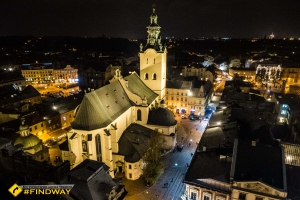
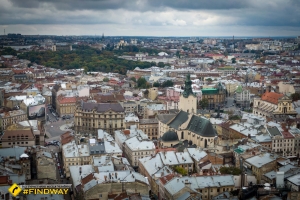

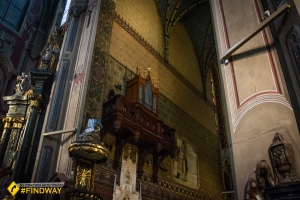
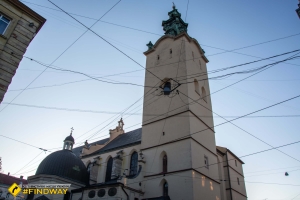


This cathedral took so long to build that the stonemasons who laid the first stone never lived to see the first vaults rise under its roof. From the start of construction to its full completion, nearly two centuries passed.
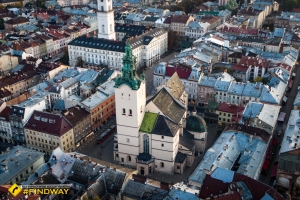
The result still stands at the very heart of Lviv: Gothic walls on the outside, lavish Baroque inside, and a Turkish cannonball walled into the masonry as a reminder of a siege.
Quick facts
| Location | Cathedral Square, the historic core of Lviv |
| What’s nearby | ≈ 200 m from Rynok Square |
| Time needed | 30–60 minutes (longer with the Boim Chapel) |
| What to bring | covered shoulders and knees, a quiet voice, a camera with flash off |
What it is and why people come here
The full name is the Cathedral Basilica of the Assumption of the Blessed Virgin Mary. Locals simply call it the Latin Cathedral, or just “the Cathedral.” It’s the city’s main Roman Catholic church and one of the oldest buildings to survive almost intact from medieval Lviv.
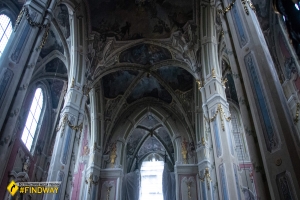
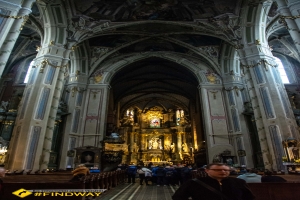
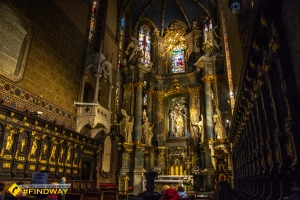
People come for a combination that’s rare in Ukraine: severe Gothic vaults on the outside, and inside — a warm, golden Baroque “redress” added in later centuries. Add stained-glass windows that glow like coloured glass catching sunlight, side chapels, and small details easy to walk past without noticing — each with its own story.
The cathedral is an active place of worship, with regular services. So this isn’t a museum behind glass — it’s a living shrine where tourists and parishioners share the same vaulted space.
History
Construction began in the mid-14th century, under King Casimir III. The work moved slowly, across generations: first the walls and the chancel went up, then the vaults, towers, and decoration. The church reached its final form around the turn of the 15th–16th centuries.
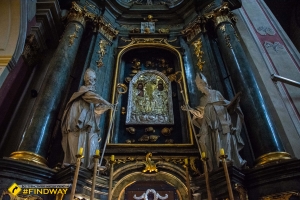
The cathedral was rebuilt more than once after that. The 18th century changed it the most: the interior received a lavish Baroque makeover — gilding, stucco, new altars. That’s how today’s contrast was born — a Gothic “skeleton” outside and Baroque “flesh” inside.
In the 17th century, it was here that King John II Casimir made a solemn vow — the famous “Lviv Oaths,” proclaiming the Virgin Mary as protector of the country. The cathedral has witnessed coronation ceremonies, wars, and the turning of several eras.
The walls have survived sieges, fires, and changes of power. The stained-glass windows visitors admire today appeared much later than the building itself — in the late 19th century, the work of renowned masters of their time.
Legends and historic details
1. The cannonball in the wall
Set into the cathedral’s outer wall is a stone cannonball — a reminder of the Ottoman siege of Lviv. According to legend, the shot hit the church but caused little damage, and this was taken as a sign of divine protection. The cannonball was left in place as a memorial, with an image of the Virgin Mary placed beside it.
2. A cathedral that “grew up” with the city
Because the building took so long to finish, different eras of Lviv seem preserved within it. Gothic portals, Renaissance details, Baroque altars — all layers of time. Locals joke that the cathedral is the city’s most honest chronicle: everything is written right into the stone.
What to see inside
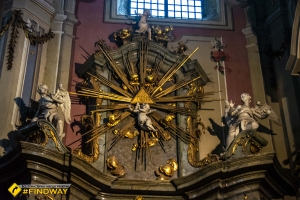
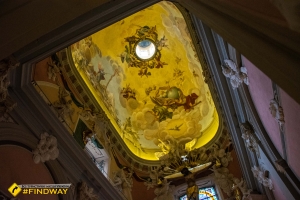
The interior and altars. Step inside and let your eyes adjust to the half-light — that’s when the Baroque decoration seems to catch fire in gold. Look out for the main altar and the side chapels.
Stained glass. On a sunny day, the windows scatter coloured light across the floor and walls. The best time to come is when the sun streams directly through them.
Boim Chapel. Right beside the cathedral stands a separate gem of a chapel, carved from black stone with such dense relief work it almost dazzles the eye. It deserves a visit of its own — one of the most striking sights on the square.
The cannonball. A tiny detail that’s easy to miss. Look for the marked cannonball on the outer wall — and a piece of history suddenly feels close.
How to get there
On foot. The easiest way. The cathedral stands on Cathedral Square, a few minutes’ walk from Rynok Square. If you’re anywhere in Lviv’s historic centre, you’re already practically there.
By public transport. Trams and buses run into the centre; get off near Rynok Square or Svobody Avenue and continue on foot — cars can’t reach the heart of the old town anyway.
Tip. Remember this is an active church. If you arrive during a service, it’s best to come back later or stand quietly to the side.
Traveller’s checklist
- Modest clothing — covered shoulders and knees, as expected in a church.
- Keep quiet — people may be praying inside; speak in whispers.
- No flash photography — harsh light ruins both the shot and the atmosphere.
- Leave time for the square — the Boim Chapel and old townhouses are right nearby.
- Avoid: bringing ice cream inside or talking loudly during a service.
Frequently asked questions
Can tourists go inside?
Yes, the cathedral is open to visitors. Just avoid service times and behave as you would in any active place of worship.
How much does it cost to enter?
Entry is usually free. A donation toward the cathedral’s upkeep is welcome but optional. Separate tours or nearby attractions may charge their own fees.
When’s the best time to see the stained glass?
On a sunny day during daylight hours, when light passes through the coloured glass and paints patterns across the interior.
What else is worth seeing nearby?
The Boim Chapel right next to the cathedral, Rynok Square a few minutes’ walk away, and other churches of Lviv’s old town.
The Latin Cathedral is one of those buildings best read like a book. The Gothic shell tells the story of medieval Lviv, the Baroque interior speaks of its golden age, the cannonball in the wall recalls its wars, and the stained glass reflects a later love of beauty.
Step inside, look up at the vaults, and let yourself pause for a minute. A building that took two centuries to raise has more than earned your fifteen quiet minutes.
JoomShopping Download & Support