

- You are here:
-
Sights by Regions

-
Kyiv region
-
Kyiv
- Monument to victims of Babin Yar, Kiyv
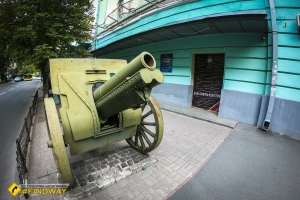
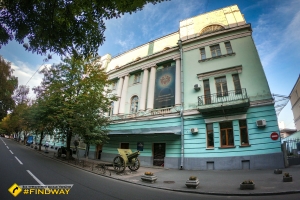

On Hrushevskoho Street, just minutes from the government quarter, stands a building where the history of the Ukrainian army is laid out shelf by shelf — from Bronze Age spearheads to the uniforms of soldiers fighting right now.
This is a museum where you can easily lose an hour moving between display cases of Cossack sabers and halls dedicated to the current war — and where recent history still feels painfully fresh.
Quick Facts
| Location | 30/1 Mykhaila Hrushevskoho St, Pechersk district, Kyiv |
| How to get there | Arsenalna metro station, ~5–7 minute walk |
| Time needed | 1.5–2.5 hours |
| What to bring | an ID for the ticket office, comfortable shoes, time to take it slow, and some emotional readiness for the halls about the current war |
What It Is and Why People Come Here
The National Museum of Military History of Ukraine is the country’s leading museum dedicated to the history of warfare. Its collection spans an enormous stretch of time — from Bronze Age weapons and the armed retinues of Kyivan Rus’ to the Armed Forces of independent Ukraine.
People come here not for pretty display cases, but for understanding. You can trace how weapons, tactics, and uniforms changed across Ukrainian lands over millennia — and why the army has always been part of this country’s story, not just a backdrop to it.
The museum is housed in the Central Officers’ House of the Armed Forces of Ukraine — a building with its own complicated history that adds extra context to a visit.
History
The museum opened to visitors as a separate national institution in 1998. But its collection draws on a much older tradition of gathering military artifacts in Ukraine — from war trophies and relics to soldiers’ personal belongings.
Over the years, the holdings have grown to tens of thousands of items: edged and firearms, medals, flags, documents, uniforms, and photographs. Relics connected to the 20th-century struggle for Ukrainian statehood hold a particularly important place.
The last decade has added the museum’s heaviest chapters yet. The exhibition has expanded with material on the Russo-Ukrainian war — from the events of 2014 to the full-scale invasion of 2022. This is history still in progress, and the museum documents it almost in real time.
Here, under one roof, you’ll find the Bronze Age and 2022. Few museums in the world display their own war while it’s still ongoing.
What to See
Weapons through the ages. From spearheads and swords to 20th-century firearms — a vivid timeline of how warfare was fought on Ukrainian land.
Uniforms and medals. A collection of uniforms from different periods and armies lets you literally see the eras change, while the cases of medals and decorations explain what they were awarded for.
Halls about the current war. The most emotionally powerful section: personal belongings, fragments of equipment, photographs, and the stories of soldiers fighting in the Russo-Ukrainian war.
The Officers’ House itself. Take a moment to notice the building and its surroundings in Pechersk — part of Kyiv’s military-historical landscape.
How to Get There
Metro. The closest station is Arsenalna, about a 5–7 minute walk uphill along Hrushevskoho Street — the most convenient option.
On foot from the center. From Maidan Nezalezhnosti and European Square, you can walk along Hrushevskoho Street, combining the visit with a stroll through the government quarter and nearby parks.
Before you go. Check opening hours and exhibition availability in advance — under martial law, schedules can change and access may be restricted during air raid alerts.
Traveler’s Checklist
- Check the current schedule before visiting — hours can change.
- Set aside at least 1.5–2 hours for an unhurried visit.
- Bring an ID — you may need it at the ticket office or entrance.
- Be prepared for strong emotions in the halls about the current war.
What NOT to do: rush through the halls — the museum’s value lies in the details and captions, not in checking it off a map.
Frequently Asked Questions
Where is the museum located?
At 30/1 Mykhaila Hrushevskoho St, in Kyiv’s Pechersk district, inside the Central Officers’ House. The closest metro station is Arsenalna.
Is it interesting to visit with kids?
For school-age children interested in history and military equipment — yes. But the halls about the current war are very emotionally intense, so younger kids should be accompanied and given context.
How much time should I plan for a visit?
Roughly 1.5–2.5 hours, depending on how closely you read the captions and how long you linger at the exhibits.
Is the museum open during martial law?
Kyiv museums mostly stay open, but hours can change, and entry is temporarily suspended during air raid alerts. It’s worth checking the schedule in advance.
The National Museum of Military History isn’t just “a hall full of weapons” — it’s an attempt to show continuity: how, on this land, people have spent millennia learning to defend themselves, to win, and to survive.
And perhaps the strongest feeling after a visit is that the exhibition’s last display case isn’t closed yet. It’s being written today, a few hundred kilometers to the east.
JoomShopping Download & Support