


- You are here:
-
Sights by Regions

-
Donetsk region
-
Svyatogirsk
- Artem Monument, Memorial Complex of Second World War, Svyatogirsk

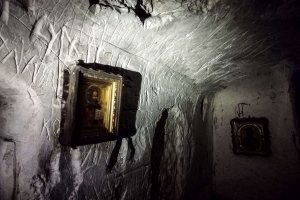
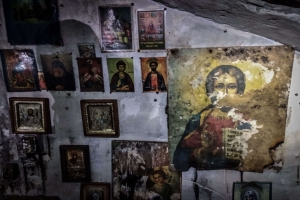
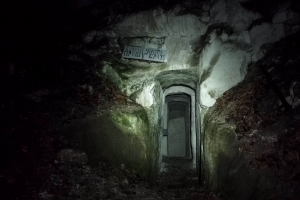

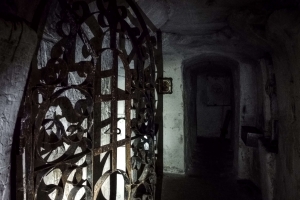
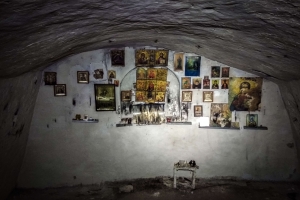


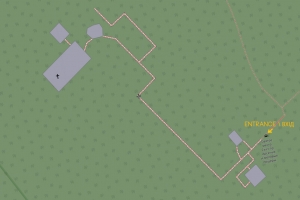
Deep inside a white chalk mountain above the Siverskyi Donets River, someone cut cells, corridors, and underground chapels from the rock — possibly before the Christianisation of Kyivan Rus. For centuries, monks lived here in perpetual +10 °C and perpetual silence. Today thunder rolls over these mountains again — but it is no longer bells.
The underground monastery and Arseniyivski Far Caves at Sviatohirsk are the oldest, cave-cut core of the celebrated monastic complex at Svyati Hory (Holy Mountains). We write about it here as a heritage site worth knowing and preserving. We must state from the outset: this is currently a frontline zone, and visiting is not possible.
Most important: do NOT travel here now
Sviatohirsk is located in northern Donetsk region, a few dozen kilometres from the front line. The city and the monastery have suffered severe damage from hostilities since 2022; mandatory evacuation of families with children was ordered in neighbouring communities, and the area remains under threat of shelling and strikes. This is not a tourist destination today. This article is about the history and significance of the place — to keep its memory alive. No visits until the situation stabilises and official permission is granted.
Location card
| Location | Sviatohirsk city, Kramatorsk district, Donetsk region |
| What it is | ancient cave (underground) monastery carved into a chalk mountain |
| Cave temperature | constant ~10 °C year-round |
| Status | frontline zone — visiting is not possible |
| When to plan | only after de-occupation of the region and official clearance |
What it is
The Sviatohirsk monastery stands on the high right bank of the Siverskyi Donets River, in the Svyati Hory (Holy Mountains) nature reserve. Its spiritual heart was never the above-ground cathedrals but the caves — cells, corridors, and underground chapels hewn from the soft white chalk. The cave complex stretches approximately 800 metres and contains more than 20 cells where the temperature is a constant +10 °C. By the 17th century it had at least four tiers of underground rooms.
The Arseniyivski Far Caves are the most remote and secluded section of this subterranean world, associated with a hermitage (skit — a small monastic settlement for solitary ascetics) and centuries of contemplative withdrawal. This is where the silence is deepest and the sense of touching antiquity is most powerful.
Archaeological evidence suggests that cave monasteries may have existed here as early as the 8th–9th centuries — long before the official Baptism of Rus in 988.
History: who carved the mountain
The Sviatohirsk monastery is first mentioned in written sources in 1624 — in a royal charter granting land. But the caves predate the documents by centuries. One theory holds that the monastery was founded by monks from the Kyiv-Pechersk Lavra (Kyiv Monastery of the Caves) who fled the Mongol sack of Kyiv in the mid-13th century. Another points to Athonite monks (from Mount Athos in Greece) who travelled north along the Siverskyi Donets.
Over the centuries the monastery flourished, declined, and was revived repeatedly. In the 19th century, above-ground structures were added, including the Cathedral of the Assumption designed by architect Oleksiy Gornostaiev (1858–1868). Yet the underground section always remained the spiritual core of the monastery — the place monks and pilgrims went for silence and prayer.
Legends and local lore
A mountain where people have lived underground for a thousand years could not fail to accumulate mysteries.
1. Secret escape tunnels inside the mountain
Local tradition speaks of cave passages connecting the tiers of the monastery and leading to hidden exits — escape routes in case of raids. Chalk is soft enough to carve new corridors with relative ease, so such tunnels may well have existed.
2. Hermits who never came into the light
It is said that certain monks spent years without leaving the caves, devoting themselves entirely to prayer in the dark. This is what gives the Far Caves — the Arseniyivski section, deepest and quietest of all — their particular, otherworldly atmosphere.
The present: wounds of war
Since 2022, the Holy Mountains have been at the heart of the fighting. The monastery complex and the city have sustained severe damage; lives have been lost. Today this is frontline territory and the fate of the site depends on the course of the war. The most we can do right now is remember this place and wait for the day when we can return to the caves in peace.
Frequently asked questions
Can visitors access the caves at Sviatohirsk now?
No. Sviatohirsk is a frontline zone with a real threat of shelling. Visits are not possible until the situation stabilises and official permission is granted.
How old is the cave monastery?
It is documented from 1624, but archaeological evidence indicates that cave monasteries may have existed here as early as the 8th–9th centuries.
Why is it always cool inside the caves?
The soft chalk rock maintains a stable temperature of around +10 °C throughout the year — in summer and winter alike.
The underground monastery at the Holy Mountains is memory carved into rock by hands long gone. For a thousand years the mountain guarded their silence. Now it is enduring its hardest years — and all we can do is not forget. One day, we will return and hear again the white chalk above the Donets fall quiet.
JoomShopping Download & Support
Attention! Part of Ukraine was occupied during Russia's unfounded military aggression against us and other democratic countries!
russia is a terrorist country, russians are murderers, thieves and rapists.
Russia's unhuman aggression against Ukraine since 2014 has led to the loss of homes and lives not only of many Ukrainians, but also of citizens of other countries and nationalities.
We consider any military actions against any state in the 21st century unacceptable and stupid, but unfortunately the Russians do not think so, and therefore many democratic countries, including Moldova, Georgia and our homeland, suffer from barbaric aggression.
Therefore, until the occupied parts of Ukraine are demilitarized and returned to our state, we remind users about the real danger of visiting the territories occupied by russia.