

- You are here:
-
Sights by Regions

-
Chornobyl Exclusion Zone
-
Pripyat
- Laboratory "Radek" in a former kindergarten, Pripyat
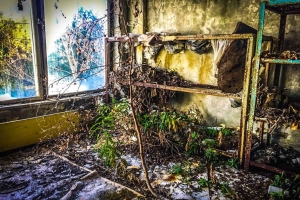

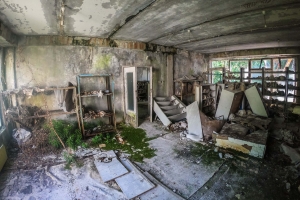


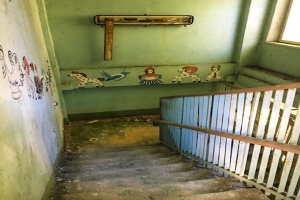

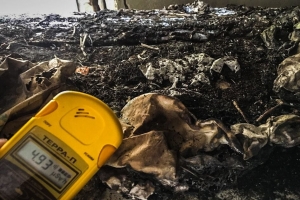


In one room — children’s cots and peeling wallpaper with rabbits. In the room next door — gas masks, glass flasks, and instrument dials. Radek is a place where a Soviet kindergarten and a radiation laboratory met in the same corridor.
Radek Laboratory is one of the most recognisable urbex sites in Pripyat: a former kindergarten repurposed after the disaster for radiation measurements. Today it is a classic stop on routes for stalkers (urban explorers) and photographers — with every caveat that many of the «iconic shots» here have long been staged.
Location Card
| Location | Pripyat, Chornobyl Exclusion Zone, Kyiv Region |
| What it is | former kindergarten adapted as a radiation laboratory |
| Condition | abandoned, structurally unsafe |
| Access (2026) | zone closed to tourists |
| What to bring | dosimeter, respirator, torch, sturdy footwear (if legal access is available) |
What It Is and Why People Come
Radek is prized for a contrast you won’t find concentrated anywhere else in the zone. It is simultaneously a kindergarten — with tiny chairs, little lockers, and murals on the walls — and a working space fitted with laboratory glass, instruments, and gas masks.
For photographers it is almost a studio: the texture of peeling paint, natural light through broken windows, and «props» that have migrated from room to room for decades. For those who come for the history, it is a reminder that after the disaster ordinary civilian buildings were hastily repurposed for the needs of the clean-up operation.
History
Before April 26, 1986, this was an ordinary kindergarten in the young nuclear city of Pripyat, home mostly to families of Chornobyl NPP workers. After the accident and evacuation, the city emptied within days.
During the clean-up years, some abandoned buildings were adapted for technical needs — including radiation monitoring and measurement. That is how the former kindergarten got a «second life» as a laboratory: instruments, glassware, and protective equipment appeared here, remaining in place even after operations wound down.
Why “Radek”
The name is unofficial, from the vocabulary of stalkers (urban explorers) and guides: from the Russian/Ukrainian root for «radiation» / «radiological». There is no sign with this word on the facade — it is a folk toponym that stuck among those who led tours here.
Legends and the Truth About Staging
This is precisely the case where the most interesting legend is the debunking of the legends themselves.
1. The Gas Mask and Doll Still Life
The classic «Chornobyl shot» — a doll in a gas mask on a child’s cot — is almost always staged. Over the decades, visitors have rearranged objects thousands of times to compose «dramatic» scenes. That doesn’t make the place any less haunting, but it’s worth knowing: half the «finds» here were directed by people, not by time.
2. The “Glowing” Flasks
A story circulated among tourists that the laboratory glass in Radek still «emits» so much radiation it practically glows. The reality is more prosaic: the real hazard here is dust, not specific flasks. But the tale of «glowing reagents» was passed on from tour to tour.
What to See Inside
The laboratory rooms. Glassware, instrument remnants, and dial faces — the most recognisable texture of this site.
The children’s half. Tiny cots, little lockers, and traces of murals on the walls — what recalls the building’s original purpose.
Protective gear. Gas masks and remnants of equipment that create the defining contrast of «kindergarten versus laboratory».
The most famous «Chornobyl» shots — the doll in a gas mask, the neatly arranged flasks — are mostly staged by visitors. Time here is terrifying enough without any direction.
Current Status (2026)
The Chornobyl Exclusion Zone is currently closed to regular tourists. After the Russian military occupation in spring 2022, parts of the territory were mined, and the exact maps of minefields are unknown. Because of this, and the proximity to the Belarusian border, tours have been suspended.
Access is currently possible only with accreditation from the Ministry of Defence or as part of official delegations. Additionally: the Radek building is structurally unsafe — floors and ceilings are unreliable even in areas where groups were previously taken.
Getting There
Organised tours only. Unauthorised entry into the zone has always been prohibited. Pripyat was visited exclusively on licensed tours through the Dytyatky checkpoint with mandatory supervision.
Within Pripyat. Radek was typically one stop on a walking route through the city, alongside other kindergartens, schools, and the Energetyk Palace of Culture.
Safety. A dosimeter, respirator, torch, and sturdy footwear are essential; entering unsafe structures is permitted only with the guide’s approval.
Visitor Checklist
- Dosimeter and respirator: the main hazard indoors is dust that settles and rises with every step.
- Torch: it’s dark inside and the floor is unreliable.
- Covered clothing: do not place anything on surfaces or touch them with bare hands.
- What NOT to do: rearrange «props» for a shot, take anything as a souvenir, or enter visibly unsafe wings.
Frequently Asked Questions
Can I visit Radek in 2026?
No. The zone is closed to tourists due to the war and landmines left after the 2022 occupation; access requires special authorisation from the Ministry of Defence.
Was it really a laboratory?
Yes, the former kindergarten was used for radiation monitoring during the clean-up operation. That is where the informal name «Radek» comes from.
Why do people say the photos here are staged?
Because it’s true: objects were rearranged by visitors over the years for dramatic effect. The building itself is genuine; the compositions are often man-made.
How dangerous is it?
Doubly so: radioactive dust indoors plus the structural condition of the building. That is why entry was always done in an organised group with a dosimeter.
Radek is Pripyat in miniature: childhood and catastrophe in the same corridor, a genuine history wrapped in staged photographs. The place that explains the zone better than any reactor or statistic — with nothing more than a tiny chair next to a gas mask.
JoomShopping Download & Support