


- You are here:
-
Sights by Regions

-
Chornobyl Exclusion Zone
-
Pripyat
- Abandoned apartments, Pripyat
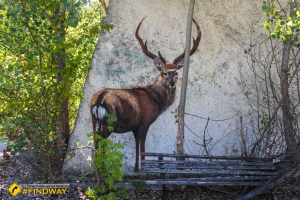
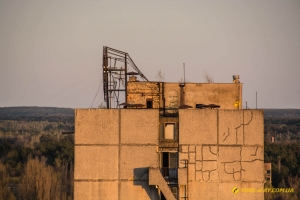

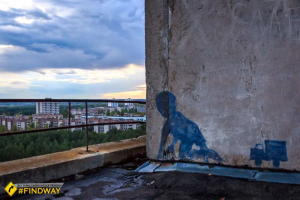
Soviet-era photos of Pripyat from 1986 show no graffiti at all. Modern photos show dozens of silhouettes — children running down empty corridors, shadows on concrete, writing on peeling walls. Between these two versions of the city lies not an explosion, but the people who came afterward.
And that's the most fascinating switch in Pripyat: what tourists perceive as "frozen in 1986" was actually painted in much later, in the 21st century.
Location card
| Location | the city of Pripyat, Chornobyl Exclusion Zone, Kyiv region |
| Distance | about 100 km north of Kyiv, 2–3 km from the Chornobyl NPP |
| Access now | closed to tourists (war, demining) — see "How to get there" |
| What to bring | for now — just curiosity and a good screen, since getting there isn't possible |
What it is and why people talk about it
Pripyat graffiti isn't a single art piece, but drawings scattered across the entire city: stenciled human silhouettes, child figures, shadows on the walls of apartment blocks, kindergartens and the school. The most famous are silhouettes that seem to "walk" through empty rooms, evoking the residents who were evacuated within hours.
These silhouettes are exactly what made Pripyat instantly recognizable in photos worldwide. They became a visual symbol of the disaster — even though they appeared long after it happened.
Almost all of Pripyat's "iconic" silhouettes were painted in the 2000s and 2010s — by artists and travelers visiting the Zone, not by the people evacuated in 1986.
History
Pripyat was built in 1970 as a city for nuclear plant workers — young, green, with an average resident age of around 26. On April 27, 1986, the day after the Chornobyl disaster, nearly 50,000 people were evacuated by bus within hours. The city was left empty.
For decades, the walls of Pripyat were just walls. The first noticeable graffiti began appearing in the 2000s, as stalkers, photographers and artists started visiting the Zone. The biggest wave came during the years of peak Chornobyl tourism, when the Zone's popularity surged after the S.T.A.L.K.E.R. video game and the "Chernobyl" TV series.
Some silhouettes are credited to specific street artists, others to anonymous visitors. The exact authorship of many works remains unknown, which only added to their mystique.
Legends and myths
Several persistent myths have grown up around the silhouettes. Let's break down the most popular ones.
1. "These are shadows of vaporized people"
The most common — and most wrong — version claims the silhouettes are imprints of people "burned" into the walls by a flash, like in Hiroshima. Pripyat had no nuclear blast and no light flash of that kind. Every silhouette is stencil-painted. But the image is so powerful that the myth persists.
2. Children playing in an empty city
The child silhouettes on kindergarten walls gave rise to a legend about "children's spirits" still playing in the corridors. Guards and guides have spent years retelling stories of children's laughter in the silence. Maybe someone heard the wind. Maybe not.
3. "Authentic" versus "fake"
Among photographers who visit the Zone, there's an ongoing debate: do these drawings even have a right to exist? Some see them as defacing the site's authenticity, others as a new layer of memory the city has earned. There's no clear answer — as with most things in Pripyat.
What to see on site
Silhouettes in the kindergartens. The most emotional pieces are in the former kindergarten buildings, where child figures are "set into" the peeling walls alongside real toys and cribs.
School No. 3 and its corridors. Long, empty hallways with silhouettes that seem to be walking — the most recognizable shots of Pripyat, reproduced around the world.
Walls of the residential districts. Here you'll find large murals and writing left by stalkers and artists over two decades of "wild" tourism.
How to get there
Honestly and briefly: right now, you can't. After the full-scale invasion of 2022, the Chornobyl Zone was occupied, mined, and its infrastructure was damaged. Official tours to Pripyat and the Chornobyl NPP have been suspended indefinitely.
How it used to work. Before the war, the Zone was visited on organized tours from Kyiv (about 2 hours' drive), exclusively with a licensed operator and advance registration. Independent entry was always illegal.
What to do for now. Watch official announcements about the Zone reopening. Until then, Pripyat's silhouettes can only be seen in photos, videos and archives.
Traveler's checklist
- Check the Zone's official status before making any plans — it changes.
- Don't believe the "shadows of vaporized people" — that's a myth; the silhouettes are painted.
- Tell apart 1986 authenticity from modern street art — they're different layers of history.
- Save a collection of archive photos while physical access is closed.
What NOT to do: don't even consider a "wildcat" entry into the Zone. It's a mined area under a special regime — this is a matter of life, not a fine.
Frequently asked questions
Are the silhouettes real shadows of people?
No. They're stencil paintings made in the 2000s and 2010s. Pripyat never had a flash that could "burn" silhouettes the way it happened in Hiroshima.
Who painted Pripyat's graffiti?
Mostly street artists and travelers who visited the Zone during the era of peak Chornobyl tourism. The authorship of many works remains unknown.
Can you see them in person right now?
No. The Exclusion Zone is closed to tourists due to the war and demining. There's no known date for tours to resume.
Does the graffiti spoil the city's authenticity?
Opinions are split. Some see it as defacement, others as a new layer of memory. There's no universal answer.
Pripyat's graffiti tells the story of how a city that died in a single day kept changing for another thirty years. The silhouettes on the walls aren't ghosts of 1986 — they're our own attempt to draw what's hard to put into words.
And maybe the most honest thing to do with these silhouettes right now is to look at them from a distance and wait for the day when Pripyat can be visited again without a mine detector.
JoomShopping Download & Support